
A while back, I came across a quiz titled, “What Type of Team Leader Are You?”
I clicked out of curiosity. A few questions in, I was already thinking, “this is surprisingly accurate.”
When I got my result, I didn’t just read it and move on. I shared it with a couple of colleagues to see what they’d get. No thought, just curiosity and fun.
That’s not a coincidence. BuzzFeed style quizzes didn’t blow up by accident. They’re designed to tap into a very specific human need: the need to be seen, labeled, and told, “yes, that’s exactly you.”
That same mechanic is exactly why knowing how to make a BuzzFeed quiz is one of the more underrated tools in a marketer’s kit. Done right, it entertains the taker and qualifies the lead simultaneously. Turns out those aren’t mutually exclusive.
I built one using ProProfs Quiz Maker to test this, and this guide walks you through exactly how.
What Is a BuzzFeed Style Quiz?
The format isn’t about what you know. It’s about what kind of person you are, and that’s a completely different psychological trigger. A score tells you how you performed. A personality result tells you something about your identity, and people share identity. They don’t share performance.
That’s why someone who scored 7 out of 10 on a trivia quiz keeps it to themselves, but someone who got “You’re the Chandler of your friend group” sends it to six people unprompted.
For businesses, this mechanic is genuinely useful beyond the engagement numbers. When someone completes a personality quiz, they’ve voluntarily shared their preferences, decision-making style, and where they are in a buying journey, without ever feeling like they’re filling out a form. That data is yours to act on.
What Are the 3 Types of BuzzFeed Style Quizzes?
Not all BuzzFeed-style quizzes are built the same. There are three distinct formats, and picking the wrong one for your goal will cost you both engagement and conversions.
Personality Quizzes
These are the signature format and the strongest lead generation tool of the three. You answer a series of questions and get a result that describes your type, tendencies, or taste. “Which Hogwarts house do you belong to?” The result is the product. People want it, and they share it because it feels like a mirror held up at exactly the right angle.
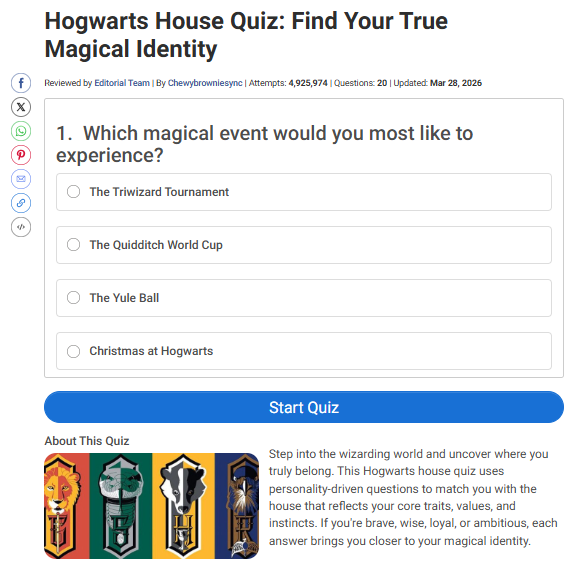
For businesses, the value doubles: personality quiz results are natural segmentation triggers. The Impulsive Buyer and the Deliberate Investor need completely different follow-up sequences. The quiz tells you which is which before you’ve sent a single email.
Trivia Quizzes
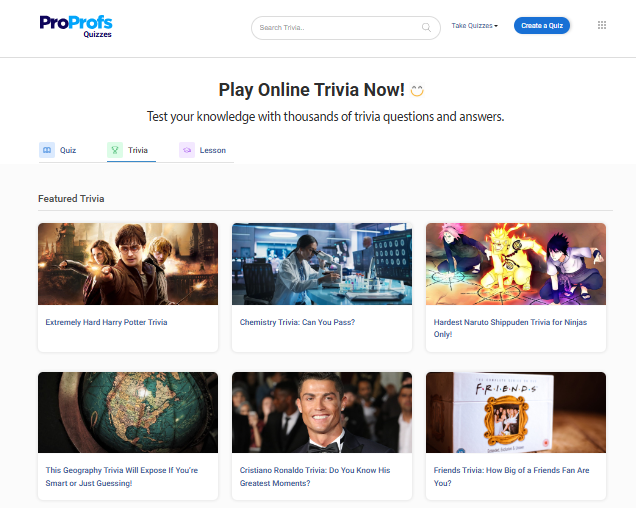
Trivia quizzes score knowledge and generate competitive energy. The share trigger here is different: “I got 9 out of 10, can you beat me?” rather than “look what this quiz revealed about me.” Works especially well for fan communities and niche brands where the audience prides itself on deep knowledge.
Polls
Polls ask for an opinion and immediately show where you stand relative to everyone else. No final reveal, just your take versus the crowd’s. High volume, low friction, and genuinely useful for audience research if you know what questions to ask.
Watch: Difference Between Quiz, Survey, Scored Survey, and Polls
How to Make a BuzzFeed Quiz: The Step-by-Step Process
The technical steps are easy. Using ProProfs Quiz Maker, I had the quiz built in an afternoon. What actually made it work were the decisions I made before I even opened the tool.
Here’s both.
Step 1: Write Result Pages First
This is the step almost everyone skips. If you know your 3 to 5 result types in advance, every question becomes a sorting mechanism. Write each result fully, including the copy and tone, before you touch the quiz tool. Once you know who each result describes, the right questions become obvious, and the scoring logic follows naturally.
Step 2: Focus on the Person, Not the Topic
“Which of these products do you prefer?” is a survey question. “Are you a shopaholic?” is a personality quiz question.
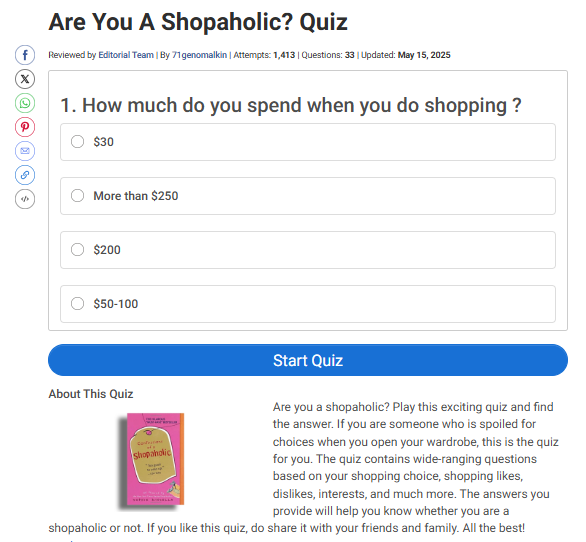
BuzzFeed-style questions reveal something about the person answering them. Use image-based answer options whenever possible. Images are processed faster, while text slows people down.
Step 3: Keep It Between 6 and 10 Questions
Short quizzes have higher completion rates, and completion drives everything else: lead capture, shares, and clicks. If you have 15 questions, you’re probably mixing two different quiz ideas.
Step 4: Build the Quiz in Your Tool
Once your structure is clear, the setup is straightforward. Here’s what I did in ProProfs Quiz Maker:
1. Click Create Quiz from the dashboard
2. Choose a Personality Quiz
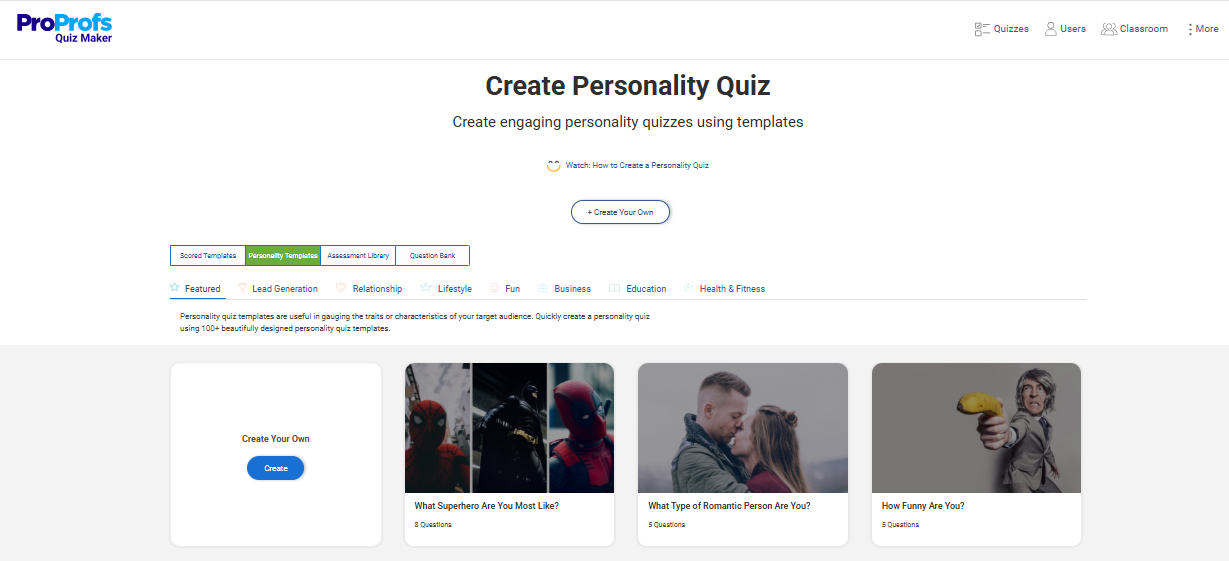
3. Pick a template or start from scratch with ProProfs AI that allows you to create complete quizzes with a single prompt. Give it a shot. Type a prompt below and watch a quiz take shape in minutes.

Let ProProfs AI Build a Quiz
4. You can edit/add questions and answers, and add images as you want
5. Configure settings and scoring as per your requirement and hit publish when done
This part is quick. Most of the work was already done before this.
Step 5: Place the Lead Form Before the Result
Not after. Before. This is the biggest structural mistake I see. After the result, motivation drops. Before it, people will do almost anything to see what they got. Here’s how a lead form created in ProProfs Quiz Maker looks:
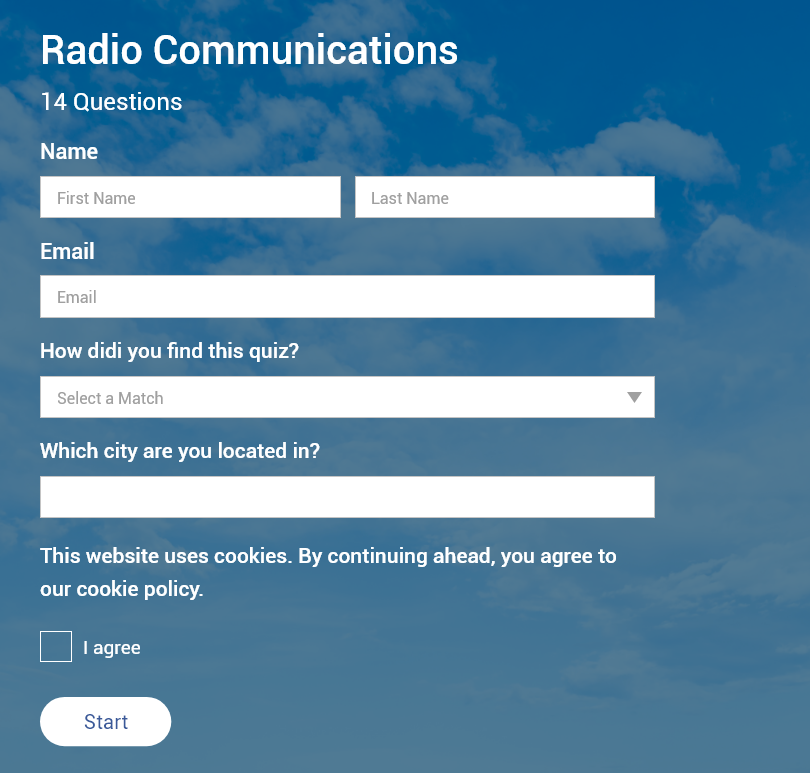
You can also configure the fields you want in your lead form like this:
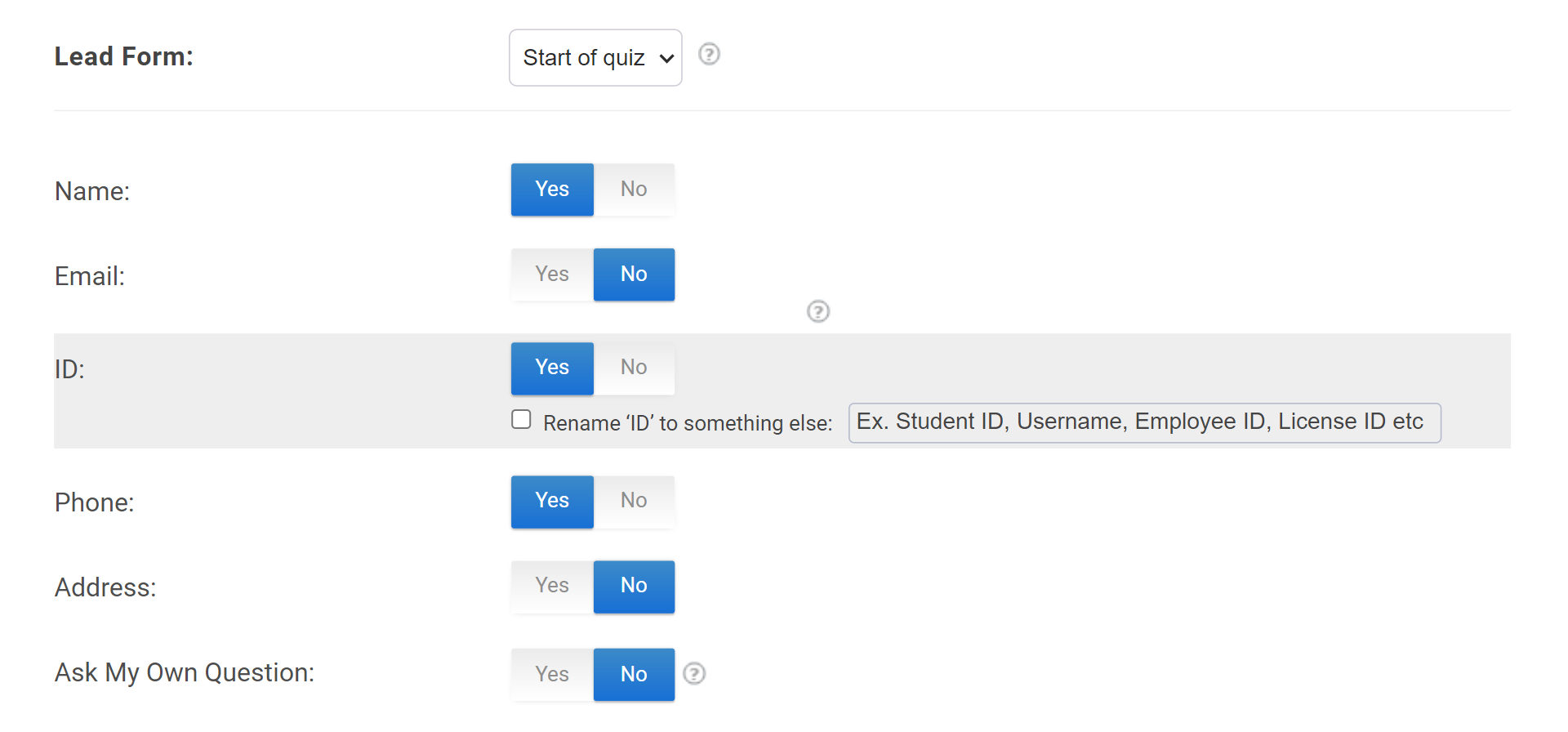
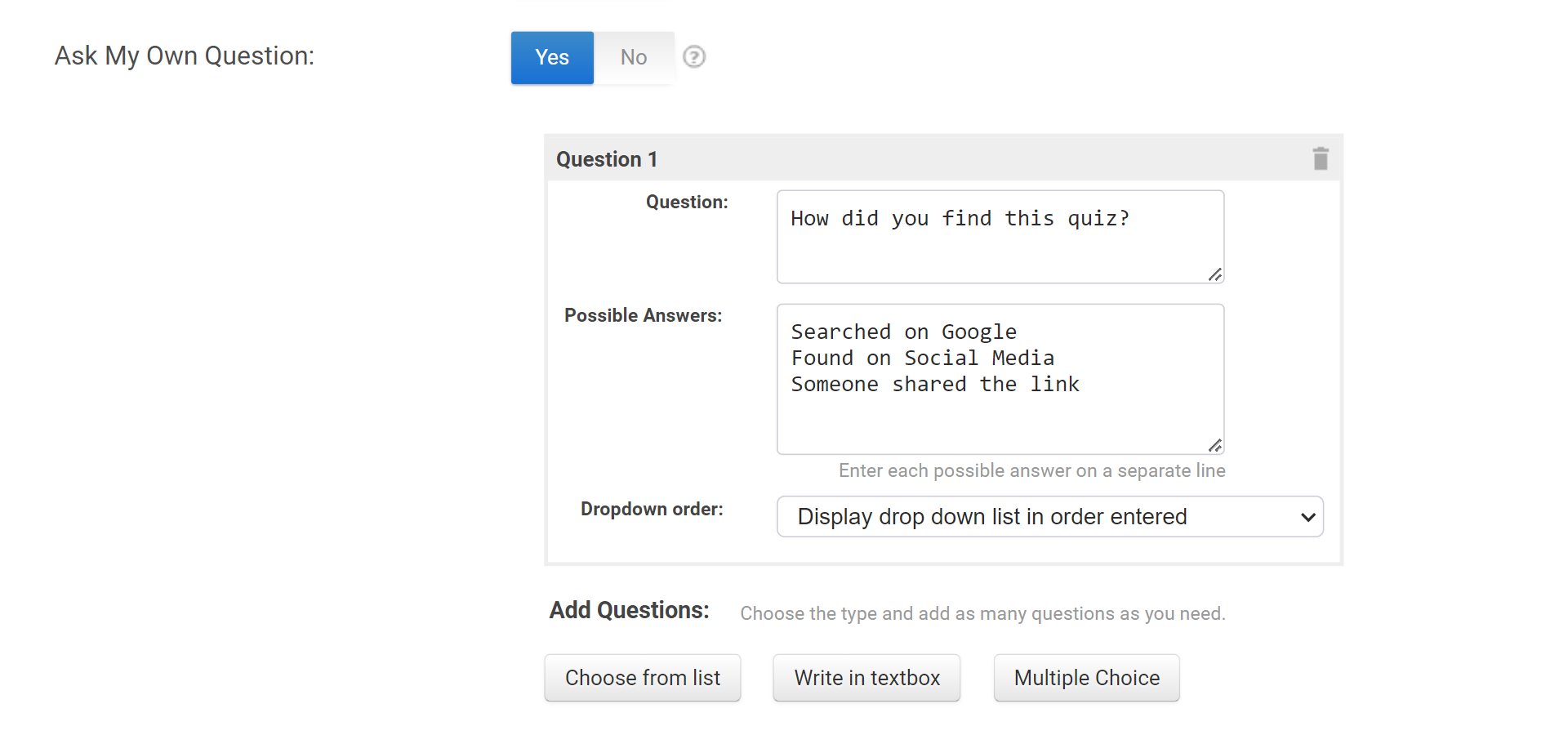
You can even add more questions about the quiz, like this:
Step 6: Match Each Result to a Specific CTA
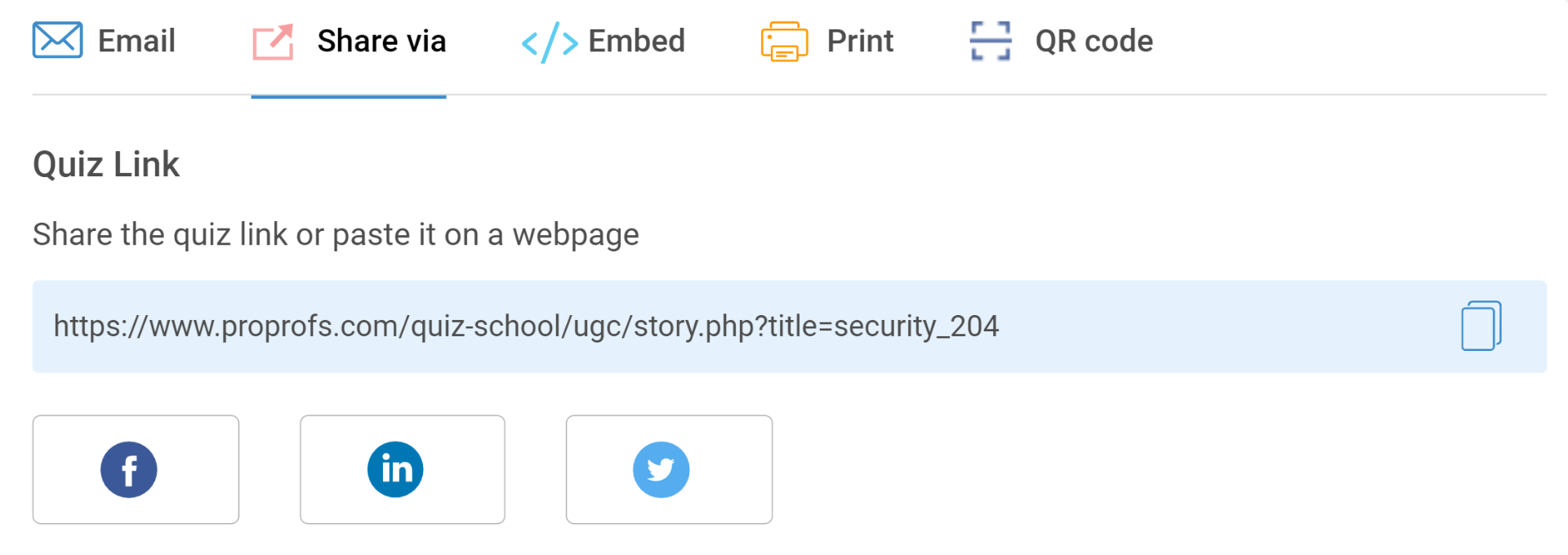
“Sign up for our newsletter” after someone learns they’re a “Spontaneous Traveler” won’t convert well. “See destinations matched to your travel style” connects directly to the identity they just claimed. One CTA per result page. The most common CTA is adding buttons to enable social sharing. Here’s an example of how you can enable social sharing buttons in ProProfs Quiz Maker:

And once you’ve enabled the social sharing buttons, here’s how they’ll appear on the results page:
Step 7: Connect Your Quiz to Your CRM Before Launch
ProProfs Quiz Maker integrates with tools like Mailchimp, HubSpot, Salesforce, and Constant Contact, so segmentation happens automatically. Set up your result-to-sequence mapping before you go live. That’s where the real value comes in.
Watch: How to Create a Personality Quiz
How Do BuzzFeed-Style Quizzes Help With Lead Generation?
This is the question most quiz guides treat as a footnote. I’d argue it’s the whole point.
Here’s what’s actually happening when someone completes your quiz:
- They answer 6 to 10 questions that reveal their preferences and decision stage
- They hit a lead form right before their result, motivated to finish
- They opt in, already tagged by result type in your CRM
- The right email sequence triggers automatically, matched to who they just told you they are
You don’t have to ask them what they want. They showed you.
The structural key is where you place the lead form: not after the result, but before it. The taker is most motivated right before the reveal. Once they’ve seen the result, that motivation disappears, and so does your conversion window.
Here’s how result-based personalization looks in practice:
| Result Type | What They Told You | What You Send Next |
| The Impulsive Buyer | High intent, acts fast | Immediate offer, low friction |
| The Deliberate Investor | Needs proof, moves slow | Comparison guide, case study |
| The Bargain Hunter | Price-sensitive, researching | Free trial trigger, discount |
The quiz doesn’t just collect an email. It hands you a segmented lead with a recommended next step already mapped. That’s a quiz funnel, not just interactive content marketing.
When I set this up in ProProfs Quiz Maker, the tagging and follow-ups weren’t manual. The quiz integrated directly with my email tool, so each result type triggered its own sequence automatically.
10 Decisions That Separate a Viral Quiz From One That Gets Ignored
Getting the structure right is the foundation. These ten decisions are what make the difference between a quiz that spreads and one that doesn’t.
1. Start with templates, but don’t stop there
ProProfs Quiz Maker has 100+ templates across entertainment, lifestyle, business, and education. Use one as scaffolding, then customize the topic, outcomes, and question framing for your audience. A template you’ve genuinely made your own will always outperform a blank canvas half-finished.
2. Spend more time on your title than you think you should
The patterns that consistently perform: the “Actually” title (challenges a wrong assumption), the “Which [X] Are You?” title (leans into identity curiosity), and the “Only real fans” title (creates competitive tension for trivia). What all three share: they promise the taker will learn something specific. That promise has to be kept on the result page.
3. Pick a topic your audience already has feelings about
The best quiz topics tap into identity. Before you choose, look at what your audience is already sharing and engaging with. Build toward their existing energy, not what you find interesting. Those two things are often not the same.
4. Brand the visual experience with intention
Consistent image style across answer options, a cover image that matches the tone, and brand customization tell takers how seriously you took it before they answer anything. ProProfs Quiz Maker includes white-labeling for this (it’s an add-on package; you can easily get it by contacting the support team). You don’t need a designer; you need consistency.
5. Write the result copy that people want to show someone
“You make spontaneous decisions, and you own them completely, even the expensive ones” is more shareable than “You are adventurous and love new experiences.” The first sounds like someone who actually knows the person. Include the quirks, not just the strengths.
6. Use “you” in every question
“Pick the item you’d actually reach for first” lands differently than “Which item is most appealing?” Scenario-based framing throughout makes the quiz feel like an observation, not a survey.
7. Map result types to lead qualification tiers before you launch
Which result type is closest to buying right now? Which needs more education? Build different follow-up sequences for each before launch. This is where the audience segmentation value compounds, and where most quiz builders leave money on the table.
8. Track conversion rate by outcome, not just completion rate
Completion rate tells you whether the quiz is engaging. Conversion rate by result type tells you whether it’s generating revenue. Which outcome becomes a paying customer at the highest rate? That’s the segment your quiz should be optimized to identify more accurately over time.
9. Write a specific share prompt, not just a button
“Send this to the person in your life who needs to see your result” is more specific than “Share with friends.” “Tag the person whose result you already know” pulls new people into the quiz funnel from the sharer’s network, without you spending a dime on distribution.
10. Test every outcome before you publish
Take your own quiz three or four times and deliberately aim for each result type. If two outcomes feel interchangeable, or a combination produces a result that doesn’t fit, fix it before real takers encounter it. A result that feels random destroys credibility regardless of how good the questions were.
What Are the 3 Mistakes That Kill BuzzFeed Style Quizzes Before They Start?
Most quizzes don’t fail because of bad tools. They fail because of a few avoidable decisions made early on.
1. Outcomes That Feel the Same
If your results are “Creative Thinker,” “Innovative Problem-Solver,” and “Outside-the-Box Strategist,” you don’t have three outcomes. You have one outcome repeated.
When results feel interchangeable, people assume the quiz is random. They won’t share it, and your segmentation breaks. Each outcome should feel distinct and personal.
2. Titles That Don’t Make a Promise
“Personality Quiz: What Kind of Shopper Are You?” describes the quiz. “We Can Tell Exactly What Kind of Shopper You Are From Just 8 Questions” creates tension.
The second makes people curious enough to prove it right or wrong. Either way, they finish.
3. Weak Result Pages
Most people spend more time on questions than on results. That’s backward.
Questions are the mechanism. The result page is the payoff. It’s also where your conversion happens.
Stop Building Quizzes. Start Building Funnels.
A quiz that lives in isolation is a traffic spike. Interesting for a week, forgotten by the next.
A quiz connected to a segmentation system, an email sequence, and a CTA matched to each result type is a funnel. The quiz is just the top. You still have to build what comes after it.
Start with the result pages. Make each one feel like something a perceptive friend would say: warm, specific, and a little surprising. Then build the questions that sort people toward the right result. Then build the follow-up that serves each outcome differently.
If you want to make your own BuzzFeed style quiz without the technical headache, ProProfs Quiz Maker gives you the templates, branching logic, scoring, and integrations to handle the mechanics in an afternoon. The hard part was never the tool. It’s treating the quiz as the beginning of a conversation, not the end of one.
Frequently Asked Questions

How do BuzzFeed style quizzes help with lead generation?
The average personality quiz converts at around 40% from start to lead, compared to 2 to 3% for a standard form. The quiz gives something back (a personalized result), so people complete it willingly. Placing the lead form between the final question and the result reveals captures emails at the moment of highest motivation. The result type then tells you exactly which follow-up sequence to send.
How many questions should a BuzzFeed style personality quiz have?
Six to ten is the sweet spot. Below six, results often feel thin or random. Above ten, drop-off climbs noticeably. Start with eight for a new audience and adjust based on your completion data.
How do you turn quiz responses into actionable insights?
Map each result type to a specific follow-up before launch. The Impulsive Buyer gets an immediate offer. The Deliberate Investor gets a comparison guide. The Bargain Hunter gets a free trial trigger. When your quiz tool integrates with your CRM, that mapping triggers automatically the moment someone opts in. You're not just collecting emails; you're collecting intent signals.
Are personality quizzes effective for audience segmentation?
Yes, and they're one of the most efficient segmentation tools available because the taker does the work for you. Instead of asking people to fill out a preference form, the quiz surfaces the same information through engaging questions. Every result type maps to a distinct segment with its own messaging, offer, and nurture sequence. The segmentation is done before your first email goes out.
What makes a personality quiz effective?
Three things: a result copy that feels specific enough to be surprising, a title that makes a promise or issues a challenge, and a lead form placed before the result reveal. Most quizzes fail because the results are too generic to share, the title is descriptive instead of challenging, or the lead form comes after the payoff instead of before it.
How do you design quiz outcomes for better engagement and conversion?
Write outcomes that describe clearly distinct personalities, not variations of the same type. Each outcome needs a warm, specific identity label, a 2 to 3 sentence description that includes recognizable quirks, and a CTA that connects directly to that personality's most likely next step. Vague outcomes don't get shared. Outcomes that feel like a perceptive friend summed you up accurately do.
What happens after someone completes a quiz?
That's where the real value is. Immediately after completion, the taker's result type should trigger a tagged segment in your CRM, fire the appropriate email sequence, and present a personalized CTA on the result page. If you've set up your integrations before launch, all of this is automatic. The quiz captured the lead. The follow-up converts them.
Can personality quizzes be used for B2B marketing?
Yes, though the framing shifts from entertainment to diagnosis. B2B quizzes work best when they help professionals understand something about their situation: "What's Your Team's Biggest Communication Gap?" or "Which Project Management Style Fits Your Team?" The result segments them into the right nurture sequence, and the quiz doubles as a lead qualification tool before a single sales conversation happens.
Let ProProfs AI Build a Quiz

 We'd love your feedback!
What did you like & how can we make it even better?
 Thanks for your feedback!
 Ask Your Question
Have a question? Get expert help to make your decision easier.