

I once watched a hiring manager spend forty minutes praising a candidate’s “exceptional communication skills” during a debrief.
The candidate had scored well on the company’s communication assessment test. Confident speaker. Clean written responses. Good eye contact on the video call.
Six months later, that same hire had managed to confuse three clients, miss two escalations because he “thought someone else had it,” and send a “quick clarification email” that spawned a seventeen-message thread of further confusion.
“But he tested so well,” the manager said.
Right. He did.
That’s the problem.
This guide is for:
- HR managers and recruiters who need pre-employment communication testing that actually predicts performance
- L&D managers building competency frameworks for customer-facing or cross-functional teams
- Training coordinators in regulated industries where communication failures have compliance consequences
- Team leads who’ve inherited communication problems they didn’t personally create but now have to fix
What Is a Communication Assessment?
That distinction is doing a lot of work, and it’s worth slowing down on.
Most assessments test the idea of communication: vocabulary range, grammatical accuracy, and how articulately someone describes their “communication style” in an interview. These things are measurable. They’re just not very predictive of whether someone can write a customer de-escalation email under pressure, explain a technical failure to a non-technical stakeholder, or stop talking long enough to actually hear what’s being asked.
A communication skills assessment worth running puts people in situations and measures what they do. Not what they say they’d do. Not how polished they sound in a low-stakes interview. What they actually produce when the scenario is real and the clock is running.
How Do You Design Communication Assessments for Different Roles Without Starting From Scratch Every Time?
I used to treat communication as one broad skill, which made every assessment feel like a new project. Over time, I realized the issue wasn’t the effort. It was the approach. Now, I focus on the role first and build everything around it.
Here’s what actually works for me:
- Start with the role, not the test
I begin by identifying 2-3 high-stakes communication moments that define success in that role. These are real situations, not generic skills. - Build around real scenarios
I turn those moments into questions. This keeps the assessment practical and directly tied to the job. - Avoid starting from scratch
I use templates, AI-generated questions, and a shared question bank. I only add custom questions where needed. - Set up scoring early
I assign points and automate evaluation from the start. This ensures consistency across roles and teams. - Create a reusable system
I maintain a tagged question bank by role, skill, and difficulty. Instead of rebuilding, I assemble assessments quickly and consistently. - Use multiple question formats
I include written responses, situational questions, and sometimes audio or video answers. This helps evaluate communication in real contexts.
Watch: Question Types for Online Assessment
Tools like ProProfs Quiz Maker fit well into this workflow. I’ve been able to reuse questions, randomize assessments to maintain integrity, and even convert training documents into questions using AI. It reduces setup time and lets me focus more on what the assessment is actually trying to measure.
Here’s how I created communication testing quizzes in a few simple steps with ProProfs:
Step 1: Pick a pre-made communication skills test, generate a quiz with AI, or start from scratch.
Step 2: Add questions using AI, by importing from a question bank, or by creating manually.
Step 3: Automate scoring by assigning points to questions.
Step 4: Configure settings for security, notifications, etc.
Step 5: Customize the look and feel.
Types of Questions in Online Communication Assessments
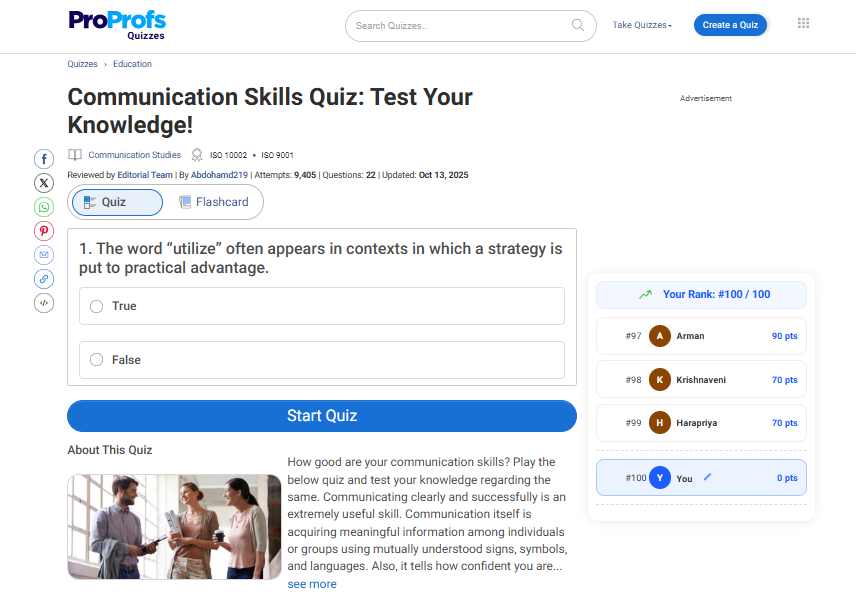
Communication assessments utilize a diverse range of question types to evaluate all aspects of communication skills. Here are some of the most effective formats:
- Multiple Choice
This format presents a question with several answer options, requiring the test-taker to select the correct one. It effectively assesses knowledge of communication principles, best practices, and etiquette. For example, a question might ask about the most appropriate way to address a customer complaint.
- True/False
This simple format presents a statement, and the test-taker must determine whether it’s accurate or not. This is useful for quickly assessing understanding of a wide range of communication concepts.
- Checkbox
Checkbox questions allow for multiple correct answers, enabling assessment of nuanced understanding and problem-solving skills. They are useful when evaluating situations where several solutions might be appropriate, such as identifying effective conflict resolution techniques.
- Fill-in-the-Blanks
This format requires test-takers to complete a sentence or paragraph with missing words, testing their recall and understanding of key terms and definitions. For example, a question might be,
“The three components of effective communication are _______, _______, and _______.”
- Essay
Essay questions require written responses, allowing for an evaluation of critical thinking, persuasive writing, and the ability to construct well-reasoned arguments. This format is ideal for assessing a test-taker’s ability to express themselves clearly and persuasively in writing.
- Matching
This format requires test-takers to connect corresponding elements, such as matching communication styles to their descriptions. It assesses knowledge of communication models and the ability to recognize relationships between concepts.
- Comprehension
Comprehension questions involve reading a passage and answering questions related to it. They test reading and analysis skills that are crucial for understanding workplace documents such as instructions, reports, and emails.
- Video/Audio Response
This format allows for the assessment of presentation skills, nonverbal communication, and clarity of expression through recorded or uploaded video/audio responses. It is useful for evaluating communication skills in dynamic settings, allowing observation of delivery, tone, and nonverbal cues.
What Does a Useful Communication Skills Assessment Actually Measure?
Not all communication works the same way, and I’ve learned that a gap in one area doesn’t mean a gap everywhere.
I’ve seen people who speak clearly and confidently in meetings but send emails that confuse everyone. I’ve also seen the opposite. Strong writers who struggle the moment a conversation gets difficult.
That’s why I don’t view communication as a single skill anymore.
A well-designed communication skills test covers five dimensions separately, because that’s where the useful data lives.
Verbal Communication: More Than Sounding Confident
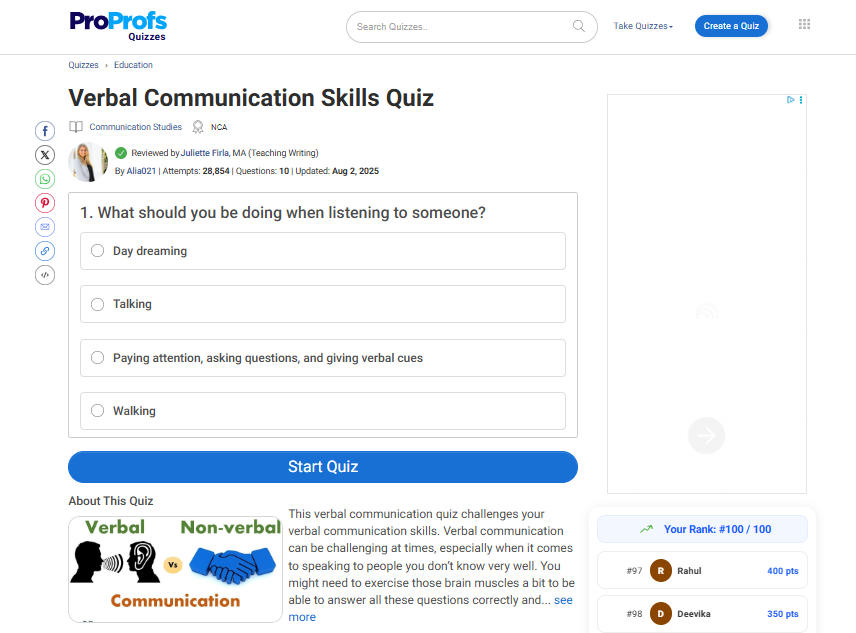
Clarity of speech, pace, tone management under pressure, and the ability to explain something complex to someone who doesn’t share your context. “Did they sound confident?” is not a measurement. Confidence is easy to fake. Clarity under pressure is not.
Written Communication: The One Everyone Underestimates
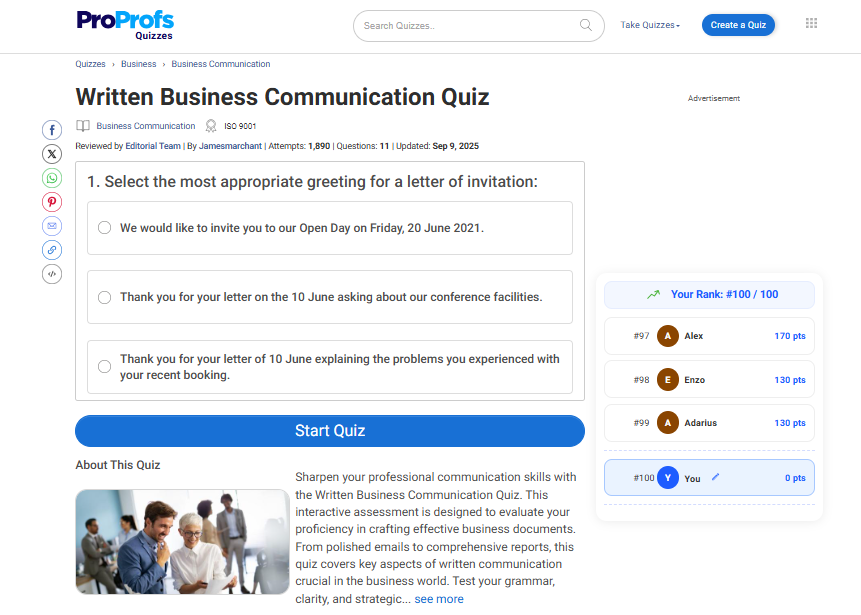
The ability to translate information into appropriately structuhttps://www.proprofs.com/quiz-school/story.php?title=verbal-communication-skills-quizred text for the intended audience. A technical support rep writing to an engineer needs a different register and density than one writing to a frustrated small business owner. Most written communication tests don’t distinguish between these. That’s a design failure.
Active Listening: The Dimension Most Assessments Skip Entirely
This one is measurable and almost universally ignored. Active listening means summarizing accurately before responding, asking clarifying questions instead of making assumptions, and recognizing when someone has said something different from what you expected. It correlates directly with customer satisfaction scores and conflict frequency. It almost never appears in a standard communication assessment tool.
Non-Verbal and Interpersonal Awareness
For roles involving video calls, client-facing meetings, or high-stakes negotiations, this matters. Body language, facial expression, and the ability to read when someone is confused, bored, or frustrated. Harder to assess at scale, but not impossible when you’re using video response formats.
Asynchronous and Digital Communication
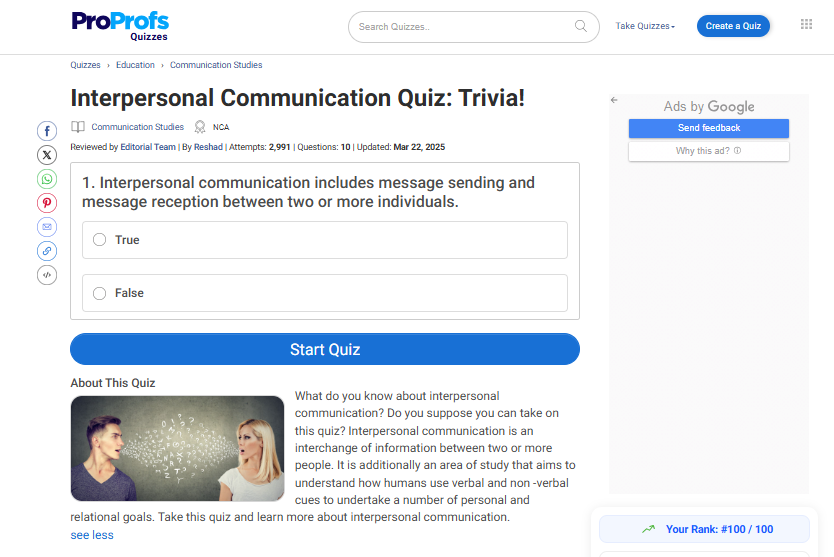
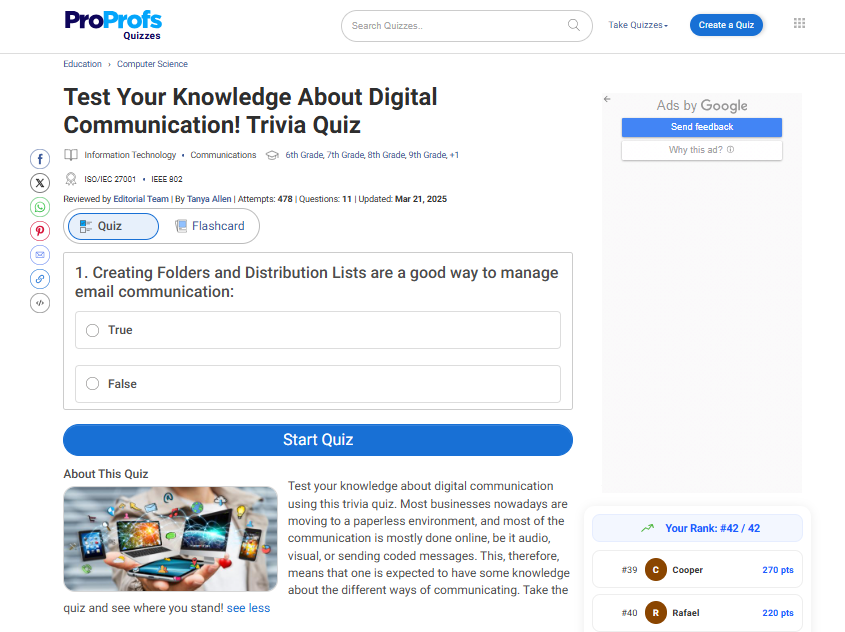
Slack messages. Teams threads. Email chains. Pre-recorded video updates. This is where the majority of professional communication actually happens, and it is almost entirely absent from traditional assessment design. Someone can interview beautifully and be genuinely difficult to work with asynchronously. Your assessment should catch that.
What Are the Benefits of Communication Tests?
Communication tests help you identify strong communicators and improve your existing team’s skills. They make hiring smarter and training more effective. Overall, they ensure your workforce communicates clearly and performs better.
Let’s have a look at these benefits:
Stronger Teamwork and Collaboration
Communication tests help identify people who can clearly share ideas and work well with others. This improves trust, teamwork, and engagement across teams. Over time, it also helps reduce employee turnover.
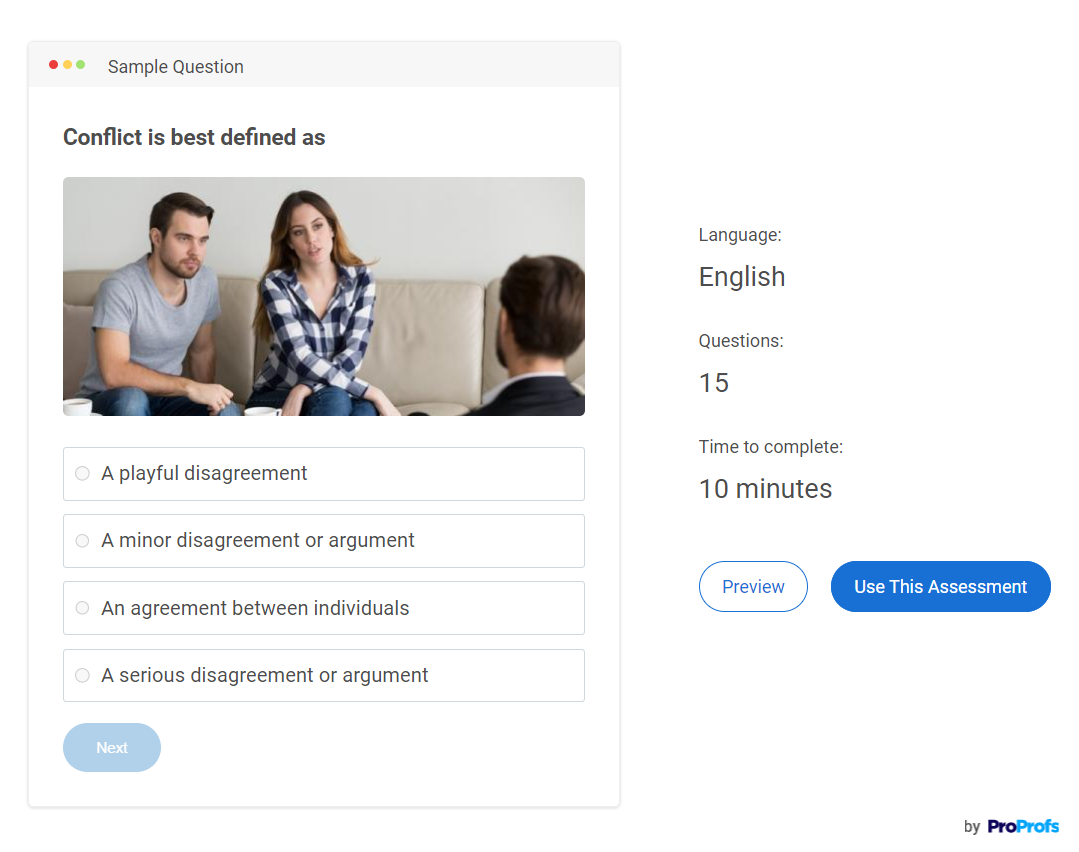
Better Conflict Resolution
Assessments show how well employees handle disagreements in real situations. Strong communicators resolve issues faster and more professionally. This leads to fewer conflicts and more productive discussions.
Higher Productivity
When employees understand instructions clearly, they work more efficiently. Communication tests reduce misunderstandings and improve clarity. This results in better meetings, accountability, and output.
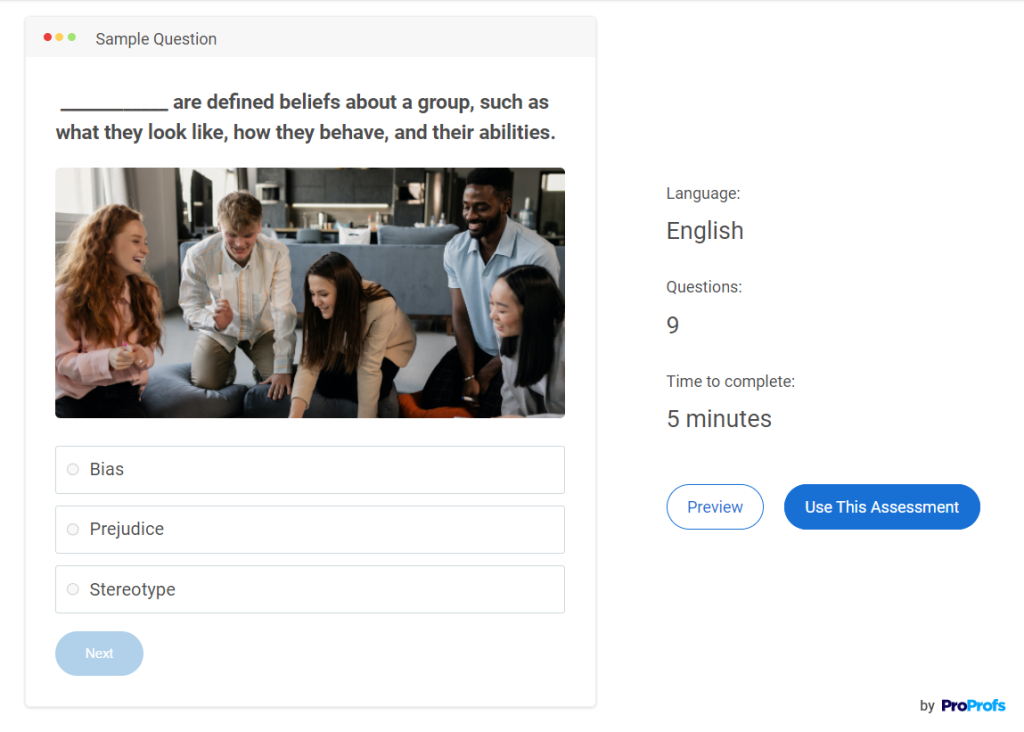
Positive Work Environment
Clear communication reduces confusion and workplace tension. It helps create a more inclusive and respectful culture. This is especially important in diverse teams.
Improved Customer Relationships
Communication skills directly affect customer experience. Tests ensure employees can listen, respond clearly, and build trust. This leads to better retention and stronger brand loyalty.
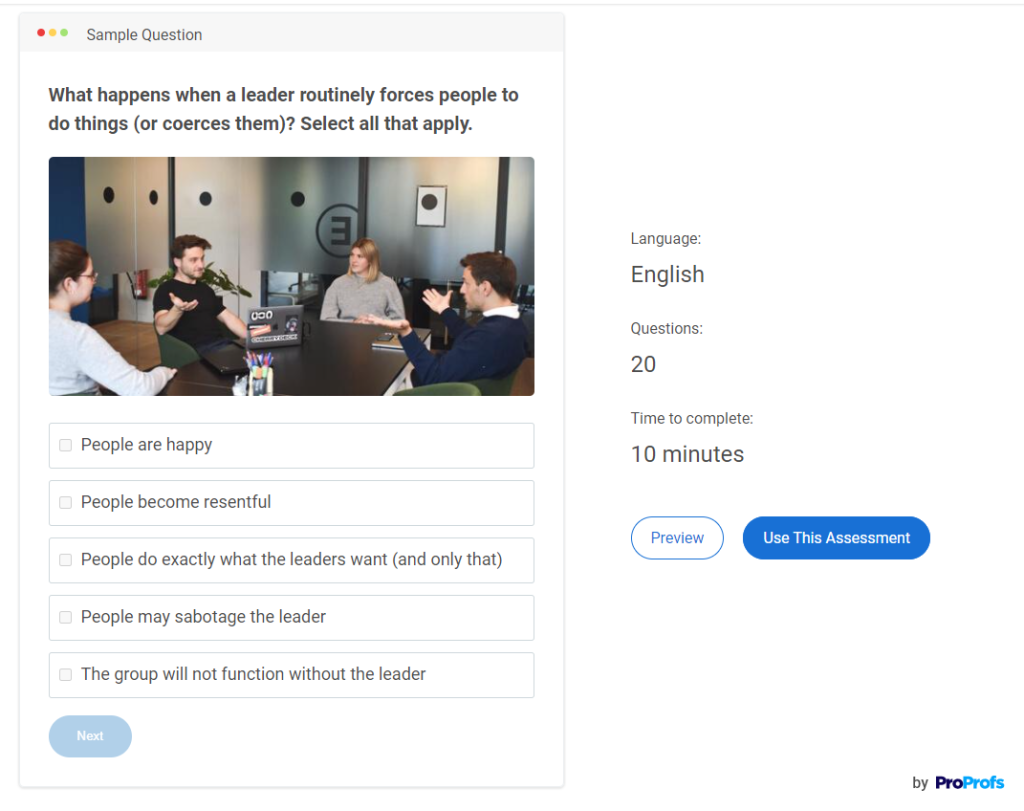
Better Leadership and Feedback Culture
Leaders rely on strong communication to guide and support their teams. Assessments help identify and improve these skills. This creates a more effective feedback culture.
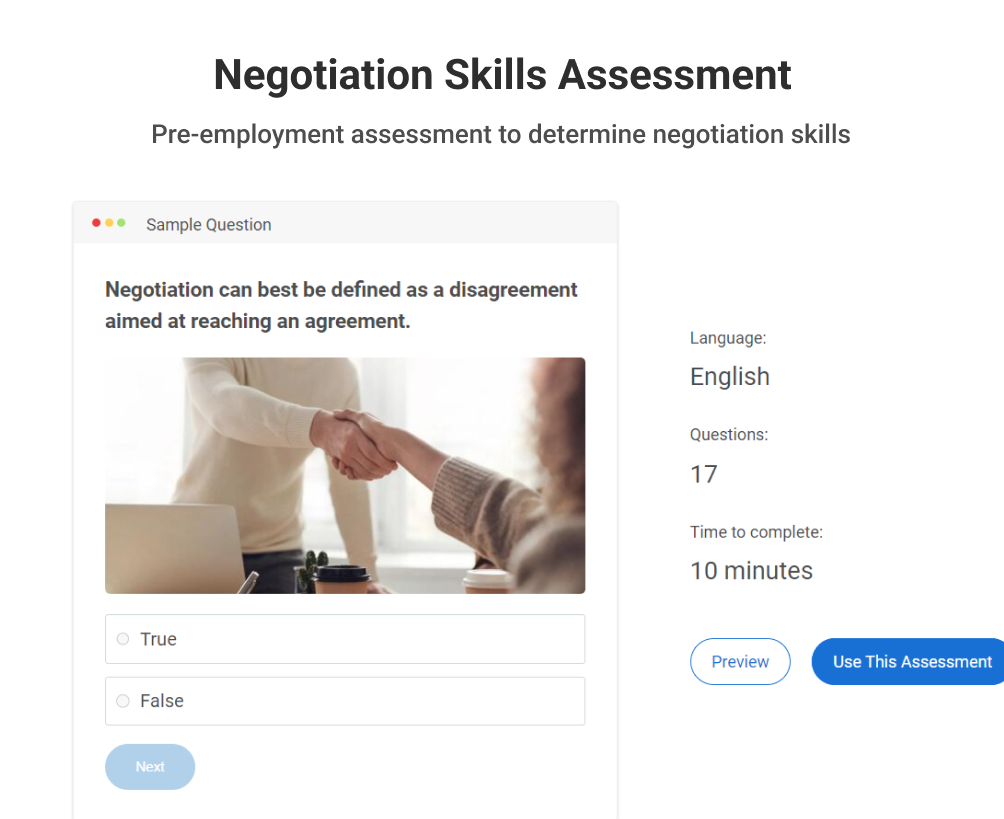
Stronger Persuasion and Negotiation Skills
Communication tests evaluate how well employees influence decisions. This improves sales, hiring, and internal discussions. It also leads to faster and better decision-making.
Improved Workplace Safety
Clear communication is critical for sharing safety instructions and procedures. Tests ensure employees understand and convey important information correctly. This helps prevent risks and accidents.
More Innovation
Open communication encourages employees to share ideas freely. This leads to better collaboration and creative problem-solving. Over time, it drives innovation.
More Effective Training Outcomes
Communication assessments help identify skill gaps before training begins. They also measure improvement after training. This makes learning more targeted and impactful.
How Do Situational Judgment Tests Measure Communication Skills Better Than Standard Tests?
Short answer: They put people in the situation instead of asking them to describe it.
A situational judgment test presents a realistic workplace scenario and asks the respondent to either choose a response or write one directly. I’ve found this format consistently produces more predictive data than abstract grammar tests or self-reported behavioral questions, because it measures judgment and application in context rather than knowledge of communication principles in the abstract.
Here’s a simple example of the difference:
| Standard Question | SJT Version |
| “How would you handle a difficult customer?” | “A customer emails saying they were promised a refund that hasn’t arrived in three weeks, and they’re threatening to post publicly. Write the response you’d send.” |
| “Describe your communication style.” | “A colleague has forwarded you an escalation thread where your team’s response is being blamed for a client delay. What do you do first?” |
| “Rate your written communication skills 1–5.” | “Rewrite this technical explanation for a customer who has no product knowledge.” |
The right column tells you what the left column only hints at. The output is specific, observable, and comparable across candidates without relying on self-assessment bias, which, for the record, is severe. Most people rate their own communication skills a 4 out of 5. That’s the statistical equivalent of everyone being an above-average driver.
For pre-employment communication testing and role-based training assessments, I’d build around SJTs. Generic communication skills quizzes are fine for a quick self-check. They’re not fine for hiring decisions or compliance documentation.
What Metrics Should I Actually Be Tracking in a Communication Assessment?
This is where most programs die. You run the assessment. You get scores. You file them somewhere. Nothing changes.
The problem isn’t the data. It’s that the data was never connected to anything actionable. Here’s what I track and why it matters:
- Dimension scores, not just totals: A candidate who scores 68% overall might be excellent at written clarity and weak at de-escalation scenarios. That’s a completely different hiring or training decision than someone who is uniformly average across everything. Total scores flatten the signal. Dimension-level scores surface it.
- Team patterns versus individual gaps: If 75% of my customer support team scores low on tone adaptability, that’s a systemic training need. If one person scores low, that’s individual coaching. These require different responses, and I can’t distinguish them without dimension-level data.
- Score correlation with performance outcomes: Customer satisfaction scores, escalation frequency, and error rates. If my communication assessment tool is well-designed, scores should predict these outcomes over time. If they don’t, the assessment is measuring the wrong things.
- Pre- and post-training measurement: A communication assessment before training and after training is the only way to demonstrate that the training actually did something. Without it, I’m spending budget on development I cannot prove is landing.
Why Does Communication Training Keep Failing Without Assessment?
Here’s the thing nobody says out loud in the L&D debrief: training without assessment is just hoping.
You run the communication workshop. People nod. Fill out the feedback form. Give it a 4.2 out of 5. Return to their desks and continue doing exactly what they were doing before.
I’ve seen this pattern repeat across teams of every size, and it almost always traces back to the same failures:
- No diagnosis before training: I don’t know where the actual gaps are, so everyone gets the same generic content. The person who struggles with written tone sits through the same session as the person who can’t de-escalate a live call. Neither gets what they actually need.
- No measurement after training: There’s no post-assessment to confirm whether anything changed. The training is declared successful because attendance was high and the feedback forms were positive.
- Scores without context: When a communication assessment test does exist, it returns a total score. “72%. Proficient.” That tells me nothing about whether the problem is written clarity, active listening, or situational judgment under pressure.
- No connection to real job tasks: The assessment tests grammar and vocabulary in a vacuum. It doesn’t test whether someone can write a denial email that doesn’t cost a customer, or explain a compliance issue to someone who doesn’t want to hear it.
- Training treated as a one-time event: Communication competency degrades, especially in high-pressure roles. Without reassessment tied to a cycle, the program runs once and quietly stops mattering.
- Results that go nowhere: Managers receive a summary score, file it, and move on. Nobody uses the data to assign targeted development or track whether performance outcomes actually improved.
The fix isn’t a better workshop. It’s building the feedback loop that the workshop was always missing: assess first, train to the gap, measure again.
Can Communication Assessments Actually Improve Customer Experience?
Short answer: yes. But only under one condition.
The assessment must be tied to role-specific communication behaviors, and the results must connect to training. Without both, I have a score sitting in a spreadsheet doing nothing.
Customer-facing communication failures follow patterns. They’re not random. I see them show up as:
- Unclear status updates: Agents who write vague responses that trigger three follow-up calls instead of closing the loop once.
- Tone matching: Representatives who escalate in register when a customer escalates in frustration, instead of absorbing it and de-escalating.
- Wrong question answered: Support staff who answer the question they expected rather than the one that was actually asked.
These are specific, observable behaviors. A well-designed communication assessment test identifies them at the individual and team level. Targeted training addresses them. A post-training reassessment confirms whether they’ve improved.
The organizations I’ve seen close this loop see real movement in customer satisfaction scores, first-contact resolution rates, and escalation frequency. The ones that don’t are the ones running annual workshops, collecting 4.2-out-of-5 feedback forms, and wondering why the same complaints keep appearing in client reviews.
Communication Assessment in Regulated Industries: When Getting It Wrong Has Real Consequences
In most industries, communication failures are expensive. In some, it’s dangerous.
In healthcare, financial services, and aviation, “we ran a general communication workshop” is not an adequate response to a preventable incident caused by a miscommunication. Here’s what regulated industries need that standard programs miss:
- Validated frameworks, not gut-checks: In clinical settings, the Kalamazoo Consensus Statement defines evidence-based communication competencies for healthcare providers, covering information gathering, relationship building, and shared decision-making. That’s a rubric assessors can apply consistently across evaluators.
- Policy and compliance communication as a separate dimension: Whether a client understood the terms they agreed to, whether an employee raised a compliance concern through the right channel in the right way: these aren’t soft-skill questions. They’re legal ones.
- Documentation, not just scores: Who was assessed, when, what they scored, what training followed, when they were reassessed. In a regulated environment, this audit trail is the difference between a defensible compliance program and an exposure.
- Recertification cycles built into the platform: Communication competency in a regulated role isn’t a box I check once. It needs refreshing after incidents, role expansions, or changes in industry standards. Managing this manually is how it quietly stops happening.
Scaling Communication Assessments Across Teams and Roles Without It Becoming a Second Job
The practical problem most L&D managers face is that a well-designed assessment program for one role is doable. Rolling it out across eight roles, three departments, and 400 people while also doing your actual job is a problem entirely different.
A few things make this manageable:
Centralized question banks with role tagging mean you build once and assemble many times. You’re not recreating assessments from scratch for each team. You’re drawing from a shared, validated library and configuring the output.
Automated assignment and scheduling tied to onboarding workflows, role changes, or certification cycles removes the manual tracking. The assessment goes out when it should, to the person it should go to, without someone manually managing a spreadsheet.
Role-based reporting lets a team lead see their team’s results without seeing everyone else’s. A manager in customer support doesn’t need (or want) to dig through data for the engineering team to find what’s relevant to them.
Automated recertification triggers are the part that most organizations implement last, and should implement first. Communication competency in a regulated industry or customer-facing role is not a check-you-did-once. It needs to be refreshed, especially after incidents, role expansions, or changes in industry standards. Building the recertification cycle into the platform rather than managing it manually is what distinguishes a communication assessment program from a communication assessment event.
The Question Under the Question
Here’s what I’ve noticed after watching organizations run communication skills assessments for a while:
The people who get the most out of them are not the ones who designed the best assessment. They’re the ones who were honest about what they were actually trying to learn.
Most assessments start as screening tools and end there. The insight that unlocks the real value is simpler: your employees are probably communicating in ways that cost you customers, create compliance exposure, and generate internal friction that never shows up in a dashboard. You can see it in the patterns. You just don’t have the structured data to confirm it or act on it precisely.
A communication skills assessment, done right, gives you that data. Not as a number to file. As a diagnostic that tells you specifically where the gap is, for which people, in which situations, and how to close it.
That’s the job. Not proving that communication matters (it does, everyone agrees, and it keeps not getting fixed). Actually creating the feedback loop that makes the training land.
Frequently Asked Questions

What are the best methods to evaluate communication during hiring?
Situational judgment tests and work sample tasks outperform traditional interviews for communication screening. They test what someone does in context, not what they say they'd do, which makes them more predictive of actual job performance and less vulnerable to interview coaching.
Can communication assessments improve customer service performance?
Yes, when results are connected to targeted training. Assessments identify specific gaps in tone, clarity, and de-escalation behavior that map directly to customer satisfaction outcomes. Without a training loop attached, the assessment is diagnostic without being corrective.
How do situational judgment tests measure communication skills?
SJTs present realistic workplace scenarios and ask respondents to choose or write a response. They measure judgment, tone, and adaptability in context, which correlates more strongly with job performance than abstract grammar or vocabulary tests.
What metrics should I track in communication assessments?
Track results by dimension (written, verbal, listening, situational) rather than total score only. Over time, correlate assessment scores with customer satisfaction data, escalation rates, and error frequency to validate whether your assessment is measuring the right things.
How do I design communication assessments for different roles?
Start by listing the three to five highest-stakes communication moments in each specific role. Build scenarios around those moments. If someone in a different role looks at your assessment and recognizes themselves in it, the design is too generic.

Let ProProfs AI Build a Quiz

 We'd love your feedback!
What did you like & how can we make it even better?
 Thanks for your feedback!
 Ask Your Question
Have a question? Get expert help to make your decision easier.