

Resumes tell you where someone worked. Interviews tell you how well they rehearsed.
Neither tells you how they think when the answer isn’t obvious, and no one’s watching.
I started using a cognitive test online after realizing my shortlisting process was essentially a confidence contest. The most articulate candidate kept winning. The best thinker kept losing. And the gap between those two things was showing up at the 90-day mark, quietly and expensively.
A cognitive assessment isn’t a replacement for interviews or judgment. It’s the data layer underneath them: a 20-minute window into reasoning, problem-solving, and learning capacity that no resume section and no interview question reliably surfaces.
That’s the gap it fills. Nothing more, nothing less.
This is for you if you’re:
- A recruiter or hiring manager whose shortlisting still runs mostly on gut
- An HR professional who needs something more defensible than “they seemed sharp”
- A team lead tired of high ramp-time hires who need hand-holding on problems that should be self-directed
- Anyone screening at volume who needs a faster, fairer first filter
- Someone who suspects confident talkers keep beating actual thinkers in the process
What Is a Cognitive Test, Actually?
That distinction matters more than it sounds.
A skills test tells you if someone can write a SQL query today. A cognitive assessment tells you if they’ll figure out the problem the SQL doesn’t cover tomorrow. One measures what’s already there. The other measures what can be built on.
Most cognitive exams run 15 to 45 minutes, cover two to four ability domains, and produce scores you can actually compare across candidates. That comparability is most of the value.
What I Actually Wanted to Know That Resumes Couldn’t Tell Me
Here’s the honest thing I had to admit to myself: I wasn’t bad at reading people. I was asking the wrong questions.
Interviews, even good ones, ask: how does this person present themselves under pressure? That’s useful. It’s just not the same as: can this person think?
So I started mapping the real failures. The eleven. And a pattern showed up fast.
What I actually needed to know before making an offer:
Can they solve problems they’ve never seen before? Not “have they solved problems.” Not “can they describe their problem-solving approach in a confident tone of voice.” Actually work through something novel with incomplete information and get somewhere useful.
Can they learn quickly? Roles change. Processes update. The candidate who absorbs new rules and applies them correctly without being walked through them three times is worth more than twice the experience if the learning curve is shallow.
Can they handle complexity without freezing? Multiple variables, no clean answer, mild time pressure. This separates genuine analytical thinkers from people who are good at explaining what they would do in theory.
Do they actually pay attention to detail? (And I mean actually, not “yes, absolutely, I’m very detail-oriented” in an interview.) The performance on a structured task where errors matter is a completely different data point than the self-reported version.
Can they communicate clearly under pressure? Verbal reasoning, specifically. Not vocabulary. Whether someone can read something, extract what it actually says, and reason from it without being misled by what they expected it to say.
None of these show up reliably on a resume. Most survive an interview intact.
A cognitive ability assessment is the only tool I’ve found that directly gets at them.
Here’s Where It Actually Changed My Hiring
I don’t run a cognitive test on every role. Context matters. But here’s where the signal has been sharpest.
High-Volume Hiring
When I’m screening 200 applicants for 12 positions, I physically cannot do meaningful conversations with all of them before thinning the pile. A 20-minute cognitive function assessment before the phone screen cuts the field on something predictive, not just keyword matching. Faster. And it catches candidates who wouldn’t have survived the resume filter but turn out to be sharp thinkers.
Remote Hiring
Video interviews are subtly worse at detecting low-fit candidates than in-person ones. The cues are fewer. The setting is controlled. A prepared candidate can manage the format well regardless of what’s actually happening cognitively. Running a cognitive performance test before the interview surfaces the gap between how someone presents and how they actually think.
Watch: How to Create a Video Interview Question
Technical Roles
Engineers. Analysts. Operations leads. Roles where performance is almost entirely determined by reasoning capacity, not relationship management. Logical reasoning and numerical reasoning scores correlate better with 90-day performance here than anything I’ve asked in an interview. It’s not close.
Customer-Facing Roles
This one surprised me. Verbal reasoning turned out to be one of my strongest predictors for customer success and account management performance. The candidates who read client communications accurately, caught the actual question being asked, and responded to that rather than the one they assumed: they showed it in the cognitive exam before I saw it in their work.
Leadership Hiring
Learning agility and logical reasoning together. What I’m trying to assess: can this person take in a new context quickly, reason from it well, and make a decision without needing the full picture? Senior leaders rarely have the full picture. The ability to think well with incomplete information is the most important part of the job.
Entry-Level Screening
Thin resumes are common at the entry level. The core question isn’t where someone studied or what their GPA was. It’s whether they can catch errors, follow multi-step instructions, and stay accurate under mild time pressure. A cognitive test helps measure those abilities, and it’s often a better predictor of first-year performance than GPA. It’s not even a debate.
The Data That Made Me Stop Questioning This
Before I committed to building cognitive testing into my process, I needed to know it wasn’t just a trendy filter.
Frank Schmidt and John Hunter published a meta-analysis in 1998 in Psychological Bulletin that reviewed 85 years of selection research across thousands of studies. They wanted to know: what actually predicts job performance?
| Hiring Method | Predictive Validity |
| Work sample tests | 0.54 |
| General cognitive ability test | 0.51 |
| Structured interviews | 0.51 |
| Job knowledge tests | 0.48 |
| Unstructured interviews | 0.38 |
| Reference checks | 0.26 |
| Years of experience | 0.18 |
Source: Schmidt & Hunter, Psychological Bulletin, 1998.
Unstructured interviews, which is what most hiring still runs on, scored lower than reference checks.
Years of experience, the thing most job descriptions are gatekept behind, predicted almost nothing.
I use this table when I need to make the case internally. It tends to end the “assessments feel impersonal” conversation faster than anything I could say from experience.
The practical takeaway: cognitive assessments work best combined with structured interviews and a work sample. Together, those three form the strongest predictive combination the research has found. Alone, any one of them leaves gaps.
How I Actually Built a Cognitive Assessment Process
The tool is the easy part. The process around it is what determines whether you get a signal or expensive noise.
Step 1: Define the Cognitive Demands of the Role First
Before I open any platform, I write down three to five specific cognitive demands the role actually makes. Not job description language. The real stuff.
“Has to catch pricing errors before invoices go out.”
“Has to absorb new product updates and explain them to clients within 48 hours.”
“Has to read compliance documentation and surface the relevant clause without being told where to look.”
Those demands map directly to the domains I’ll test. Without this step, I’m running a generic cognitive function check and hoping it’s relevant.
Step 2: Match Domains to the Role, Not to a Template
Two or three domains. Not all five. Over-testing creates fatigue and candidate resentment, and it signals that you haven’t thought carefully about what the job actually requires.
Step 3: Keep It Short
Twenty to thirty minutes. That’s the ceiling for pre-screening. Fatigue affects scores in ways that have nothing to do with ability, and a candidate who’s applied to 30 jobs this month is not in the same testing condition as someone fresh and focused. Shorter tests with well-designed questions give more reliable data than longer ones padded with filler.
When I started building these assessments in ProProfs Quiz Maker, the AI quiz generator helped speed this up a lot. I could generate a working cognitive assessment from a role description in under a minute and then trim it down to the exact domains I wanted instead of building everything manually. Try the AI quiz generator yourself:

Let ProProfs AI Build a Quiz
Step 4: Add Anti-Cheating Settings
Question randomization from a bank. Per-question time limits. Browser monitoring for high-stakes roles. The goal isn’t to be punitive. It’s to make sure the score reflects the candidate’s thinking, not their Google search speed.
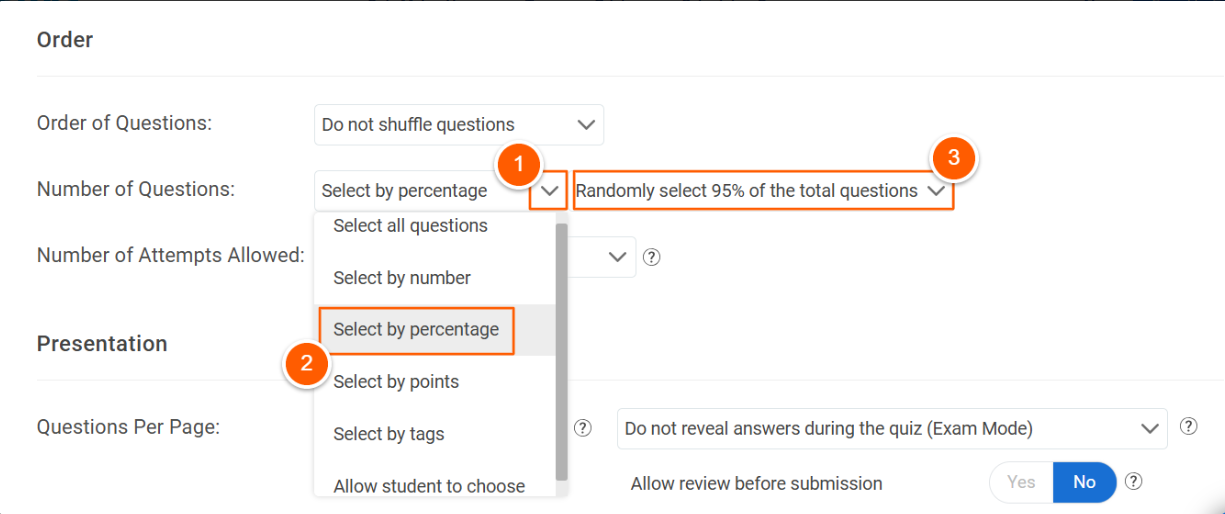
This is where the question pools and randomization settings in ProProfs were most helpful. Different candidates saw different question sequences, which reduced answer sharing without making the experience feel restrictive. For remote hiring, I also used browser monitoring and proctoring selectively for roles where accuracy mattered more.
Step 5: Combine With Interviews, Not Instead of Them
The cognitive assessment tells me where to probe harder. A low verbal reasoning score doesn’t disqualify someone. It tells me to test comprehension more directly in the interview. A high logical reasoning score doesn’t make the hire. It tells me the raw capacity is there, and now I need judgment, collaboration, and domain knowledge.
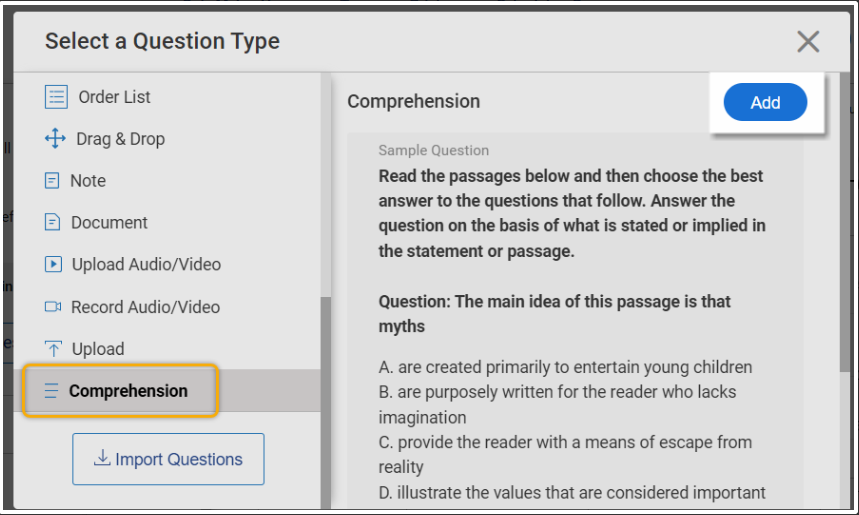
The reporting side made this easier, too. Instead of looking at one overall score, I could see breakdowns by domain and use that to shape the interview conversation more intelligently.
Step 6: Review the Candidate Experience
I test every assessment from the candidate’s side before it goes live. Timing, instructions, question clarity, and whether the experience signals a thoughtful organization. Candidates talk. A confusing, poorly timed free cognitive test leaves an impression entirely unrelated to the score.
One thing I underestimated was how much the candidate experience affects completion rates. Removing account creation friction and keeping the assessment mobile-friendly reduced drop-offs noticeably during remote hiring.
The Types of Cognitive Tests I Actually Use
Let me break these down the way I actually think about them. Not textbook definitions. When I use it, what role does it fit, and what failure mode does it catch?
Logical Reasoning
When I use it: Any role where the work is non-routine, and problems don’t arrive with instructions.
What role it fits: Analysts, engineers, operations leads, product managers.
What failure mode it catches: The “can’t think independently” hire. The one who performs perfectly on scripted tasks and freezes the moment the situation falls outside their experience.
Numerical Reasoning
When I use it: Any role where someone will read data and make decisions from it.
What role it fits: Finance, sales operations, data-adjacent roles, and anyone interpreting reports rather than just generating them.
What failure mode it catches: The confident misreader. The person who draws the wrong conclusion from a dataset and doesn’t know they’ve done it. I’ve watched this destroy forecasts and client relationships.
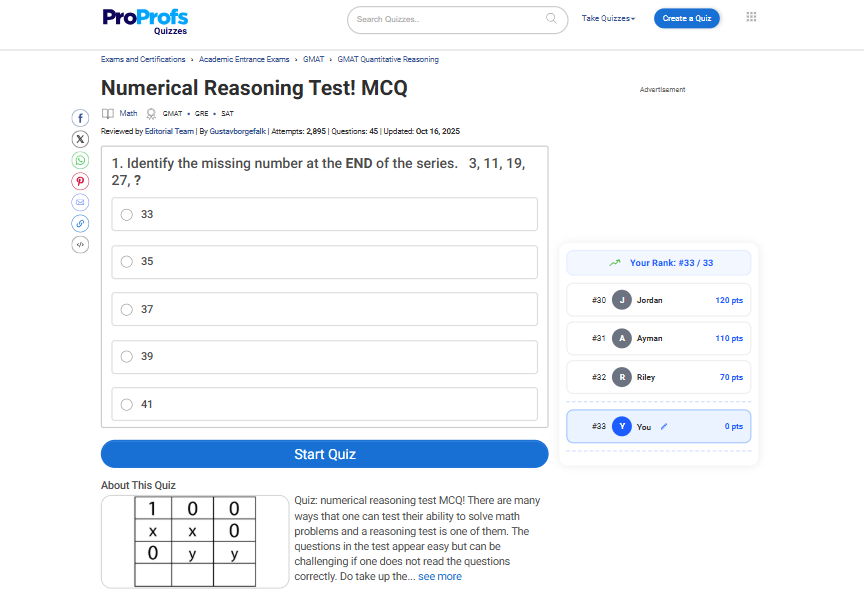
Verbal Reasoning
When I use it: Roles involving contracts, compliance, client communication, anything where misreading has downstream consequences.
What role it fits: Legal support, customer success, HR, operations with policy exposure.
What failure mode it catches: The candidate who hears what they expected rather than what was said. In writing, it shows up as responding to the wrong question. In client communication, it shows up as escalations.
Attention to Detail
When I use it: Entry-level roles in data, finance, legal support, and operational roles where error rates matter.
What role it fits: Data entry, invoicing, compliance tracking, and administrative operations.
What failure mode it catches: The polished candidate who interviews attentively and misses 40% of errors in a structured task. This specific gap shows up in cognitive test examples more than almost anything else I’ve run. The interview says one thing. The assessment says something more honest.
Learning Agility
When I use it: Fast-changing environments, leadership positions, anything where the job will look different in 12 months.
What role it fits: Operations, product, account management, and team leads.
What failure mode it catches: The experienced candidate who is experienced in a context that no longer exists. Learning agility determines whether past performance transfers to a different environment, or just looks like it will.
Mistakes I Won’t Make Again
After running cognitive assessments across different hiring cycles, I realized the biggest mistakes usually aren’t technical. They’re process mistakes. Most of them came from treating the assessment as more objective and complete than it actually is.
1. Over-Relying on Scores
A score is a data point. Not a verdict. I’ve hired people who scored in the top quartile and struggled. I’ve passed on people who scored lower and would have been excellent. The assessment narrows the pile. It does not replace judgment.
2. Ignoring Soft Skills
Cognitive testing measures processing capacity. It does not measure communication style, emotional regulation, or whether someone will be a nightmare to manage. A high-scoring candidate who can’t collaborate is still a bad hire.
3. Making Tests Too Long
I ran 45-minute assessments for about six months because I thought more data meant better decisions. It meant more dropout, more resentment, and scores inflated by test-taking energy that doesn’t reflect actual work conditions.
4. Using Generic Tests for Every Role
Same domains, same thresholds, every opening. The cognitive ability assessment that predicted my best analyst hire told me almost nothing about my best client success hire, because the roles had completely different cognitive profiles.
5. Not Checking for Bias
Heavily timed assessments can disadvantage candidates with ADHD, anxiety, or processing-speed differences in ways that do not predict job performance. I calibrate time limits to match the actual pace of the role. If the job doesn’t require split-second reasoning under pressure, the assessment shouldn’t either.
6. Rejecting Candidates Too Early
A score below the threshold in one domain is a flag, not a door. Sometimes it reflects a testing condition I can’t account for. The conversation that follows is often more informative than the number.
How I Pitch the Test to Candidates So They Don’t Ghost Me
Here’s the part nobody writes about. And it’s why a lot of online cognitive test rollouts quietly fail.
The tool is fine. The communication around it isn’t.
When a candidate gets a link to a timed assessment with no context, three things happen in sequence: Is this legitimate? Why do they need this if I already sent a resume? Should I bother if I don’t know where I stand?
Top candidates with multiple offers make a fast calculation about whether the process is worth their time. If the ask feels arbitrary or unexplained, they don’t always ghost dramatically. They just deprioritize you. The response time stretches. The company’s offer with a cleaner process lands first.
Here’s the message I send with every assessment link. Short by design:
“Before we move to interviews, I’d like to share a short online assessment. It takes about 20 minutes and covers reasoning and problem-solving. There are no trick questions, and it’s not a pass/fail filter on its own. It helps me understand how you think, so I can make the interview more relevant to you and less generic. The link is [X], and it’s open until [date].”
Four things that the message does:
- Sets the time expectation: Candidates who know it’s 20 minutes complete it. Candidates who open a link without knowing what they’re walking into abandon it.
- Names what it measures: “Reasoning and problem-solving” is honest and non-threatening. It signals you’re testing something real.
- Removes the pass/fail anxiety: This doesn’t lower your standards. It lowers the stress response, which degrades performance and scares off capable candidates who test anxiously.
- Reframes it as being in their interest: “So I can make the interview more relevant to you” lands differently than “so we can evaluate you.” One sounds like a service. The other sounds like a gauntlet.
When a Strong Candidate Pushes Back
Occasionally, someone will say directly, “Why do I need to take a test? I have 10 years of experience.”
My answer: “Because experience tells me what you’ve done, not how you think through problems you haven’t encountered yet. This role requires [specific thing]. The assessment is the fastest way I have to understand whether you’ll hit the ground running. It’s 20 minutes. If you’d rather skip it, I understand, but it means moving forward without a data point I use for every candidate.”
Most people respect directness more than they resent the ask.
(The ones who push back hardest on a transparent, professionally framed cognitive performance test are occasionally telling you something worth knowing.)
The Compliance Question: What to Tell HR or Leadership
The concern you’ll usually hear is adverse impact: Does this screen out protected groups disproportionately?
The honest answer is yes, any selection method can create disparate impact if it’s implemented poorly. That includes resumes and unstructured interviews.
What matters is how the cognitive assessment is designed and applied.
Here’s what makes the process more defensible:
- Use validated cognitive testing methods
- Apply the same thresholds to all candidates for the same role
- Document why each domain is job-related
- Use the cognitive assessment as one part of the hiring process, not the only filter
- Review outcomes regularly for bias patterns
This is also where the EEOC’s Uniform Guidelines on Employee Selection Procedures matter. If a hiring screen creates an adverse impact, employers need to show that the assessment is related to actual job performance.
A role-specific cognitive ability assessment can support that. A generic cognitive test used inconsistently usually cannot.
The argument that has worked best for me internally is simple: we’re already making hiring decisions based on something.
Resumes and unstructured interviews have bias too. The difference is that cognitive testing can be structured, documented, and consistently applied. That makes it easier to defend, not harder.
What Features I Actually Needed in an Assessment Tool
I’ve tried several platforms. Here’s what I genuinely couldn’t work without.
- Fast setup: If building a role-specific cognitive exam takes more than 30 minutes, the tool is getting in the way. I need to go from role criteria to live assessment in under an hour.
- Question randomization: Fixed-question tests become liabilities the moment candidates share answers. Pooling from a bank is the baseline, not a premium feature.
- Category-level reporting: A composite score doesn’t tell me anything actionable. I need domain-level breakdowns so I know where to probe in the interview.
- Easy candidate sharing: No account creation required. A link, a deadline, a clean experience. Friction in the flow means dropout, and dropout skews my pool toward people with more time and fewer competing offers.
- Role-specific templates: Starting from a blank build every time is inefficient. Templates I can customize let me move fast without sacrificing precision.
- Proctoring options: Webcam monitoring, tab-switching detection, and IP tracking for high-stakes roles. These aren’t about distrust. They’re about making sure the score means what I think it means.
- Bulk hiring support: When I’m running assessments across 15 open roles simultaneously, I need reporting that aggregates without requiring me to pull each one manually.
The Hire You’re Actually Trying to Make
Faster shortlisting is real. But what I care about more is fewer surprises after the hire.
The analyst who catches the error before it becomes a client issue. The team lead who can figure things out without constant escalation. The candidate who performs well beyond the interview script.
A cognitive test doesn’t guarantee that. Nothing does.
What cognitive testing does is narrow the gap between how someone presents and how they actually perform. A good cognitive assessment gives you a more measurable way to evaluate thinking under realistic conditions.
That matters because bad hires are expensive. Research from the Society for Human Resource Management (SHRM) estimates that replacing an employee can cost between 6 and 9 months of their salary, depending on the role and seniority.
The 25 minutes a candidate spends on a cognitive test online is not the bottleneck in your hiring process.
The hires you’re making without one might be.
Frequently Asked Questions
What is a cognitive test online?
A cognitive test online is a structured digital assessment measuring reasoning, problem-solving, and information-processing ability. It's used in hiring to evaluate how a candidate thinks under pressure, not just what they've done before. Most run 15 to 30 minutes with domain-level scoring.
What does a cognitive assessment measure?
A cognitive assessment measures specific mental abilities: logical reasoning, numerical reasoning, verbal comprehension, attention to detail, and learning agility. Each domain predicts performance in different role types, which is why matching the assessment to the role matters before you build it.
What is a cognitive test example in hiring?
A typical cognitive test example is a 20-minute assessment covering logical reasoning (pattern identification), numerical reasoning (data interpretation), and attention to detail (error detection). Scores are compared across candidates shortlisting for the same role with pre-set benchmarks.
Is a free cognitive test reliable for hiring decisions?
Free cognitive test options vary widely. Reliable ones are validated against a norming population, transparent about what they measure, and produce domain-level breakdowns rather than a single composite score. The validation methodology matters more than the price.
How do I set a passing score for a cognitive ability assessment?
Set the threshold before you see candidate results, based on the actual cognitive demands of the role. A passing score for a data analyst role will look different from one for a customer success role. Benchmarking after you've seen results introduces confirmation bias.
Can cognitive tests be unfair to some candidates?
Yes, particularly when heavily timed. Research consistently shows strict time limits can disadvantage candidates with ADHD, anxiety, or processing-speed differences, without that disadvantaging predicting actual job performance. Calibrate time limits to match the real pace of the job.
How is a cognitive assessment different from a skills test?
A skills test measures whether a candidate can already perform a specific task. A cognitive ability assessment measures their capacity to figure out problems they haven't encountered yet. Both are useful; they answer different questions about different failure modes.
What is learning agility in a cognitive performance test?
Learning agility measures how quickly someone absorbs new rules and applies them correctly under mild time pressure. A cognitive performance test, it predicts performance in roles where the environment changes rapidly or where adapting to new information is central to the work.
Let ProProfs AI Build a Quiz

 We'd love your feedback!
What did you like & how can we make it even better?
 Thanks for your feedback!
 Ask Your Question
Have a question? Get expert help to make your decision easier.