Interactive Invertebrates Quiz on Classification

Reviewed by Editorial Team
The ProProfs editorial team is comprised of experienced subject matter experts. They've collectively created over 10,000 quizzes and lessons, serving over 100 million users. Our team includes in-house content moderators and subject matter experts, as well as a global network of rigorously trained contributors. All adhere to our comprehensive editorial guidelines, ensuring the delivery of high-quality content.
Learn about Our Editorial Process
| By Thames
T
Thames
Community Contributor
Quizzes Created: 7682 | Total Attempts: 9,547,133
| Questions: 16 | Updated: Nov 27, 2025
Please wait...
Question 1 / 16
0 %
0/100
Score 0/100
1. What are the characteristics of Phylum Annelida?

Explanation

Annelids are defined by true segmentation, where internal and external structures repeat across segments. They possess a complete digestive tract, a closed circulatory system, and nephridia for excretion. Their coelom is fully developed, allowing for hydrostatic movement. These features distinguish them from simpler worm groups lacking segmentation or complete organ systems.

Submit
Please wait...
About This Quiz
Interactive Invertebrates Quiz On Classification - Quiz

Understanding animal diversity begins with mastering invertebrate groups, and this invertebrates quiz helps learners explore the characteristics, adaptations, and taxonomic features of annelids, leeches, polychaetes, tardigrades, and other major invertebrate phyla.

This quiz on invertebrates highlights differences among groups like Hirudinea, Polychaeta, Oligochaeta, Ectoprocta, and Tardigrada. The quiz includes classification-based... see morequestions, anatomy identification, and ecological roles to strengthen foundational biological knowledge. see less

2.
You may optionally provide this to label your report, leaderboard, or certificate.
2. What is the correct identification for Phylum Annelida, Class Polychaeta, Genus Arenicola?

Explanation

Arenicola, known commonly as the Lugworm, belongs to Polychaeta and is adapted for burrowing in marine sediments. Its body shape, parapodia, and feeding strategy match Polychaete characteristics. Other options represent unrelated taxa with different morphologies and ecological niches.

Submit
3. What are the characteristics of Class Polychaeta?

Explanation

Polychaetes are marine annelids with numerous setae and parapodia used for movement and respiration. Their body segments show strong differentiation, and they possess sensory structures such as eyes and antennae. These features distinguish them from other annelid classes.

Submit
4. What is the correct identification of the organism known as the Clamworm?

Explanation

Nereis, the clamworm, is a well-known polychaete characterized by parapodia, setae, and active predatory behavior. The other taxa belong to entirely different phyla, confirming Nereis as the correct identification.

Submit
5. What are the characteristics of Class Hirudinea?

Explanation

Hirudinea includes leeches, which lack setae and parapodia. Their bodies have grooves giving the appearance of extra segments, and they possess suckers for attachment. Their midgut ceca allow long intervals between feedings.

Submit
6. What is the identification of the predatory leech that eats other leeches and snails?

Explanation

Haemopis is a predatory genus of leeches that feeds on worms, snails, and other leeches. Its anatomical structure and feeding behavior classify it distinctly within Hirudinea.

Submit
7. What is the identification of the Medical leech?

Explanation

Macrobdella decora is the Medical leech in North America. It feeds primarily on amphibian blood and shows classic leech anatomical traits including suckers and segmentation.

Submit
8. Which organism is found in nasal cavities of ducks and coots?

Explanation

Theromyzon species reside in the nasal cavities of water birds. Their flattened bodies and feeding adaptations make them specialized parasites within Hirudinea.

Submit
9. Which resource is best for identifying earthworm anatomy visually?

Explanation

Earthworm anatomy requires visual recognition of structures like the clitellum, prostomium, and internal organs. An image provides a precise spatial representation, unlike text or video.

Submit
10. What is the correct identification of Water Bears?

Explanation

Tardigrades, or water bears, are micro-invertebrates known for extreme survival abilities. Their ability to withstand radiation, desiccation, and space vacuum sets them apart from the other groups.

Submit
11. What is Phylum Ectoprocta known for?

Explanation

Ectoprocts, or Bryozoans, have an anus located outside the lophophore ring. Their colonial aquatic lifestyle differentiates them from arthropods, mollusks, and chordates.

Submit
12. Which feature distinguishes oligochaetes from polychaetes?

Explanation

Oligochaetes possess few setae per segment, unlike polychaetes which have many setae and parapodia. This distinction is central to annelid classification.

Submit
13. What is a defining feature of leeches?

Explanation

Leeches show false segmentation due to transverse grooves. This creates an appearance of more segments than are internally present.

Submit
14. What is the main role of parapodia in polychaetes?

Explanation

Parapodia assist polychaetes in locomotion and gas exchange, utilizing increased surface area.

Submit
15. Which group includes mostly marine annelids with well-developed heads?

Explanation

Polychaetes are predominantly marine with well-developed heads, unlike other annelid groups with reduced cephalization.

Submit
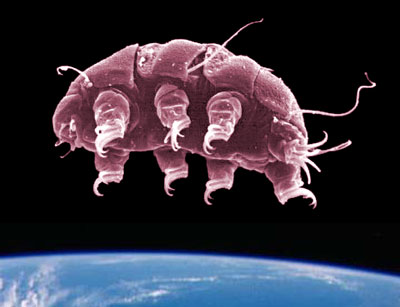
16. What is the identification of this organism?

Explanation

The correct identification of the organism described is Phylum: Tardigrada, Common name: Water bears. They are known for their ability to survive extreme conditions, such as the vacuum of space, for up to 10 days while in a dormant state.

Submit
×
Saved
Thank you for your feedback!
View My Results
Cancel
  • All
    All (16)
  • Unanswered
    Unanswered ()
  • Answered
    Answered ()
What are the characteristics of Phylum Annelida?
What is the correct identification for Phylum Annelida, Class...
What are the characteristics of Class Polychaeta?
What is the correct identification of the organism known as the...
What are the characteristics of Class Hirudinea?
What is the identification of the predatory leech that eats other...
What is the identification of the Medical leech?
Which organism is found in nasal cavities of ducks and coots?
Which resource is best for identifying earthworm anatomy visually?
What is the correct identification of Water Bears?
What is Phylum Ectoprocta known for?
Which feature distinguishes oligochaetes from polychaetes?
What is a defining feature of leeches?
What is the main role of parapodia in polychaetes?
Which group includes mostly marine annelids with well-developed heads?
What is the identification of this organism?
Alert!

Advertisement


