Every time I sit with a founder or hiring manager, I hear the same story. Endless resumes. Careful interviews. Still no clear signal on who can actually do the work. Hire the wrong person, and you burn salary, training time, and customer trust. Move too slowly, and the best candidates accept offers elsewhere. That tension quietly kills growth.
What changed my own approach was using a simple technical assessment test early in the funnel. A short, focused technical skills test or coding assessment lets you see how candidates think, build, and troubleshoot in conditions that look like your real workday. Suddenly, interviews are for the top slice, not guesswork.
In this guide, I will walk you through how I design and use these assessments so you can hire faster, protect your runway, and still raise the bar on technical talent.
What Is a Technical Assessment Test?
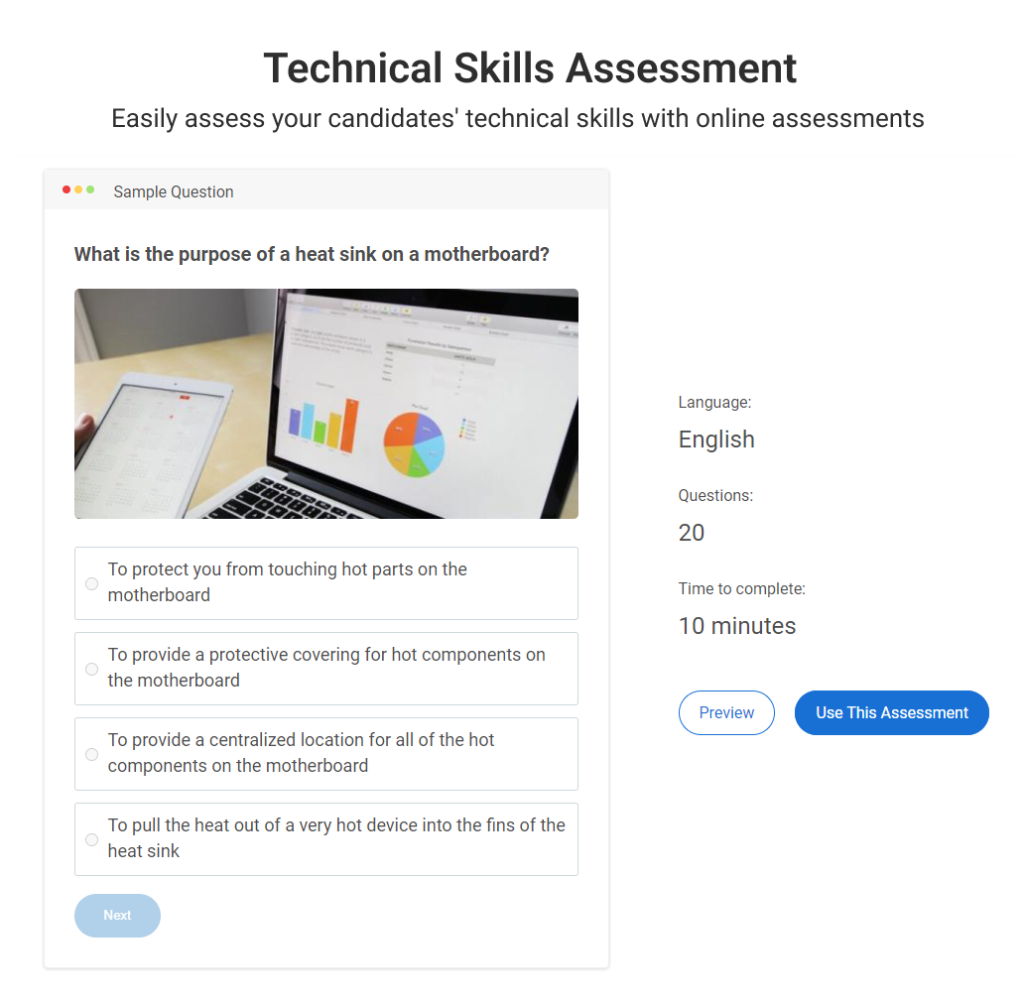
A technical assessment test is a pre-employment screening test that assesses a job candidate’s technical knowledge and skills.
For example, a technical assessment for hiring developers would consist of questions that test candidates’ programming skills. Similarly, a technical skill test for hiring for a finance & accounting role may test candidates’ bookkeeping skills or familiarity with accounting software.
Technical skill assessments differ from soft skill assessments in that soft skill assessments focus on general abilities applicable across various roles, such as communication or time management skills. On the other hand, technical skills assessment tests only test candidates’ role-specific abilities.
In practice, you will use a technical assessment test when:
- You have many applicants and need a fair way to filter them quickly
- The role depends heavily on role-based skills, such as coding, networking, design, financial analysis, or product support
- You want evidence beyond a resume and portfolio before involving busy hiring managers
- You are hiring for repeat roles and want a repeatable pre-employment technical test that produces consistent data over time
What Do Technical Tests Cover?
Technical tests evaluate a candidate’s ability to think and perform in a technical role. They assess a wide range of skills, including:
- Technical Knowledge: Understanding of core concepts, principles, and technologies. This might include programming languages, software tools (like CRM or project management software), or specialized knowledge in areas like mechanical reasoning or spatial reasoning.
- Problem-Solving: Analyzing situations, identifying problems, and developing effective solutions. This could involve debugging code, troubleshooting technical issues, or resolving real-world scenarios presented in case studies.
- Critical Thinking: Evaluating information, forming judgments, and making decisions in technical contexts. This might involve analyzing data, interpreting diagrams, or understanding complex technical documentation.
- Practical Application: Using skills and knowledge to complete tasks, build solutions, and overcome challenges. This could involve writing code, configuring software, or applying mechanical and spatial reasoning to solve problems.
By assessing these areas, technical tests help you identify candidates who possess both the knowledge and the practical skills needed to excel in a technical role.
Types of Technical Assessment Tests
When it comes to evaluating a candidate’s technical skills, a one-size-fits-all approach simply won’t do. Different roles and industries require specific expertise, and your assessment methods should reflect that.
As tech teams evolve, I see a lot more hiring for AI and machine learning, cloud and DevOps, cybersecurity, data engineering, and revenue operations roles. Each of these calls for a slightly different mix of coding tests, domain knowledge checks, and scenario-based exercises.
To help you choose the right tools for the job, here’s a breakdown of the most common types of technical assessments, arranged from most to least technically demanding:
1. Programming Language Skills Assessments
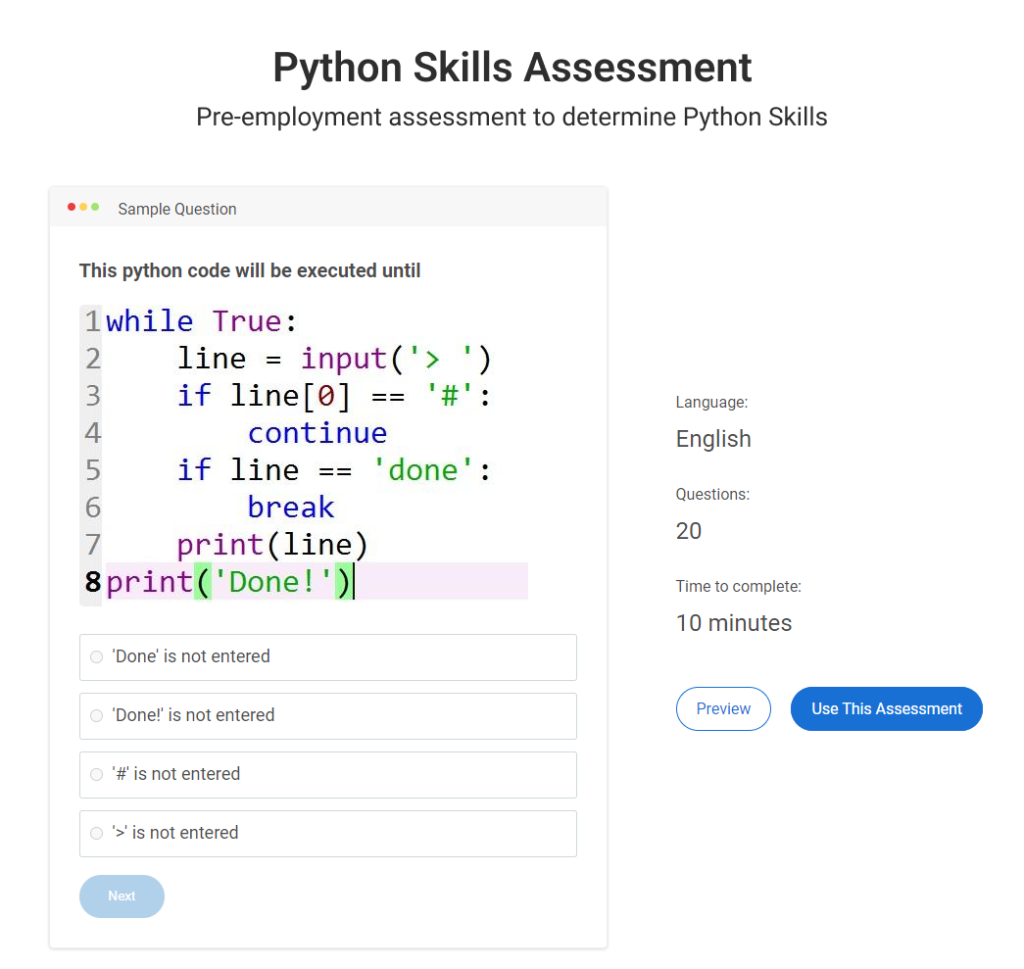
These assessments focus specifically on evaluating a candidate’s proficiency in one or more programming languages. They go beyond basic syntax and assess a candidate’s ability to write clean, efficient, and functional code.
- What they assess: Knowledge of programming concepts, syntax, data structures, algorithms, and best practices in specific languages like Java, Python, C++, JavaScript, etc.
- Formats: Coding challenges, debugging exercises, multiple-choice questions on language-specific concepts, and code review tasks.
- Ideal for: Roles that require strong programming skills, such as software developers, data scientists, and web developers.
2. Coding Tests
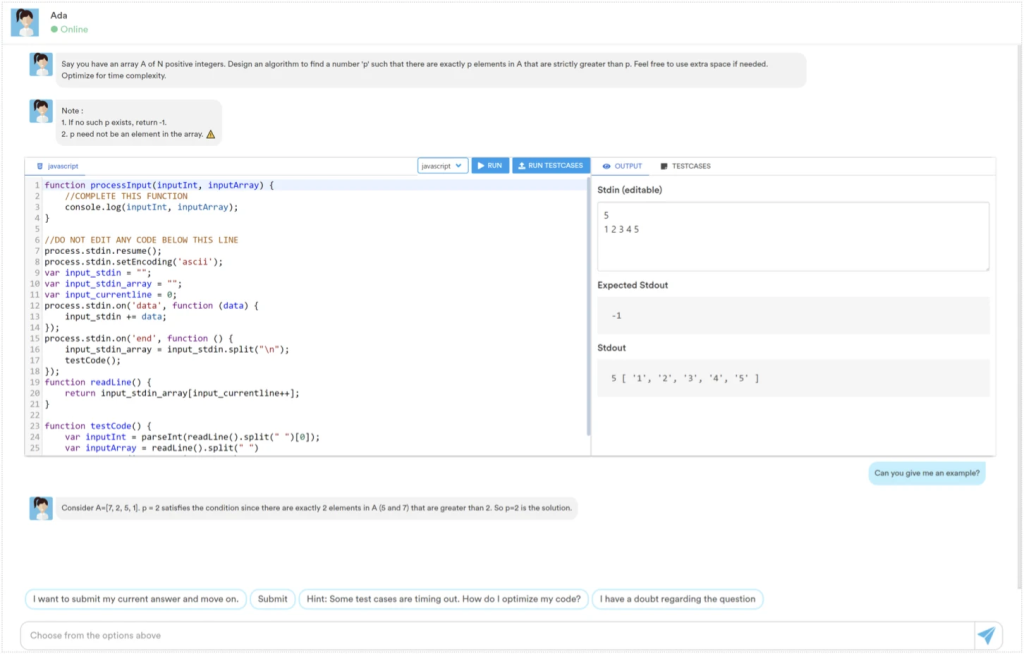
Image source: adaface.com
Essential for any role that involves programming, coding tests go beyond simply assessing a candidate’s knowledge of a language. They evaluate a candidate’s ability to write clean, efficient code, debug errors, and solve problems using their programming skills.
- What they assess: Coding proficiency, problem-solving, logical reasoning, and the ability to apply programming concepts to real-world scenarios.
- Formats: Coding challenges, debugging tasks, algorithm design exercises, and simulations of real-world coding tasks (e.g., building a feature, integrating an API).
- Ideal for: Software developers, data scientists, backend engineers, and even technical sales roles that involve automation or scripting.
3. Role-Specific Assessments
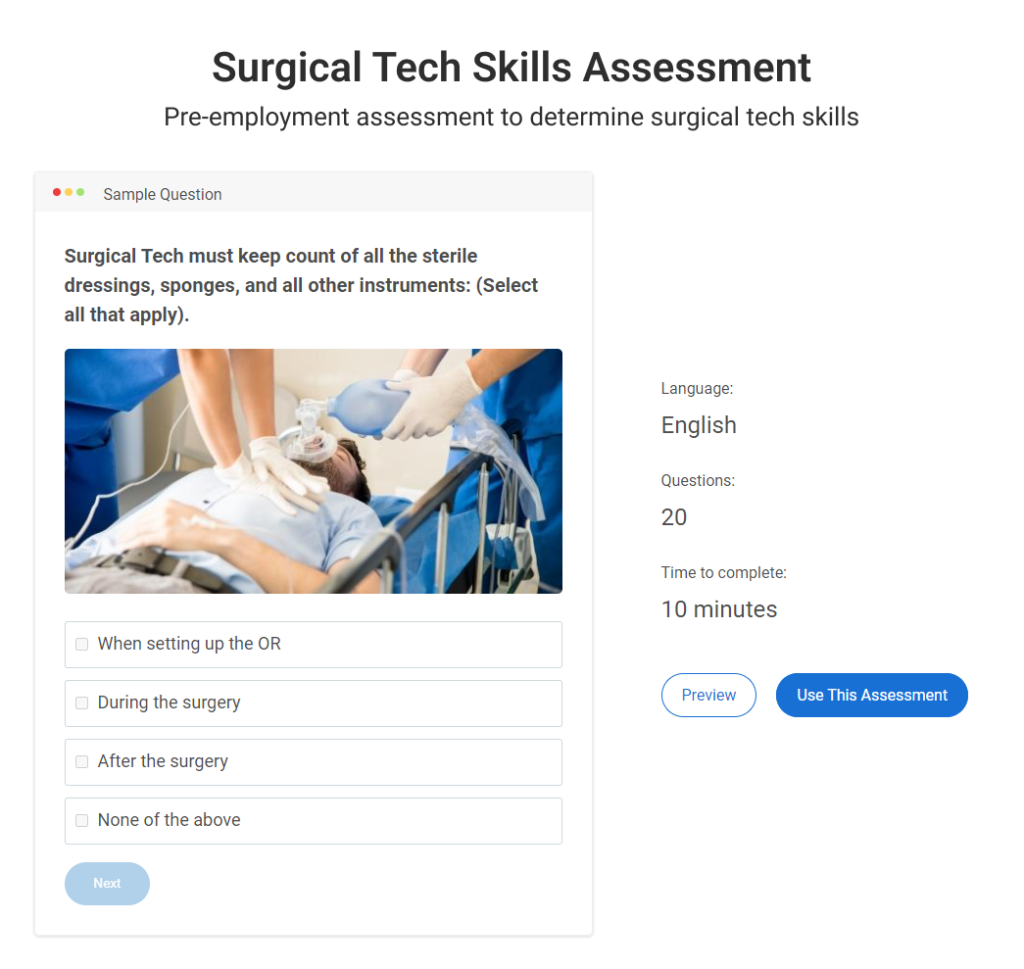
To truly assess a candidate’s readiness for a specific role, you need assessments that target the unique technical skills and knowledge required in that field.
- What they assess: In-depth knowledge and skills directly related to a particular job or industry.
- Formats: Case studies, practical exercises, simulations of real-world scenarios, and knowledge-based questions tailored to the specific role.
- Ideal for: A wide range of industries and roles, including:
- Healthcare: Medical terminology, patient care procedures, knowledge of healthcare regulations.
- Finance: Financial statement analysis, risk assessment, knowledge of financial regulations.
- Retail: Inventory management, product knowledge, and customer service skills in a retail context.
- IT: Network security, troubleshooting, knowledge of specific operating systems or hardware.
4. Whiteboard or Live Coding Interviews
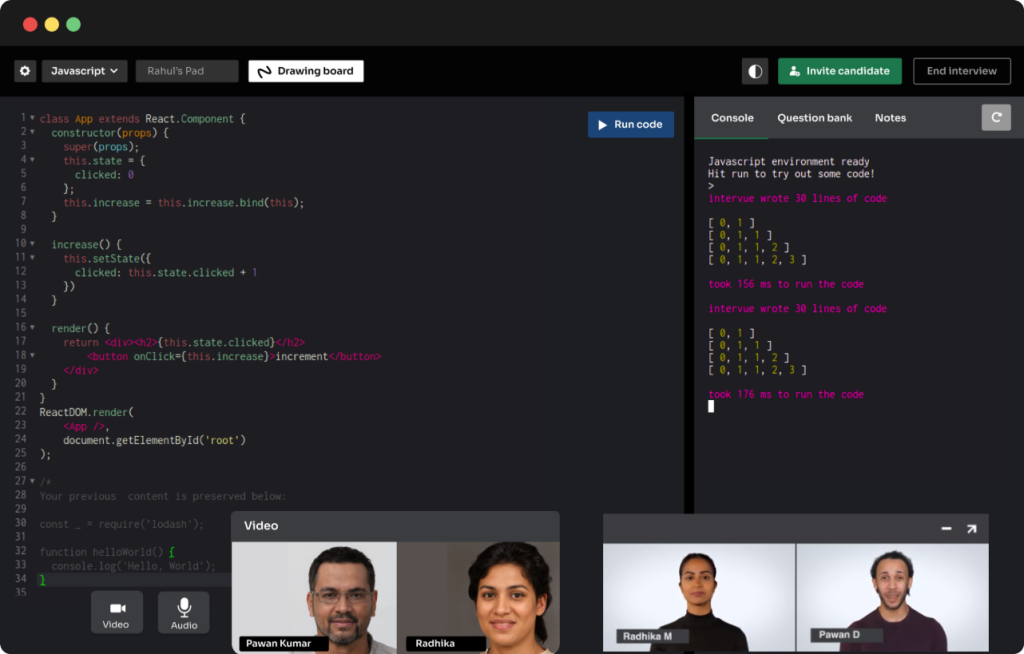
Image source: intervue.io
These interactive assessments provide a direct view into a candidate’s technical skills and problem-solving process. They require candidates to think on their feet, explain their reasoning, and demonstrate their coding proficiency in real time.
- What they assess: Real-time problem-solving, coding proficiency, communication skills, ability to think critically under pressure, and technical collaboration.
- Formats: Candidates are presented with technical challenges (e.g., algorithms, debugging tasks, system design) and asked to solve them while explaining their thought processes on a whiteboard or by writing code live.
- Ideal for: Engineers, architects, developers, technical leads, and roles requiring strong technical communication and collaboration skills.
5. Take-Home Assignments
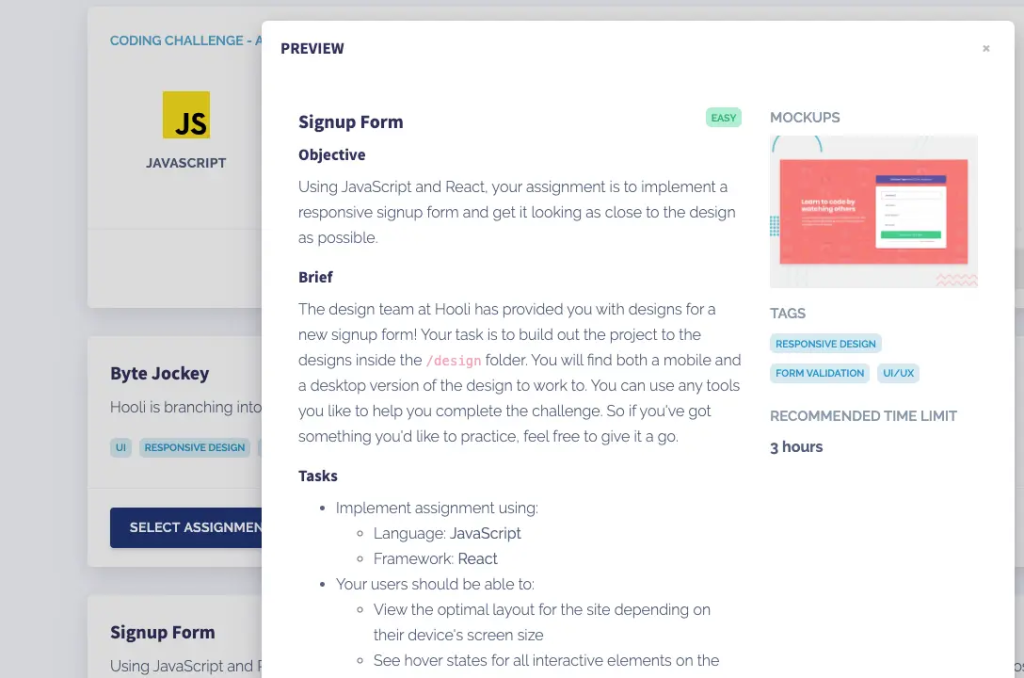
Image source: codesubmit.io
Take-home assignments provide a more in-depth evaluation of a candidate’s technical skills and allow them to demonstrate their ability to work independently.
- What they assess: Independent problem-solving, technical execution, code quality, ability to work under minimal supervision, and time management skills.
- Formats: Feature development, technical documentation, prototype creation, data analysis tasks, or creative problem-solving challenges.
- Ideal for: Developers, analysts, designers, technical writers, and roles involving independent work and project completion.
6. Business Software Skills Assessments
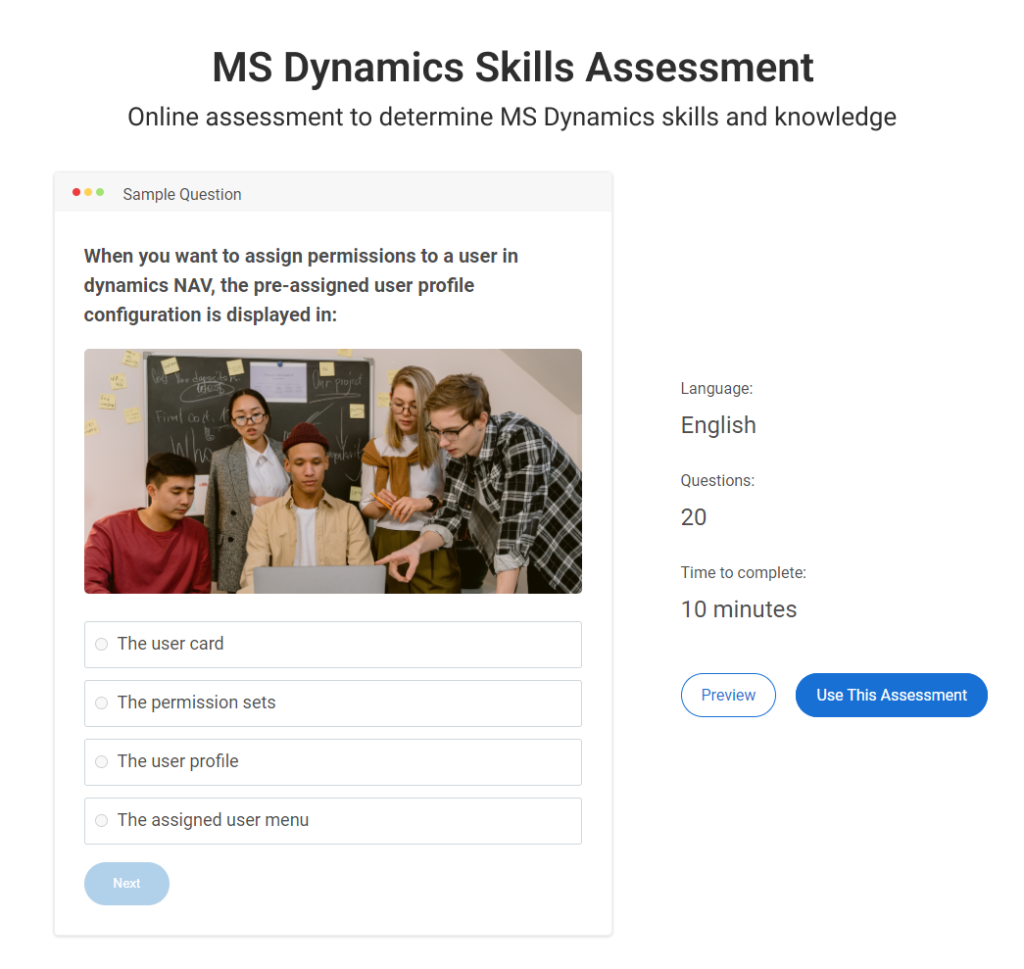
Many roles require proficiency in specific software applications. These assessments measure a candidate’s ability to use industry-standard tools effectively.
- What they assess: Technical expertise in tools like CRMs (e.g., Salesforce), project management software (e.g., Asana), marketing automation platforms, and data analysis software.
- Formats: Hands-on tasks within the software, multiple-choice questions on functionalities, and simulations of common workflows.
- Ideal for: Sales, customer service, marketing, finance, and operations roles that rely heavily on specific software applications.
7. Technical Aptitude Tests
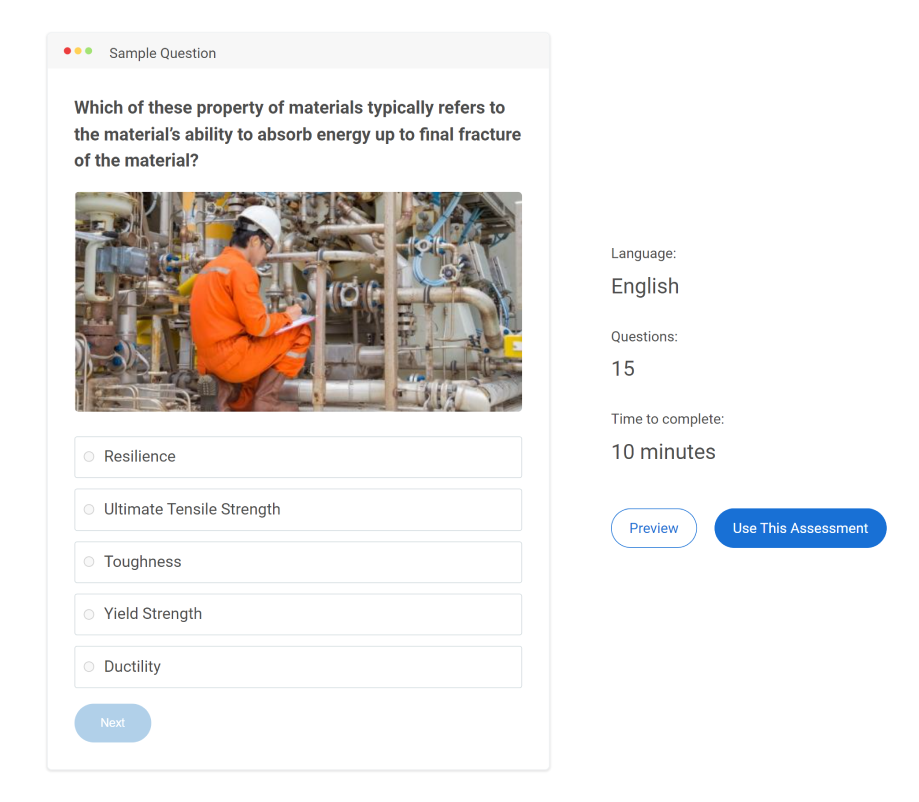
These assessments go beyond evaluating knowledge of specific tools or languages. They measure a candidate’s underlying aptitude for technical work, including their ability to think logically, solve problems, and reason in technical contexts.
- What they assess: Logical reasoning, numerical problem-solving, spatial reasoning, pattern recognition, and critical thinking skills.
- Formats: Logical puzzles, numerical computations, pattern-recognition tasks, abstract reasoning problems, and diagram interpretation exercises.
- Ideal for: Roles that require strong analytical skills, such as engineering, data analysis, IT support, and technical sales positions that involve data interpretation.
8. Domain Knowledge Tests
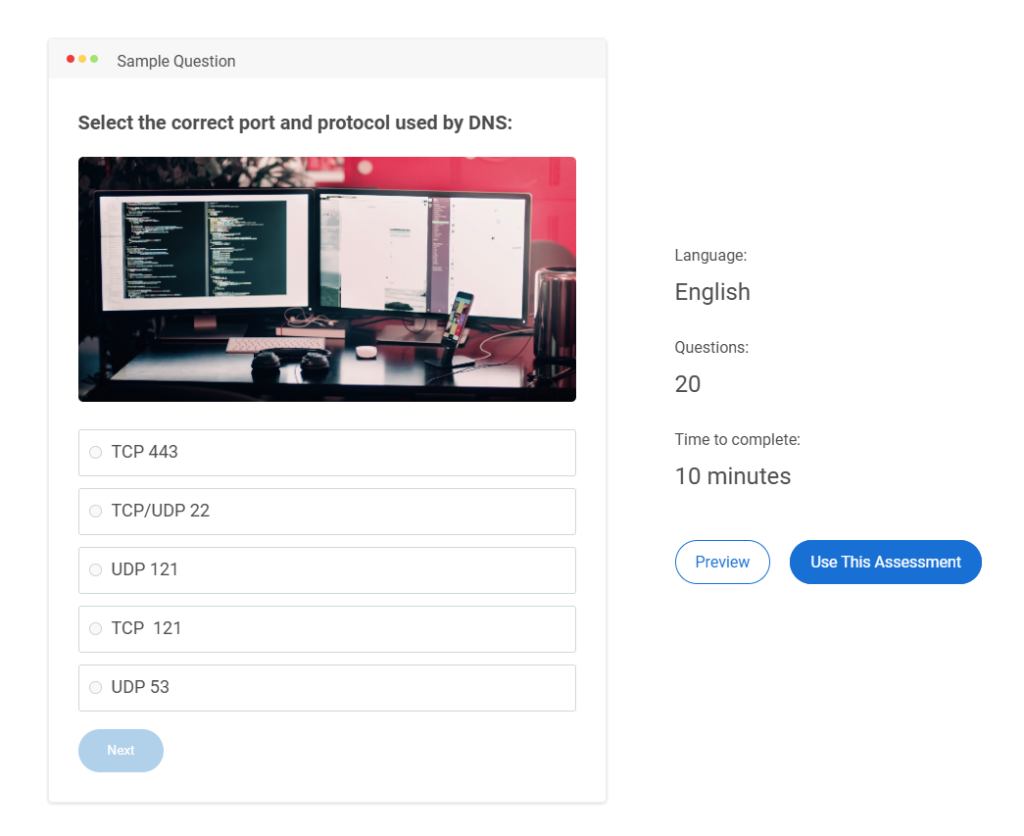
In many technical fields, specific domain knowledge is crucial. These assessments evaluate a candidate’s understanding of concepts, terminology, and best practices within a particular domain.
- What they assess: Theoretical and practical knowledge within a specific field, such as cloud computing, cybersecurity, networking, databases, or specific programming frameworks.
- Formats: Graded quizzes, scenario-based questions, case studies, or essays.
- Ideal for: Specialized roles within IT, engineering, and other technical fields where deep domain expertise is required.
9. Project-Based Assessments
Give candidates a taste of real-world challenges with project-based assessments. These allow them to demonstrate their ability to apply their technical skills to solve problems and create solutions.
- What they assess: Real-world technical application, problem-solving, project management skills, and the ability to work independently or collaboratively.
- Formats: Feature implementation, integration tasks, project documentation, prototype creation, and presentations of their solutions.
- Ideal for: Engineers, designers, developers, product managers, and technical sales roles that involve solution design and implementation.
By strategically combining these different types of technical assessments, you can gain a comprehensive understanding of a candidate’s abilities and find the perfect fit for your open roles.
10. Diagnostic & Troubleshooting Tests
The ability to identify and resolve technical issues is a critical skill in many fields. These assessments evaluate a candidate’s diagnostic skills and problem-solving approach in technical contexts.
- What they assess: Problem-solving, analytical thinking, and troubleshooting capabilities in situations involving software, hardware, or systems.
- Formats: Error detection exercises, debugging tasks, simulations of troubleshooting scenarios (e.g., resolving a server error, diagnosing a network issue).
- Ideal for: IT support, system administration, network engineering, customer service roles involving technical troubleshooting, and maintenance roles.
To make the choice easier, here is a quick comparison of the most common technical assessment formats:
| Test Type | Best For | Typical Duration | Scoring Approach | Anti-Cheat Options |
|---|---|---|---|---|
| Coding assessment/programming language skills test | Software developers, data engineers, data scientists, QA roles | 30 to 60 minutes | Auto-scored test cases, code review, and basic style checks | Browser restrictions, question pools, tab switch tracking, IP and time logs |
| Live coding/whiteboard assessment | Engineers, tech leads, architects | 30 to 60 minutes | Manual review of reasoning, code quality, and communication | Clear brief, interviewer calibration, shared coding or whiteboard tools |
| Role-based skills test | Sales engineers, support teams, product specialists, RevOps | 20 to 45 minutes | A mix of auto-scoring for objective items and manual review for scenarios | Question and answer randomization, time limits, unique test links |
| Technical aptitude test | Entry-level technical roles and career switchers | 20 to 40 minutes | Auto-scored MCQs, puzzles, and reasoning questions | Randomized questions and answers, large question banks, timed sections |
| Domain knowledge test | Cloud, security, networking, data platforms, specialized stacks | 20 to 40 minutes | Auto-scored MCQs and scenario questions, sometimes short written answers | Up-to-date question bank, version-specific questions, role-relevant topics |
| Project-based or take-home assessment | Mid to senior engineers, data leaders, technical writers, product roles | A few hours spread over several days | Manual review of code, docs, and solution quality using a clear rubric | Clear brief, reasonable deadline, plagiarism checks, transparent evaluation criteria |
| Business software skills assessment | CRM, ERP, marketing, finance, and operations roles | 20 to 30 minutes | Auto-scored in-app tasks, simulated workflows, and scenario answers | Secure links, time limits, session tracking, and restricted retakes |
| Diagnostic and troubleshooting test | IT support, SRE, network operations, technical customer support | 20 to 45 minutes | Auto-scored logs and questions plus manual review of explanations | Standardized environments, log capture, and consistent scenarios for each candidate |
Why Do Companies Use Technical Assessments?
In modern organizations, technical assessments have a significant impact across various operational areas.
- Refining Hiring Processes
Technical assessments streamline the recruitment process by identifying candidates that best match the job requirements. This ensures that the right talent is selected, reducing the time and resources spent on finding the perfect candidate.
- Guiding Training Initiatives
By highlighting the specific skills and knowledge areas employees need to improve, technical training assessments help develop targeted training programs. This ensures efficiency and effectiveness in training efforts by addressing the identified gaps.
- Enhancing Performance Reviews
Technical assessments objectively measure employee performance, leading to fairer and more productive performance reviews. This alignment of individual goals with organizational objectives encourages personal and professional growth.
- Supporting Succession Planning
Technical assessments identify employees with leadership potential or those who could excel in more advanced technical roles, thus aiding in succession planning. This helps ensure continuity and stability within key positions by preparing future leaders.
- Aiding Strategic Workforce Decisions
The insights gained from technical assessments assist in making informed decisions about talent management, ranging from hiring and development to strategic planning. This data-driven approach optimizes workforce allocation and prepares for future skill requirements.
Importance of Technical Assessments in Hiring
1. Accurately Assess Skills to Verify Claims
Technical testing of job candidates offers several advantages, such as saving time, money, and effort during recruitment and after. Here they are:
Research shows more than three in four people lie on their resumes. Imagine hiring someone who doesn’t actually have the advertised skills or experience!
Also, as we mentioned earlier, the cost of bad hires can be great. It can go up to $840,000 if recent research is to be believed.
In my experience, you usually feel the impact of a mis-hire long before you see a number on a report. It shows up as missed deadlines, rework, dropped customers, and projects that never quite land the way they were planned.
Needless to say, the stakes are high!
The way out?
Using technical tests, you can get deep insights into a candidate’s skills, enabling you to verify their claims about qualifications and experience easily.
2. Ensure Role Alignment
Technical exams help ensure that all employees are well-aligned with their roles by enabling you to understand candidates’ skills accurately.
Plus, this works both ways.
Technical screening tests provide candidates with a taste of what the job would be like so that they can self-analyze and screen themselves out if they find the role doesn’t match their skills.
3. Assess Candidates Remotely
Online technical tests make it easy to assess candidates when hiring remotely. Candidates can take assessments at a time and place of their choosing, removing test scheduling issues.
For example, take the case of John Baker Sales, a leading paint booth provider in Denver, Colorado. Here’s how John Baker, the company’s owner, improved their hiring process using remote technical tests.
| Case Study: John Baker SalesJohn had been struggling with implementing a testing process that would enable them to find which applicants perfectly fit their hiring criteria and the role. He found a test that would help them identify the right candidates, but delivering it in paper form turned out to be highly ineffective.Many people would do terribly on the test. Still, John would have to block an hour of his time for each candidate.Using ProProfs, John started sending the same test as a quiz link to the applicants. If the candidate didn’t meet the minimum score requirements, they were eliminated, and the face-to-face interview wasn’t conducted. John now finds it easy to create and share technical assessment tests using online assessment software. The tests are mobile-compatible, enabling candidates to take them anytime, anywhere. He gets the results in real time, making the process even more convenient. The testing approach has made John Baker Sales’ hiring process much more efficient, saving him countless hours that he can spend on revenue-producing activities.John has been looking to add more technical assessment tests, such as mechanical and electrical knowledge tests, to his pre-employment assessment process. He’s extremely confident that the new tests will provide the same satisfying results. |
Besides text-based questions, you can also include video-response questions in your technical tests, enabling you to conduct flexible remote interviews. This is particularly useful for hiring remote employees from any time zone.
4. Make Data-Driven Comparisons
Online technical tests provide an excellent way to compare candidates and improve hiring decision-making. That’s because top online technical assessment tools offer automated reporting and analytics that you can leverage to create a data-backed screening process.
In practice, the metrics I pay the most attention to are completion rate, average score, score distribution by source, time spent per question, and drop-off rate. Over a few hiring cycles, these numbers tell you whether your technical assessment test is calibrated properly or needs adjustment.
5. Easily Hire at Scale
Powered by automation features, such as automated scoring, feedback, and report generation, online technical assessments let you assess candidates at scale while maintaining the effectiveness of your assessments.
The best assessment tools also let you set up measures to prevent cheating.
This means there’s no need for invigilation and physical test centers.
For example, test maker software may be equipped with anti-cheating settings, such as question/answer shuffling, question pooling, proctoring, time limits, and more.
6. Reduce Bias
Hiring bias is an age-old issue that sadly persists in modern times. What’s more, even if you do your best to create a diversity-oriented work culture, your hiring process may still be plagued by unconscious bias.
What is unconscious bias?
It’s the human tendency to form stereotypes without realizing it. Even if they champion diversity, equity, & inclusion, people may have unconscious biases about various groups.
Online technical assessments help reduce hiring bias by making the recruitment process more objective and data-focused.
7. Engage Candidates
A well-designed technical test can help provide an engaging hiring experience to the candidates by letting them showcase their knowledge and even gain new knowledge to enhance their skill set.
This can improve the chances of the candidate choosing your company if they have multiple offers.
Online technical assessment tests also let you present your questions in an aesthetically pleasing way since you can add beautiful themes.
The best assessment software also lets you add branding elements, such as your company’s logo, colors, and graphics, to your assessments to make candidates feel better connected with your organization.
Watch: How to Add a Theme & Logo to a Test
A big part of a positive candidate experience is transparency. Tell candidates:
- How long will the technical assessment test will take
- What skills are you measuring
- Whether they will see coding questions, multiple choice, case studies, or a mix
- How the results fit into the overall hiring process
You can even share one or two sample questions in advance so the format does not come as a surprise.
After the test, send a short, clear update. Even a simple message, such as “You met our pass criteria, and we would like to invite you to the next step” or “You were slightly below our threshold for this role, but we appreciate your time,” can reduce ghosting and leave candidates with a better impression of your brand.
8. Onboard Smoothly
The knowledge and insights you gain from conducting a technical assessment test can help you create better, personalized induction programs. For example, you may need to provide a quick training course to a new employee during onboarding before you can put them on the job. A technical assessment can help identify such training requirements.
Many teams also use role-based skills tests as part of internal certification programs, product knowledge checks after a new release, and ongoing training to measure how effective their onboarding or learning paths really are.
Watch: How to Create an Employee Onboarding Training Program
How to Create an Employee Onboarding Training Program
9. Identify High Potential & Future Training Needs
Besides identifying immediate training needs, technical tests can also help you identify future training needs and leadership potential. In this way, technical tests also play a key part in succession planning initiatives.
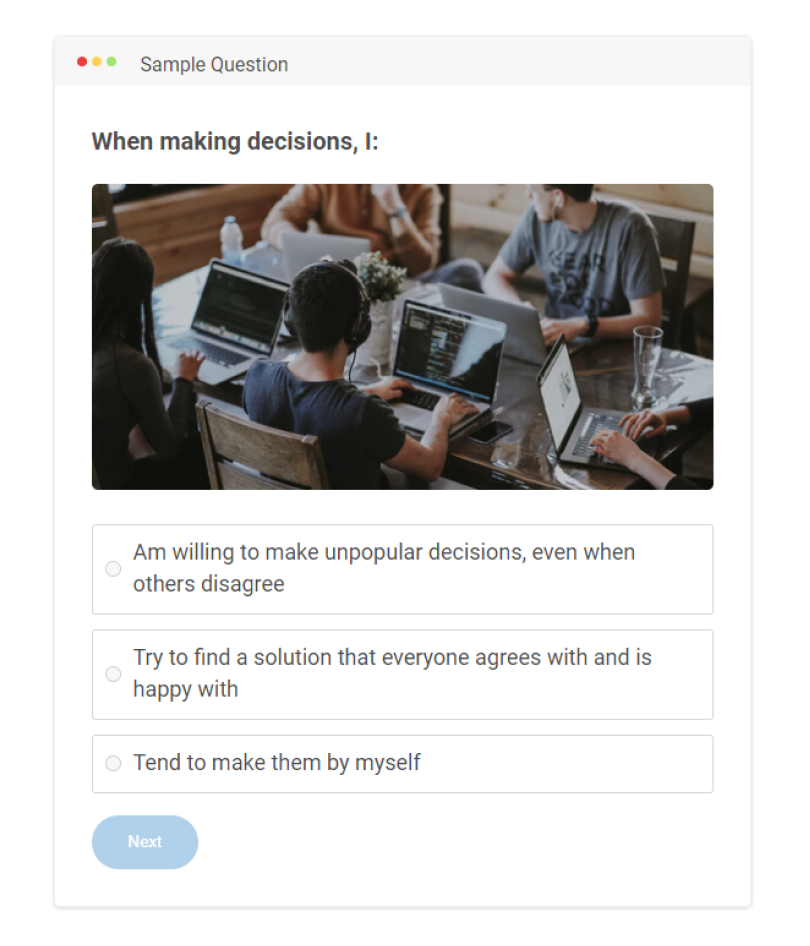
When you design your technical assessment test, keep a few simple benchmarks in mind:
- Most screening level tests work well in the 30 to 45 minute range
- A pass score of around 60 to 70 percent is usually enough to separate prepared candidates from those who are guessing
- One focused role-based skills test is better than a long mix of unrelated questions
It also helps to avoid a few common mistakes:
- Making the test much longer than the real work requires
- Using puzzle style questions that do not reflect the actual job
- Writing questions that are so vague that even strong candidates feel lost
- Giving no information about format, time, or how the results will be used
- Never sharing outcomes or next steps, which increases drop offs in the funnel
That was a round-up of the multi-faceted advantages that technical assessment tests bring to the table.
Now, let’s jump to how you can create technical tests using online assessment software and optimize them for the best results.
How to Create Technical Assessment Tests Online
Here’s the process for creating online technical assessments in five simple steps.
Step 1: Pick a pre-built assessment or start creating one from scratch.
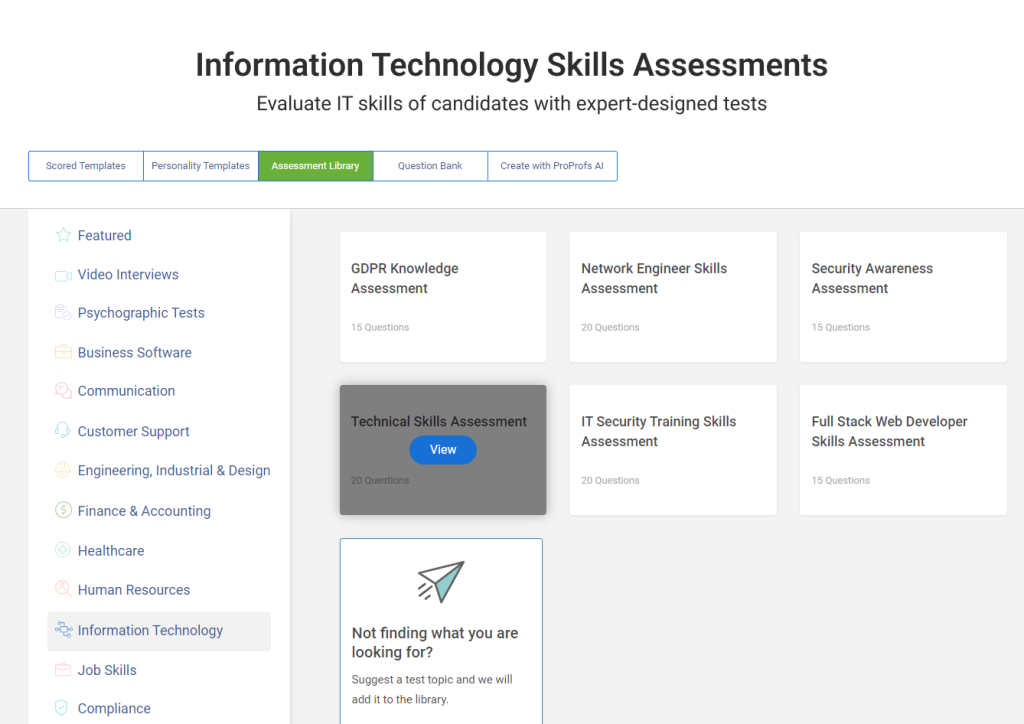
Step 2: Draft questions, import them from a library, or generate them using AI.
Step 3: Automate scoring and results.
Step 4: Configure security, notifications, and other settings.
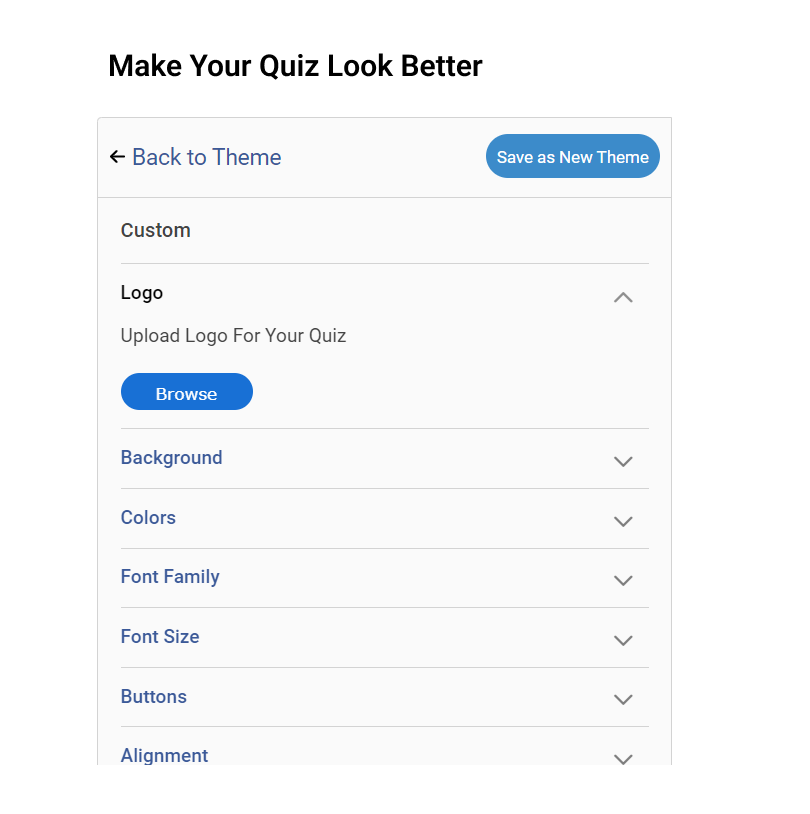
Step 5: Customize the appearance and add your branding.
To learn more about the assessment creation process, check out the video tutorial below.
Before you take the test live, run a quick pilot with people who already do the job. Ask them to confirm that:
- The tasks feel realistic and match their day to day work
- The difficulty suits the level you are hiring for
- The time limit feels fair rather than rushed or endless
- The instructions and welcome screen are easy to follow
Catching issues here saves candidates from a confusing experience and saves you from noisy data.
What Tools Are Used for Technical Assessment Tests?
To effectively evaluate candidates, companies use numerous tools in their technical assessments:
- Objective-Type Questions: These include multiple-choice, true/false, fill-in-the-blank, and short essay questions, which are used to quickly assess specific knowledge and recall accuracy.
- Caselets and Case Study Simulations: These tools present candidates with scenarios or real-world problems to analyze and solve, testing their practical application, problem-solving, and critical-thinking skills.
- Coding Platforms: Ideal for evaluating programming skills, these platforms offer coding challenges and live coding interviews, providing a clear picture of a candidate’s coding abilities and how they tackle problems in real time.
- Simulation Tools: These tools provide a wide range of pre-employment tests, including technical skills and cognitive abilities, with robust analytics and anti-cheating measures to ensure a fair and thorough evaluation process.
Using these tools, companies can create effective and reliable technical assessments, streamline the hiring process, and ensure they select the best candidates for the job.
When you pick a platform, look beyond the basic question types. For long term use, it really helps if your technical assessment software:
- Connects with your HRIS or ATS and LMS through integrations or APIs
- Supports bulk question import from Excel or Word so you do not have to rebuild everything by hand
- Offers AI support for drafting new questions and variations
- Includes richer formats such as file uploads, coding environments, hotspot questions, and written responses
- Comes with strong anti cheating options like browser controls, proctoring, and detailed logs
These features make it much easier to scale from a single coding assessment to a full library of role based skills tests.
Best Practices for Setting up a Technical Assessment
Before you build the test, decide where it sits in your hiring flow. For most roles, a short pre-employment technical test works best after an initial resume and profile review, and before time-intensive panel interviews.
For very senior or niche roles, you might rely more on portfolio review, system design discussions, or project-based assessments rather than a long, timed coding test.
Here are some tips on creating the best technical assessments to help you achieve your smart hiring goals.
1. Define Competencies
Before creating your assessments, you need to be clear about the specific competencies you want to test.
Defining the competencies you’re looking for will help ensure that:
- your test is tailored to the role you’re hiring for
- includes enough questions focusing on the unique competencies required
- Use Various Question Formats
Using a mix of question types in your assessments lets you assess candidates’ knowledge in different ways while giving you the flexibility to ask any question in a proper format.
This enables you to get a comprehensive understanding of candidates’ expertise. Using multiple question types also results in a better, more engaging experience for the candidates.
2. Create a Comprehensive but Short Test
While your test must adequately cover the competencies you’re assessing, it also shouldn’t be too long. Unnecessarily lengthy recruitment tests result in a poor candidate experience and reduce the chances of the candidate choosing your company over others.
For example, suppose you’re hiring for a sales position. In that case, you can create one test to assess general sales skills, another to assess upselling & cross-selling skills, and a third one to assess familiarity with customer relationship management software,
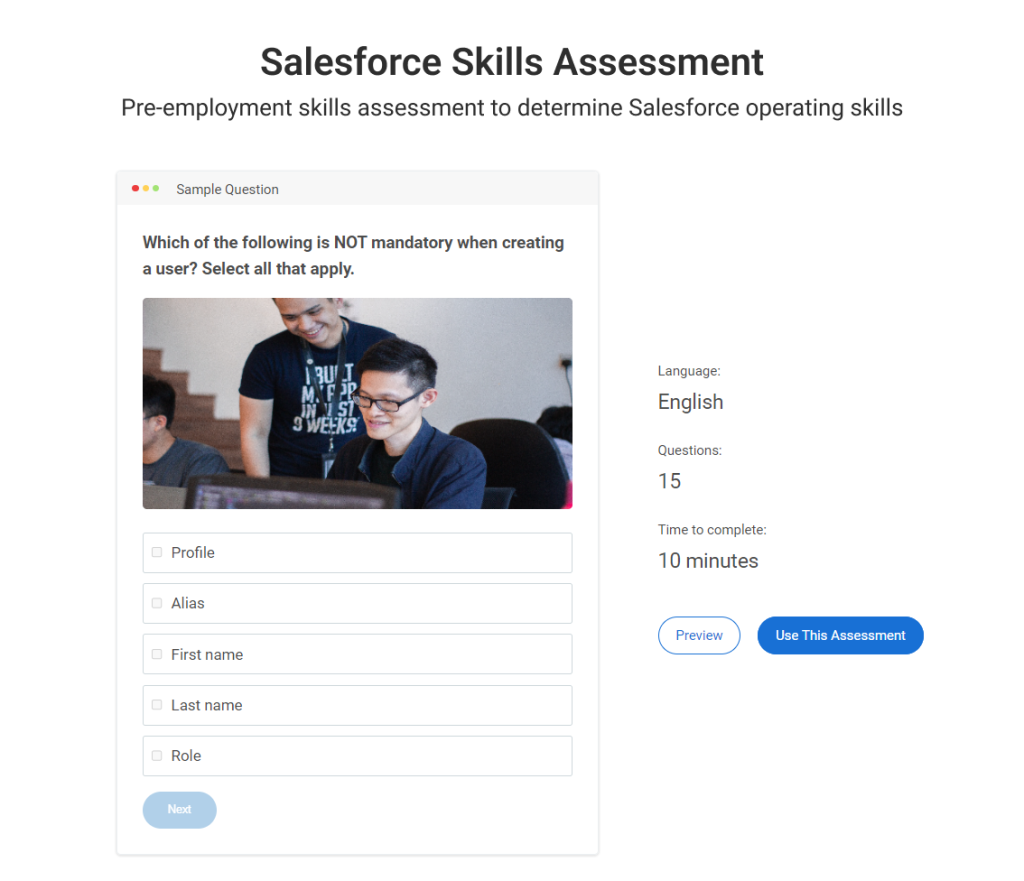
For senior candidates, you can sometimes replace a full coding assessment with a short take home design task, portfolio review, or architecture discussion that still shows how they think without asking them to solve basic textbook problems.
3. Test Practical Knowledge
You want to hire candidates who can do the job, not those who have all the knowledge but will require extensive training to become job-ready. So, make sure your technical assessment tests focus heavily on testing practical knowledge.
To that end, you need to include a good number of case study or scenario-based questions in your assessments. Check out the technical assessment example below featuring scenario-based questions on sales.
4. Add Images to Questions
Adding images to your questions or answer options is a great way to make them visually appealing and make your technical assessment test more engaging.
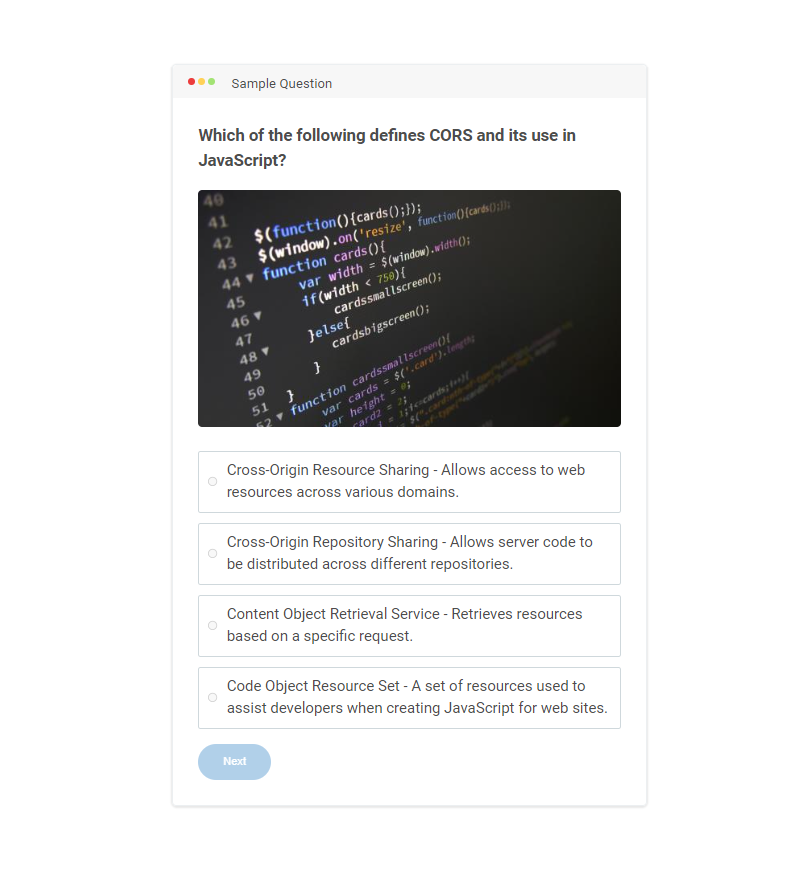
Besides images, you can also add videos, documents, or audio clips to your test and ask questions based on them.
5. Configure Security & Anti-Cheating Settings
Security and anti-cheating settings maintain the credibility and integrity of your assessment. Here are some essential settings for technical assessment tests.
- Make your assessments private and password-protected
- Shuffle the order of questions and answer options
- Create a pool of questions to present a different, randomly-selected set of questions to each candidate
- Enable remote proctoring settings
- Disable tab switching
- Disable copying and printing of test content
Read: Ways to Prevent Cheating in Online Tests & Exams
6. Add Time Limits
Adding time limits to your technical assessment test questions helps you conduct more accurate assessments in two ways:
- It enables you to find out how quickly the candidate can recall critical information and how familiar they are with key processes.
- It serves as a cheating prevention measure since candidates don’t get enough time to look for answers.
Watch: How to Create a Timed Test
7. Work on the Look & Feel
How your test looks can be crucial in terms of candidate experience. Your technical assessment tests should have an appealing aesthetic that accurately reflects your brand identity.
Choose a beautiful theme and customize it to match your brand. Change the background, colors, fonts, etc., and add your company logo to the test interface.
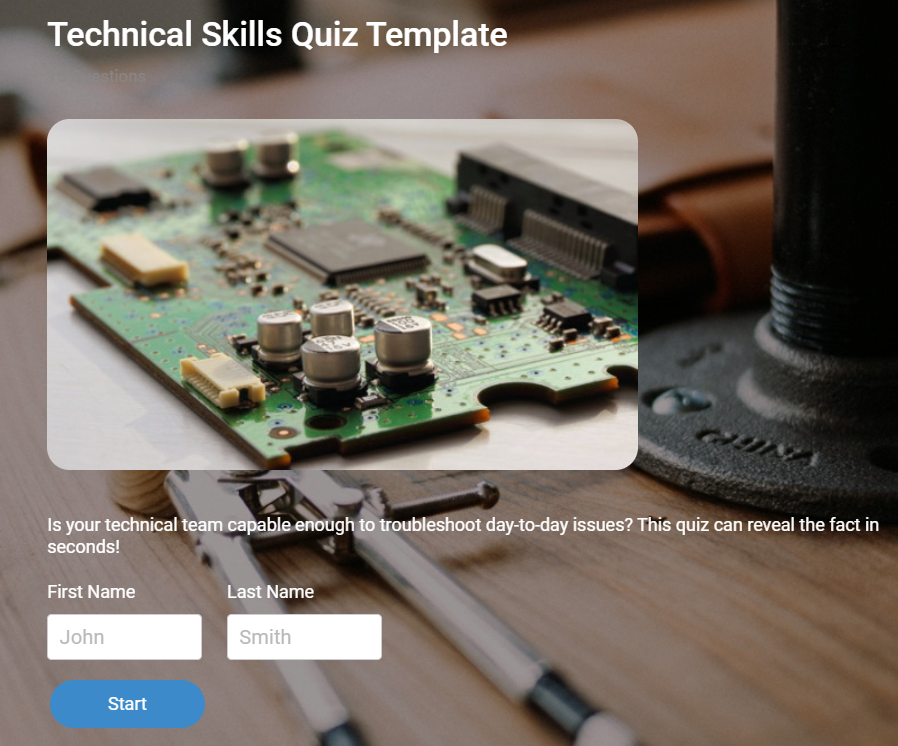
8. Provide Clarity in the Welcome Screen
Before a candidate starts with a technical assessment test, they need to be clear on the assessment’s purpose and any guidelines they need to keep in mind. You can provide this clarity on the welcome screen in the form of a test description or as a short video introducing your company and the test.
9. Use Top-Notch Assessment Software
To implement the tips shared above and realize the benefits discussed earlier, you need robust assessment software.
- Your assessment tool should be feature-rich so that you can customize and configure your assessments to suit your requirements to the T.
- It should also have a fast, clean, and user-friendly interface so that you have no trouble navigating through it.
- It should also be equipped with advanced reporting capabilities for easy candidate comparison.
Watch: How to Choose the Best Assessment Software
So, that was a quick tutorial on creating and conducting technical assessment tests online. Let’s wrap up this post by exploring the various types of technical tests you can create with an online assessment tool.
Create a Holistic Suite of Online Assessments
When you put a well-designed technical assessment test early in your funnel, you get a clear signal on role-specific skills before you spend hours on interviews. That one change can protect your hiring budget and keep your team focused on the best candidates.
The real upside comes when you treat assessments as a full system, not a one-off quiz. Combine technical tests with personality and culture fit assessments, and reuse them for onboarding checks, internal certifications, and product knowledge reviews. You begin to see the same skill data appear across hiring, training, and performance.
If you want to build that kind of test-driven setup without wrestling with complex tools, ProProfs Quiz Maker gives you a practical base to work from. You can mix 20 plus question types, fine-tune scoring and reporting with smart settings, and pull from a large library of expert-built quizzes and ready questions to move faster.
Frequently Asked Questions

Are coding tests fair for experienced candidates?
A coding assessment is fair when it mirrors real work rather than obscure puzzles. Use tasks your team performs, set difficulty to match the role, explain expectations clearly, and give senior candidates options like system design discussions or portfolio review.
When should I add a technical test to my hiring process?
Use a pre-employment technical test after an initial resume screen and before time intensive interviews. This keeps screening objective, reduces interviewer workload, helps you compare candidates on the same criteria, and stops unqualified applicants from moving further into the process.
How can I keep online technical tests fair and secure?
To keep online tests fair and secure, combine instructions with strong settings. Use links tied to each candidate, question randomization, time limits, browser restrictions, and proctoring when needed. Pair each role-based skills test with realistic scenarios so guessing becomes harder.
Can technical assessments be used beyond hiring?
Technical assessments work beyond hiring. Teams use them to check product knowledge after launches, measure onboarding progress, run internal certification programs, and identify skill gaps for training. Reusing a well designed test bank also makes evaluations faster and more consistent.

Let ProProfs AI Build a Quiz

 We'd love your feedback!
What did you like & how can we make it even better?
 Thanks for your feedback!
 Ask Your Question
Have a question? Get expert help to make your decision easier.