Frog Dorsal Muscles and Functions

Reviewed by Editorial Team
The ProProfs editorial team is comprised of experienced subject matter experts. They've collectively created over 10,000 quizzes and lessons, serving over 100 million users. Our team includes in-house content moderators and subject matter experts, as well as a global network of rigorously trained contributors. All adhere to our comprehensive editorial guidelines, ensuring the delivery of high-quality content.
Learn about Our Editorial Process
| By Themes
T
Themes
Community Contributor
Quizzes Created: 3463 | Total Attempts: 1,248,268
| Questions: 13 | Updated: Nov 18, 2026
Please wait...
Question 1 / 14
🏆 Rank #-- ▾
0 %
0/100
Score 0/100

1. What is the function of the Temporalis muscle in a frog?

Explanation

The temporalis muscle raises the lower jaw, closing the mouth as the frog bites or holds food.

Submit
Please wait...
About This Quiz
Frog Dorsal Muscles and Functions - Quiz

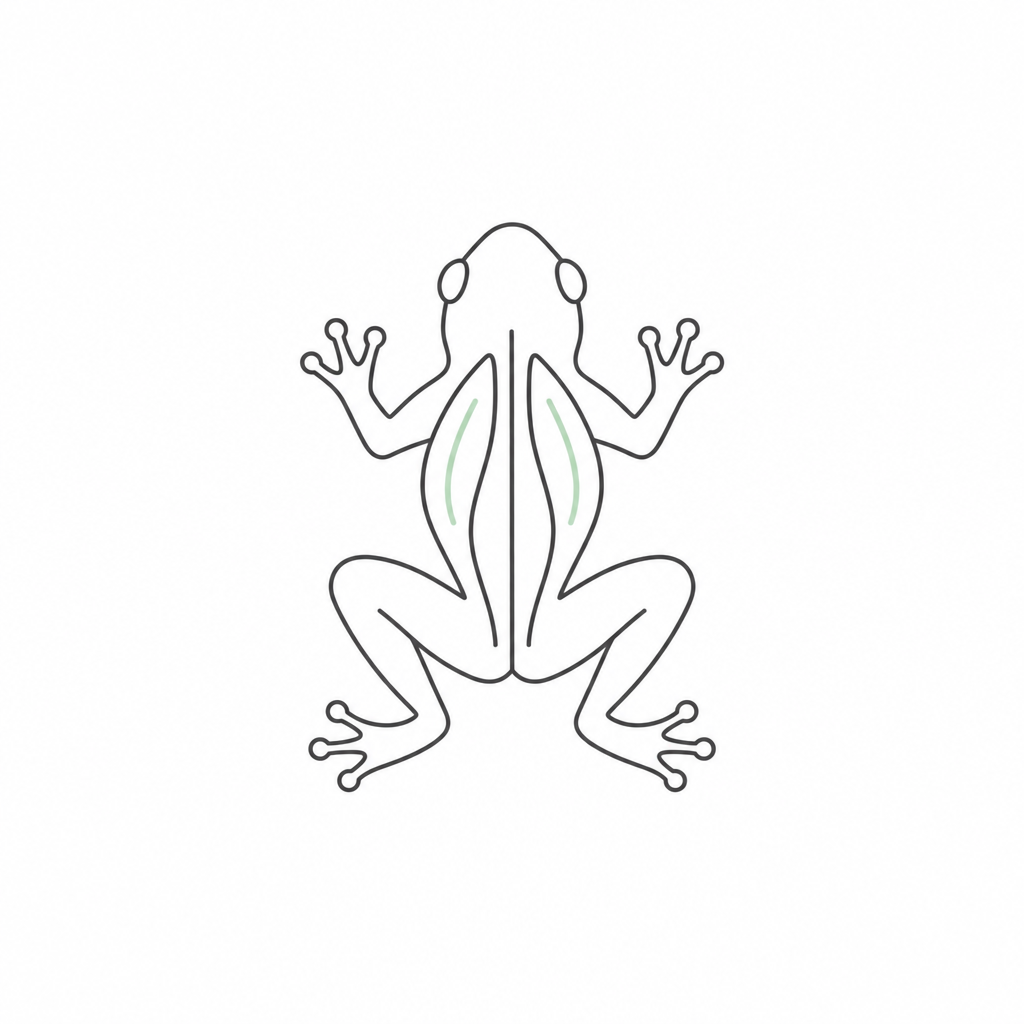
This resource covers the functions of frog dorsal muscles. It assesses how muscles such as the temporalis, deltoid, triceps brachii, and gastrocnemius move or stabilize the jaw, shoulder, forelimbs, hindlimbs, and feet. Knowing these actions helps learners connect muscle names with frog anatomy and movement.

2.

What first name or nickname would you like us to use?

You may optionally provide this to label your report, leaderboard, or certificate.

2. Which dorsal muscle is responsible for moving and stabilizing the shoulder region?

Explanation

Dorsalis scapulae refers to muscles along the back of the shoulder blade that help move and stabilize the scapula, supporting shoulder movement and posture.

Submit

3. What is the primary function of the Latissimus dorsi in a frog?

Explanation

The latissimus dorsi is a muscle in the frog’s trunk that acts on the forelimb, pulling it backward toward the body. This movement is called retraction.

Submit

4. Which muscle extends the forearm at the elbow in the dorsal view?

Explanation

The triceps brachii is located on the back of the upper arm and straightens the elbow by extending the forearm. It is the primary muscle responsible for this movement.

Submit

5. The Deltoid muscle in a frog primarily ____.

Explanation

The deltoid connects the shoulder region to the forelimb. Its contraction moves the forelimb and helps keep the shoulder joint stable during movement.

Submit

6. Which dorsal muscle extends the hindlimb at the knee?

Explanation

Triceps femoris lies on the dorsal thigh and extends the hindlimb at the knee (stifle), straightening the joint. The other listed muscles do not primarily perform this action.

Submit

7. What is the function of the Sartorius muscle in the dorsal view?

Explanation

The sartorius crosses the thigh and helps flex it at the hip, contributing to movement of the hindlimb.

Submit

8. The Gracilis major muscle adducts the thigh and helps flex the lower leg.

Explanation

The gracilis is a medial thigh muscle that adducts the thigh at the hip and helps flex the leg at the knee.

Submit

9. Which muscle only helps adduct the thigh without a major role in leg flexion (dorsal view)?

Explanation

Gracilis minor primarily adducts the thigh and has little role in flexing the leg. By contrast, biceps femoris contributes substantially to leg movement, while tibialis anterior acts on the foot.

Submit

10. The Semimembranosus muscle extends the thigh and ____ the lower leg.

Explanation

The semimembranosus extends the thigh at the hip and flexes the lower leg at the knee.

Submit

11. Which dorsal muscle helps flex the lower leg AND move the thigh?

Explanation

Biceps femoris is a muscle on the back of the thigh. It flexes the lower leg at the knee and helps move the thigh at the hip, including extending it.

Submit

12. What is the function of the Gastrocnemius muscle in the dorsal view?

Explanation

The gastrocnemius is a calf muscle that plantarflexes the foot at the ankle, helping point the toes downward. It also contributes powerful push-off during activities such as jumping, running, and walking.

Submit

13. The Tibialis anterior longus helps flex the foot and move the lower leg.

Explanation

The tibialis anterior dorsiflexes the ankle, lifting the front of the foot, and helps coordinate movement of the lower limb.

Submit
×
Saved
Thank you for your feedback!
View My Results
Cancel
  • All
    All (13)
  • Unanswered
    Unanswered ()
  • Answered
    Answered ()
What is the function of the Temporalis muscle in a frog?
Which dorsal muscle is responsible for moving and stabilizing the...
What is the primary function of the Latissimus dorsi in a frog?
Which muscle extends the forearm at the elbow in the dorsal view?
The Deltoid muscle in a frog primarily ____.
Which dorsal muscle extends the hindlimb at the knee?
What is the function of the Sartorius muscle in the dorsal view?
The Gracilis major muscle adducts the thigh and helps flex the lower...
Which muscle only helps adduct the thigh without a major role in leg...
The Semimembranosus muscle extends the thigh and ____ the lower leg.
Which dorsal muscle helps flex the lower leg AND move the thigh?
What is the function of the Gastrocnemius muscle in the dorsal view?
The Tibialis anterior longus helps flex the foot and move the lower...
play-Mute sad happy unanswered_answer up-hover down-hover success oval cancel Check box square blue
Alert!


