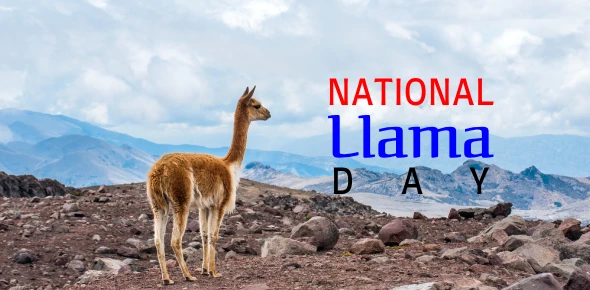
Uncover National Llama Day Fun: Test Your Llama Knowledge!

  • Grade 3rd,
  • Grade 4th,
  • Grade 5th,
  • Grade 6th
Created by Editorial Team
The ProProfs editorial team is comprised of experienced subject matter experts. They've collectively created over 10,000 quizzes and lessons, serving over 100 million users. Our team includes in-house content moderators and subject matter experts, as well as a global network of rigorously trained contributors. All adhere to our comprehensive editorial guidelines, ensuring the delivery of high-quality content.
Learn about Our Editorial Process
| By Amit Mangal
Amit Mangal, Quiz Creator
Amit, a key part of ProProfs.com, excels at crafting diverse and interactive quizzes. His enthusiasm for learning and originality shines through his work, making each quiz both fun and enlightening. Amit is committed to delivering high-quality content that keeps users engaged and informed.
Quizzes Created: 1269 | Total Attempts: 1,636,278
| Questions: 15 | Updated: Oct 22, 2025
Please wait...
Question 1 / 15
🏆 Rank #--
0 %
0/100
Score 0/100

1. What is the scientific name for llamas?

Explanation

The scientific name for llamas is Lama glama. It belongs to the camelid family and is closely related to the alpaca, guanaco, and vicuña.

Submit
Please wait...
About This Quiz
Uncover National Llama Day Fun: Test Your Llama Knowledge! - Quiz

Celebrate National Llama Day by exploring the enchanting world of llamas. This engaging activity delves into their behaviors and fun facts, enhancing your understanding of these South American natives.

2. What is the purpose of a llama's long neck?

Explanation

Llama's long necks help them reach high vegetation, making them efficient grazers. Their evolved neck structure allows them to easily browse on tall grasses and leaves.

Submit

3. Which of the following is true about llama spit?

Explanation

Llama spit is primarily composed of saliva. Llamas use it as a defense mechanism, aiming at the eyes and mouth of potential threats. While it may be unpleasant, it is generally harmless.

Submit

4. What type of animal is a llama?

Explanation

Llamas are herbivores, meaning they mainly consume plant-based foods. Their diet primarily consists of grasses, hay, and other vegetation.

Submit

5. What sound do llamas commonly make?

Explanation

Llamas commonly make a humming sound, similar to a low-frequency hum or hummed 'meh.' They produce this sound as a form of communication within their herd.

Submit

6. Which of these animals is NOT closely related to llamas?

Explanation

Kangaroo is not closely related to llamas. Llamas belong to the camelid family, which includes camels, alpacas, vicuñas, and guanacos. Kangaroos belong to the marsupial family.

Submit

7. How many stomach compartments do llamas have?

Explanation

Llamas have three stomach compartments, also known as compartments of the stomach. These compartments help them efficiently digest their plant-based diet.

Submit

8. Which country is known to have the largest population of llamas?

Explanation

Bolivia has the largest population of llamas, with an estimated 3.7 million llamas in the country. Llamas play a significant role in the culture and economy of Bolivia.

Submit

9. How long can llamas live on average?

Explanation

Llamas have an average lifespan of 20-25 years. However, with proper care and nutrition, some llamas have been known to live into their early 30s.

Submit

10. What is the primary use of llamas in traditional Andean cultures?

Explanation

In traditional Andean cultures, llamas are primarily used as pack animals and guards. Their ability to detect and deter predators makes them valuable in protecting livestock.

Submit

11. What is the gestation period of a llama?

Explanation

Llamas have a gestation period of approximately 12-13 months. Female llamas give birth to a single cria (baby llama) at a time.

Submit

12. From which wild animal did llamas descend?

Explanation

Llamas descended from wild guanacos, an ancient camelid species that still exists today. Through domestication and selective breeding, llamas became distinct from their wild ancestors.

Submit

13. Which fiber is commonly obtained from llamas?

Explanation

Llamas provide fiber commonly known as alpaca. Alpaca fiber is known for its softness, warmth, and hypoallergenic properties, making it highly sought after for various textile purposes.

Submit

14. What is the average height of a fully grown llama?

Explanation

A fully grown llama typically reaches a height of 5-6 feet at the shoulder. They have a tall, slender physique, which aids in their mobility and agility.

Submit

15. What is known as the 'Llama Capital of the World'?

Explanation

La Paz, the capital city of Bolivia, is often referred to as the 'Llama Capital of the World.' With its strong association with llamas, the city celebrates National Llama Day on July 9th.

Submit
×
Saved
Thank you for your feedback!
View My Results
Cancel
  • All
    All (15)
  • Unanswered
    Unanswered ()
  • Answered
    Answered ()
What is the scientific name for llamas?
What is the purpose of a llama's long neck?
Which of the following is true about llama spit?
What type of animal is a llama?
What sound do llamas commonly make?
Which of these animals is NOT closely related to llamas?
How many stomach compartments do llamas have?
Which country is known to have the largest population of llamas?
How long can llamas live on average?
What is the primary use of llamas in traditional Andean cultures?
What is the gestation period of a llama?
From which wild animal did llamas descend?
Which fiber is commonly obtained from llamas?
What is the average height of a fully grown llama?
What is known as the 'Llama Capital of the World'?
play-Mute sad happy unanswered_answer up-hover down-hover success oval cancel Check box square blue
Alert!



