Student learning assessment is how I evaluate what students understand, where learning breaks down, and how instruction should adjust before, during, and after teaching. I don’t see assessment as a grading exercise. I see it as a way to collect evidence that informs what happens next in the classroom.
For a long time, student assessment focused almost entirely on outcomes. A test at the end of a unit. A score at the end of a term. That approach showed results, but rarely explained how students arrived there or where learning started to slip.
Today, assessment happens in more controlled, intentional moments. Short quizzes expose misconceptions. Feedback clarifies thinking. Simple checks confirm whether a lesson worked as planned.
When used this way, assessment gives teachers usable signals and gives students a clearer sense of progress.
This article breaks student learning assessment down into practical, classroom-ready terms.
What Is a Student Learning Assessment?
A student learning assessment is a structured way to collect and analyze evidence of learning so it can be evaluated and acted on. It is not limited to tests or exams. Instead, it includes a range of formal and informal methods used at different points in the learning process.
Student learning assessments may involve quizzes, written responses, projects, presentations, or self and peer evaluations. Each method serves a specific purpose depending on what is being measured and when the assessment takes place.
What separates student learning assessment from simple testing is how the information is used. When results guide instruction, support feedback, and inform future lessons, assessment becomes an integral part of teaching rather than a standalone activity.
Watch: How to Create an Online Quiz for Student Assessment
Different Types of Student Learning Assessment
Now that you understand what student learning assessment is and why it matters, let’s look at the main types teachers use. Some assessment types help determine when learning is measured, while others explain how learning is evaluated.
1. Diagnostic Assessment
Diagnostic assessment evaluates a learner’s existing knowledge or skills before instruction begins. It typically includes questions covering the core concepts and objectives of a topic.
Diagnostic assessment helps teachers:
- Identify students’ strengths and weaknesses
- Detect misconceptions or gaps in understanding
- Adjust instruction to better meet learning goals
By comparing pre-instruction and post-instruction results, teachers can also see how much progress students have made in specific areas.
2. Formative Assessment
Formative assessment collects information about student learning during instruction. Its purpose is not grading, but identifying where students need clarification, support, or challenge, so teaching can be adjusted while learning is still in progress.
These assessments are designed to surface misconceptions early, provide timely feedback, and guide next instructional steps.
Common formative assessment examples include:
- In-class activities like writing prompts, worksheets, or oral questions
- Homework reviewed for feedback rather than grades
- Short quizzes, polls, or surveys
- Student self-assessments using rubrics or reflection prompts
- Peer assessments using checklists or scoring guides
- Multi-part projects with feedback provided at each stage
Formative assessments are used to inform instruction and support learning, not to evaluate final achievement.
3. Summative Assessment
Summative assessment evaluates overall student achievement at the end of a learning period, such as:
- A course
- A grade level
- A degree program
It measures how well learning objectives were met and how effectively instruction supported those outcomes.
Summative assessments are often high-stakes, meaning the results contribute significantly to final grades, certification, or advancement decisions.
Common examples include:
- Standardized tests
- Mid-term and final exams
- Final papers or capstone projects
- Senior theses and oral examinations
- Proctored online assessments
Watch: How to Prevent Cheating in Online Assessments | 9 Proven Strategies
Summative assessments are primarily used for grading, reporting, and accountability. Unlike formative assessments, they are not designed to adjust instruction while learning is still in progress.
Formative vs Summative Assessment: Key Differences
| Aspect | Formative Assessment | Summative Assessment |
|---|---|---|
| Timing | During instruction | After instruction |
| Primary purpose | Improve learning while it’s happening | Evaluate overall achievement |
| Stakes | Low | High |
| Feedback | Immediate and actionable | Limited or end-stage |
| Instructional impact | Guides next teaching steps | Confirms outcomes |
| Common examples | Quizzes, reflections, drafts | Final exams, end projects |
4. Performance-Based Assessment
Performance-based assessment measures how well students can apply knowledge and skills in real or simulated situations.
Examples include:
- Projects that require creating a product or solution
- Demonstrations or practical tasks
- Portfolios showing progress over time
- Presentations or role-based activities
These assessments are especially useful when learning outcomes focus on problem-solving, communication, or practical application, and they can also include formats like video response quizzes, where students explain ideas or demonstrate skills in their own words.
Watch: How to Create a Video Response Quiz
When to Use Each Core Type of Student Learning Assessment
| When Learning Is Measured | Assessment Type | Primary Use |
|---|---|---|
| Before instruction | Diagnostic assessment | Identify prior knowledge and learning gaps |
| During instruction | Formative assessment | Monitor understanding and adjust teaching |
| After instruction | Summative assessment | Measure achievement against learning goals |
| Skill or application-focused | Performance-based assessment | Evaluate real-world application of knowledge |
Other Assessment Frameworks Used in Education
Some assessment types describe how results are interpreted rather than when learning is measured.
1. Interim Assessment
Interim assessments act as structured checkpoints during the year. They help monitor progress between diagnostic and summative assessments and allow teachers to make timely instructional adjustments.
2. Norm-Referenced Assessment
Norm-referenced assessments compare a student’s performance to a larger group or average. They are often used for:
- Standardized testing
- Program placement or admissions decisions
- Identifying learning differences
3. Criterion-Referenced Assessment
Criterion-referenced assessments measure student performance against defined learning standards or outcomes rather than against other students. They help identify learning gaps and evaluate mastery.
4. Ipsative Assessment
Ipsative assessment compares a student’s current performance with their past performance. It supports goal-setting, self-reflection, and tracking individual progress over time.
Each type of student learning assessment serves a different purpose. Choosing the right one depends on what you want to measure, when you want to measure it, and how the results will be used.
What Is the Purpose of Student Learning Assessment?
The purpose of student learning assessment depends on when it is used and how the results inform instruction. In practice, assessments are designed to measure outcomes, guide learning while it is happening, or support student reflection and self-monitoring.
In education, these purposes are commonly explained through three categories.
Purpose of Student Learning Assessment
| Aspect | Assessment of Learning | Assessment for Learning | Assessment as Learning |
|---|---|---|---|
| Purpose | Measure achievement at the end of a unit or course | Improve learning while instruction is ongoing | Support student reflection and self-monitoring |
| Role of the Teacher | Evaluate performance against standards | Monitor progress and provide timely feedback | Guide self and peer assessment |
| Role of the Student | Demonstrate knowledge and skills | Act on feedback to improve understanding | Reflect on learning and adjust strategies |
Why Student Assessment Matters
Student assessment plays a critical role for both teachers and students by supporting learning, instruction, and progress tracking.
1. Provides Diagnostic Feedback
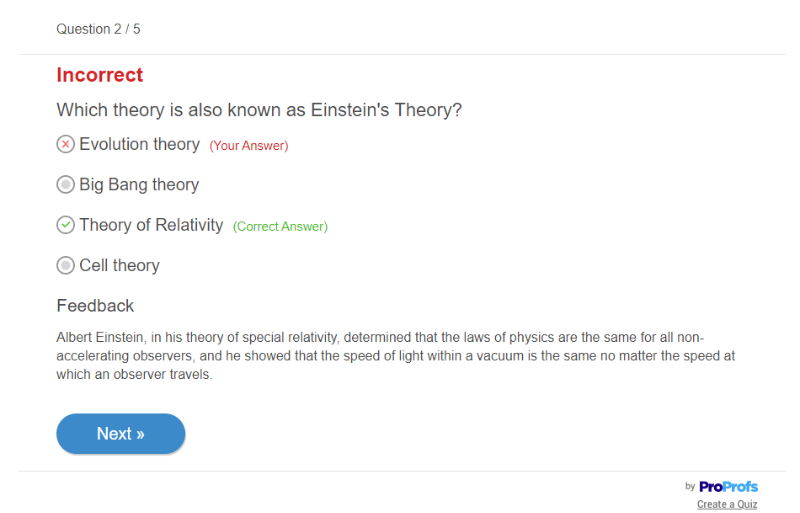
Assessment helps students understand where they went wrong and what needs improvement. Clear, timely feedback allows students to correct misconceptions and strengthen understanding.
2. Helps Evaluate Teaching Effectiveness
Assessment results show whether instructional strategies are working. Teachers can use this information to refine lesson plans, pacing, and teaching approaches.
3. Supports Personalized Learning
Assessment data reveals individual strengths, weaknesses, and learning needs, allowing instruction to be adjusted to support different learners.
4. Improves Retention
By reinforcing learning and identifying gaps, assessments help students retain information more effectively than restudying alone. They can even improve the retention of subsequently studied information.
Watch: How Barry Hoffman, a New York math teacher, uses ProProfs’ instant feedback to boost retention
5. Tracks Learning Progress Over Time
Assessments make it possible to measure growth, identify performance patterns, and set meaningful improvement goals.
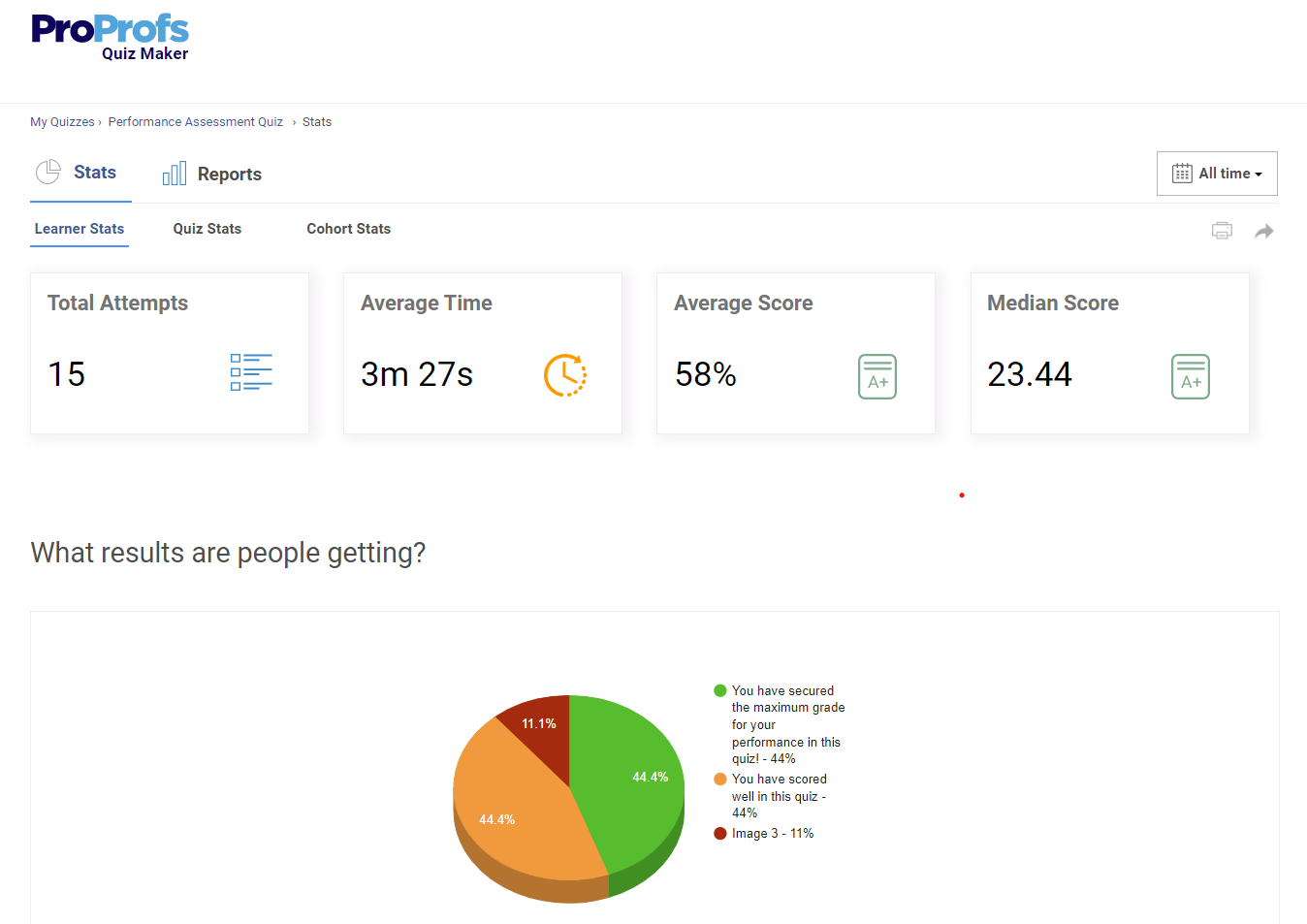
Watch: How to Review Quiz Reports & Statistics
Top Methods For Student Assessment
There isn’t a single “best” method for assessing students. Each method reveals something different about learning, which is why effective assessment relies on combining approaches rather than repeating the same one in every situation. The key is understanding what each method is good at uncovering and when it makes sense to use it.
1. Written Work (Essays, Reports, Blogs)
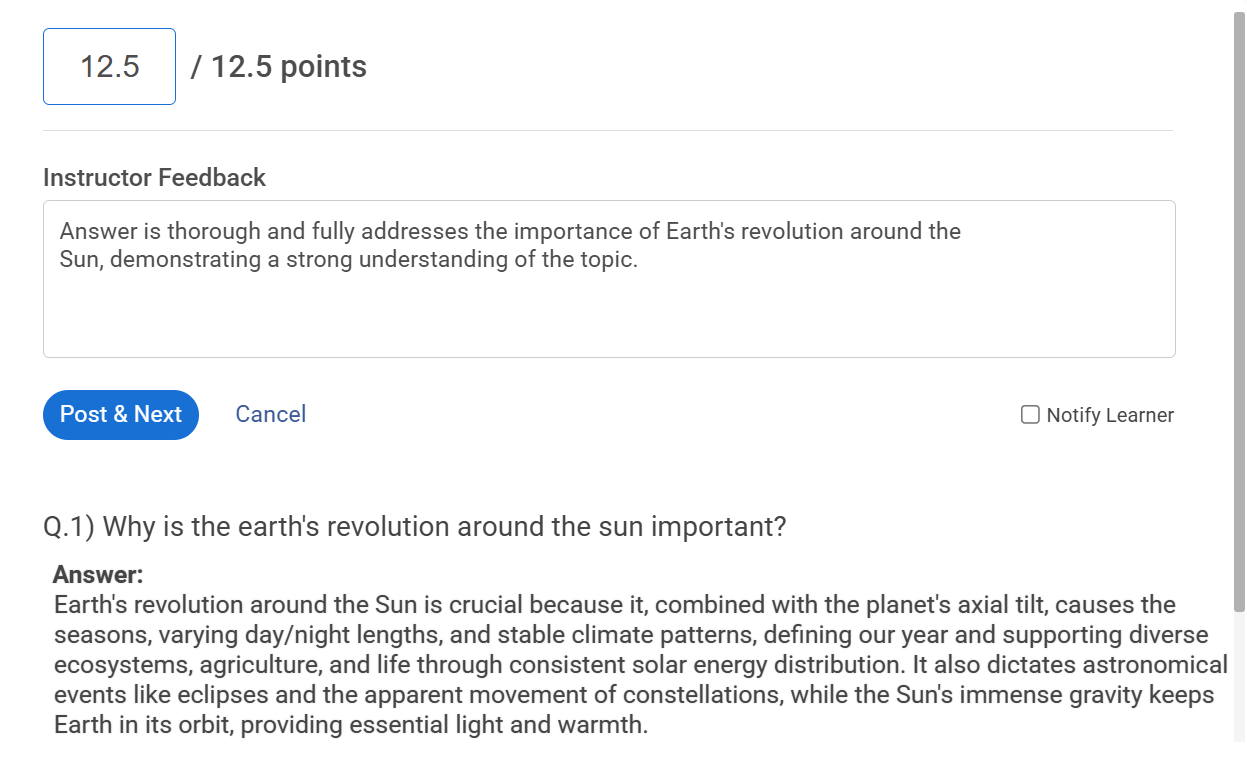
Written work is most useful when the goal is to understand how students process ideas. It shows how well they can explain concepts, connect arguments, and make sense of information in their own words.
These assignments work best when prompts require reasoning rather than recall. Asking students to justify a position, compare perspectives, or apply concepts to a new situation produces far more insight than asking for summaries. Clear rubrics help keep evaluation focused on thinking and structure, which also makes feedback easier for students to act on.
2. Portfolios Of Student Work
Portfolios shift the focus from performance on a single task to learning over time. They make progress visible in a way that isolated assessments cannot.
This method is particularly effective when students are asked to select specific work samples and explain what improved, changed, or remained challenging. Portfolios work well in skill-based or project-driven subjects, where growth and iteration matter as much as final output.
3. In-Class Tests And Exams
Tests and exams are still valuable, especially for checking retention and application at defined points in a course. Their usefulness depends far more on design than on format.
When exams rely only on memorization, they offer limited insight. Including short-answer or applied questions helps reveal whether students understand concepts or are simply recalling facts. Keeping exams tightly aligned to core objectives also improves the quality of the information they provide and avoids unnecessary overload.
Watch: Question Types for Online Learning & Assessment
4. Self-Assessment
Self-assessment introduces students to the habit of evaluating their own learning rather than waiting for external judgment.
This method works best when reflection is guided. Structured prompts or rubrics help students identify strengths, recognize gaps, and think about next steps. Over time, self-assessment supports independence and encourages students to take ownership of improvement.
5. Peer Assessment
Peer assessment gives students exposure to different approaches and interpretations, which can deepen understanding.
For peer feedback to be useful, expectations must be clear. Focusing feedback on specific criteria and asking students to identify concrete strengths and areas for improvement keeps the process constructive and learning-centered rather than subjective.
6. Visual Or Audio Presentations
Presentations allow students to demonstrate understanding through explanation and communication rather than written responses alone.
They are especially effective when learning outcomes involve articulation, reasoning, or application. Using a rubric helps maintain consistency when evaluating clarity, accuracy, and organization. Recorded formats, including video response quizzes, are useful when students need time to explain ideas or demonstrate skills verbally.
7. Surveys And Course Evaluations
Surveys provide insight into how students experience instruction and where learning may be breaking down.
When used during instruction rather than only at the end, short surveys can surface confusion, pacing issues, or engagement gaps while there is still time to respond. Used this way, surveys become a tool for adjustment rather than a formality.
How to Choose the Right Student Assessment Method
Choosing an assessment method becomes easier when the instructional goal is clear. Different methods answer different questions about learning.
| Instructional Goal | Recommended Method | Why It Works |
|---|---|---|
| Check prior knowledge | Diagnostic quizzes, short written responses | Reveals readiness and misconceptions early |
| Monitor understanding during instruction | Formative quizzes, in-class activities | Provides timely signals for adjustment |
| Measure final achievement | Tests, exams, final projects | Confirms mastery of learning objectives |
| Assess application of skills | Performance-based tasks, presentations | Shows how knowledge is used |
| Track growth over time | Portfolios, repeated formative assessments | Makes progress visible |
| Build reflection and ownership | Self and peer assessment | Encourages metacognition |
Evolution of Student Assessments and Current Trends
Student assessment has evolved in response to how learning is designed and delivered. The focus has gradually shifted from summarizing performance at the end of instruction to generating insight while learning is still taking place.
How Student Assessment Has Changed
| Earlier Focus | Current Direction |
|---|---|
| End-of-course evaluation | Ongoing assessment during learning |
| Paper-based tests | Digital and online assessments |
| Recall-focused questions | Application and reasoning-focused tasks |
| Manual grading | Automated scoring and reporting |
| Single assessment formats | Multiple forms of learning evidence |
1. Shift Toward Ongoing Assessment
Earlier assessment practices relied heavily on final tests and exams. While useful for reporting outcomes, they offered little opportunity to respond to learning gaps in time. Modern approaches place greater emphasis on formative and diagnostic assessment to surface misunderstandings early and guide instruction as learning unfolds.
2. Broader Ways to Demonstrate Learning
Assessment formats have expanded beyond written tests. Projects, presentations, and performance-based tasks are now used more frequently to evaluate how students apply knowledge, communicate ideas, and solve problems. These formats provide richer evidence of learning than recall-focused questions alone.
3. Technology as an Enabler, Not the Goal
Digital tools have made assessment easier to administer and analyze. Automation supports faster scoring, clearer reporting, and better visibility into learning patterns. The value lies in improved insight, not speed or volume.
Watch: How the University of Zurich Streamlined Assessments & Reduced Workload
Overall, these changes reflect a move toward assessment as a continuous source of instructional insight rather than a final judgment.
Challenges In Student Assessment (& Strategies to Overcome Them)
Student assessment can be hard, even when teachers do everything right. These are real constraints that affect accuracy and usefulness, with fixes that keep the assessment practical.
1. Limited Time for Meaningful Feedback
Challenge: Grading, documenting results, and writing feedback take time, especially with larger classes. Feedback often arrives after students have moved on, so it has less impact.
Fix: Use shorter, more frequent checks and prioritize feedback on the top one or two misconceptions. Rubrics speed up grading and keep feedback consistent.
2. Inconsistent Evidence Across Assessment Methods
Challenge: A quiz, project, and presentation can all assess the “same topic” but produce different signals, making it hard to compare learning or track progress reliably.
Fix: Anchor different formats to the same criteria. A simple rubric helps ensure each method measures the same outcome.
3. Measuring Complex Skills Reliably
Challenge: Skills like critical thinking, problem-solving, and communication matter, but they are harder to assess consistently than factual knowledge. Scoring can become subjective or uneven.
Fix: Break complex skills into observable indicators, such as reasoning quality, use of evidence, and clarity. Assess those indicators consistently across tasks.
4. Fairness and Accessibility Across Learners
Challenge: Language proficiency, learning needs, and access differences can affect how students perform, even when understanding is strong. One format may unintentionally disadvantage some learners.
Fix: Offer more than one way to demonstrate the same outcome when possible and make expectations explicit. Keep standards steady by using consistent criteria.
5. Academic Integrity in Online or High-Stakes Settings
Challenge: Unsupervised environments and high pressure can reduce confidence in results, especially when assessments rely heavily on recall.
Fix: Use application- and reasoning-based prompts, vary scenarios, and include short explanations. This makes understanding easier to verify and harder to copy.
Watch: How to Create a Timed Quiz
How to Create a Student Assessment
Creating a student assessment is a process that involves a careful selection of assessment types and methods, which we have talked about above.
Step 1: Define Learning Objectives
Your assessment is only as strong as the objective behind it. Write objectives that are brief, specific, and measurable.
Example: Instead of “understand renewable energy,” use “identify the impact of solar, wind, and hydro power on emissions and cost.”
Step 2: Pick an Assessment Type
After you’ve set your learning objectives, pick an assessment type from the the assessment types discussed above.
Consider your learning objectives while picking the type. If you wish to assess students’ pre-existing knowledge about the topic, use the diagnostic assessment.
If you’ve already taught the topic and wish to assess retention, go with a formative assessment.
Step 3: Select a Method
The methods you choose for assessment will vary depending on the learning outcome(s) you wish to achieve. Select a method that helps you encourage, enable, and support learning.
Also, base your choice on the frequency with which your students need to be assessed. Focus on how much attention and energy you want your students to invest in the assessments and choose accordingly.
Step 4: Create the Assessment
Once you’ve decided on an assessment type and method, you can set up your assessment. Here’s how the process looks if you create a quiz for your student assessment:
- 1: Choose a quiz template or create a quiz with AI or manually.
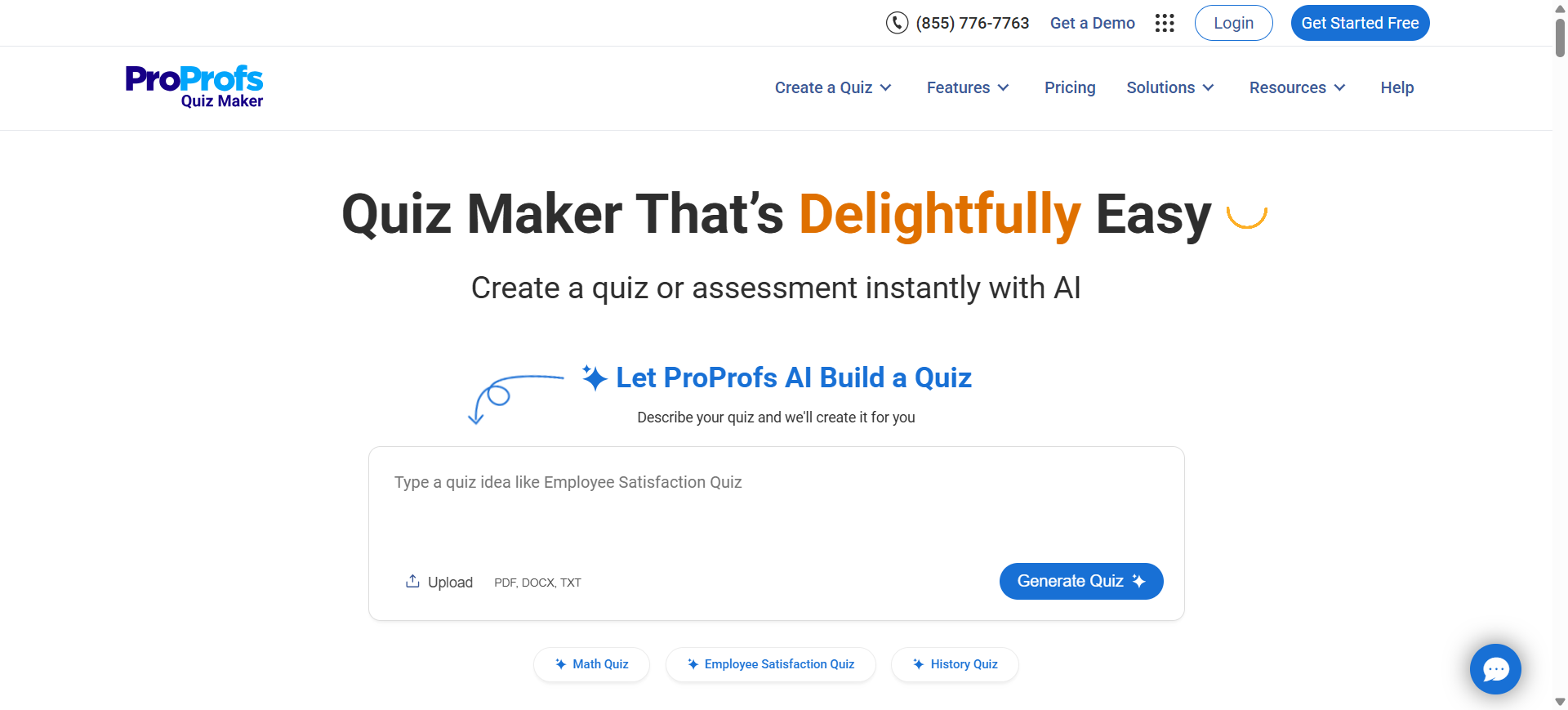
- 2: Create questions, import them from a question bank, or generate them with AI.
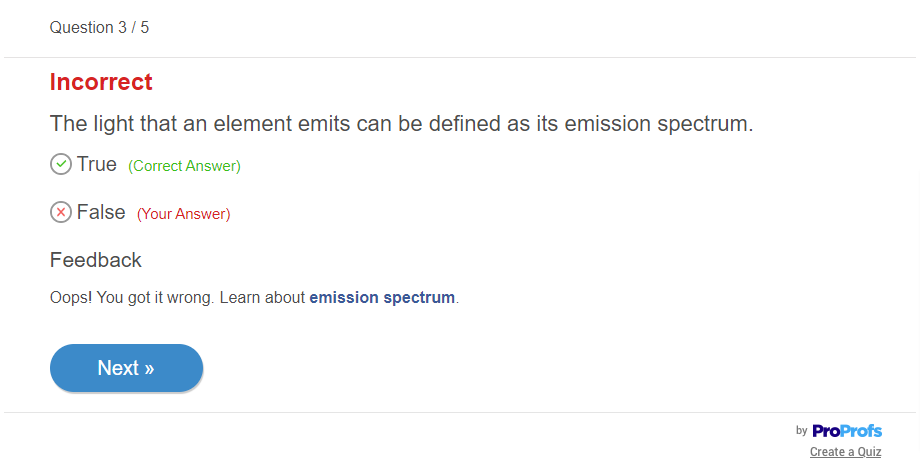
- 3: Add images, videos, and instant feedback to make your quiz more engaging and effective.
- 4: Configure settings for scoring, security, cheating prevention, notifications, and more.
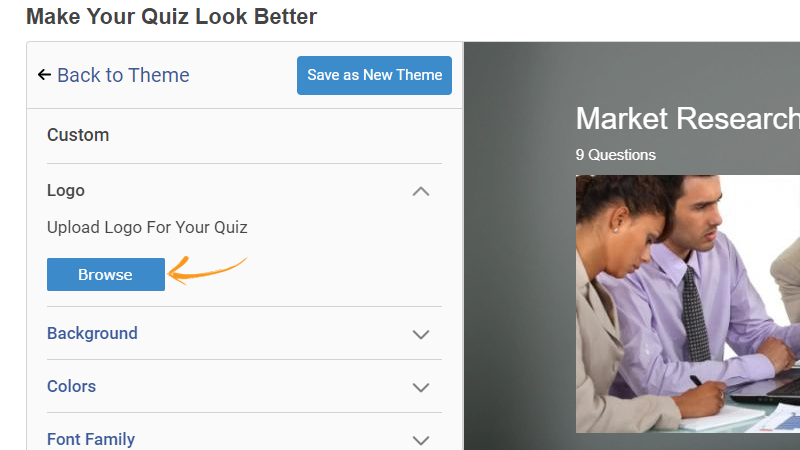
- 5: Add and customize a theme to give your quiz an appealing look.
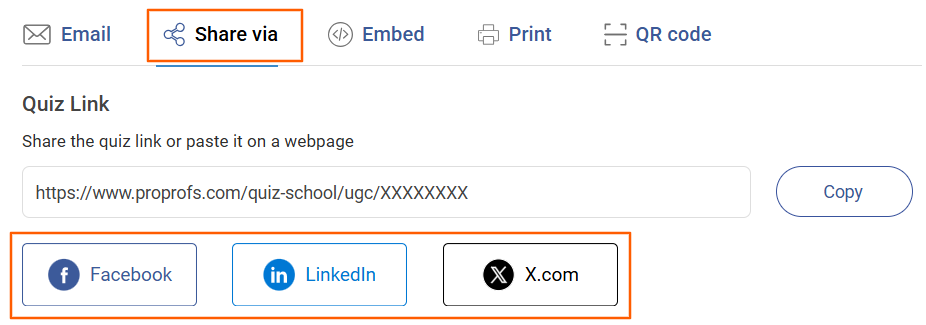
- 6: Share the quiz with your students via a link, virtual classroom, website embed, or QR code.
Step 5: Analyze the Results
After you have administered the assessment and collected the data, you need to analyze the results to evaluate your assessment’s effectiveness and student learning outcomes.
This can be a challenging and time-consuming task, especially if you have a large number of students or a complex assessment design.
However, there is a way to make the analysis process much easier and faster: online quizzes for student assessment.
Online quizzes can automatically generate reports and statistics for your student assessment results, saving you time and effort. You can access and view the reports and statistics in various formats, such as:
- Scores: Online quizzes can show you the scores of each student, as well as the average, minimum, and maximum scores of the whole class or group.
- Individual and group analysis: Online quizzes can help you better understand your students’ learning by showing you individual students’ or groups’ performance and progress.
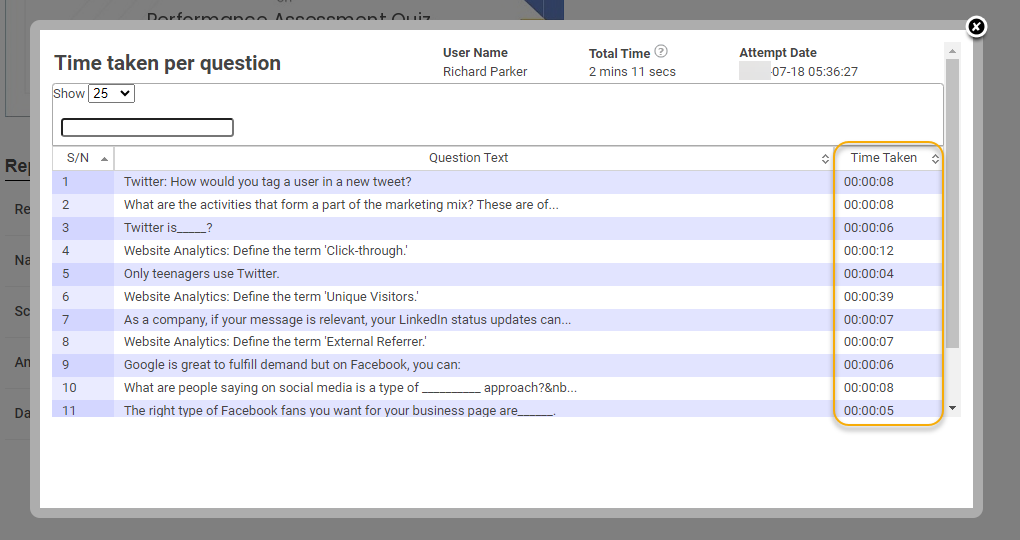
- Question analysis: Online quizzes can provide detailed information on each question, such as the difficulty level, the time taken per question, and the percentage of correct and incorrect responses.
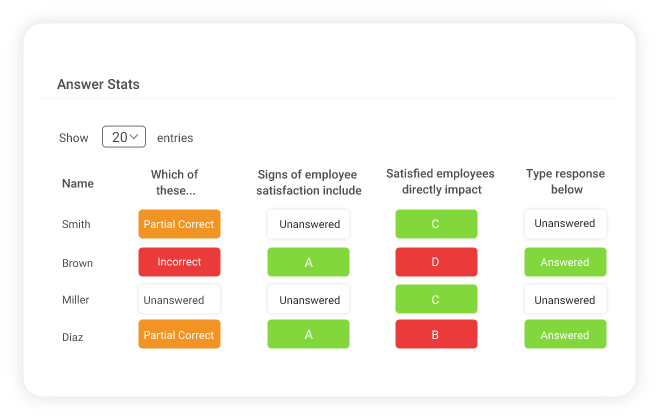
By using online quizzes for student assessment analysis, you can gain valuable insights into your students’ learning and your own teaching and assessment strategies.
Student Learning Assessment Best Practices
Student learning assessment works best when it gives you evidence you can act on quickly. These best practices help you design assessments that are clear, fair, and instruction-friendly.
1. Write Questions That Reveal Learning, Not Test-Taking Skills
A good question is diagnostic. It tells you whether students understand the idea, what misconceptions they are carrying, or whether they can apply the concept beyond the exact example you taught.
Start with plain language. If students miss a question because of confusing wording, you learn nothing about their understanding. Then match the question to the skill. If the goal is reasoning, a pure recall item will flatter results and hide gaps.
Here’s what that looks like.
Weak (Mostly Recall):
“What is the main idea of the passage?”
This is vague and often measures test strategy more than comprehension. It also gives you little insight into what the student misunderstood.
Stronger (Forces Evidence and Thinking):
“Which sentence best states the author’s main claim, and what detail from the passage most strongly supports it?”
This makes students show identification and justification. If they pick the wrong claim, the issue is comprehension. If they pick the right claim but weak support, the issue is using evidence.
Another common upgrade is moving from definition checks to application.
Weak (Definition Check):
“What is a metaphor?”
Stronger (Application Check):
“Read the sentence: ‘Time is a thief.’ What does the metaphor suggest, and why is it not meant literally?”
This requires understanding, not memorization.
2. Use Performance-Based Assessments When the Outcome Is Application
When outcomes focus on problem-solving, communication, or real-world use of knowledge, performance-based assessment often gives better evidence than a quiz alone. It shows process, not just a final answer, and it surfaces partial understanding.
Projects, demonstrations, portfolios, and presentations are strong formats here. If spoken responses are part of the assessment, audio or video response questions in an online quiz can capture oral evidence without scheduling bottlenecks.
3. Use Rubrics That Make Expectations Obvious
Rubrics reduce subjectivity and save time, but their bigger value is clarity. Students produce stronger work when they know what quality looks like before they begin.
Keep rubrics short, observable, and tied directly to the learning outcome. If a criterion cannot be seen in the work, it should not be scored.
4. Shorten the Feedback Loop So Results Lead to Action
Student learning assessment improves learning when feedback arrives while students can still use it. Instead of trying to comment on everything, focus on what will move learning forward fastest.
A practical approach is to review results, identify the most common misunderstanding, address that first, then assign targeted follow-up for the students who still need support.
5. Choose the Assessment Type Based on the Decision You Need Next
Assessment becomes easier when the purpose is clear. Diagnostic checks readiness. Formative guides instruction during learning. Summative confirms achievement at the end. Ipsative helps track growth over time. Norm-referenced supports comparisons when required.
6. Use a Simple Mix Across the Learning Cycle
A single assessment rarely tells the full story. A sustainable sequence is to start with a brief diagnostic check, use quick formative checks during instruction, end with a summative assessment aligned to outcomes, then follow up based on the gaps you actually see instead of reteaching everything.
How to Use Student Learning Assessment Before, During, and After Instruction
This is a simple way to plan student learning assessment so it supports teaching decisions at every stage, not just grading.
Step 1: Before Instruction, Run a Readiness Check
Start by figuring out what students already know, what they forgot, and which prerequisites are missing. This helps you set the right starting point and avoid teaching blindly.
How to do it:
- Give a short pre-test or concept check (10 minutes)
- Use an entry ticket that targets the most important prerequisite skills
- Ask one “explain in a sentence” question to surface misconceptions
How to use results: regroup students for support, add a quick refresher, or adjust pacing before the unit starts.
Step 2: During Instruction, Use Quick Checks to Guide Teaching
During a lesson, assessment should help you catch confusion early, while there is still time to fix it. Keep it low-stakes and focused on the day’s objective.
How to do it:
- Use exit tickets tied to the lesson goal
- Run mini-quizzes after a concept or example
- Ask one short constructed-response question to see reasoning
- Use quick polls or checks for understanding to spot classwide gaps
How to use results: reteach one key point, change examples, slow down for a tricky step, or assign targeted practice to students who need it.
Step 3: After Instruction, Confirm Mastery and Plan the Next Move
After a unit, assessment should verify outcomes and help you decide what to reinforce, what to spiral, and what students are ready to do next.
How to do it:
- Give a unit test or final quiz aligned to objectives
- Use a performance task when application matters
- Run a cumulative review quiz to check retention
- Add a short reflection prompt so students identify strengths and gaps
How to use results: identify standards that need reinforcement, plan a spiral review, adjust the next unit’s starting point, and provide follow-up practice.
Step 4: Close the Loop With One Action for the Whole Class and One for Individuals
This keeps assessment from becoming a dead-end. After reviewing results, choose:
- One class-wide adjustment (reteach, revisit, or practice)
- One targeted next step for students who need more support or extension
Build a Repeatable Assessment Routine That Saves Time and Improves Learning
Student learning assessment works best when it is treated as a teaching tool, not a once-in-a-while event. A quick readiness check before a unit can prevent confusion later. Small checks during instruction help catch misconceptions while there is still time to fix them. And a thoughtful wrap-up assessment after instruction does more than confirm mastery. It tells you what to reinforce, what to spiral, and what students are ready to learn next.
If you are running assessments regularly, the practical win is consistency: clear objectives, clean questions, timely feedback, and results you can act on. When the process is simple enough to repeat, assessment becomes part of everyday teaching, not a separate project.
And if you prefer to deliver those checks online, many teachers use ProProfs Quiz Maker to create quick pre-tests, exit tickets, and revision quizzes, then review results in one place without adding extra admin work.
Frequently Asked Questions

What are examples of assessment of student learning?
Common examples include pre-tests, exit tickets, quick quizzes, short written responses, projects, presentations, portfolios, and peer or self-assessments. The best choice depends on whether the goal is to check readiness, monitor progress, or confirm mastery.
What is an example of an SLO in education?
An SLO (student learning objective) is a clear statement of what students should be able to do by the end of instruction. Example: “By the end of the unit, students will solve two-step linear equations and explain each step using correct math vocabulary.”
What are the six types of learning assessments?
A practical set many educators use includes diagnostic, formative, summative, interim, performance-based, and self or peer assessment. Each type supports a different decision, from readiness checks to mastery confirmation.
What is the difference between a student assessment, a test, and an exam?
Student assessment is the broad process of gathering evidence of learning in many ways. A test is one method, often shorter and skill-focused. An exam is usually more formal, more comprehensive, and often higher stakes.

Let ProProfs AI Build a Quiz

 We'd love your feedback!
What did you like & how can we make it even better?
 Thanks for your feedback!
 Ask Your Question
Have a question? Get expert help to make your decision easier.