

Last quarter, I joined a training review where completion rates were presented as the headline result. I asked to see what happened after the course: audit exceptions, repeat escalations, rework, and manager notes. The same issues were still showing up, which made one thing clear to me. Training isn’t proven by completion. It’s proven by performance.
That’s where the benefits of online exams show up in a practical way. Used as checkpoints, they confirm whether learners can recall and apply the right steps when the lesson isn’t open in another tab. They also pinpoint where the content is unclear or where people are guessing.
In this blog, I’ll cover the advantages of online exams for training courses and what to look for in online test-taking platforms and online assessment tools.
What Online Exams Mean in Training
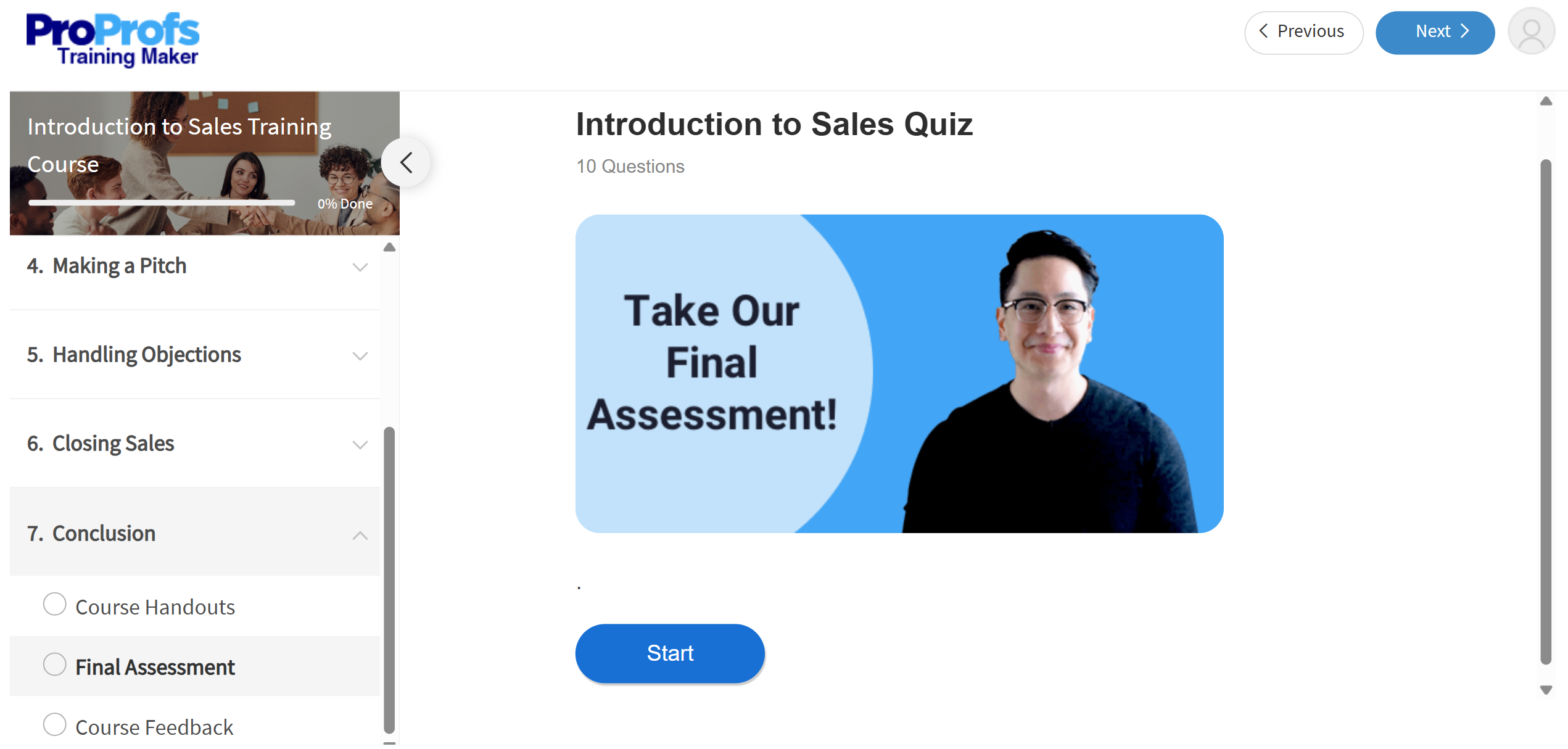
In training, an online exam isn’t just a score at the end. It’s a way to make learning measurable while it’s happening, so you can separate “I completed it” from “I can do it.” The best programs use exams as checkpoints that reinforce standards, reduce repeat mistakes, and confirm readiness, not as a box to tick after a module.
In practice, online exams in training usually take five forms:
- Micro quizzes after a short lesson to confirm one key idea landed
- Module checkpoints that require a pass score before learners move forward
- Final exams that validate readiness for role expectations, certification or recertification, and compliance sign-off
- Pre-assessments that show what learners already know, so training starts at the right level
- Skills validations that test judgment through scenarios and exceptions, not just definitions
What makes training exams different from academic tests is intent. You’re not ranking people. You’re confirming capability and protecting standards, especially in compliance and safety training. The same structure also applies to customer and partner training, where correct usage and consistent outcomes matter more than simple completion.
Why Online Exams Matter More Than Ever
Training is easier to launch than ever, but harder to validate. When learning happens asynchronously across roles, locations, and time zones, “completion” becomes a weak signal. People can finish a course and still miss the steps that matter when the job gets messy.
Online exams solve that gap by creating proof at the right moments. A well-placed checkpoint forces retrieval, slows down skimming, and reveals whether learners can apply the standard without the lesson open in another tab.
Just as importantly, the reporting data shows you whether the issue is learner confusion, unclear content, or a question that needs rewriting.
The shift is simple but powerful: online exams turn training from a one-way delivery into a system you can measure, defend, and improve each cycle.
Benefits of Online Exams in Training Courses
Online exams earn their place in training when they do two things at once: improve how people learn and reduce the cost of training mistakes. The trick is to treat assessments as checkpoints inside the course, not as a ceremony at the end.
When you do that, the benefits show up quickly and in places leaders actually care about.
1. Change How Learners Consume Training
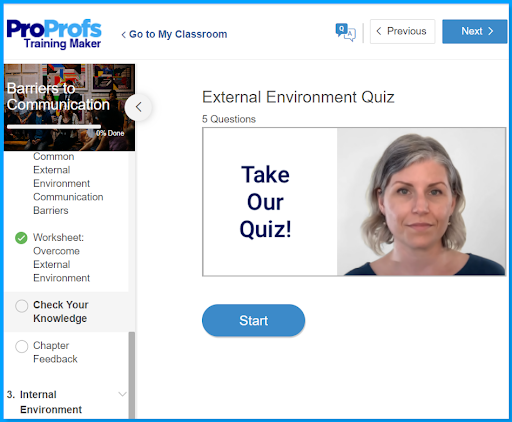
Most employees do training alongside real work. If the course can be skimmed, many will skim it, not out of laziness but because that’s how overloaded people behave. A short assessment changes the mental posture. It creates a moment where the learner has to retrieve and decide, not just nod along.
One practical move I’ve seen work across onboarding and compliance is a short checkpoint right after the highest-risk concept. Keep it tight, keep it relevant, and you’ll notice fewer “I thought I understood that” mistakes later.
2. Improve Retention by Forcing Retrieval
A learner recognizing the right answer is not the same as a learner being able to use the concept two weeks later. Retrieval practice is what builds durable recall. Online exams make retrieval easy to structure across a course without turning training into a constant test.
If you want this benefit without adding complexity, focus on repeating the same idea in different forms. A rule question early, a scenario question later. That shift from recall to application is where retention starts to look like competence.
3. Turn Training from Completed to Verified
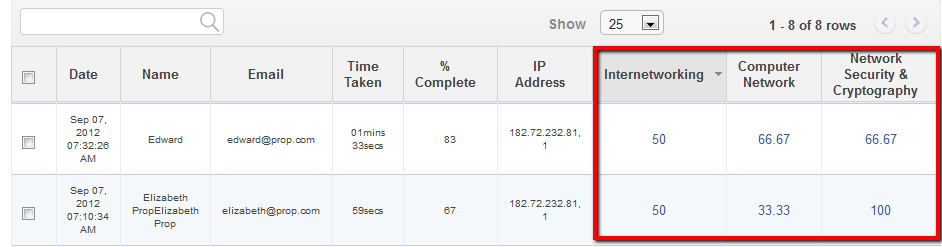
Completion is a weak signal because it measures activity, not capability. Online exams give you evidence that training outcomes are real and defensible, especially in compliance, safety, and customer-facing workflows.
You can track signals like:
- Pre-assessment vs. post-assessment improvement
- Pass rates by role, cohort, or location
- Topic-level gaps that predict downstream errors
- Completion tied to passing, not just viewing content
This is also the point where training conversations with leadership get easier. You’re no longer selling the idea of training. You’re showing measurable movement.
4. Expose Weak Content Before It Shows Up as Rework
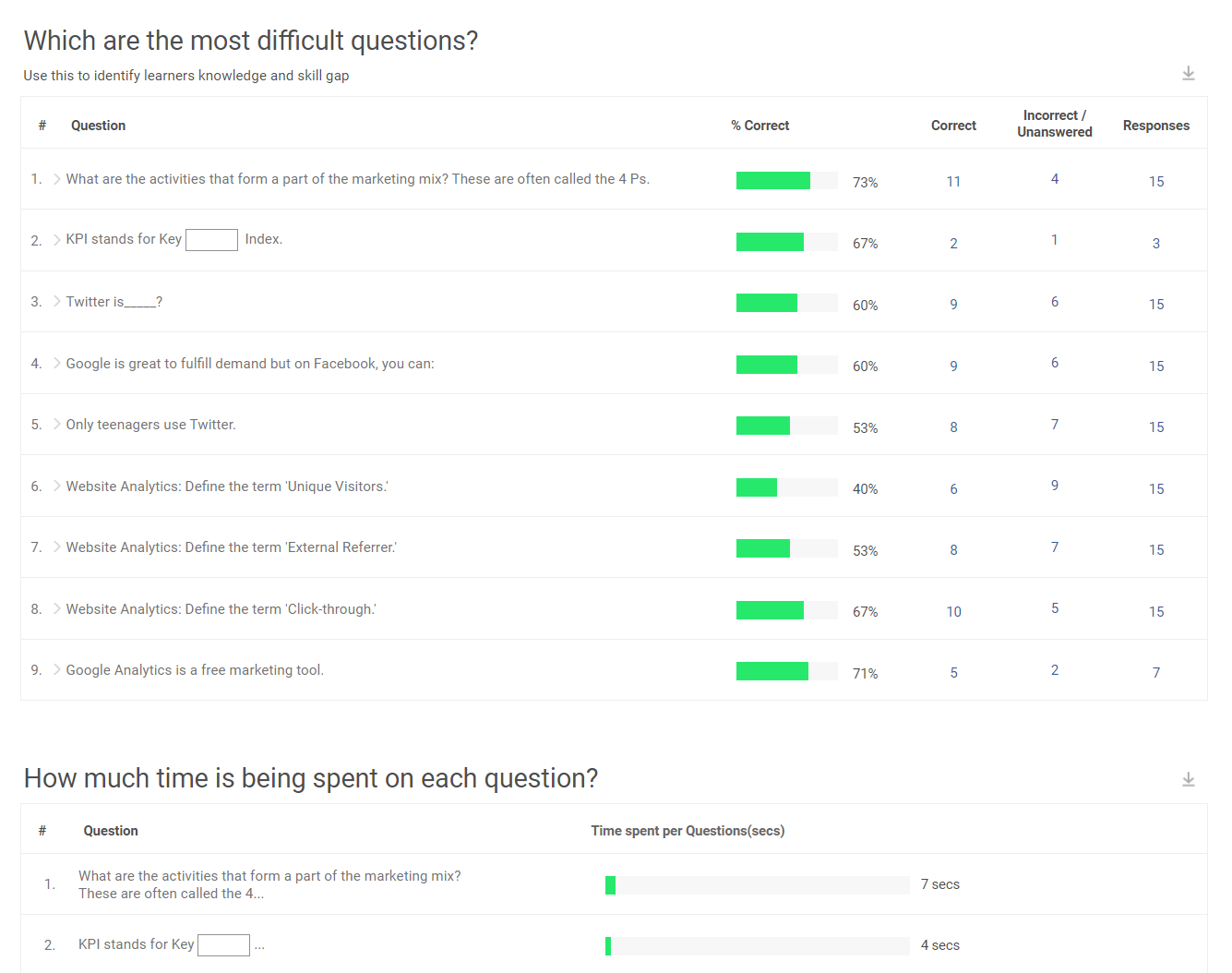
When a large group misses the same question, treat it like a diagnostic report. Sometimes learners need reinforcement. Often, the training content needs clarity. Either way, exams show you where your program is leaking.
Common fixes that work fast:
- Add one concrete example where the content is abstract
- Convert dense policy text into a short checklist and retest it
- Rewrite ambiguous questions so you’re not measuring interpretation
This is one of the strongest advantages of online exams for training teams: you stop debating what learners “should have understood” and start seeing where the course needs tightening.
5. Reduce Admin Load Without Making the Program Flimsy
Training teams often hesitate to add assessments because they don’t want a grading burden. Modern online assessment tools remove that friction through automation, so you can add rigor without adding manual work.
Automation typically covers:
- Auto-grading for objective & essay questions
- Pass rules, timers, attempt limits, and retakes
- Certificates triggered by passing
- Reporting dashboards and export-ready logs
The result is a program that’s easier to run at scale and easier to audit, without training turning into a spreadsheet project.
Watch: How to Automate Quiz Scoring & Grading
6. Scale Standards Across Locations and Schedules
In-person testing assumes shared time and supervision. That breaks down when you’re training shift workers, distributed teams, or frequent onboarding cohorts. Online exams make assessments consistent across learners, which makes results comparable across groups.
This matters most when you have:
- Frontline and shift-based roles
- Teams across multiple states
- Partner or customer training audiences
- Recurring onboarding cycles
Consistency is the hidden benefit here. When everyone is assessed against the same blueprint, you can trust the signal.
Thermo Fisher Scientific saw this firsthand, assessing nearly 600 employees worldwide with one consistent online exam setup and using reports to quickly spot where training needed improvement.

7. Support Personalization Without a Big Build
Not every learner needs the same path. Exams give you a clean way to adjust training based on performance without building a complex adaptive system.
A simple approach is to route learners based on topic performance:
- If a learner struggles in Topic A, assign a short refresher and retest
- If a learner scores high, let them skip the basics and move forward
That kind of branching makes training feel more relevant and reduces wasted time for both learners and trainers.
8. Reduce Click-Through Completion in a Fair Way
People click through training when the system rewards speed. Exams change the incentive structure by making understanding matter.
The fairest way to do this is to match the strictness to the stakes:
- Use low-stakes quizzes during the course with explanations
- Use stricter settings only on final checks for high-risk topics
- Write questions that test decisions, not trivia
When learners see that assessments reflect real work, resistance drops and effort rises.
What to Look for in Online Exam Platforms
The real benefits of online exams show up when the platform helps you do three things consistently: assess real understanding (not guessing), run exams without admin drag, and learn from results so training improves over time.
1. Exam Creation and Delivery
A platform should make it easy to build exams that mirror work, not just definitions. The most telling capability is how quickly you can create a scenario-based quiz, reuse question sets, and update a few items without rebuilding the whole assessment.
Look for:
- Question banks with tagging and reusable sets
- Randomization and question pools (helps results stay credible)
- Timers, attempt rules, and clean access controls
- A stable mobile experience that doesn’t break the flow
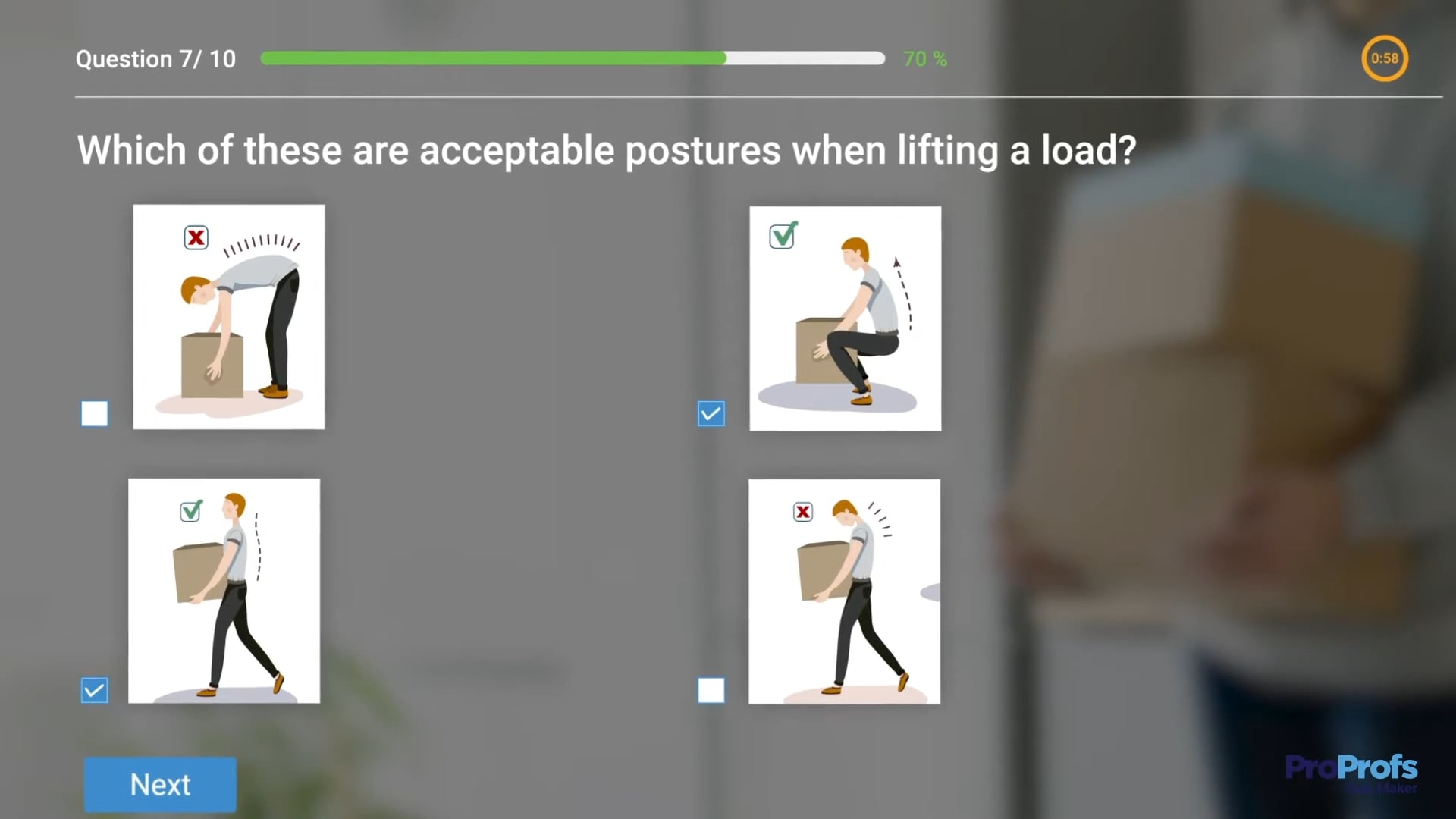
- Option to add images and videos to questions
2. Reporting and Analytics
Online exams are valuable because they produce actionable data. You want visibility that points to what to fix: the concept, the explanation, or the question itself.
Look for:
- Question-level analytics (the fastest path to spotting weak modules)
- Filters by cohort, role, and location
- Attempt history to separate “didn’t know” from “rushed and guessed”
- Export-ready reports for managers and audits
Watch: How to Review Quiz Reports & Statistics
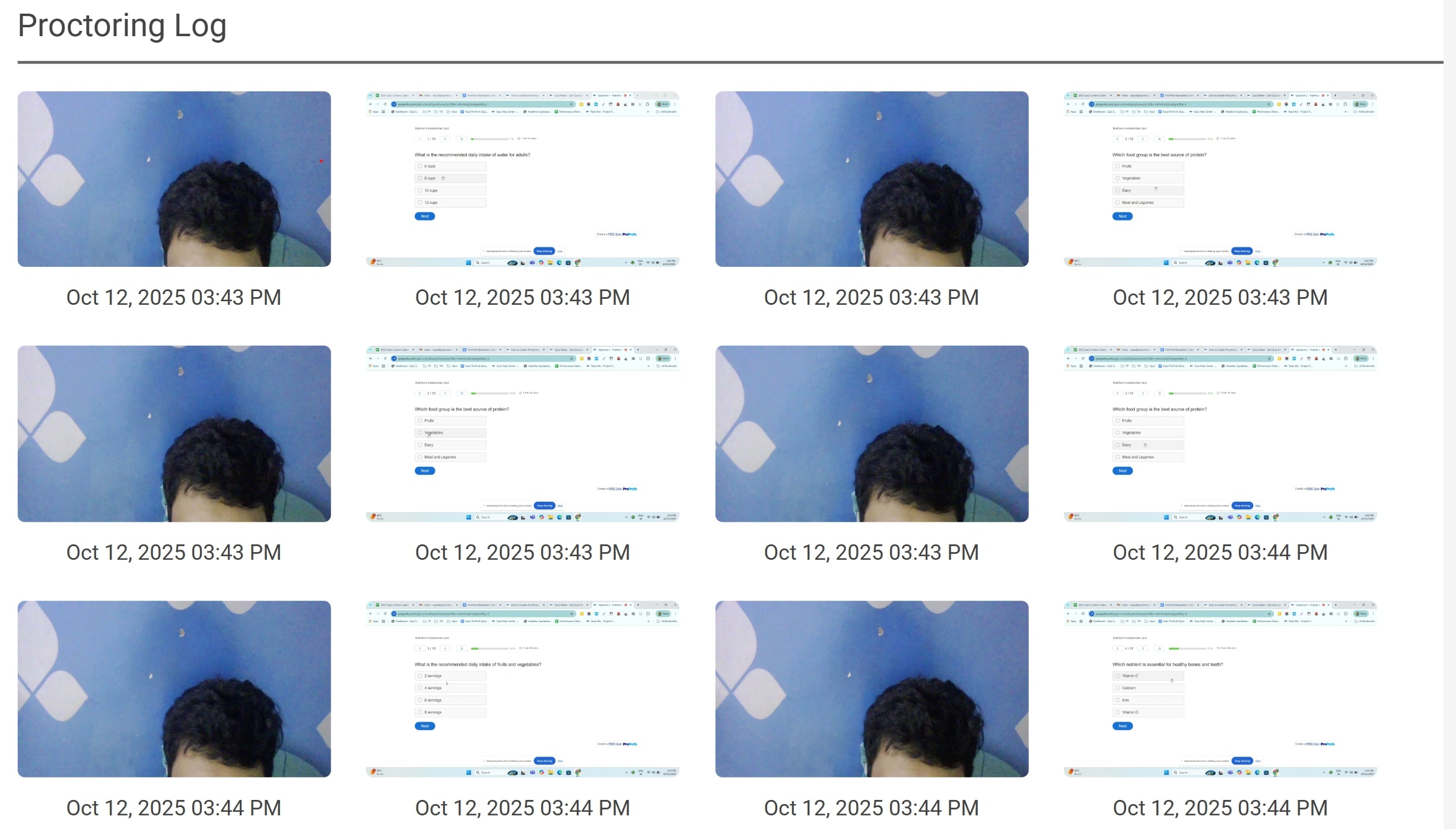
3. Security and Exam Integrity
Integrity is not an all-or-nothing decision. Most training needs low-friction safeguards, while certification or compliance may require stricter controls. The best exam platforms let you adjust security by exam stakes.
Look for:
- Question pools, shuffling, time limits, and attempt limits
- Access windows and invite-only options when needed
- Stricter controls (browser restrictions, proctoring) available selectively
4. Accessibility and Learner Experience
If learners struggle with navigation or device issues, your scores won’t reflect learning. They’ll reflect friction. A clean experience protects fairness and improves completion quality.
Look for:
- Clear layouts, consistent question presentation, and good instructions
- Keyboard-friendly navigation and accommodation options where needed
- Fast performance on common browsers and devices
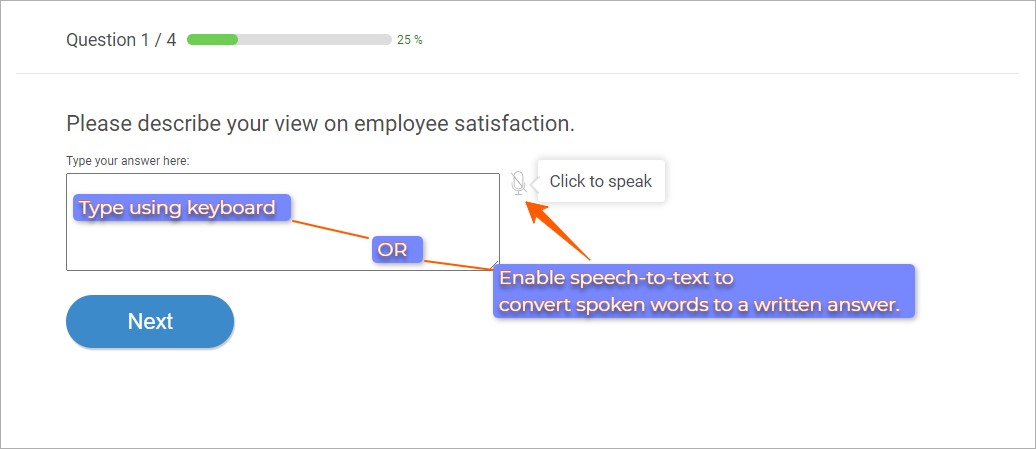
- Speech-to-text and text-to-speech options wherever possible
5. Integration and Training Workflow Fit
Online exams deliver their biggest operational benefits when they fit your training stack instead of creating manual reconciliation work. The right platform reduces reporting chaos and keeps records consistent.
Look for:
- LMS compatibility (SCORM if your LMS is the system of record)
- SSO or identity controls for internal training
- Integrations that reduce manual tracking and duplicate reporting
How to Keep Online Exams Fair, Secure, and Credible
One of the main benefits of online exams is credibility. When results are trustworthy, you can use them to confirm readiness, spot gaps early, and defend training outcomes. The key is matching security to the stakes so you protect integrity without adding unnecessary friction.
1. Use Low-Friction Settings to Protect Everyday Exam Value
For most training courses, you want integrity without disrupting flow. These settings keep measurement consistent while preserving a smooth learner experience.
Use:
- Question pools so each learner sees a different mix
- Shuffled answers to reduce answer-sharing
- Reasonable timers that reflect difficulty
- Attempt rules that separate practice quizzes from final checks
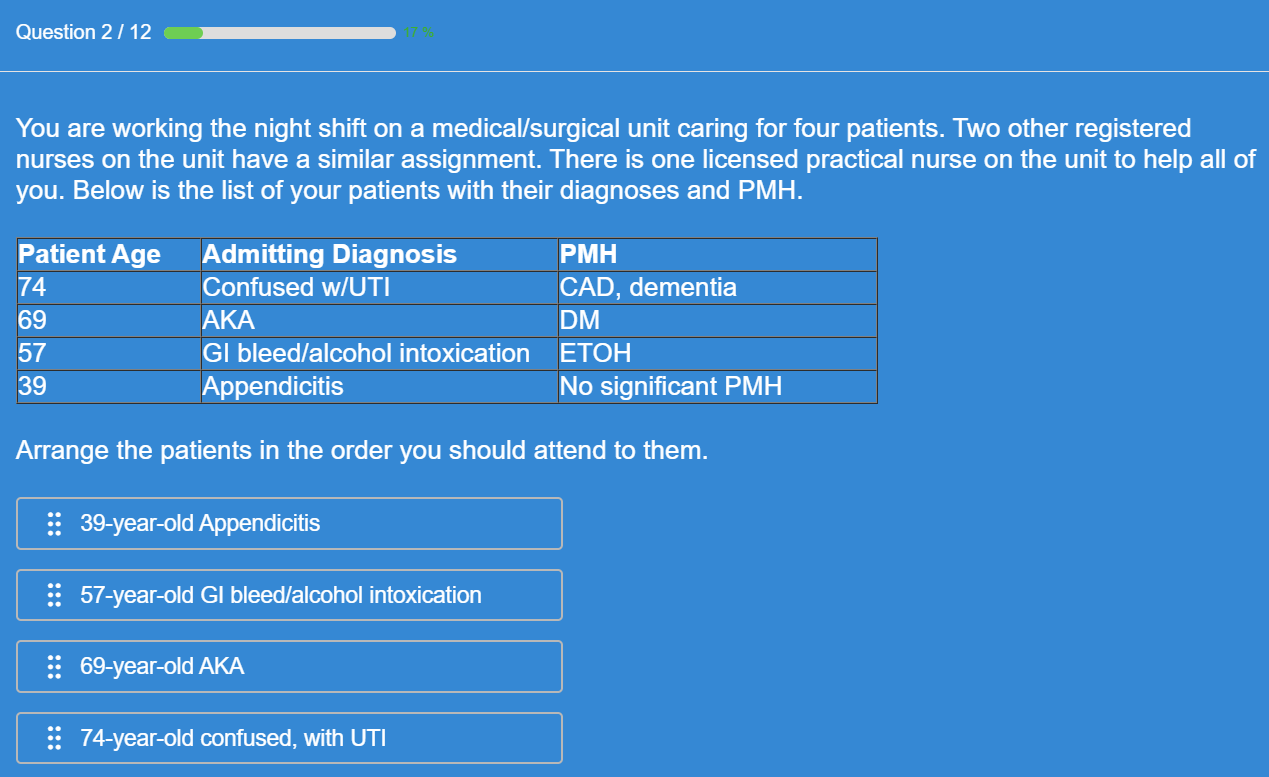
- More scenario-based questions that require judgment
2. Apply Stronger Controls When the Outcome Really Matters
When exams affect certification, compliance, or safety outcomes, stricter controls protect the value of the score.
Consider:
- Tighter access windows (invite-only links, expiration times)
- Lower attempt limits for final exams
- Browser restrictions where appropriate
- Proctoring only for truly high-stakes assessments
3. Keep Trust High With Simple, Transparent Instructions
Security works better when learners understand it. A one-line explanation reduces resistance and keeps focus on performance.
For example: “These settings help keep results fair and consistent for everyone.”
Done right, these settings keep scores meaningful without turning training into a surveillance experience. That’s what protects the real payoff of online exams: trustworthy signals you can use to improve training and reduce repeat mistakes.
SCORM vs. Non-SCORM Online Exams
One of the practical benefits of online exams is portability. You can reuse assessments across programs, track results consistently, and avoid rebuilding the same exam every time your delivery method changes. SCORM (and non-SCORM delivery) affects how portable your exams are, where results get recorded, and how clean your reporting stays.
1. What SCORM Changes for Training Exams
SCORM is mainly about packaging and tracking. When an exam is delivered as SCORM content, it can be launched inside many SCORM LMS platforms and report completion and scores back to the LMS. That matters when your LMS is the system of record and you need standardized reporting in one place.
SCORM tends to help when you care most about:
- Centralized tracking inside the LMS
- Consistent completion reporting across courses
- Reusing the same exam package across LMS environments
2. When Non-SCORM Exams Make More Sense
Non-SCORM exams are typically delivered through a platform link or embedded workflow, with results tracked in that assessment platform (or through integrations). The benefit here is flexibility. You can move faster, share externally, and iterate without the packaging steps that SCORM often requires.
Non-SCORM tends to help when you care most about:
- Faster rollout and easier updates
- Training audiences beyond the LMS (partners, customers, applicants)
- More flexibility in exam design and delivery options
3. How to Choose Without Overthinking It
If you want the benefits of online exams with minimal operational friction, choose based on where you need results to live.
A simple rule:
- If your LMS is the official source of truth for training records, SCORM is usually the safer fit.
- If you need speed, flexibility, or external delivery, non-SCORM often wins.
Many training teams use both. They keep SCORM for compliance-heavy internal training and use non-SCORM delivery for onboarding bursts, partner enablement, and programs that need frequent updates.
Make Online Exams the Part of Training That Drives Results
Online exams help training move from “completed” to “confirmed.” They keep learners engaged, improve retention by forcing recall, and surface exactly where people are getting stuck. That’s where the benefits of online exams become real: fewer repeat mistakes, clearer standards, and outcomes you can explain with confidence.
The biggest payoff is credibility. When your questions reflect real job decisions and your exam settings match the stakes, results become reliable enough to guide coaching, validate readiness, and support compliance records, without adding a manual tracking burden.
To act on this, start with one course: add a short scenario-based checkpoint after the highest-risk concept and review the results after the first group completes it. If you want a simple way to build and run these assessments, ProProfs Quiz Maker helps you create online exams faster with AI-assisted question generation, reuse question banks, and track performance trends so you can keep improving training over time.
Frequently Asked Questions

What are the advantages of using online assessment?
Online assessment tools give you faster feedback loops. You can automate scoring, apply consistent pass rules, and use analytics to improve course content over time. They also help you document outcomes for programs like compliance and certification without adding manual tracking.
What is the key purpose of offering online exams?
The core purpose is validation. Online exams help you verify that learners can recall and apply what they learned, not just complete a module. In training, that’s what turns content delivery into defensible readiness.
How do you choose the right online exam format for training?
Choose formats based on what you need to validate. Use multiple choice for scalable checks, scenario-based questions for job readiness, and fill-in questions when accuracy matters. A strong mix keeps exams fair, useful, and aligned with real training outcomes.

Let ProProfs AI Build a Quiz

 We'd love your feedback!
What did you like & how can we make it even better?
 Thanks for your feedback!
 Ask Your Question
Have a question? Get expert help to make your decision easier.