Thermodynamics in Nuclear Reactor Operations: Understanding BWR Dynamics through Pressure and Flow

Reviewed by Editorial Team
The ProProfs editorial team is comprised of experienced subject matter experts. They've collectively created over 10,000 quizzes and lessons, serving over 100 million users. Our team includes in-house content moderators and subject matter experts, as well as a global network of rigorously trained contributors. All adhere to our comprehensive editorial guidelines, ensuring the delivery of high-quality content.
Learn about Our Editorial Process
| By Thames
T
Thames
Community Contributor
Quizzes Created: 10017 | Total Attempts: 9,652,179
| Attempts: 13 | Questions: 15 | Updated: Aug 4, 2025
Please wait...
Question 1 / 16
🏆 Rank #--
0 %
0/100
Score 0/100

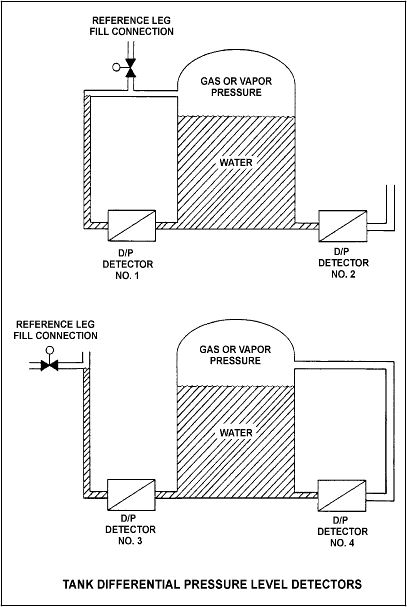
1. Refer to the drawing of two water storage tanks with four differential pressure level detectors. The tanks are presently at 2 psig overpressure, sharing the same constant water level. If a ventilation malfunction causes containment structure pressure to decrease to 12 psia, which level detectors will produce the lowest level indication?

Explanation

When the containment structure pressure decreases to 12 psia, the tanks will experience a differential pressure that will affect the level detectors differently leading to varying level indications. Level detectors 1 and 4 will produce the lowest level indication as they are affected by the pressure change in the containment structure.

Submit
Please wait...
About This Quiz
Thermodynamics In Nuclear Reactor Operations: Understanding Bwr Dynamics Through Pressure and Flow - Quiz

Explore the fundamentals of thermodynamic units and properties in the context of nuclear reactors, specifically Boiling Water Reactors (BWR). This educational content enhances understanding of nuclear reactor operations and safety, tailored for professionals and students in nuclear engineering.

2.

What first name or nickname would you like us to use?

You may optionally provide this to label your report, leaderboard, or certificate.

2. Refer to the drawing of two water storage tanks with four differential pressure level detectors (see figure below). The tanks are identical and are presently at 2 psig overpressure, 60F, and the same constant water level. They are located within a sealed containment structure that is being maintained at atmospheric pressure. All level detectors have been calibrated and are producing the same level indication. If a ventilation malfunction causes the containment structure pressure to decrease to 13 psia, which level detectors will produce the highest indication?

Explanation

When the containment structure pressure decreases to 13 psia, the level detectors located in tanks 2 and 3 will produce the highest indication because they are the ones with a differential pressure setup to respond to these changes. As the pressure decreases, the differential pressure in those tanks will increase, leading to a higher level indication being displayed.

Submit

3. Refer to the drawing of two water storage tanks with four differential pressure level detectors. If each detector experiences a ruptured diaphragm, which detector(s) will cause indicated tank level to increase?

Explanation

If detector No. 1 experiences a ruptured diaphragm, it will cause indicated tank level to increase as it will lose pressure. Detectors No. 2, 3, and 4 will not have an impact on the indicated tank level.

Submit

4. A water storage tank is vented to atmosphere. The tank is located at sea level and contains 100,000 gallons of 80EF water. A pressure gauge at the bottom of the tank reads 5.6 psig. What is the approximate water level in the tank?

Explanation

The water level in the tank can be calculated using the hydrostatic pressure formula P = ρgh where P is the pressure at the bottom of the tank, ρ is the density of water, g is the acceleration due to gravity, and h is the height of the water column. By converting 5.6 psig to feet of water, we find that the pressure supports a column of water approximately 13 feet high.

Submit

5. Refer to the drawing of a tank with a differential pressure (D/P) level detector. If the tank contains 30 feet of water at 60EF, what is the approximate D/P sensed by the detector?

Explanation

The correct answer is B. To calculate the D/P sensed by the detector, we use the formula: D/P = SG x h. Given that water has a specific gravity of approximately 1, and the height of water in the tank is 30 feet, the approximate D/P sensed by the detector would be 1 x 30 = 30 psid. However, since zero point calibration is done at 60EF, there is an adjustment factor of 2.3 psid per 100EF, resulting in an adjustment of 9 psid. Subtracting this adjustment from the initial 30 psid gives us a final D/P of 21 psid. Among the choices provided, 13 psid is the closest option to the calculated value of 21 psid.

Submit

6. A water storage tank is vented to atmosphere. The tank is located at sea level and contains 100,000 gallons of water at 80EF. A pressure gauge at the bottom of the tank reads 7.3 psig. What is the approximate water level in the tank?

Explanation

To determine the water level in the tank, you can use the formula: Height of water column = (Pressure at bottom of tank / (density of water * gravity)) + (Potential energy / (density of water * gravity)). By calculating this, the approximate water level in the tank is equal to 17 feet.

Submit

7. A water storage tank is vented to atmosphere. The tank is located at sea level and contains 100,000 gallons of water at 80EF. A pressure gauge at the bottom of the tank reads 9.0 psig. What is the water level in the tank?

Explanation

The water level in the tank can be calculated by converting the pressure into feet of water using the formula: Pressure (psig) x 2.31 = Height of water (feet). In this case, 9.0 psig x 2.31 = 20.79 feet, which rounds to 21 feet.

Submit

8. Refer to the drawing of two water storage tanks with four differential pressure level detectors. The tanks are identical and are presently at 2 psig overpressure, the same constant water level, and a temperature of 60EF. They are surrounded by atmospheric pressure. All level detectors have been calibrated and are producing the same level indication. A leak in the top of each tank causes a complete loss of overpressure in both tanks. Which level detector(s) will produce the highest level indication?

Explanation

The detectors No. 1 and 4 would produce the highest level indication because the overpressure loss would cause the water level in the tanks to equalize with the surrounding atmospheric pressure, resulting in an increase in the indicated level on detectors No. 1 and 4.

Submit

9. Refer to the drawing of a water storage tank with a differential pressure (D/P) level indicator that is vented to atmosphere. The D/P level indicator is sensing a differential pressure of 4.0 psi. What is the water level in the tank above the instrument penetration?

Explanation

The correct answer is 9.2 feet above the instrument penetration. The calculation involves the relationship between differential pressure and water level in tanks, taking into consideration standard atmospheric pressure and water temperature.

Submit

10. Refer to the drawing of a differential pressure manometer. A differential pressure manometer filled with water is installed across an orifice in a ventilation duct to determine the direction of airflow. With the ventilation conditions as shown, the pressure at P1 is ________ than P2, and airflow is ________?

Explanation

In the given scenario, the pressure at P1 is greater than P2, causing airflow from left to right. This is due to the differential pressure created by the orifice in the ventilation duct.

Submit

11. Refer to the drawing of two water storage tanks with four differential pressure level detectors. The tanks are identical and are being maintained at 17 psia and the same constant water level. They are surrounded by atmospheric pressure. Which one of the level detectors is sensing the greatest D/P?

Explanation

Detector No. 2 is sensing the greatest D/P because it is located at the bottom of the tank where the pressure due to water depth is the highest, resulting in a greater differential pressure compared to the other detectors.

Submit

12. Refer to the drawing of a differential pressure manometer in a ventilation duct (see figure below). P1 and P2 are pressures sensed in the ventilation duct. With the conditions shown, P1 is __________ than P2; and airflow is to the __________.

Explanation

In a differential pressure manometer, the side with the lower pressure (P1) will have a lower fluid level than the side with the higher pressure (P2). This indicates that P1 is less than P2. Additionally, airflow is always directed from the higher pressure side (P2) to the lower pressure side (P1), which in this case would be from right to left.

Submit

13. Refer to the drawing of two water storage tanks with four differential pressure level detectors (see figure below). The tanks are identical and being maintained at 30 psia with a water level of 20 feet. They are surrounded by standard atmospheric pressure. If each detector experiences a ruptured diaphragm, which detector(s) will cause indicated tank level to decrease?

Explanation

When the diaphragms of detectors 2, 3, and 4 rupture, the tank indicated level will decrease due to the loss of pressure balance causing the water level in the tanks to appear lower. Detectors 1, on the other hand, will not cause the tank level to decrease as they are still intact and functioning properly.

Submit

14. If a leak in the top of each tank causes a complete loss of overpressure, which level detector(s) will produce the lowest level indication?

Explanation

When the overpressure is lost due to a leak, the level detectors that will produce the lowest level indication are No. 2 and 3. This is because the loss of overpressure will result in the water level dropping in both tanks equally, causing the detectors closest to the bottom (No. 2 and No. 3) to indicate the lowest level.

Submit

15. An enclosed water storage tank is pressurized with nitrogen to prevent air inleakage. A differential pressure detector with a dry reference leg is used to measure the tank level. To achieve the greatest accuracy of measurement, the low pressure side of the detector should sense which one of the following?

Explanation

In this scenario, the low-pressure side of the detector should sense the pressure of the gas space at the top of the tank to accurately measure the tank level since it is pressurized with nitrogen to prevent air inleakage.

Submit
×
Saved
Thank you for your feedback!
View My Results
Cancel
  • All
    All (15)
  • Unanswered
    Unanswered ()
  • Answered
    Answered ()
Refer to the drawing of two water storage tanks with four differential...
A water storage tank is vented to atmosphere. The tank is located at...
Refer to the drawing of a tank with a differential pressure (D/P)...
A water storage tank is vented to atmosphere. The tank is located at...
Refer to the drawing of two water storage tanks with four differential...
Refer to the drawing of a water storage tank with a differential...
Refer to the drawing of a differential pressure manometer. A...
Refer to the drawing of two water storage tanks with four differential...
Refer to the drawing of a differential pressure manometer in a...
Refer to the drawing of two water storage tanks with four differential...
If a leak in the top of each tank causes a complete loss of...
An enclosed water storage tank is pressurized with nitrogen to prevent...
play-Mute sad happy unanswered_answer up-hover down-hover success oval cancel Check box square blue
Alert!