Exploring the Structure and Development of the Placenta

Reviewed by Editorial Team
The ProProfs editorial team is comprised of experienced subject matter experts. They've collectively created over 10,000 quizzes and lessons, serving over 100 million users. Our team includes in-house content moderators and subject matter experts, as well as a global network of rigorously trained contributors. All adhere to our comprehensive editorial guidelines, ensuring the delivery of high-quality content.
Learn about Our Editorial Process
| By Thames
T
Thames
Community Contributor
Quizzes Created: 8156 | Total Attempts: 9,588,805
| Questions: 28 | Updated: Aug 4, 2025
Please wait...
Question 1 / 29
🏆 Rank #--
Score 0/100

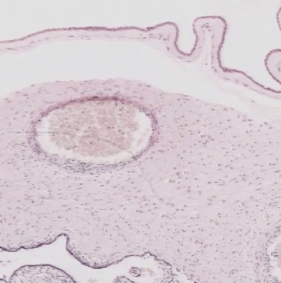
1. What are the different structures visible in the image?

Explanation

The image shows various structures in a cross-section. The correct answer describes the different components accurately. The incorrect answers provided are unrelated to the structures visible in the image.

Submit
Please wait...
About This Quiz
Exploring The Structure and Development Of The Placenta - Quiz

Explore the functions and health implications of the placenta during pregnancy. This content is crucial for understanding maternal-fetal exchanges and potential complications, enhancing both academic knowledge and practical application in obstetric care.

2.

What first name or nickname would you like us to use?

You may optionally provide this to label your report, leaderboard, or certificate.

2. What are the components of the early placenta?

Explanation

The early placenta consists of villi, trophoblast, and lacunae where maternal blood is present.

Submit

3. What is the structure of the outer surface of all villi in the context of embryonic development?

Explanation

In embryonic development, the outer surface of all villi is characterized by syncytiotrophoblast, a mass of protoplasm containing nuclei, cytotrophoblast in cuboidal epithelium form, and a central core of connective tissue. This structure plays a crucial role in nutrient and gas exchange between the maternal and fetal circulatory systems during pregnancy.

Submit

4. What is found in the secondary villus during development?

Submit

5. What is found in a tertiary villus in the placenta?

Explanation

In a tertiary villus of the placenta, the layer of syncytiotrophoblast, cytotrophoblast, and fetal capillaries with mature blood cells are present to facilitate the exchange of nutrients and waste between the mother and the fetus.

Submit

6. What is depicted in the image?

Explanation

The image depicts a mature or late term placenta with numerous villi shown, along with chorionic villi, intervillus space filled with maternal blood, and cytotrophoblast. The presence of syncytial knots indicates the placenta is in a late stage of development.

Submit

7. What is the term used to describe a thinned-down tertiary villus containing a syncytial knot?

Explanation

The correct term for a thinned-down tertiary villus with a syncytial knot is Syncytial knot- cyto thinned downTertiary villus. Decidualized stroma with necrosis, Spiral arteries with atherosis, and Submucosal hemorrhage in the basal decidua are not the appropriate terms for this description.

Submit

8. What happens in the intervillous space during pregnancy?

Explanation

During pregnancy, maternal blood flows through the intervillous space surrounding the chorionic villi in the placenta, allowing for the exchange of nutrients and waste products between the maternal and fetal circulatory systems.

Submit

9. What are the main components of the placental barrier?

Explanation

The placental barrier is mainly composed of syncytiotrophoblast, cyto- cells, fetal capillaries with fetal blood cells, and other components like basal lamina and endothelium. These structures together form a selective barrier that allows for the exchange of nutrients and waste products between the maternal and fetal circulations, while still providing protection for the developing fetus.

Submit

10. What structures are found on the left side of the cytotrophoblast?

Explanation

The cytotrophoblast is a layer of cells in the developing placenta. On the left side of the cytotrophoblast, microvilli are present to absorb nutrients from the maternal blood supply. The incorrect answers do not accurately describe structures found on the left side of the cytotrophoblast.

Submit

11. Which side of the placental barrier has the thinnest portion consisting of Endothelium, basal lamina of cap and syncitio-Trophoblast itself?

Explanation

The thinnest portion of the placental barrier is located on the right side, which includes fetal blood and capillary. This area consists of the Endothelium, basal lamina of capillary, and syncitio-Trophoblast itself, allowing for efficient exchange between fetal and maternal blood.

Submit

12. What organelles are found in Syncitia and are responsible for producing specialized functions?

Explanation

Syncitia are cells in different tissues that share a cytoplasm. Mitochondria are responsible for energy production, Rough Endoplasmic Reticulum (RER) is involved in protein synthesis, and Coated Vesicles are responsible for transporting molecules within the cell.

Submit

13. What is the capital of France?

Explanation

Paris is the capital city of France. Berlin is the capital of Germany, Madrid is the capital of Spain, and Rome is the capital of Italy.

Submit

14. What is observed on the fetal surface of the placenta?

Explanation

The correct observation on the fetal surface of the placenta is the amnion covering the chorionic plate on the left side. This characteristic helps in identifying the fetal surface of the placenta. The incorrect options provide descriptions of observations that are not typically seen on the fetal surface of the placenta.

Submit

15. What can be seen in 2 views of 2 sides of the placenta?

Explanation

The correct answer describes specific structures observed in 2 views of 2 sides of the placenta, involving features of both the fetal and maternal sides. The incorrect answers do not accurately depict what can be seen in this context.

Submit

16. What is the connection between the fetus and the placenta?

Explanation

The fetus is connected to the placenta through the umbilical cord, which consists of a single umbilical vein carrying oxygen-rich blood and nutrients from the placenta to the fetus, and two umbilical arteries carrying deoxygenated blood and waste from the fetus to the placenta.

Submit

17. What are the specialized functions of the nipple regarding infant suckling?

Explanation

The nipple is specialized for the special function of suckling by infants, with adaptations such as long dermal papilla, smooth muscle contributing to nipple erection for latch, sebaceous glands on the bottom, and Montgomery glands on the areola.

Submit

18. What structures are found in the lactiferous ducts of the nipple?

Submit

19. What are the functional cells of the mammary gland?

Explanation

The functional cells of the mammary gland are the parenchyma, responsible for secretion and responding to hormonal changes during pregnancy, not the myofibrils, stroma, or endothelial cells.

Submit

20. What is the structure that separates lobules in the mammary gland and indicates an inactive gland?

Explanation

The correct answer describes the interlobular connective tissue that separates lobules in the mammary gland and signifies an inactive gland. The interlobular tissue is a key feature in identifying the structure of the gland.

Submit

21. What characteristics are associated with an inactive mammary gland?

Explanation

An inactive mammary gland lacks secretory alveoli and has ducts but no secretory component. Estrogen stimulates the ducts to form alveoli in an inactive gland.

Submit

22. What is the definition of a white adipose gland?

Explanation

White adipose glands are primarily storage depots for energy in the form of fat. They contain large adipocytes filled with lipids and are generally considered inactive compared to brown adipose tissue.

Submit

23. Where can inactive gland ducts be found?

Explanation

The correct answer refers to the specific location of inactive gland ducts, which are different from the other options provided.

Submit

24. What changes occur in the breast during the second state of proliferation?

Explanation

During the second state of proliferation in the breast, various changes occur as mentioned in the correct answer. This includes the production of estrogen, secretion of alveoli with hormones like progesterone, prolactin, and hcg, increase in lobule size, increase in the number of cross-sectional profiles, increase in CT cells, and depression of adipose tissue.

Submit

25. What type of duct is associated with a gland that produces a large amount of secretory product?

Explanation

Glands that produce a large amount of secretory product typically have larger ducts to accommodate the volume of secretion. Smaller ducts with excretory product, medium-sized ducts with exocrine product, and tiny ducts with endocrine substances are less likely to be associated with glands producing high amounts of secretory products.

Submit

26. How do cells produce milk in alveoli?

Explanation

The correct answer describes the process of cells producing milk in alveoli by concentrating lipid for milk.

Submit

27. In which phase of the cell cycle does cell growth and DNA replication occur?

Explanation

Cell growth and DNA replication primarily occur in the proliferative phase of the cell cycle. Mitotic phase is focused on cell division, G0 phase is a resting phase, and apoptotic phase is programmed cell death.

Submit

28. What are the characteristics of the secretory product after a 6-month gestation period?

Explanation

After a 6-month gestation period, the secretory product consists of pink material, which is the protein component, while the white and washed out material is lipid.

Submit
×
Saved
Thank you for your feedback!
View My Results
Cancel
  • All
    All (28)
  • Unanswered
    Unanswered ()
  • Answered
    Answered ()
What are the different structures visible in the image?
What are the components of the early placenta?
What is the structure of the outer surface of all villi in the context...
What is found in the secondary villus during development?
What is found in a tertiary villus in the placenta?
What is depicted in the image?
What is the term used to describe a thinned-down tertiary villus...
What happens in the intervillous space during pregnancy?
What are the main components of the placental barrier?
What structures are found on the left side of the cytotrophoblast?
Which side of the placental barrier has the thinnest portion...
What organelles are found in Syncitia and are responsible for...
What is the capital of France?
What is observed on the fetal surface of the placenta?
What can be seen in 2 views of 2 sides of the placenta?
What is the connection between the fetus and the placenta?
What are the specialized functions of the nipple regarding infant...
What structures are found in the lactiferous ducts of the nipple?
What are the functional cells of the mammary gland?
What is the structure that separates lobules in the mammary gland and...
What characteristics are associated with an inactive mammary gland?
What is the definition of a white adipose gland?
Where can inactive gland ducts be found?
What changes occur in the breast during the second state of...
What type of duct is associated with a gland that produces a large...
How do cells produce milk in alveoli?
In which phase of the cell cycle does cell growth and DNA replication...
What are the characteristics of the secretory product after a 6-month...
play-Mute sad happy unanswered_answer up-hover down-hover success oval cancel Check box square blue
Alert!