Advanced Microbiology Laboratory Techniques Quiz

  • CLSI
  • ISO 15189
Reviewed by Editorial Team
The ProProfs editorial team is comprised of experienced subject matter experts. They've collectively created over 10,000 quizzes and lessons, serving over 100 million users. Our team includes in-house content moderators and subject matter experts, as well as a global network of rigorously trained contributors. All adhere to our comprehensive editorial guidelines, ensuring the delivery of high-quality content.
Learn about Our Editorial Process
| By Thames
T
Thames
Community Contributor
Quizzes Created: 8157 | Total Attempts: 9,569,759
| Attempts: 15 | Questions: 30 | Updated: Aug 4, 2025
Please wait...
Question 1 / 31
🏆 Rank #--
Score 0/100
1. How do you perform the Urea Hydrolysis Test?

Explanation

The correct answer involves inoculating urea broth with a loop for the test.

Submit
Please wait...
About This Quiz
Advanced Microbiology Laboratory Techniques Quiz - Quiz

Micro Lab Test 3 assesses advanced microbiology lab techniques and knowledge, focusing on practical applications and analysis. It's designed to enhance critical thinking and precision in a lab setting, essential for students and professionals in microbiological sciences.

2.
You may optionally provide this to label your report, leaderboard, or certificate.
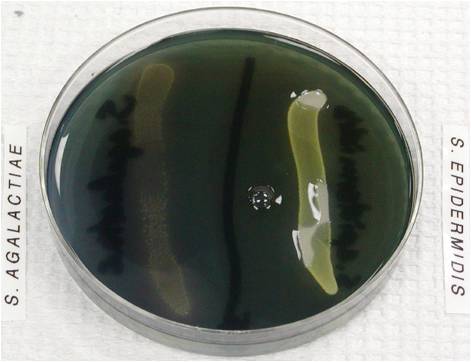
2. What are the results of a Starch Hydrolysis test?

Explanation

In a Starch Hydrolysis test, the left side will show a negative result (-) indicating the absence of starch hydrolysis, while the right side will show a positive result (+) indicating the presence of starch hydrolysis.

Submit
3. Mixed Acid Fermentation (MR) Test Results.

Explanation

In a Mixed Acid Fermentation (MR) Test, the correct result sequence is control, negative, positive. This order is crucial in determining the presence of certain fermentation pathways in bacteria.

Submit
4. What are the results of urea hydrolysis test?

Explanation

In urea hydrolysis test, the activity of the enzyme urease is being tested. If urease is present, it will break down urea into ammonia and carbon dioxide. The positive result is indicated by a change in pH due to the presence of ammonia, turning the indicator pink in the 1st tube. The 2nd tube remains yellow as it is negative.

Submit
5. What is the term used to describe flagella that are distributed over the entire surface of a cell?

Explanation

Peritrichous flagella are flagella that are distributed over the entire surface of a cell. They allow the cell to move in a variety of directions in response to stimuli.

Submit
6. The major organelles of motility are _________. Motility can be determined by the tube method. Which tube shows positive motility?

Explanation

The major organelles of motility usually refer to flagella, which are responsible for movement in many microorganisms. The flagellatube on the left would show positive motility because flagella are expected to be present and functional in that sample.

Submit
7. ___________ is the partial breakdown of organic molecules to alcohols, aldehydes, acids, and gases.

Explanation

Fermentation is the correct answer as it refers to the metabolic process that produces chemical changes in organic substrates through the action of enzymes. Oxidation, combustion, and photosynthesis are incorrect as they involve different processes than the partial breakdown described in the question.

Submit
8. What test can be used to identify a Gram + cocci that does not form spores?

Explanation

The catalase test is used to differentiate bacteria based on their ability to produce the enzyme catalase. In this case, a positive catalase test would indicate the presence of a Gram + cocci that does not form spores.

Submit
9. Which of the following terms describes an organism that requires oxygen for growth and survival?

Explanation

An obligate aerobe is an organism that requires oxygen for aerobic respiration. Facultative anaerobes can switch between aerobic and anaerobic respiration, aerotolerant organisms can survive in the presence of oxygen but do not use it for respiration, and obligate anaerobes cannot survive in the presence of oxygen.

Submit
10. How is the Citrate Test performed and what are the expected results?

Explanation

The correct method involves inoculating the slant with a needle and stabbing it to introduce the bacteria. The expected result for positive (+) is a blue color, indicating the metabolism of citrate. A negative result (-) is indicated by no color change, remaining green.

Submit
11. What are the results of a Tryptophan Degradation Test?

Explanation

The Tryptophan Degradation Test results in a positive color change when Tryptophan is degraded, indicating the presence of the enzyme Tryptophanase.

Submit
12. What steps would you take after finding you have a gram + Rod?

Explanation

After finding a gram + Rod, the next steps would typically involve confirming the bacteria identification through additional staining techniques such as spore stain (if + you are done) or Acid Fast stain, rather than using Gram stain, Ziehl-Neelsen stain, or Dark-field microscopy.

Submit
13. After finding out you have a gram - rod, you perform the next test, which is the motility test. If your motility test is negative, what test should be performed next?

Explanation

The citrate test is commonly performed after a motility test and can help in differentiating bacteria based on their ability to utilize a citrate source. Oxidase, urease, and coagulase tests are not typically performed immediately after a motility test.

Submit
14. After finding out you have a gram - rod, you perform the next test, which is the motility test. If your motility test is positive:

Explanation

The correct answer involves a specific sequence of tests based on the results of the motility test, which is essential for identifying the characteristics of the gram - rod. The incorrect answers are not relevant to the testing process described in the question.

Submit
15. Most Gram + species are NOT ________.

Explanation

Gram-positive bacteria are typically characterized by their lack of motility, meaning they do not possess flagella or other means of movement. However, they can vary in terms of other characteristics such as being anaerobic, rod-shaped, or spore-forming.

Submit
16. Streaking cultures for isolated colonies allows you to:

Explanation

Streaking cultures for isolated colonies is a common method used in microbiology to obtain pure cultures of bacteria for further analysis. By streaking a sample onto a solid growth medium, individual colonies are allowed to grow separately, helping to separate mixed cultures, purify a single type of bacterium, propagate a clonal population, and aid in the identification of the bacterium.

Submit
17. I am a gram-positive cocci.... next step?

Explanation

Gram-positive cocci would suggest Staphylococcus or Streptococcus species, but further information is needed before taking any specific action.

Submit
18. I am a gram + rod and do not form spores.... what characteristic am I known for?

Explanation

Gram + rods that do not form spores and are acid fast are typically known for their characteristic acid-fast staining due to the high mycolic acid content in their cell walls.

Submit
19. Carbohydrate Fermentation & Gas Production Test 1. How do you perform the test? 2. Why? 3. What media and reagents are used? 4. What are the results?

Explanation

The correct answers provide the accurate method, purpose, media, reagents used, and interpretation of results for the Carbohydrate Fermentation & Gas Production Test, while the incorrect answers deviate from the correct procedure, purpose, and components required for the test.

Submit
20. What are the possible results of Carbohydrate Fermentation & Gas Production Test?

Explanation

Carbohydrate Fermentation & Gas Production Test can have different results based on the acid and gas production. It is important to interpret the results accurately to determine the metabolic activity of the organism being tested.

Submit
21. How is the Mixed Acid Fermentation Test performed?

Explanation

The correct way to perform the Mixed Acid Fermentation Test is by inoculating the broth with a loop and adding a methyl red indicator to indicate the acid end products.

Submit
22. What do the Citrate Test Results indicate?

Explanation

In the Citrate Test, a positive result is indicated by a blue color, while a negative result is indicated by a green color. This color change helps in determining the utilization of citrate by the microorganism being tested.

Submit
23. What Gram-negative rod bacterium is a facultative anaerobe that produces a pigment called prodigosin and is associated with hospital-acquired infections related to UTIs, catheters, and wounds?

Explanation

Serratia marcescens is a Gram-negative bacterium known for its red pigment prodigosin. It is a facultative anaerobe and is commonly associated with hospital-acquired infections, particularly UTIs, catheters, and wounds. Escherichia coli, Pseudomonas aeruginosa, and Acinetobacter baumannii are also common pathogens but do not exhibit all the characteristics mentioned in the question.

Submit
24. I am a gram + obligate aerobe, I am spherical and an emerging hospital acquired infection. Who am I?

Explanation

Micrococcus luteus fits the description provided as a gram-positive obligate aerobe. Staphylococcus aureus is also gram-positive but not an obligate aerobe. Escherichia coli is gram-negative and Pseudomonas aeruginosa is a gram-negative opportunistic pathogen, not an obligate aerobe.

Submit
25. A streak plate and pour plate are 2 methods for obtaining pure cultures. The end point is to have a single cell give rise to a ______ _______.

Explanation

The correct term for the result of obtaining a single cell is a pure colony, as the objective is to isolate a population of identical cells for further study or analysis.

Submit
26. I am a gram + rod, I form spores.... next step..

Explanation

Gram positive rods that form spores do not have a specific 'next step' in terms of a biological process.

Submit
27. How is the Tryptophan Degradation Test performed and what are the expected results?

Explanation

The correct answer explains the step-by-step process of the Tryptophan Degradation Test and how to interpret the results, while the incorrect answers describe unrelated tests with different procedures and outcomes.

Submit
28. How is the Catalase Test performed, why is it performed, and what are the results?

Explanation

The Catalase Test involves streak plating colonies, adding H2O2, observing for bubbling to test for the bacteria's catalase production. The incorrect answers provided deviate from the correct test procedure and purpose of the Catalase Test.

Submit
29. How is the Starch Hydrolysis Test performed?

Explanation

The correct way to perform the Starch Hydrolysis Test is to divide the starch plate in 2 parts, streak control on one side and bacteria specimen on the other.

Submit
30. What steps should be taken after finding out you have a gram + cocci?

Explanation

After finding out you have a gram + cocci, the correct steps involve performing a spore stain test (if +, no further testing is needed; if -, proceed to a catalase test). Conducting a gram - stain, skipping further testing, or performing a blood culture test are not the appropriate steps in this scenario.

Submit
×
Saved
Thank you for your feedback!
View My Results
Cancel
  • All
    All (30)
  • Unanswered
    Unanswered ()
  • Answered
    Answered ()
How do you perform the Urea Hydrolysis Test?
What are the results of a Starch Hydrolysis test?
Mixed Acid Fermentation (MR) Test Results.
What are the results of urea hydrolysis test?
What is the term used to describe flagella that are distributed over...
The major organelles of motility are _________. Motility can be...
___________ is the partial breakdown of organic molecules to alcohols,...
What test can be used to identify a Gram + cocci that does not form...
Which of the following terms describes an organism that requires...
How is the Citrate Test performed and what are the expected results?
What are the results of a Tryptophan Degradation Test?
What steps would you take after finding you have a gram + Rod?
After finding out you have a gram - rod, you perform the next test,...
Most Gram + species are NOT ________.
Streaking cultures for isolated colonies allows you to:
I am a gram-positive cocci.... next step?
I am a gram + rod and do not form spores.... what characteristic am I...
Carbohydrate Fermentation & Gas Production Test...
What are the possible results of Carbohydrate Fermentation & Gas...
How is the Mixed Acid Fermentation Test performed?
What do the Citrate Test Results indicate?
What Gram-negative rod bacterium is a facultative anaerobe that...
I am a gram + obligate aerobe, I am spherical and an emerging hospital...
A streak plate and pour plate are 2 methods for obtaining pure...
I am a gram + rod, I form spores.... next step..
How is the Tryptophan Degradation Test performed and what are the...
How is the Catalase Test performed, why is it performed, and what are...
How is the Starch Hydrolysis Test performed?
What steps should be taken after finding out you have a gram + cocci?
play-Mute sad happy unanswered_answer up-hover down-hover success oval cancel Check box square blue
Alert!