Brain Organization Quiz: Pathways & Behavior

Reviewed by Editorial Team
The ProProfs editorial team is comprised of experienced subject matter experts. They've collectively created over 10,000 quizzes and lessons, serving over 100 million users. Our team includes in-house content moderators and subject matter experts, as well as a global network of rigorously trained contributors. All adhere to our comprehensive editorial guidelines, ensuring the delivery of high-quality content.
Learn about Our Editorial Process
| By Thames
T
Thames
Community Contributor
Quizzes Created: 10017 | Total Attempts: 9,652,179
| Attempts: 11 | Questions: 15 | Updated: Feb 12, 2026
Please wait...
Question 1 / 16
🏆 Rank #--
0 %
0/100
Score 0/100

1. What best defines behaviour in biological terms?

Explanation

Behaviour is defined scientifically as observable actions or responses of an organism triggered by internal states or external stimuli. It includes reflexes, voluntary movements, and cognitive responses. Unlike definitions limited to genetics or environment alone, behaviour results from dynamic neural processing. Measurable behavioural patterns over time provide empirical evidence for study. Therefore, observable stimulus response patterns represent the most comprehensive biological definition of behaviour.

Submit
Please wait...
About This Quiz
Neuroscience Quizzes & Trivia

Step into the world of biotechnology and explore how scientists reshape genetic material. This genetic engineering quiz covers cloning methods, gene modification techniques, and essential biotechnology concepts. You’ll evaluate how DNA is manipulated, replicated, and applied in medicine, agriculture, and research.

Questions are designed to strengthen your understanding of terminology, processes,... see moreand ethical considerations surrounding genetic innovation. By the end, you’ll better understand how modern genetic tools work and how biotechnology continues to transform industries and global health. see less

2.

What first name or nickname would you like us to use?

You may optionally provide this to label your report, leaderboard, or certificate.

2. Animal behaviours are generally classified into which two categories?

Explanation

Animal behaviour is broadly divided into inherited and learned categories. Inherited behaviours are genetically encoded and present at birth, while learned behaviours develop through experience and environmental interaction. Research in ethology shows most behaviours contain elements of both. This classification helps scientists determine evolutionary influences versus experiential modification. Therefore, inherited and learned categories represent the most accurate and scientifically accepted dichotomy.

Submit

3. What characterizes innate behaviour?

Explanation

Innate behaviour is genetically programmed and relatively fixed across individuals within a species. Such behaviours require minimal prior learning and are typically adaptive for survival. Examples include reflexes and instinctual feeding patterns. Since heredity governs neural circuitry responsible for these actions, variation is limited. Therefore, describing innate behaviour as heredity dependent and relatively fixed best reflects biological accuracy and evolutionary theory principles.

Submit

4. What defines learned behaviour?

Explanation

Learned behaviour develops through interaction with the environment and experience. Neural plasticity allows synaptic connections to strengthen or weaken based on exposure and repetition. Unlike innate behaviours, learned actions vary between individuals. Experimental studies in conditioning demonstrate that experience modifies behavioural output. Therefore, behaviour influenced by experience and environmental interaction correctly defines learned behaviour within neuroscience and behavioural psychology frameworks.

Submit

5. What determines behavioural complexity?

Explanation

Behavioural complexity arises from interaction between genetic programming and environmental input. Genes provide structural neural frameworks, while environmental experiences modify neural pathways through plasticity. Studies show enriched environments increase synaptic density, enhancing complexity. Therefore, neither genetics nor environment alone explains behaviour. The integration of both factors produces variation in behavioural sophistication across individuals and species.

Submit

6. Neural function can be defined at which levels?

Explanation

Neural function operates at multiple hierarchical levels including whole brain systems, individual neurons and glial cells, and neurotransmitter interactions. Recording techniques such as EEG, cellular imaging, and molecular assays confirm this multi level organization. Each level contributes uniquely to signal transmission and integration. Therefore, defining neural function across brain, cellular, and chemical levels provides a complete scientific understanding.

Submit

7. Which brain structure controls most conscious behaviours?

Explanation

The forebrain, particularly the cerebral cortex, governs conscious thought, reasoning, planning, and voluntary movement. It is highly developed in mammals and birds. Functional imaging demonstrates increased cortical activity during conscious tasks. In contrast, cerebellum and brainstem regulate coordination and autonomic functions. Therefore, the forebrain is responsible for most conscious behaviours in complex organisms.

Submit

8. Which brain structure regulates most unconscious behaviours in simpler animals?

Explanation

The brainstem controls fundamental survival functions such as respiration, heart rate, and basic motor patterns. In simpler animals, much behaviour depends on brainstem circuitry. These processes operate without conscious awareness. Damage to this region disrupts automatic life sustaining mechanisms. Therefore, the brainstem is primarily responsible for unconscious behaviours in simpler organisms.

Submit

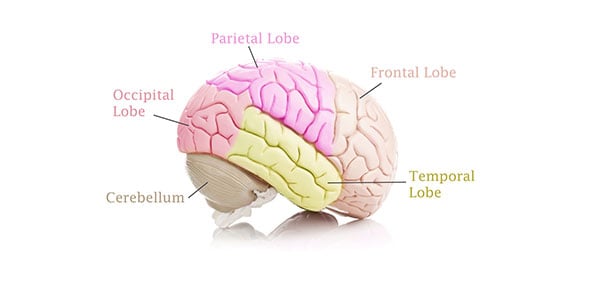
9. Which set correctly identifies the four cerebral lobes?

Explanation

The four cerebral lobes are frontal, parietal, temporal, and occipital. Each lobe performs specialized functions including executive processing, sensory integration, auditory processing, and visual interpretation. Neuroanatomical mapping confirms these divisions structurally and functionally. Accurate identification is essential for understanding localized brain damage effects. Therefore, this set correctly represents anatomical and functional brain organization.

Submit

10. Peripheral nerves outside the CNS primarily connect to which structures?

Explanation

Peripheral nerves connect the central nervous system to sensory receptors, muscles, and internal organs. Sensory neurons transmit signals inward, while motor neurons transmit signals outward. This bidirectional communication enables reflexes and voluntary movement. Bones and cartilage do not serve as primary neural targets. Therefore, receptors, muscles, and organs represent the correct peripheral connections.

Submit

11. What describes the relationship between neural function and behaviour?

Explanation

Neural function and behaviour exhibit a bidirectional relationship. Neural activity produces behaviour, while behavioural experiences reshape neural circuits through plasticity. For example, learning increases synaptic efficiency. Brain imaging studies confirm structural changes following repeated behaviours. Therefore, both processes continuously influence each other rather than functioning independently or unidirectionally.

Submit

12. What is the most common brain injury in individuals under 40?

Explanation

Head injuries are statistically the leading cause of brain damage in individuals under forty. Epidemiological data show trauma related accidents account for the majority of cases. Neurodegenerative conditions like Alzheimer’s are rare in younger populations. Therefore, traumatic head injury remains the most common cause within this demographic.

Submit

13. Which group has the highest incidence of head injuries from accidents?

Explanation

Accident data consistently show males aged fifteen to thirty experience the highest rates of head injuries. Risk taking behaviours and vehicle related accidents contribute significantly. Statistical injury reports confirm higher incidence in this demographic compared to other groups. Therefore, males aged fifteen to thirty represent the highest risk category.

Submit

14. Which age groups are most vulnerable to fall-related head injuries?

Explanation

Children and older adults are most vulnerable to fall related head injuries. Children lack developed coordination, while older adults experience reduced balance and bone density. Fall statistics confirm increased hospital admissions in these age groups. Therefore, these two groups demonstrate the highest fall related head injury prevalence.

Submit

15. Rapid brain movement within the skull during trauma most commonly causes what injury?

Explanation

Rapid acceleration and deceleration during trauma produce shearing forces within brain tissue. This movement causes diffuse axonal injury, characterized by widespread nerve fiber damage. Coup and contrecoup mechanisms create rotational forces rather than simple fractures. Therefore, diffuse axonal injury best explains damage resulting from rapid internal brain movement.

Submit
×
Saved
Thank you for your feedback!
View My Results
Cancel
  • All
    All (15)
  • Unanswered
    Unanswered ()
  • Answered
    Answered ()
What best defines behaviour in biological terms?
Animal behaviours are generally classified into which two categories?
What characterizes innate behaviour?
What defines learned behaviour?
What determines behavioural complexity?
Neural function can be defined at which levels?
Which brain structure controls most conscious behaviours?
Which brain structure regulates most unconscious behaviours in simpler...
Which set correctly identifies the four cerebral lobes?
Peripheral nerves outside the CNS primarily connect to which...
What describes the relationship between neural function and behaviour?
What is the most common brain injury in individuals under 40?
Which group has the highest incidence of head injuries from accidents?
Which age groups are most vulnerable to fall-related head injuries?
Rapid brain movement within the skull during trauma most commonly...
play-Mute sad happy unanswered_answer up-hover down-hover success oval cancel Check box square blue
Alert!