
Interactive Oral Pathology Image Diagnosis Quiz

Reviewed by Editorial Team
The ProProfs editorial team is comprised of experienced subject matter experts. They've collectively created over 10,000 quizzes and lessons, serving over 100 million users. Our team includes in-house content moderators and subject matter experts, as well as a global network of rigorously trained contributors. All adhere to our comprehensive editorial guidelines, ensuring the delivery of high-quality content.
Learn about Our Editorial Process
| By Thames
T
Thames
Community Contributor
Quizzes Created: 7387 | Total Attempts: 9,527,791
| Questions: 28 | Updated: Aug 4, 2025
Please wait...
Question 1 / 28
0 %
0/100
Score 0/100
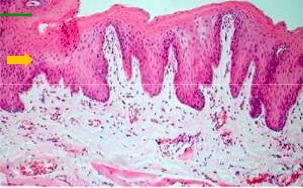
1. What is the term used to refer to the thickening of the skin illustrated in the image?

Explanation

Acanthosis is a condition characterized by the thickening of the skin which can be seen in the image. Dermatitis, eczema, and psoriasis are different conditions that do not specifically involve skin thickening as seen in acanthosis.

Submit
Please wait...
About This Quiz
Interactive Oral Pathology Image Diagnosis Quiz - Quiz

Enhance your understanding of oral pathology and medicine through image-based slides. This educational tool focuses on key definitions, terms, and theories relevant to oral health sciences, aiding students and professionals in effective learning and revision.

2.
You may optionally provide this to label your report, leaderboard, or certificate.
2. What is the diagnosis based on the image provided?

Explanation

The correct diagnosis based on the image provided is Acanthosis (Mild) due to the visible thickening of the skin's top layer. Psoriasis and eczema present different symptoms, and melanoma is a type of skin cancer not related to the condition shown in the image.

Submit
3. What is the condition shown in the image?

Explanation

The image depicts Acanthosis, a skin condition characterized by thickening of the skin's top layer. Eczema, Psoriasis, and Contact Dermatitis are skin conditions with different symptoms and characteristics.

Submit
4. What is the diagnosis based on the image provided?

Explanation

The image shows a radiographic presentation commonly associated with an ameloblastoma, which is a benign odontogenic tumor originating from the odontogenic epithelium.

Submit
5. What is the likely diagnosis based on the image?

Explanation

The image shows a radiographic view of a unicystic lesion in the jaw which is characteristic of unicystic ameloblastoma. Dentigerous cyst is usually associated with an unerupted tooth, odontogenic myxoma typically presents as a well-defined radiolucent lesion, and central giant cell granuloma usually appears as a multilocular radiolucent lesion with a 'soap bubble' appearance.

Submit
6. What is the most likely diagnosis for the lesion shown in the image?

Explanation

The correct answer is Unicystic ameloblastoma, as the radiographic appearance typically presents as a unilocular radiolucency with scalloped borders. Dentigerous cyst, Keratocystic odontogenic tumor, and Adenomatoid odontogenic tumor have different radiographic features and should be ruled out through further evaluation.

Submit
7. What is the condition shown in the image?

Explanation

The image shows the characteristic appearance of an aneurysmal bone cyst, which is a benign tumor-like lesion with blood-filled spaces separated by connective tissue septa. This condition commonly occurs in the metaphyses of long bones and can cause pain and swelling.

Submit
8. What is the term for this medical condition depicted in the image?

Explanation

The image is showing carcinoma in situ, a type of cancer that has not spread beyond the original tissue. Benign tumors are non-cancerous growths, metastatic cancer has spread to other parts of the body, and adenocarcinoma is a specific type of cancer that can be malignant or benign.

Submit
9. What is the name of the lesion shown in the image?

Explanation

The image shows a radiographic view of a central giant cell granuloma (CGCG) based on its characteristic features such as a soap bubble appearance, well-defined borders, and presence in the central jaws.

Submit
10. What is the diagnosis shown in the image?

Explanation

The correct answer is Cystic Lesion as indicated in the image. A cystic lesion is a sac filled with air, fluid, blood, or other material. It appears as a dark area with defined borders on imaging studies like ultrasounds or MRIs.

Submit
11. What is shown in the image?

Explanation

The correct answer is Cystic Lesion as indicated in the image. Cystic lesions are fluid-filled spaces within the body that may be benign or malignant. Fractured Bone, Solid Tumor, and Muscle Strain are incorrect as they do not match the characteristics shown in the image.

Submit
12. What is the term used to refer to the lesion shown in the image?

Explanation

The correct term for the lesion in the image is Cystic Lesion, as it shows characteristics typical of cystic formations. Benign Tumor, Inflammatory Mass, and Hematoma are incorrect options as they do not accurately describe the nature of the lesion displayed.

Submit
13. What is the most likely diagnosis based on the image?

Explanation

The image shows a radiograph of a unilocular radiolucency around the crown of an unerupted tooth, which is characteristic of a dentigerous cyst. Ameloblastoma usually presents as a multilocular radiolucency. Odontogenic keratocyst typically appears as a unilocular radiolucency with well-defined margins. Periapical cyst is a common odontogenic cyst that is usually associated with the apex of non-vital teeth.

Submit
14. What is the radiographic finding shown in the image?

Explanation

The image shows a ground glass appearance within the bone, which is characteristic of fibrous dysplasia. Osteosarcoma would show cortical destruction and aggressive periosteal reaction. Enchondroma typically presents as a well-circumscribed radiolucent lesion with stippled calcifications. Giant cell tumor would show a soap-bubble appearance with thinning of the cortical bone.

Submit
15. What is the term used to refer to the thickening of the stratum corneum layer of the skin as shown in the image?

Explanation

Hyperkeratosis is a condition characterized by the thickening of the stratum corneum layer of the skin, resulting in a build-up of keratin. Dermatitis, eczema, and psoriasis are skin conditions that involve inflammation and irritation, rather than the thickening of the skin.

Submit
16. What is the name of the skin condition shown in the image?

Explanation

The correct answer is Lichen planus. This condition is characterized by an itchy, non-infectious rash that can appear as purple, flat-topped bumps on the skin. Eczema, Psoriasis, and Ringworm are different skin conditions with varying symptoms and causes.

Submit
17. What is the dermatological condition shown in the image?

Explanation

The image displayed features characteristics commonly associated with lichen planus including flat-topped, polygonal, purple-colored bumps that may be itchy or painful. Psoriasis, eczema, and melanoma have different visual presentations and are not depicted in the image.

Submit
18. What is the likely diagnosis based on the image provided?

Explanation

The image shows characteristic flat-topped, shiny, violaceous papules typically seen in lichen planus. Psoriasis presents with well-defined, thick, red scaly plaques. Eczema is characterized by red, itchy rash with papules and vesicles. Seborrheic dermatitis presents with greasy, yellowish, scaly patches on the scalp, face, and other areas.

Submit
19. What is the medical term for the image shown?

Explanation

Lymphangioma is a benign tumor made up of abnormal lymphatic vessels. Angiokeratoma, Nevus flammeus, and Papillomatosis are different dermatological conditions with distinct characteristics.

Submit
20. What is the histological diagnosis of the image?

Explanation

The correct histological diagnosis for the image is Mucoepidermoid carcinoma, characterized by a mix of mucinous, squamous, and intermediate cells.

Submit
21. What is the most likely diagnosis based on the image?

Explanation

The image shows characteristic features of Mucoepidermoid carcinoma (low grade) including a mixture of mucous cells, epidermoid cells, and intermediate cells. Adenoid cystic carcinoma typically displays cribriform pattern, Squamous cell carcinoma is composed of squamous cells, and Warthin tumor is a cystic lesion with lymphoid stroma, none of which are present in the image.

Submit
22. What condition is depicted in the image?

Explanation

The image shows characteristic mucosal erosions which are typical in mucous membrane pemphigoid. Lichen planus typically presents with white lacy patches, while bullous pemphigoid is characterized by tense blisters. Systemic lupus erythematosus can have mucosal involvement but typically presents with other systemic symptoms.

Submit
23. What is the diagnosis for the lesion shown in the image?

Explanation

The correct diagnosis for the lesion in the image is odontogenic myxoma, a benign mesenchymal odontogenic tumor commonly found in the jaw bones. Fibrous dysplasia, ameloblastoma, and central giant cell granuloma are other types of jaw lesions with distinct histopathological features.

Submit
24. What is the most likely diagnosis for the lesion shown in the image?

Explanation

The correct diagnosis for the lesion shown in the image is Odontogenic keratocyst (OKC). This type of cyst is characterized by its specific histopathological features such as a lining of parakeratinized stratified squamous epithelium and potential for aggressive behavior.

Submit
25. What is the likely diagnosis based on the image provided?

Explanation

The image shows a radiograph of a well-demarcated radiolucent lesion in the jaw, which is typical of an Odontogenic keratocyst (OKC). Dentigerous cyst presents as a radiolucent lesion associated with the crown of an unerupted or developing tooth. Ameloblastoma usually appears as a multilocular radiolucent lesion with a soap bubble or honeycomb appearance. Periapical cyst is a well-defined radiolucency at the apex of a nonvital tooth.

Submit
26. What is the correct diagnosis for the condition shown in the image?

Explanation

The correct diagnosis for the condition shown in the image is Osteosarcoma, which is a type of bone cancer that primarily affects the bone tissue.

Submit
27. What is the name of the bone cancer shown in the image?

Explanation

The correct answer is Osteosarcoma, which is a type of bone cancer shown in the image. Leukemia, Lymphoma, and Melanoma are different types of cancer that do not specifically refer to bone cancer.

Submit
28. What is the name of the condition shown in the image?

Explanation

The correct answer is Pemphigus vulgaris, which is a rare autoimmune disease that causes painful blistering on the skin and mucous membranes. Psoriasis, eczema, and lupus are all different conditions with distinct symptoms and treatment approaches.

Submit
×
Saved
Thank you for your feedback!
View My Results
Cancel
  • All
    All (28)
  • Unanswered
    Unanswered ()
  • Answered
    Answered ()
What is the term used to refer to the thickening of the skin...
What is the diagnosis based on the image provided?
What is the condition shown in the image?
What is the diagnosis based on the image provided?
What is the likely diagnosis based on the image?
What is the most likely diagnosis for the lesion shown in the image?
What is the condition shown in the image?
What is the term for this medical condition depicted in the image?
What is the name of the lesion shown in the image?
What is the diagnosis shown in the image?
What is shown in the image?
What is the term used to refer to the lesion shown in the image?
What is the most likely diagnosis based on the image?
What is the radiographic finding shown in the image?
What is the term used to refer to the thickening of the stratum...
What is the name of the skin condition shown in the image?
What is the dermatological condition shown in the image?
What is the likely diagnosis based on the image provided?

What is the medical term for the image shown?
What is the histological diagnosis of the image?
What is the most likely diagnosis based on the image?
What condition is depicted in the image?
What is the diagnosis for the lesion shown in the image?
What is the most likely diagnosis for the lesion shown in the image?
What is the likely diagnosis based on the image provided?

What is the correct diagnosis for the condition shown in the image?
What is the name of the bone cancer shown in the image?
What is the name of the condition shown in the image?
Alert!

Advertisement

