
When teams first start formalizing hiring and certification tests, Mettl alternatives are usually not on their radar. Mettl looks like the safe, enterprise-grade choice: secure, structured, and trusted by big companies. It is a strong product, which is why so many HR and training leaders begin their journey there in the first place.
But as the business grows, the gaps start to show. I often meet founders and talent leaders who feel locked into complex workflows, high per-candidate costs, and limited flexibility for use cases beyond classic pre-employment testing.
They want faster setup, richer question types, smoother integrations, and modern proctoring that does not scare candidates away. That is where smarter, more flexible alternatives come in, giving you the same level of trust with far more control over the experience and the economics.
Why Look Beyond Mettl
If you are exploring Mettl alternatives, it is usually not because Mettl is “bad,” but because your needs have grown in a different direction than the product. From what I have seen, the friction shows up in a few predictable ways.
1. Enterprise Workflows for Non-Enterprise Teams
Mettl is built with large, structured organizations in mind. Smaller HR teams, training companies, coaches, or schools often feel they are working around the tool instead of with it. Simple things like spinning up a new assessment or giving multiple instructors access can feel heavier than they should.
2. Pricing That Does Not Scale Gracefully
Per-candidate or enterprise-style pricing is fine when you have a big budget. It is painful when you run bootcamps, recurring training, or volume hiring with tight margins. Many teams tell me they want predictable plans and strong free tiers before they commit.
3. Limited Flexibility for Mixed Use Cases
Your reality is not “only pre-employment tests.” You might be running certification exams, sales training, campus hiring, and customer education in the same quarter. A rigid assessment workflow makes it hard to adapt quickly.
4. Security That Feels Complex Instead of Natural
People want browser lock, proctoring, and randomization, but they also want to set it up in minutes, not days. With Mettl, security can feel like an all-or-nothing switch instead of something you fine-tune per use case.
5. Integrations and Content Reuse
Modern teams expect plug-and-play connections with ATS, LMS, HRIS, and CRMs, plus easy reuse of question banks across projects. When that feels limited or too “enterprise-only,” it is a strong signal to start comparing newer Mettl alternatives.
Best Mettl Alternatives to Assess Your Candidates
Here is a quick overview of some of the best Mettl alternatives I have seen teams switch to. Each one leans into a slightly different strength, from AI-built tests and technical libraries to job simulations and high-volume hiring.
Mettl Alternatives at a Glance
| Tool | Best For | Pricing |
|---|---|---|
| ProProfs Quiz Maker | AI-powered skills tests and secure assessments | Free for short quizzes; paid plans from $19.99/month |
| eSkill | Deep technical skills testing | Custom pricing |
| iMocha | Template-based and coding assessments | Starts at $999/year. |
| TestInvite | Secure remote proctoring and monitored exams | Starts at $37/month. |
| Criteria | Scientifically validated aptitude & personality tests | Custom pricing |
| Vervoe | Job simulations and task-based hiring | Starts at $300 for 10 candidates. |
| Harver | High-volume recruitment and workflow automation | Available at request. |
| TestGorilla | Fast, library-based pre-employment screening | Starts at $96/month. |
| Adaface | Conversational, candidate-friendly skills tests | Starts at $180/year. |
| Talview | Assessments plus video interviews & AI proctoring | Custom pricing |
1. ProProfs Quiz Maker — Best for AI-Powered Skills Tests and Secure Assessments
I reach for ProProfs Quiz Maker when I want to move fast without losing depth or security. It works just as well for pre-employment screening as it does for internal training, certifications, and even client assessments.
The AI quiz generator is the real accelerator. I can feed in a JD, topic outline, or chunk of content and get an assessment in seconds or pick from a library of 100,000+ templates and 1,000,000+ ready questions. On the candidate side, 20+ question types (including video, audio, drag-and-drop, and hotspot) make the experience feel modern instead of like a dated aptitude test.
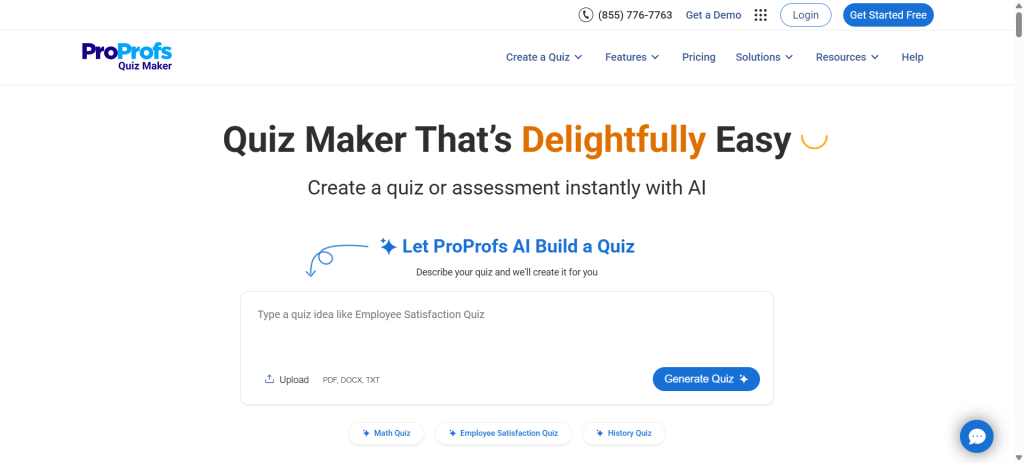
For teams coming from Mettl, the big unlock is how easy it is to dial security up or down. You get question randomization, browser lockdown, IP restrictions, and AI-driven webcam and screen proctoring, but you can keep things lightweight for low-stakes tests too.
Pros
- AI question generator creates full assessments from text or documents in seconds
- 100,000+ templates and a million ready questions for different roles and skills
- 20+ interactive question types, including video, audio, hotspot, and drag-and-drop
- Detailed analytics at the test, group, and question level for sharper hiring decisions
- Strong anti-cheating: randomization, time limits, browser lockdown, AI proctoring
Cons
- No dark mode yet, which some power users miss during long authoring sessions
- Fully cloud-based, so you need a stable internet connection for exams
How ProProfs Quiz Maker Compares to Mettl
Mettl is built like an enterprise exam engine. ProProfs gives you similar security with far more flexibility. You get AI-driven test creation, richer question types, and an easier interface that works for hiring, onboarding, and training in the same workspace. It feels less like heavy infrastructure and more like a product you can adapt as your business evolves.
User Rating: 4.6/5 (Capterra)
Pricing: Free for short quizzes and all essential features. Paid plans start at $19.99/month.
2. eSkill — Best for Technical Assessments
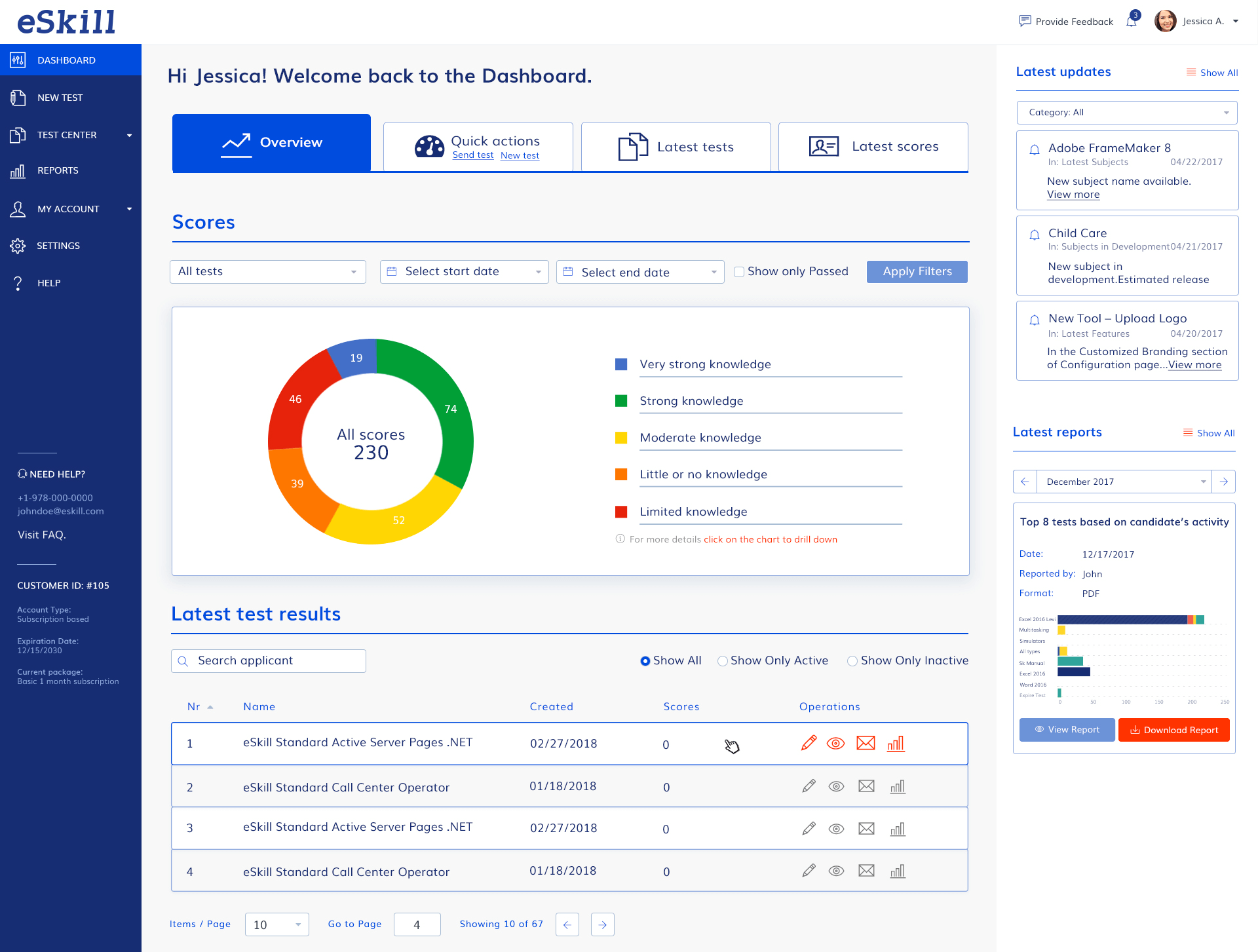
Image source: eSkill
When I talk to teams that live and breathe technical hiring, eSkill usually comes up early in the Mettl alternatives conversation. It is built for roles where you cannot afford to guess on hard skills. The test library covers a huge range of technical domains, from core IT and engineering to more niche, industry-specific skills.
What I like most is how flexible the test assembly is. You can pull questions from different subjects, add your own, and combine them into tailored role profiles instead of relying on generic “developer” or “engineer” tests. The reporting then breaks performance down in a way that actually supports a hiring decision, not just a pass or fail label.
For distributed teams, advanced proctoring, frequent content updates, and multi-language support make it much easier to run fair technical assessments across regions without managing ten different tools.
Pros:
- Extensive, regularly updated technical test library across many industries
- Advanced proctoring options, including live, recorded, and AI-based monitoring
- Multi-language assessments for global hiring and distributed teams
- Job simulation tests that mimic real-world technical tasks
- Detailed, role-relevant reporting for confident hiring decisions
Cons:
- Building highly tailored role profiles takes some calibration time
- The admin interface surfaces a lot of configuration at once, which can overwhelm smaller teams
How eSkill Compares to Mettl
Both tools serve serious assessment needs, but eSkill leans harder into deep, role-specific technical testing. You get rich simulations, up-to-date technical content, and flexible test design that feels better suited to fast-moving engineering and IT teams than Mettl’s more generalized enterprise approach.
User Rating: 4.5/5 (Capterra)
Pricing: Custom pricing
3. iMocha — Best for Template-Based & Role-Specific Skills Assessments
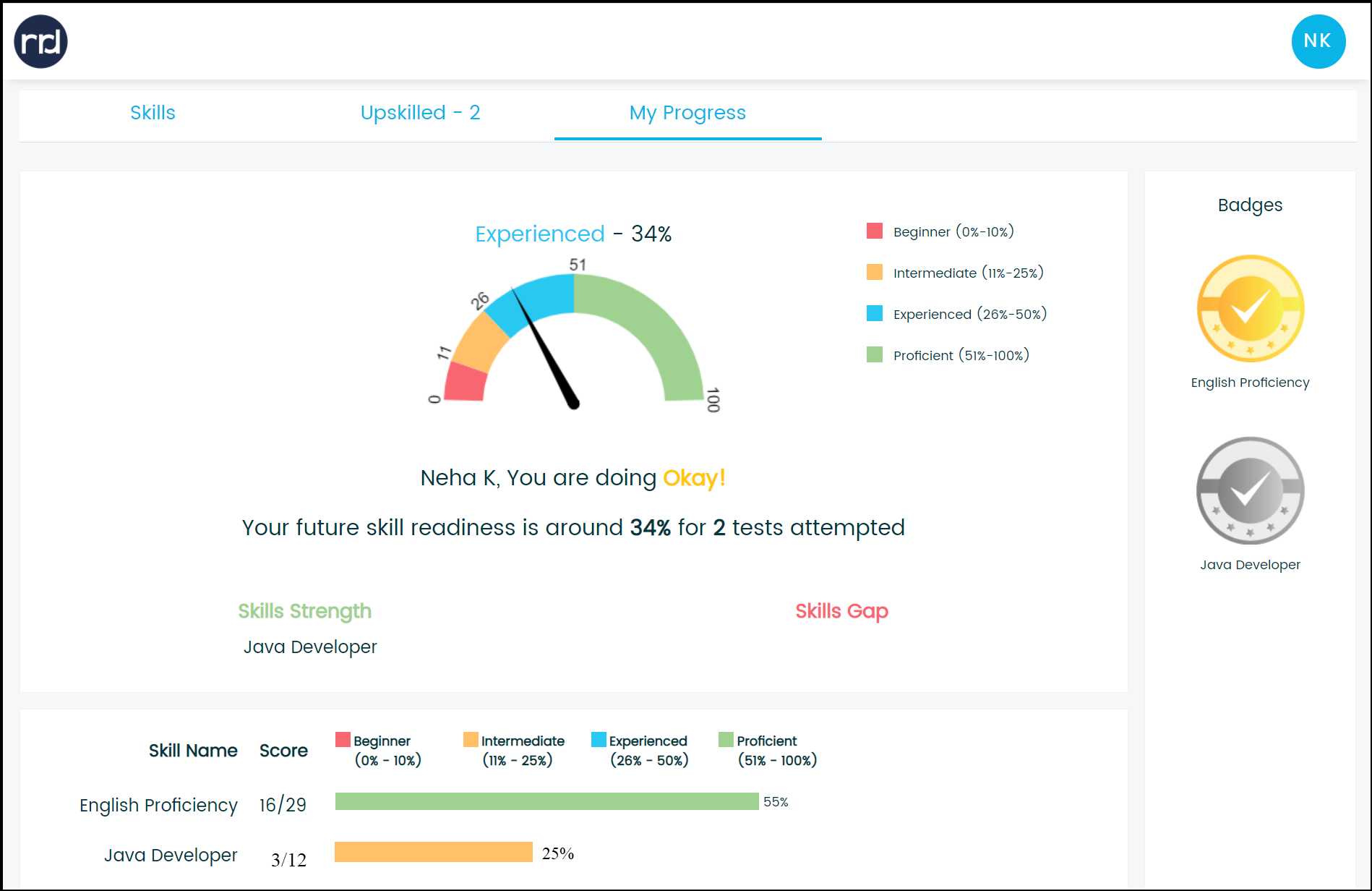
Image source: iMocha
For teams that need to spin up role-based assessments quickly, iMocha has been one of the more reliable choices.
Its real advantage is a broad library of templates aligned with specific job roles and skill sets, so I am almost never staring at an empty screen. I can grab a prebuilt test for a Java developer or a customer success rep and then refine or replace questions instead of constructing everything from the ground up.
The platform also handles blended roles gracefully. It is easy to combine coding tasks, aptitude questions, and domain-focused scenarios into a single assessment, and the analytics make it clear whether a candidate is primarily “theoretical,” strong in practical application, or managing to deliver on both fronts.
Pros:
- Large, template-rich library for tech and non-tech roles
- Strong support for coding challenges and digital skills
- AI-based proctoring with image, video, and audio monitoring
- Flexible test assembly so you can mix skills, cognitive, and domain questions
- Clear reports that help you rank candidates, not just score them
Cons:
- Reporting may need manual enhancements for better admin insights.
- Advanced features like simulations and detailed analytics are often locked behind higher plans
How iMocha Compares to Mettl
Mettl gives you solid assessments in a traditional enterprise package. iMocha feels more like a role toolkit. You still get strong security and reporting, but the template depth and coding focus make it better suited when you need repeatable assessments across many digital roles and do not want to design everything manually.
User Rating: 4.5/5 (Capterra)
Pricing: Starts at $999/year.
4. Testinvite — Best for Remote Proctoring & Secure Online Exams
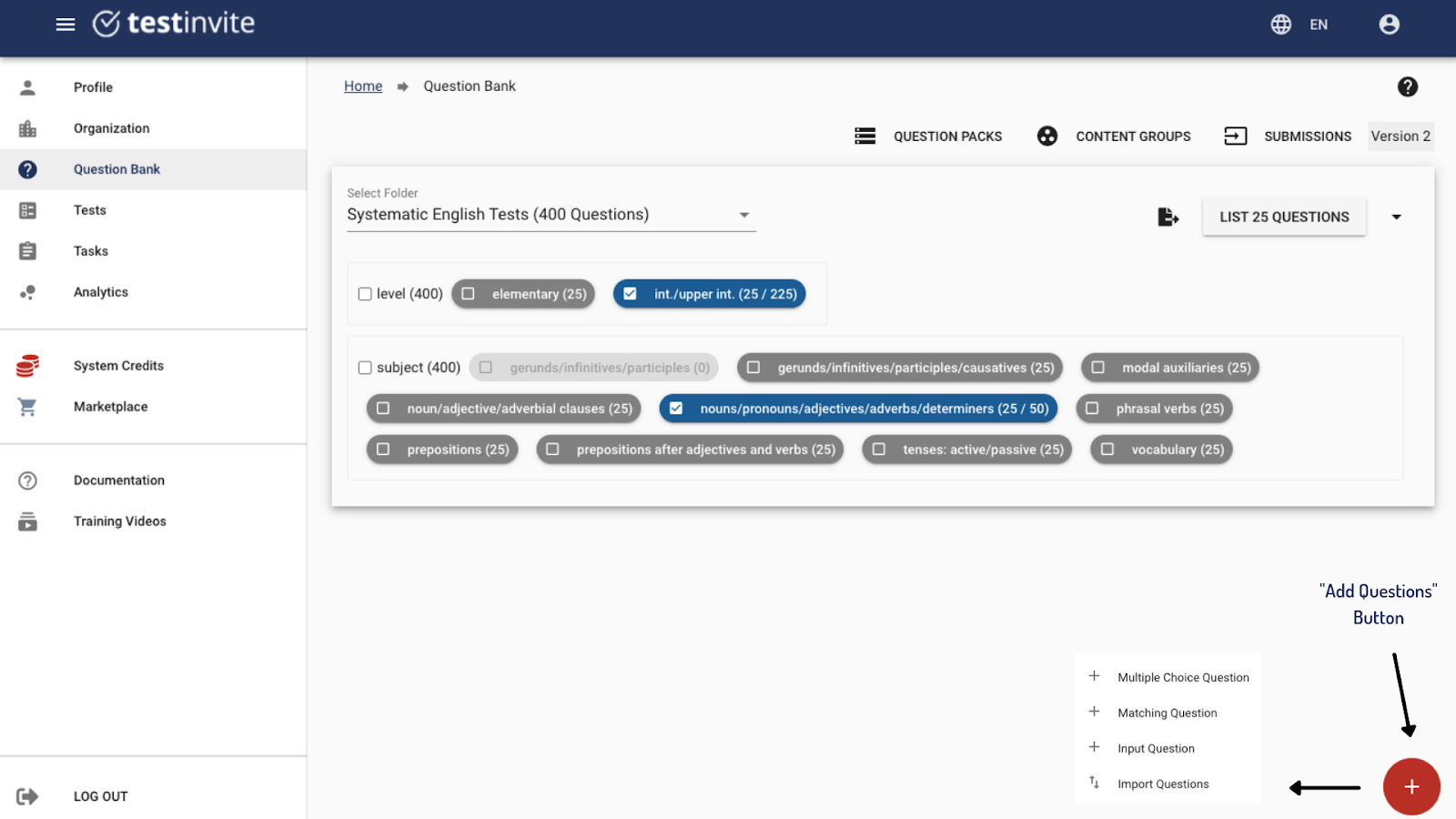
Image source: Testinvite
When I work with fully remote or multi-country hiring teams, Testinvite is a name that often comes to my mind for proctored exams. It is built for situations where “please don’t cheat” is not good enough and you need proper controls around every session. I like that I can set up access codes, time windows, attempt limits, and strict browser rules without needing a separate IT project.
Where this Mettl alternative shines is the combination of security and visibility. Detailed logs, screen monitoring options, and flexible test flows make it feel close to an invigilated exam hall, just online. At the same time, the candidate experience on laptops and mobiles is smoother than what you see in many older proctoring systems.
Pros:
- Layered security: access codes, browser lockdown, IP/device controls, and timed sessions
- Strong remote proctoring workflows for live or recorded supervision
- Mobile-friendly test delivery for candidates without a perfect desktop setup
- Granular activity logs that help you investigate suspicious sessions, not just flag them
- Scales well from small batches to large screening campaigns
Cons:
- The exam-centric terminology can be rigid if you also want casual training or practice quizzes.
- If you want rich learning insights, you may need to export data.
How Testinvite Compares to Mettl
Mettl offers solid proctoring, but Testinvite feels more focused on making high-integrity remote exams your default, not a special project. If your main concern is running fair, monitored tests across locations without drowning in complexity, Testinvite is a leaner, more exam-first alternative.
Pricing: Starts at $37/month.
User Rating: 4.9/5 (Capterra)
5. Criteria — Best for Scientifically Validated Assessments
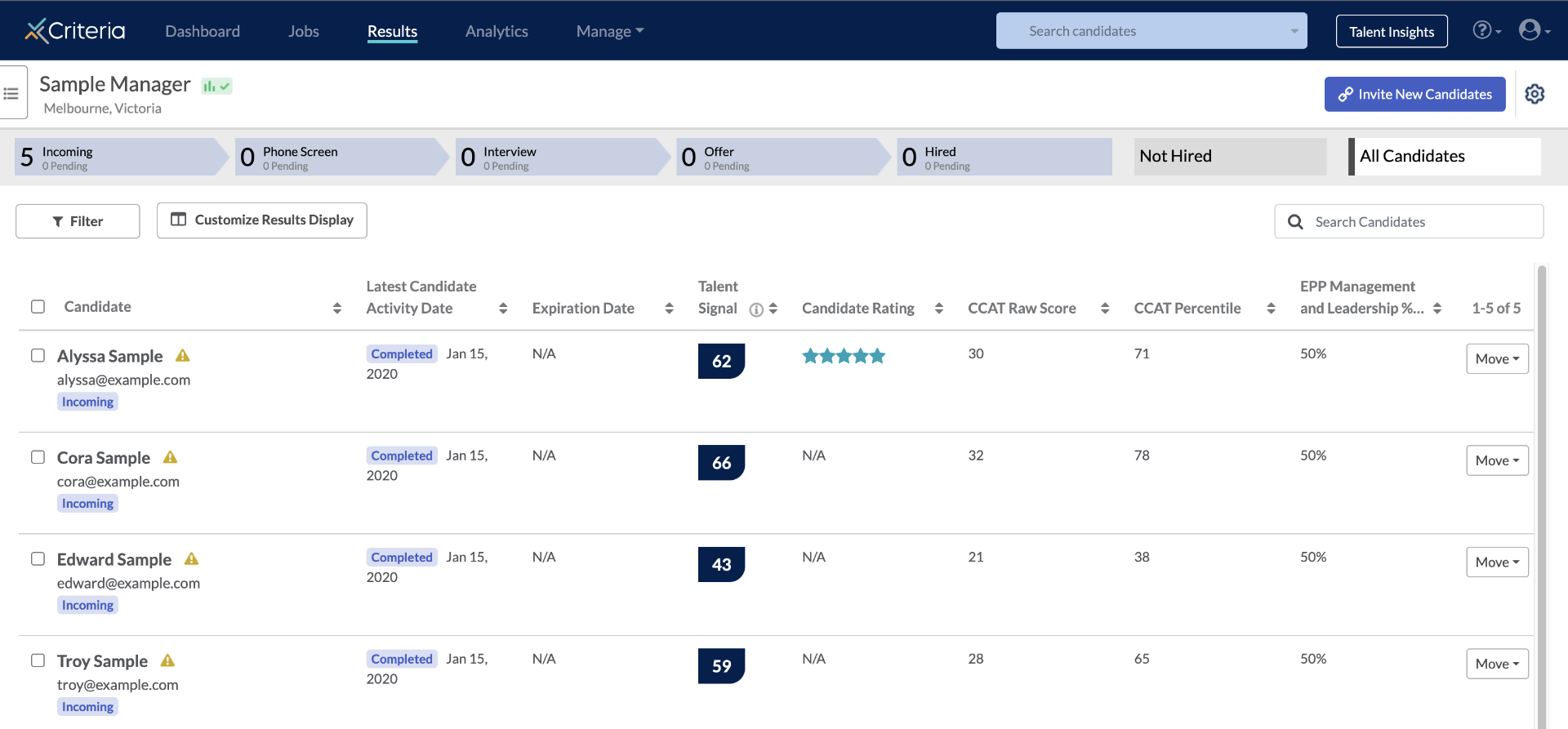
Image source: Criteria
When hiring decisions are politically sensitive or expensive to reverse, I see teams gravitate toward Criteria. It is built around scientifically validated aptitude, personality, and skills tests, so you are not just “quizzing” candidates, you are predicting job performance with real psychometric backing. I like how quickly you can spin up a test battery that looks at cognition, work style, and skills in one go.
The platform’s reports distill all that data into easy-to-read fit scores and visual summaries. That makes it much easier to align recruiters, hiring managers, and leadership on why a particular candidate is a strong (or risky) choice, without everyone reading through raw test items.
Pros:
- Deeply validated assessments for cognitive ability, personality, and skills
- Clean, manager-friendly reports that explain why someone is a good fit
- Strong focus on fairness and predictive validity, useful for high-stakes roles
- Tight integrations with popular ATS and HR systems for smooth workflows
- Good for building consistent, company-wide hiring standards
Cons:
- Less suited when you mainly need niche technical or tool-specific tests
- Global teams may need to coordinate with Criteria on localization for certain regions
How Criteria Compares to Mettl
Mettl offers a mix of skills and psychometrics, but Criteria leans harder into validation and decision support. If your priority is defensible, data-backed hiring rather than maximum customization of every test, Criteria is often the more focused choice.
User Rating: 4.7/5 (Capterra)
Pricing: Custom pricing
6. Vervoe — Best for Interactive, Real-Work Assessments
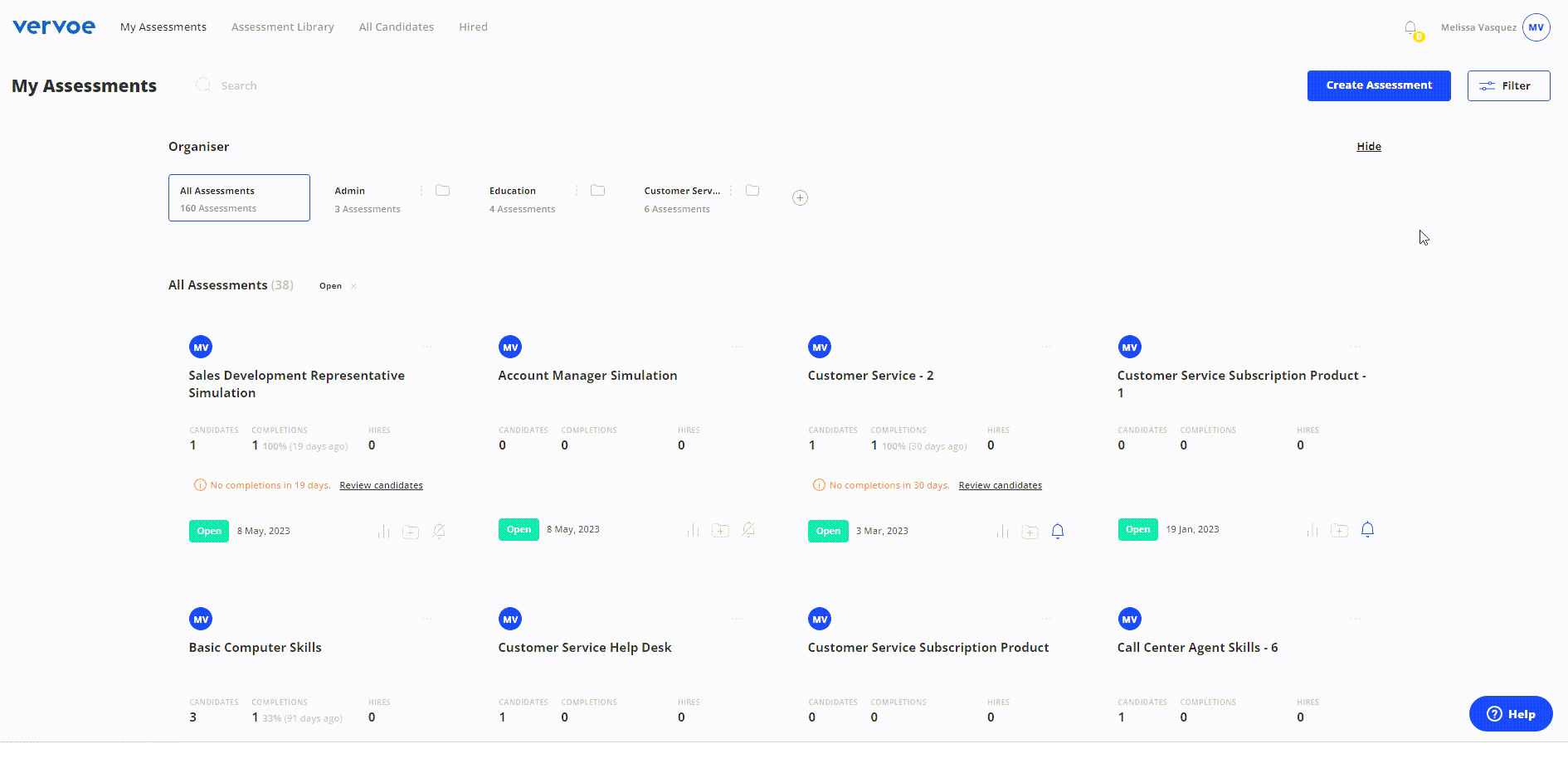
Image source: Vervoe
To really understand how someone performs in the role rather than how they handle multiple-choice questions, I see Vervoe as a strong Mettl alternative. The platform is built around work samples and simulations, so candidates actually carry out tasks they would face on the job: drafting emails, resolving support tickets, analyzing datasets, or navigating realistic sales conversations.
What I appreciate is how the AI scoring engine accelerates shortlisting without flattening nuanced, open-ended work. You can still dive into individual responses whenever a candidate looks promising, but you are not stuck manually grading every submission just to get an initial sense of who deserves a closer look.
Pros:
- Strong focus on realistic job simulations and work samples
- AI-assisted grading that reduces manual review time for open-ended tasks
- Templates for common roles that you can adapt to your workflows
- Good candidate experience, since assessments feel like real work, not abstract puzzles
- Easy to combine technical, soft-skill, and situational tasks in one assessment
Cons:
- Crafting high-quality simulations takes some upfront design effort from hiring managers
- Collaboration features for reviewers are more basic than dedicated interviewing platforms
How Vervoe Compares to Mettl
Mettl does a solid job with structured tests and standardized formats. Vervoe flips the model by centering everything on how candidates perform in realistic scenarios. If you want to hire based on demonstrated ability rather than credentials and generic test scores, Vervoe is a very compelling alternative.
User Rating: 4.5/5 (Capterra)
Pricing: Starts at $300 as a one-time payment for up to 10 candidates.
7. Harver — Best for High-Volume, Multi-Location Recruitment
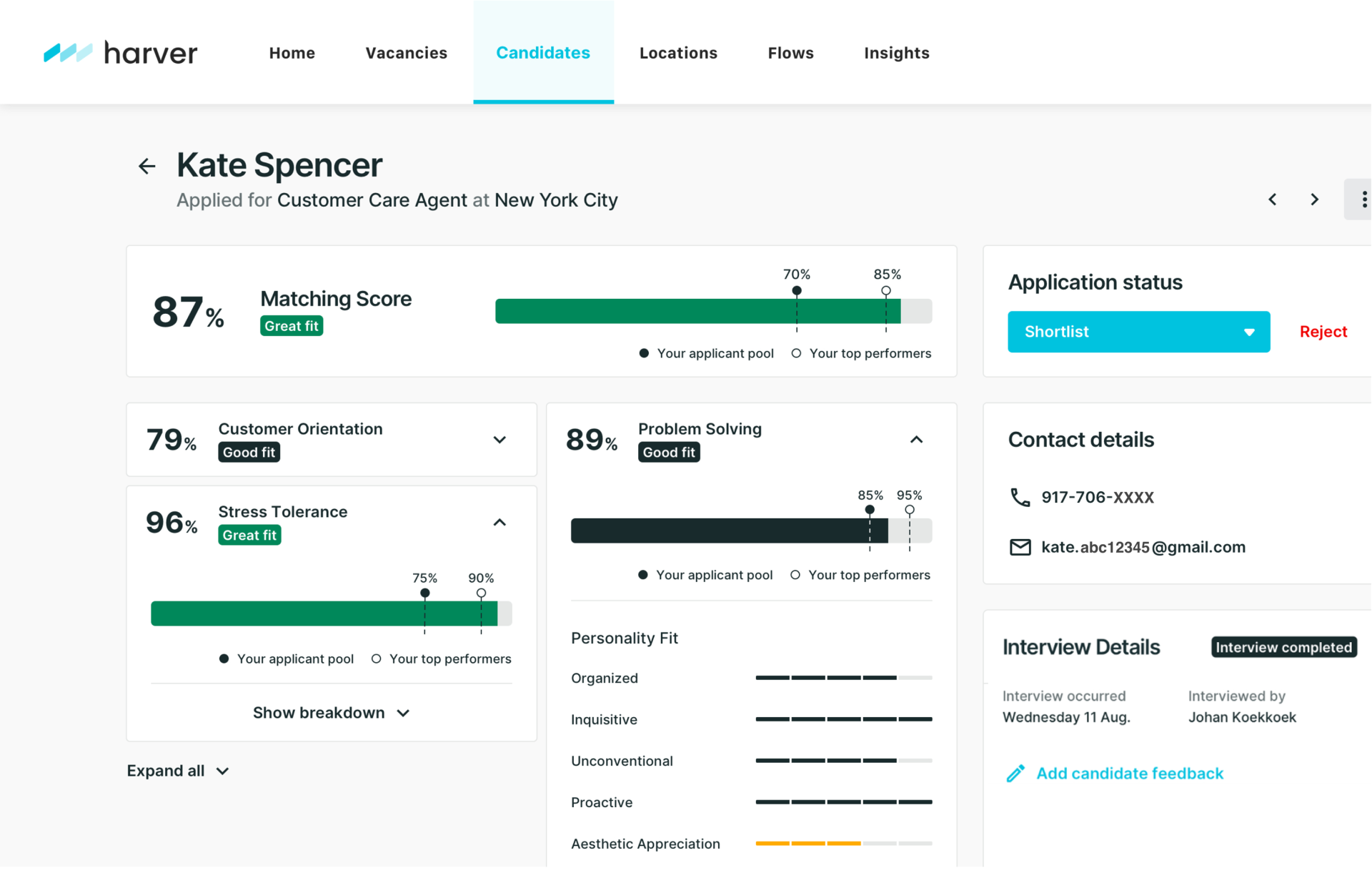
Image source: Harver
If the question is less “Can this person do the job?” and more “How do we fairly screen thousands of people every month?”, Harver is the platform I see moving the needle. It is designed for contact centers, retail, logistics, and other environments where hiring never really stops, and bottlenecks are costly.
What stands out to me is how Harver blends assessments, realistic job previews, and automation into one flow. Candidates experience what the role actually feels like, complete structured evaluations, and pass through a standardized pipeline without recruiters manually triaging every profile.
Predictive analytics then surfaces those most likely to perform well and stay, which is exactly the lever you need when attrition hurts the bottom line.
Pros:
- Designed specifically for high-volume roles across multiple sites and regions
- Combines skills, behavioral, and culture-fit assessments in one unified flow
- Realistic job previews help self-filter poor-fit candidates early
- Predictive analytics surface candidates likely to perform and stay longer
- Deep ATS/HRIS integrations that keep recruiters working in familiar systems
Cons:
- Implementation usually involves process redesign, not just “switching tools,” which smaller teams may find heavy
- Fine-tuning success profiles and predictive models takes real historical data and patience
- Best ROI appears in large, repeatable hiring programs; ad-hoc or low-volume hiring will not fully use its strengths
How Harver Compares to Mettl
Mettl can handle assessments inside a broader hiring process, but Harver is the process for high-volume roles. If you are managing constant frontline hiring and want a standardized, data-driven funnel with built-in previews and automation, Harver is a more specialized and scalable alternative.
User Rating: 5/5 (Capterra)
Pricing: Available at request.
8. TestGorilla — Best for Fast, Plug-and-Play Skills Screening
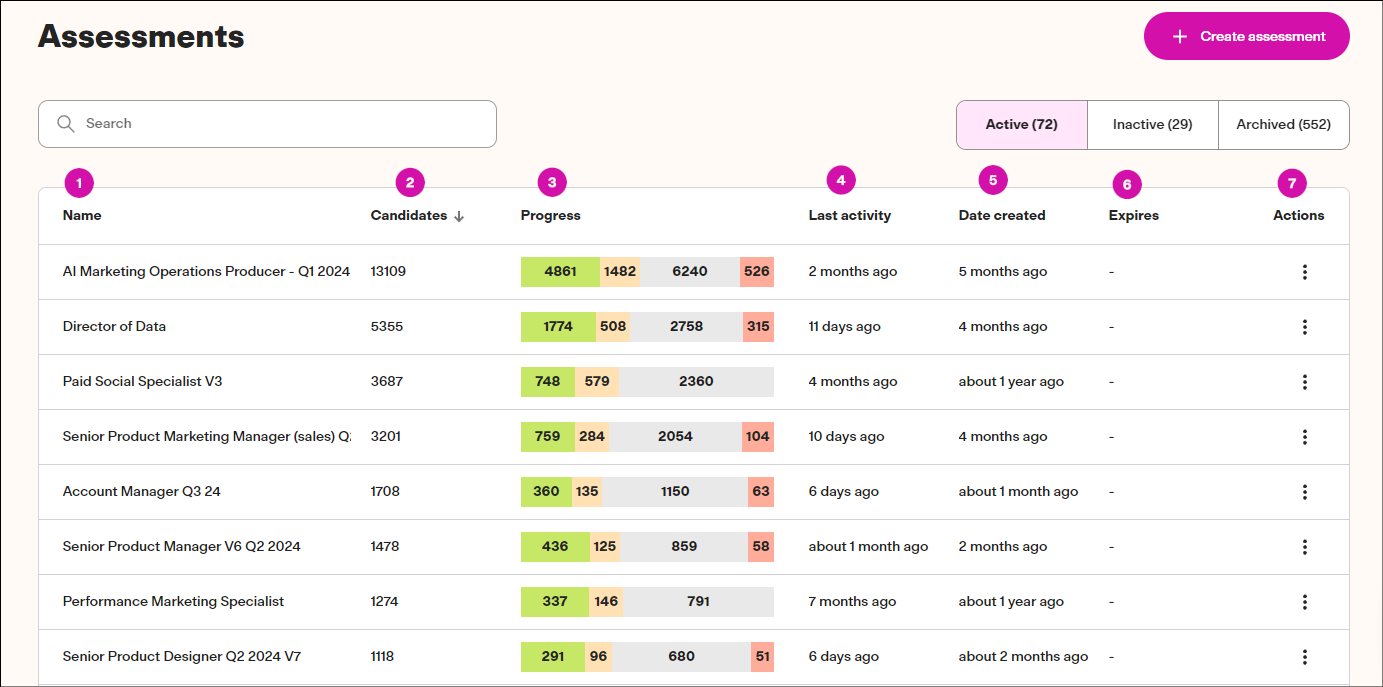
Image source: TestGorilla
In fast-paced hiring environments where time-to-shortlist really matters, TestGorilla tends to be one of the first Mettl alternatives teams experiment with. Its appeal is simple: you pick from a big library of ready-made tests, combine a few into a short assessment, send a link, and get comparable results across all applicants without much setup.
The platform is particularly handy for early-stage screening. Skills, personality, and cognitive tests can be mixed into one assessment, and most of the configuration happens through clear, guided steps. For growing teams without a dedicated assessment specialist, that “guided” feel is often a big relief.
Pros:
- Large library of ready-made skills, personality, and cognitive tests
- Easy, wizard-style assessment creation for non-expert admins
- Integrations with popular ATS tools, so recruiters stay in their main workflow
- Candidate-friendly experience on web and mobile for quick completion
- Free plan available for small pilots and limited hiring needs
Cons:
- Reporting is concise but not as deep as enterprise tools
- Occasional login issues or password reset problems
How TestGorilla Compares to Mettl
Compared to Mettl’s enterprise-style configuration and psychometrics, TestGorilla is clearly optimized for speed and simplicity. It is better suited for teams that want a structured, objective first screen without investing in complex workflows or custom test design.
User Rating: 4.1/5 (Capterra)
Pricing: Starts at $96/month.
9. Adaface — Best for Conversational, Candidate-Friendly Skills Tests
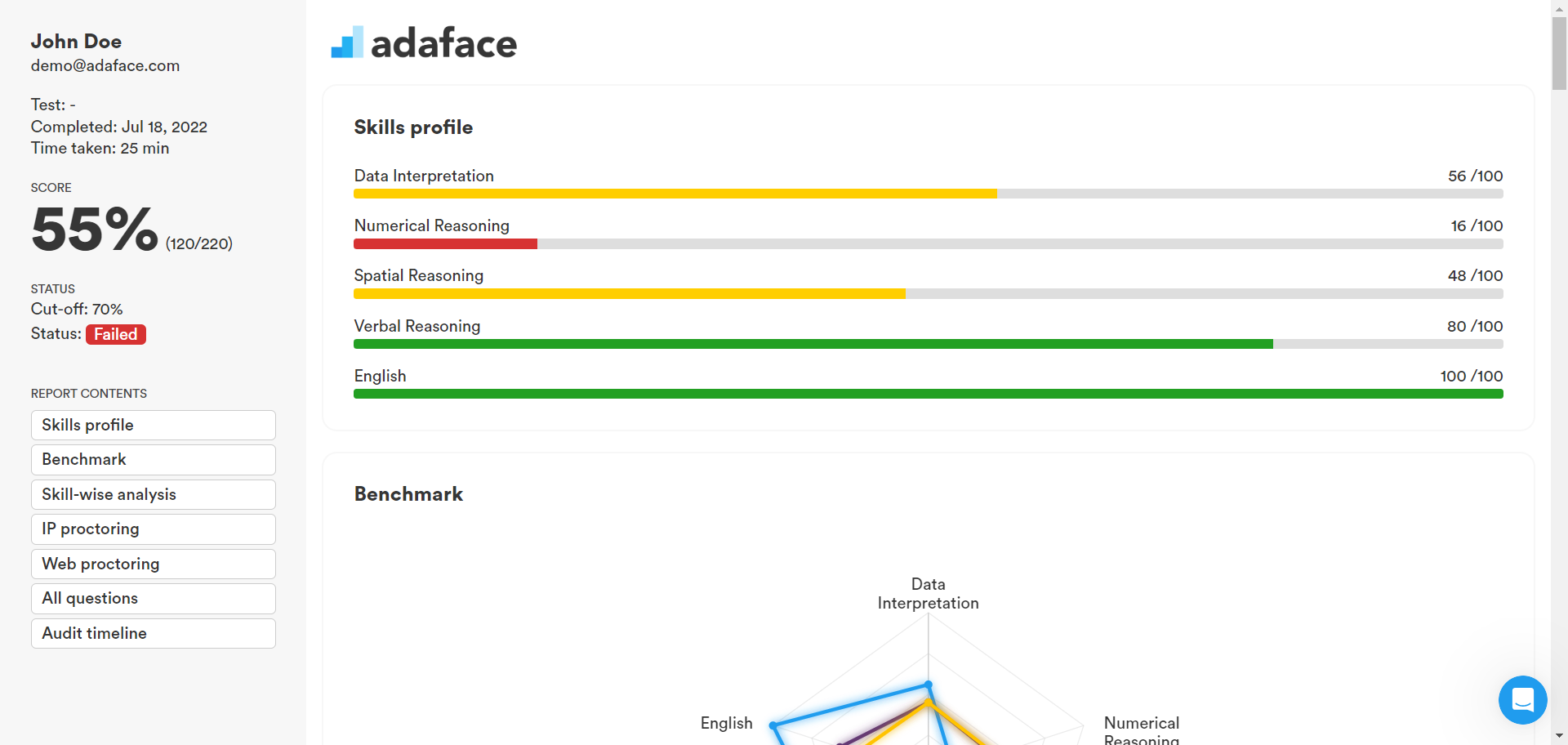
Image source: Adaface
Among the various Mettl alternatives I’ve seen in use, Adaface is the one that tends to surface when teams care as much about candidate experience as they do about test accuracy.
Instead of dropping applicants into a long, rigid exam, it runs a conversational, chat-style flow with scenario-based questions that feel much closer to real work. In practice, that format usually lowers pressure while still revealing how someone thinks, reasons, and solves problems.
In conversations with hiring leaders, Adaface often comes up when they are trying to move away from “brute-force” coding or generic aptitude tests and toward shorter, role-specific screens.
The platform ships with prebuilt assessments for common roles and lets you tune difficulty and question mix without needing a psychometrics background, which is especially helpful for lean or fast-moving talent teams.
Pros:
- Conversational, chat-like assessments that feel natural for candidates
- Role-focused libraries for engineering, product, support, and more
- Built-in anti-cheating features without heavy-handed proctoring
- Integrations with popular ATS and HR tools to keep workflows simple
- Short, targeted tests that respect candidates’ time while still filtering effectively
Cons:
- Conversation flows can require tuning for very niche or hybrid roles
- Not ideal for long, high-stakes certification exams where formal structure is expected
How Adaface Compares to Mettl
Mettl leans toward formal, exam-style assessments with traditional interfaces. Adaface takes a more candidate-centric path with shorter, conversational tests that still measure skills in depth. For organizations worried about candidate drop-off or brand perception, it offers a softer front door without sacrificing signal.
User Rating: 4.7/5 (Capterra)
Pricing: Starts at $180/year.
10. Talview — Best for Video Interviews & AI Proctoring
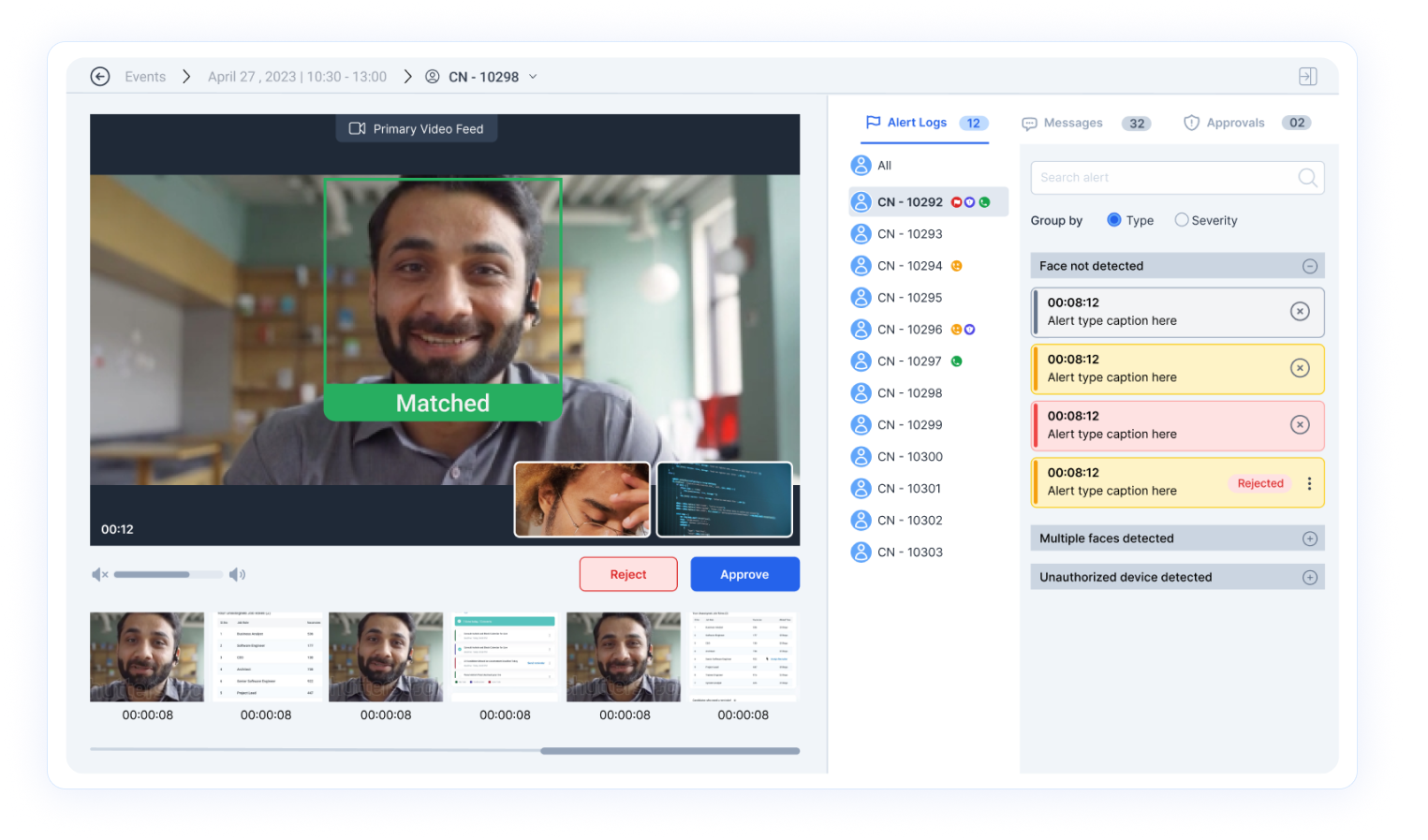
Image source: Talview
In hiring processes where tests, interviews, and identity checks all need to sit in a single, coherent journey, Talview is one of the Mettl alternatives I see mentioned most often.
From what I have observed, it is positioned as a unified environment for online exams, structured video interviews, and AI-driven proctoring, which is particularly useful for campus hiring, high-volume roles, and fully remote recruitment setups.
What I find effective is how candidates move through one continuous experience instead of juggling different links for tests, interviews, and verification steps. Recruiters, in turn, work from a single dashboard where they can configure assessments, schedule or automate interviews, and review AI-generated proctoring flags.
That centralization makes it much easier to maintain consistency across locations, roles, and hiring teams without losing visibility or control.
Pros:
- Combines assessments, video interviews, and AI-based proctoring in one platform
- Strong focus on remote, high-volume scenarios such as campus and global hiring
- Identity verification and monitoring tools to reduce impersonation risks
- Integrations with ATS and HR systems to keep data flowing into core tools
- Mobile-friendly experience that supports candidates on low-spec devices
Cons:
- Occasional technical glitches during assessments and issues with browser compatibility
- There are complaints about the limited customization options
How Talview Compares to Mettl
Mettl is strong on assessments and proctoring, while Talview pushes further into the full hiring journey by stitching tests and interviews together. For organizations that want one environment for exams, remote interviews, and AI-based monitoring, Talview can feel like a more holistic, workflow-oriented alternative.
User Rating: 4.2/5 (Capterra)
Pricing: Custom pricing based on volume and feature mix.
How to Choose a Mettl Alternative
Once you start looking at Mettl alternatives, it is easy to feel buried under logos and feature lists. What has helped me cut through the noise is to judge every tool against a few clear, practical questions instead of chasing everything at once.
1. What job are you hiring the tool for?
Start with your primary use case. Is this mainly for pre-employment screening, ongoing training, certifications, campus hiring, or a mix of all four?
A simulation-focused platform like Vervoe solves a very different problem from a psychometrics-first tool like Criteria, and a generalist quiz platform like ProProfs Quiz Maker can cover more blended use cases.
2. How much setup can your team realistically handle?
Be honest about internal bandwidth. If you do not have a dedicated assessment specialist, you will need templates, AI-assisted test creation, and simple workflows. If your team loves data and configuration, you can afford something more “power user” friendly.
3. What level of security do you actually need?
Not every test needs maximum lockdown. Map your scenarios: light controls for low-stakes training, stronger browser rules for hiring, and full proctoring for certifications or regulated roles. Pick a tool that lets you dial security up or down per assessment, instead of forcing one rigid mode.
4. How important is candidate experience?
In tight talent markets, long, clunky tests quietly kill good pipelines. Look at test length, mobile experience, and how natural the interface feels. Short, focused assessments, clear instructions, and a clean UI often outperform impressive but heavy exam setups.
5. Will it play nicely with your existing stack?
Check integrations with your ATS, LMS, HRIS, and communication tools. A slightly less “perfect” platform that connects smoothly to what you already use often wins over a feature-rich tool that lives in a silo.
6. Can you get useful insights without extra spreadsheets?
You should be able to answer simple questions quickly: Who should we interview first, which topics cause the most failures, and how do cohorts compare over time? Look for dashboards and exports that support these decisions without manual data wrangling.
If you evaluate each Mettl alternative on these points and then pilot your top two on a live role, the right choice usually becomes obvious very quickly.
My Top 3 Picks for Mettl Alternatives & Competitors
With so many strong Mettl alternatives on the table, the “right” choice really depends on what problem you are solving first. If I had to narrow it down for most teams, these three usually cover the widest ground:
1. ProProfs Quiz Maker
For blended use cases, this is the most versatile option in my view. It supports hiring assessments, onboarding, and training in one place, with AI quiz creation, question types, and proctoring. I recommend it when teams want one assessment hub that grows with the business instead of juggling multiple tools.
2. TestInvite
When exam integrity and remote hiring are non-negotiable, TestInvite is usually my first suggestion. It layers access codes, time windows, browser lockdown, and monitoring into a focused exam workflow. I find it suits certifications and regulated roles where you must clearly prove every attempt was fair, consistent, and legally supervised.
3. Adaface
For candidate-centric screening, Adaface tends to be the option I point to most. Short, modern conversational assessments feel less like exams and more like guided problem-solving. You still get strong signals on skills and fit, but with far fewer drop-offs and less damage to your employer brand in competitive markets.
FREE. All Features. FOREVER!
Try our Forever FREE account with all premium features!
Upgrade Your Assessment Stack Beyond Mettl
Assessments are no longer a back-office checkbox. They are part of the experience you offer to candidates and employees. That is why so many teams eventually look beyond Mettl. They want the same reliability with more control over UX, cost, security settings, and how quickly new tests can go live.
From what I have seen, the smartest move is to treat tools like experiments, not lifetime contracts. Shortlist two platforms, run real pilots on real roles, and let data speak. Track setup time, completion rates, hiring manager confidence, and candidate feedback.
If you want one platform that can start with simple skills tests and grow into proctored exams, training quizzes, and ongoing assessments, ProProfs Quiz Maker fits that journey without forcing an enterprise-style rollout.
Frequently Asked Questions

Which Mettl competitors are best for small businesses or startups?
Smaller teams usually lean toward tools that are easy to set up, have clear pricing, and cover multiple use cases. ProProfs Quiz Maker, TestGorilla, and Adaface come up often in research because they offer templates, simpler workflows, and lower entry costs without forcing a big enterprise implementation.
What are the most secure Mettl alternatives for high-stakes exams?
For high-stakes or regulated exams, teams typically shortlist tools that combine browser lockdown, strong proctoring, and detailed logs. TestInvite, Talview, and ProProfs Quiz Maker feature prominently in reviews because they support secure delivery, identity checks, and monitoring while still keeping candidate access relatively straightforward across locations and time zones.
Are there any good free Mettl alternatives worth trying?
Yes. Research and review data consistently highlight free or freemium options like ProProfs Quiz Maker and TestGorilla. These let you create short skills tests or pilots without long contracts, so you can validate workflows, candidate experience, and reporting quality before committing to a full paid subscription.
How hard is it to migrate from Mettl to another assessment platform?
Migration difficulty depends on how many tests and question banks you have. Most leading alternatives support spreadsheets, question import, and side-by-side pilots. A practical approach is to clone a few key assessments in the new tool, run them in parallel, then phase out Mettl gradually.

Let ProProfs AI Build a Quiz

 We'd love your feedback!
What did you like & how can we make it even better?
 Thanks for your feedback!
 Ask Your Question
Have a question? Get expert help to make your decision easier.