I’ve worked with quizzes across education, training, and marketing, and one question comes up more often than you’d expect: What is a quiz, really?
At its simplest, a quiz is a short set of focused questions designed to quickly check knowledge, understanding, or preferences.
You’ve likely taken one to test what you know, make a decision, or just satisfy curiosity. That simplicity is exactly why quizzes show up everywhere today—from classrooms and onboarding programs to social media and lead generation campaigns.
Still, quizzes are often misunderstood or confused with tests and exams, even though they serve a very different purpose.
This guide breaks down what a quiz actually is, why it’s used so widely, the different types you’ll encounter, and how to create one that keeps people engaged rather than overwhelmed.
Definition and Purpose of a Quiz
Quiz Definition: A quiz is a short, focused assessment made up of questions that measure understanding of a specific topic, concept, or skill. It gives a quick snapshot of what someone knows right now, without the breadth or formality of a full test or exam.
You’ll also see “quiz” used more casually, like trivia or personality-style quizzes.
The purpose of a quiz is to create fast clarity and guide the next step.
- In classrooms and training, it reinforces key concepts, checks whether learners are following along, and highlights weak areas early so instructors can adjust before small gaps turn into bigger ones.
- In hiring or decision-making, it acts as a quick screen for baseline knowledge so you know who’s worth a deeper conversation.
In marketing, it captures attention, delivers a personalized result (like a recommendation or fit), and collects intent signals you can use for lead capture and more relevant follow-up.
What Is the Difference Between a Quiz and a Test?
Though often used interchangeably, quizzes, tests, and exams serve different purposes in assessing knowledge and skills. Each varies in structure, difficulty, and impact.
- Quiz
A quiz is a short, informal assessment designed to check understanding of a specific topic. It is often low-stakes and used for quick learning reinforcement or engagement. Quizzes are common in classrooms, online courses, and training programs, typically featuring multiple-choice or true/false questions.
- Test
A test is a structured evaluation that measures a learner’s grasp of broader concepts. It is more detailed than a quiz and is often graded to assess progress. Tests are used in schools, workplaces, and certifications, featuring a mix of question types, including multiple-choice, short answers, and problem-solving scenarios.
- Exam
An exam is a formal and comprehensive assessment covering multiple topics. It is high-stakes and often determines grades, certifications, or qualifications. Exams may include essays, case studies, and long-form responses to measure deep understanding and application of knowledge.
Watch: How to Create an Online Test for Students or Employees
Quiz vs Test vs Exam
Each serves a unique role—quizzes encourage learning, tests track progress, and exams measure mastery. Choosing the right one depends on the depth of evaluation needed.
| Criteria | Quiz | Test | Exam |
|---|---|---|---|
| Length | Short | Moderate | Long |
| Scope | One topic or small set of concepts | A unit or module | Multiple units or full course |
| Purpose | Quick knowledge check | Evaluate comprehension and progress | Confirm mastery |
| Stakes | Low | Medium | High |
| Grading weight | Low or sometimes ungraded | Moderate | High |
| Question style | Mostly recall, quick checks | Recall + application | More application, reasoning |
| Common formats | MCQs, true/false, interactive | MCQs, short answers, problem-solving | Essays, case studies, practical tasks |
| Examples | Pop quizzes, online trivia | Unit tests, employee assessments | Final exams, professional certifications |
How to Choose Between a Quiz, Test, and Exam
If you are unsure which one you need, decide based on what you want to learn from the results.
- Choose a quiz when you want a fast signal. It’s ideal when the goal is to check understanding of a narrow topic, keep people engaged during learning, or catch confusion early while it’s still easy to fix.
- Choose a test when you need a more complete picture across a unit or module. Tests work well when you want to measure progress across multiple concepts and compare performance more formally.
- Choose an exam when you need to verify mastery across multiple topics with higher stakes. Exams are best when you are validating overall competence, eligibility, or readiness for certification.
The higher the stakes, the more you need scope, structure, and consistency.
Examples of Quizzes
Examples help because “quiz” can look very different depending on context. Below are common quiz scenarios, what they’re trying to achieve, and what a good result should tell you.
Example 1: Lesson Checkpoint Quiz
Where it shows up: Schools, online courses, workshops
Goal: Confirm learners understood one concept before moving on
What it looks like: 5 to 10 questions, mostly multiple-choice or short fill-in
What the results should tell you: Which concept needs review, not just who passed
Design tip: Include at least one question that tests application, not only memorization.
Example 2: Training Reinforcement Quiz
Where it shows up: Onboarding, product training, compliance refreshers
Goal: Make sure knowledge sticks after training
What it looks like: A short quiz after the content, plus feedback for wrong answers
What the results should tell you: Which topics are consistently weak across the group
Design tip: Add explanations so the quiz doubles as a learning moment, not a judgment moment.
Example 3: Hiring Screen Quiz
Where it shows up: Pre-interview screening for role fundamentals
Goal: Validate baseline readiness and reduce time spent on unqualified applicants
What it looks like: Scenario questions and role-specific judgment calls
What the results should tell you: Who meets the baseline and where strengths show up
Design tip: Use practical situations. Avoid trick questions that punish wording instead of skill.
Example 4: Product Recommendation Quiz
Where it shows up: Marketing and lead capture
Goal: Help users choose quickly while gathering preference signals
What it looks like: Preference-based questions that lead to a personalized result
What the results should tell you: Which category or solution fits their needs
Design tip: Keep results specific and helpful. Generic results feel like a sales pitch.
Example 5: Trivia or Team Quiz
Where it shows up: Events, social media, engagement campaigns
Goal: Entertainment and participation
What it looks like: Time limits, scoring, and shareable results
What the results should tell you: Mainly “how you did” rather than “what to do next”Design tip: Make questions crisp and avoid ambiguity, because disputes kill the fun.
What Are the Different Types of Quizzes?
Not all quizzes are built the same. Some check what you know, others help you learn more about yourself, and a few just exist to keep things fun. The format and purpose determine what kind of quiz you’re dealing with.
1. Knowledge-Based Quizzes
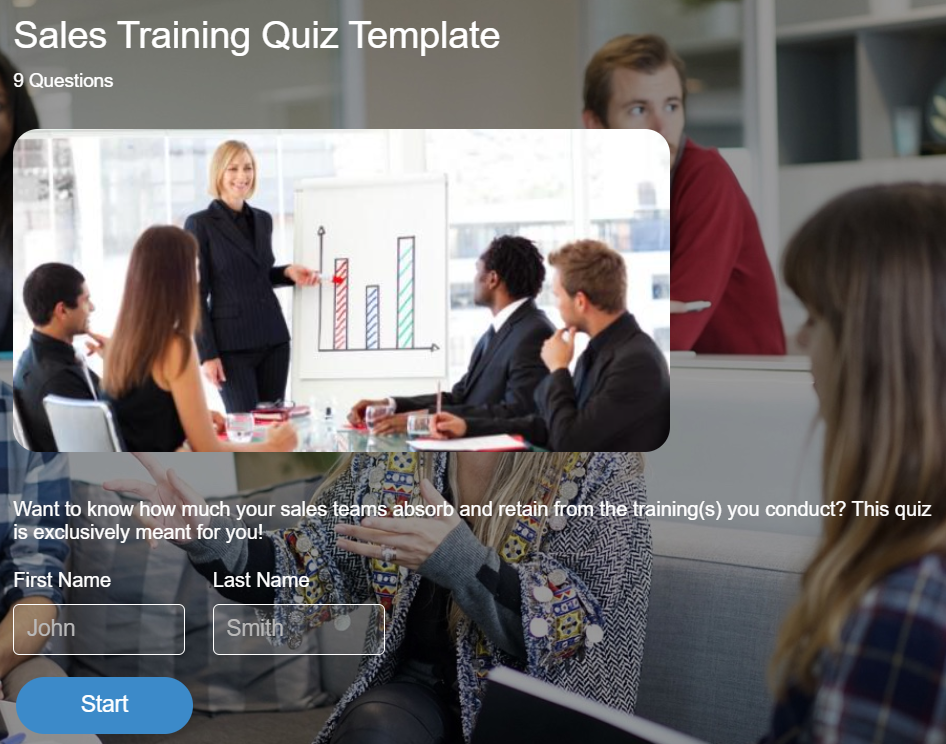
These focus on facts. Whether it’s world history, math formulas, or industry-specific concepts, the goal is to test how much information you can recall. They usually follow a structured format—multiple-choice, fill-in-the-blank, or true/false—so answers are clear-cut.
2. Personality Quizzes
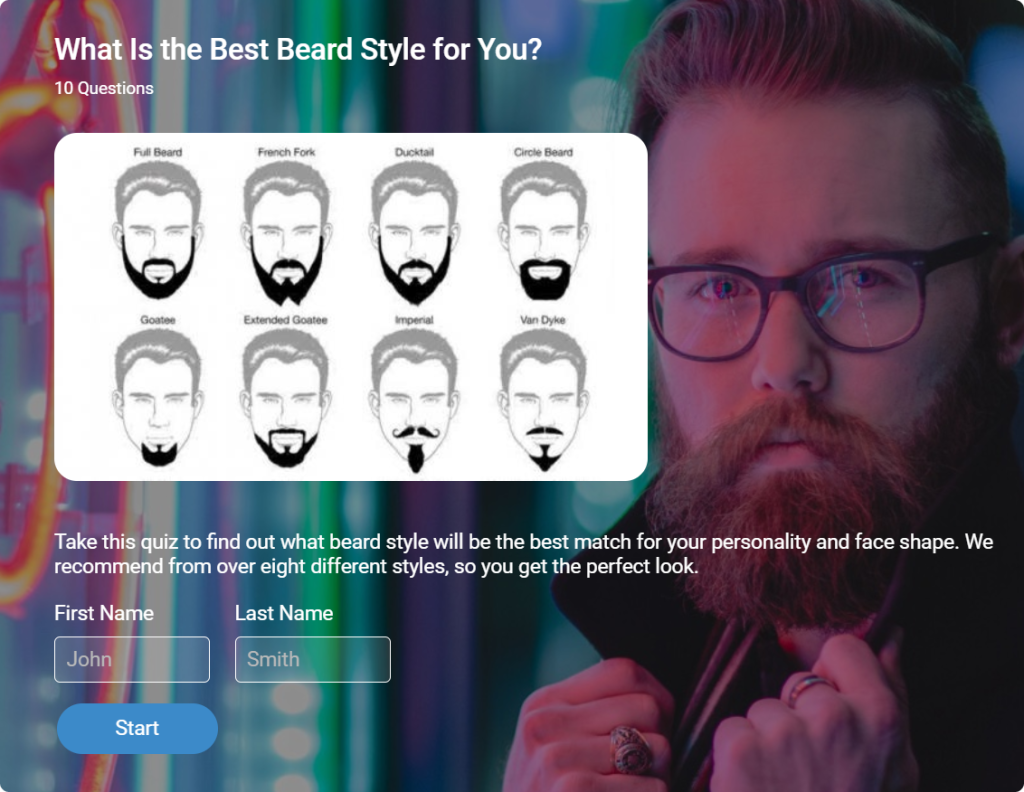
Instead of right or wrong answers, personality quizzes map out traits, preferences, or behaviors. They rely on patterns in responses to categorize people into groups—think personality types, career strengths, this or that quizzes, or even which fictional character you resemble.
3. Trivia Quizzes
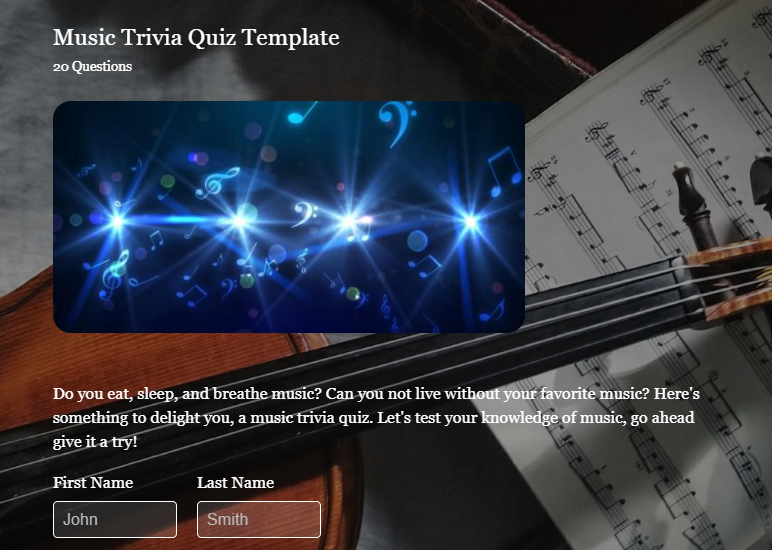
A test of random knowledge. Questions can range from “What year was the first iPhone released?” to “Which planet has the most moons?” There’s no deeper goal beyond seeing how many answers you can get right, though some versions throw in time limits or leaderboards to up the stakes.
4. Assessments
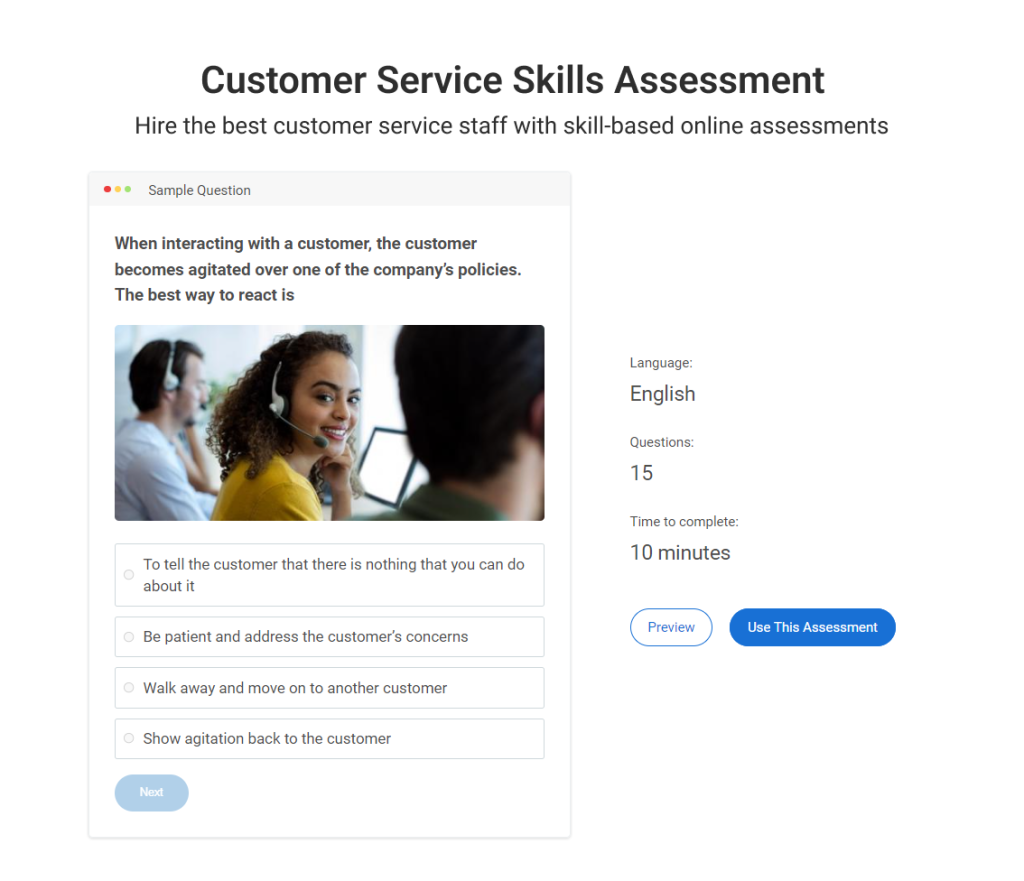
These go beyond surface-level questions. Instead of just testing facts, they evaluate skills, critical thinking, or decision-making. Many include scenario-based questions where the best answer depends on context rather than simple memorization.
5. Interactive or Gamified Quizzes
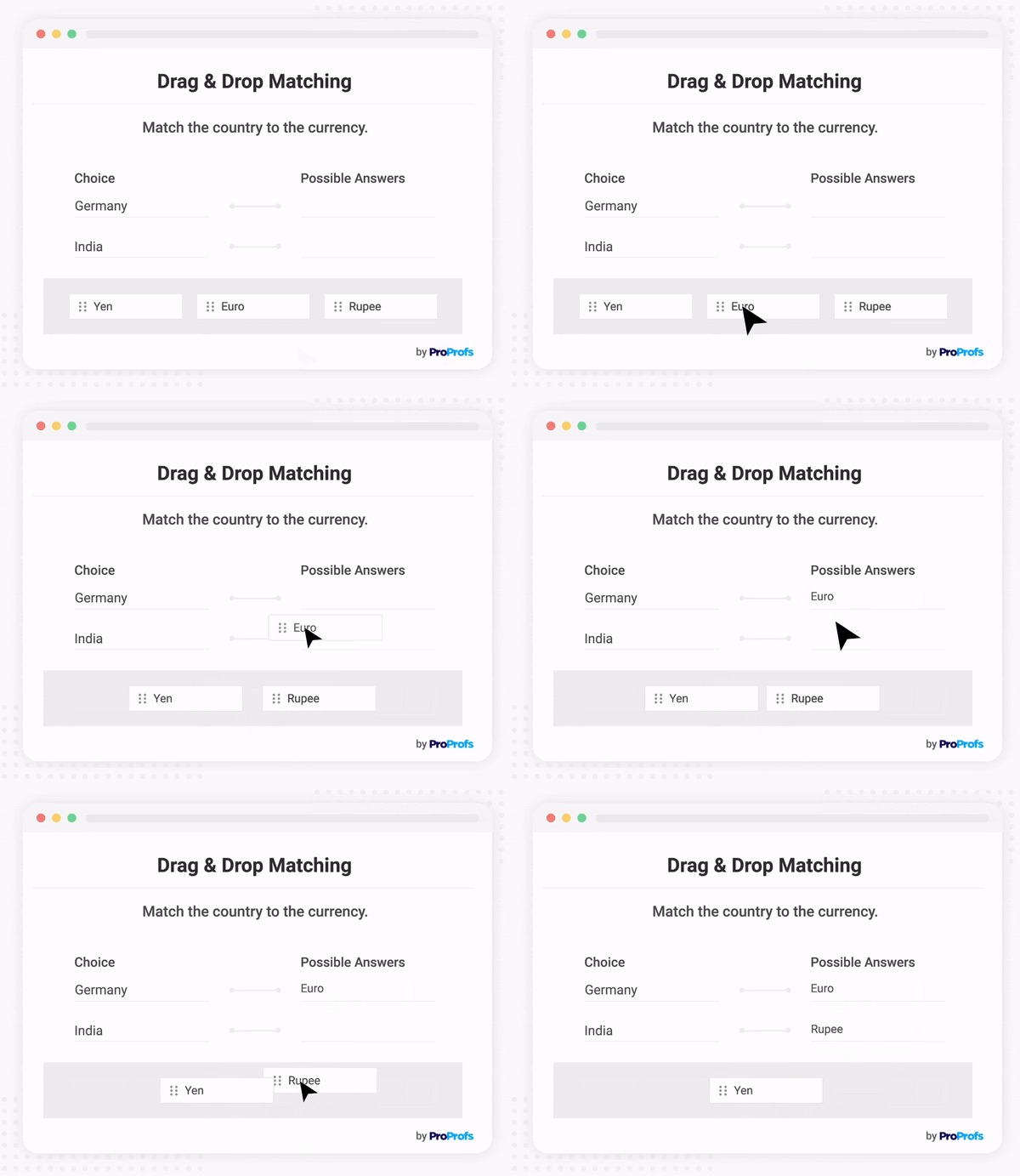
Some quizzes feel more like a challenge than a test. Timed questions, matching quizzes, dynamic difficulty levels, or scoring mechanics add an extra layer of engagement. Rather than just answering questions, participants might have to complete tasks, solve puzzles, or compete against others.
Each type serves a different purpose, but all rely on the same basic structure—questions and responses designed to reveal something, whether it’s knowledge, personality, or problem-solving ability.
Importance & Benefits of Quizzes
Quizzes aren’t just about answering questions—they shape how people learn, recall information, and even make decisions. Their value depends on how they’re used, but whether for education, training, or entertainment, they have a lasting impact.
- Reinforce Learning
Reading something once doesn’t mean it’ll stick. Answering questions forces the brain to recall information, strengthening memory and understanding. That’s why teachers, trainers, and e-learning platforms rely on quizzes to make learning active rather than passive.
- Identify Strengths & Gaps
Guesswork and confidence don’t always match up. A well-structured quiz highlights what someone truly knows versus where they’re struggling. This applies to students, professionals, and anyone trying to improve a skill.
- Keep Engagement High
A wall of text or a long lecture can lose people fast. Breaking information into smaller, interactive chunks—like quizzes—keeps attention locked in. Gamified elements, immediate feedback, or even a simple score at the end make participation feel rewarding.
- Make Decision-Making Easier
Personality quizzes, career assessments, or product recommendation quizzes take the guesswork out of choices. Instead of endless browsing or second-guessing, the right quiz helps narrow down options based on personal preferences or needs.
- Encourage Critical Thinking
Not every quiz is about memorization. Some push users to analyze, compare, or apply knowledge to real-world scenarios. The best ones don’t just ask for answers—they make people think before they pick.
- Gather Useful Insights
For businesses, quizzes reveal customer preferences without feeling like a boring survey. For educators, they show which topics need more focus. Well-designed quizzes serve both the participant and the creator by delivering useful takeaways.
- Track Progress Over Time
One quiz gives a snapshot, but repeated quizzes show patterns. Learning platforms and businesses use this to measure improvement, identify trends, and adapt content to meet evolving needs.
Watch: How to Review Quiz Reports & Statistics
What Are Quizzes Used For?
Quizzes pop up everywhere—sometimes in obvious places like schools, and other times disguised as a fun personality test. They’re used for far more than just testing knowledge. Whether it’s about learning, hiring, marketing, or just keeping people engaged, quizzes adapt to different needs.
1. Education
Teachers use quizzes to reinforce lessons, check understanding, and make learning more interactive. They also help identify which topics students struggle with, so adjustments can be made before moving on.
Unlike high-pressure exams, quizzes allow students to test themselves in a low-stakes way, making them an essential tool for effective learning.
Watch: How to Use Online Quiz Maker for Teachers
2. Workplace Training
In professional settings, quizzes go beyond simple assessments—they ensure employees actually retain and apply what they’ve learned. One of the biggest challenges in workplace learning is identifying knowledge gaps before they become real-world mistakes. That’s where training needs analysis (TNA) comes in.
By using quizzes to assess current knowledge levels, organizations can tailor training programs to focus on the areas that need the most attention instead of wasting time on topics employees already understand.
3. Hiring & Recruitment
A well-crafted quiz can reveal a lot about a candidate’s skills, problem-solving abilities, and even personality traits. Many companies use pre-employment quizzes to screen applicants before moving forward with interviews. This saves time and ensures that only those with the right qualifications get through to the next round.
Some roles, especially technical or analytical ones, rely heavily on quizzes to measure practical knowledge before making hiring decisions.
Watch: How to Create an Assessment Online
4. Self-Assessment
People take quizzes to better understand themselves. Career aptitude tests, productivity assessments, and even mental health check-ins help individuals reflect on their strengths and areas for improvement. While these quizzes aren’t a substitute for expert guidance, they offer insights that can be useful for personal growth and decision-making.
5. Marketing
Sometimes, a quiz doesn’t feel like a quiz at all. “Which skincare routine is right for you?” or “What’s your fitness personality?”—these are quizzes designed to gather data while making the user feel like they’re getting personalized advice.
Businesses use them to engage potential customers, recommend products, and build brand loyalty. The best ones don’t feel like data collection tools; they feel like a fun, interactive experience.
Watch: How to Create Customer Acquisition Quizzes That Convert
6. Fun & Entertainment
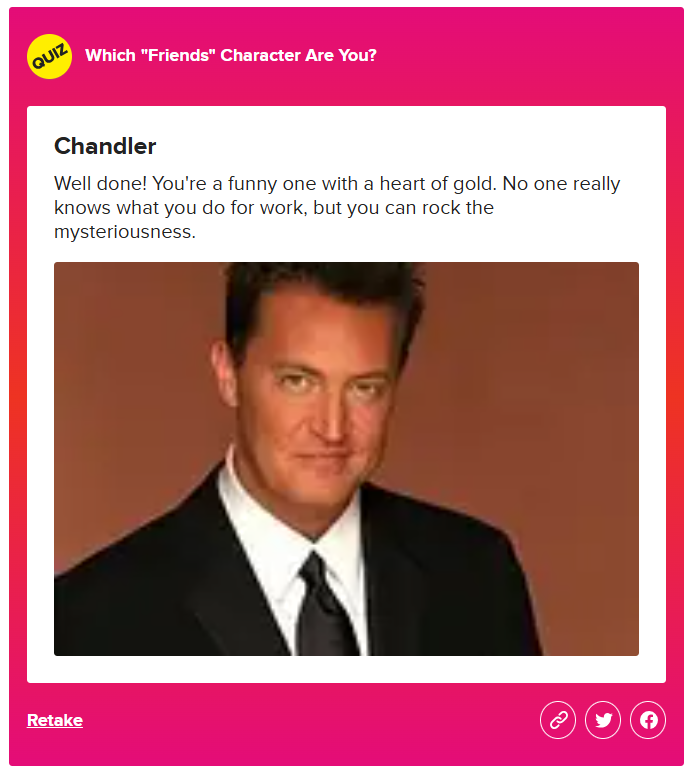
Image source: BuzzFeed
Not every quiz is serious. Trivia games, social media challenges, and personality quizzes exist purely for entertainment. They tap into curiosity and offer instant gratification with results that people often love to share.
The fun factor is what makes them spread so easily, whether it’s a “Which TV character are you?” quiz or a “Test your 90s music knowledge” challenge.
Quizzes blend into different aspects of life—sometimes they educate, sometimes they entertain, and sometimes they shape decisions without feeling like a test at all.
How to Create a Quiz
Quizzes can be created in two ways: offline or online. Offline quizzes (printed papers, verbal questioning, or a whiteboard round) can work for small groups, but they do not offer automation, instant results, or reporting. Online quizzes do, which makes them easier to scale and track.
Here’s a step-by-step way to create an online quiz using quiz maker software (using ProProfs Quiz Maker as an example):
Step 1: Create a new quiz and add questions (AI, upload, or question library)
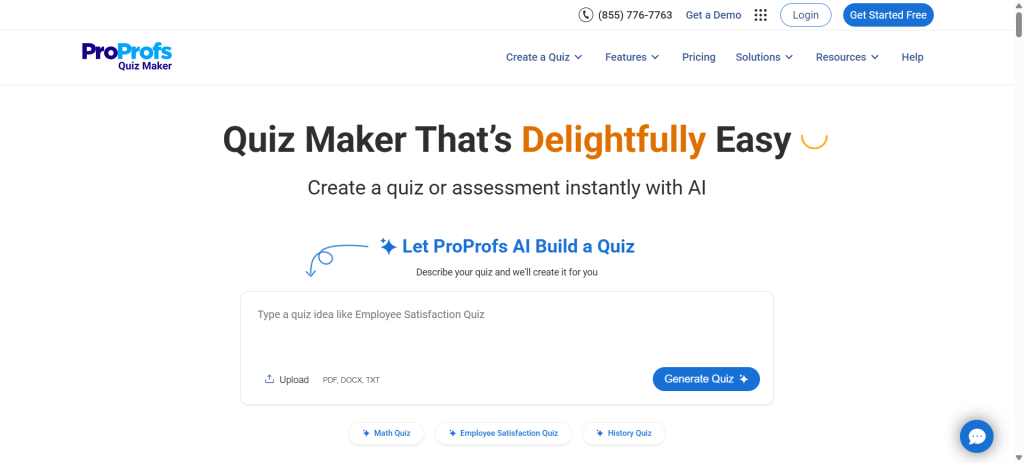
Start a new quiz, then choose the fastest way to build it:
- Create with AI by entering a topic, keywords, or source content to generate questions automatically.
- Upload questions you already have using a Word doc or Excel sheet.
- Import questions from ProProfs’ library of over a million questions.
- Or mix methods (for example, generate a quick draft with AI, then add role-specific questions from your doc or the question library)
Step 2: Arrange the quiz and choose question types
Once your questions are in, do a quick pass to make sure the quiz flows well from start to finish. This is also where you decide whether you want to stick with the question types you already have or add variety.
You can include formats like:
- Multiple-choice – Ideal for structured assessments where clear right and wrong answers exist.
- True/false – Useful for quick checks, though limited in depth.
- Fill-in-the-blank – Encourages active recall but may require precise wording.
- Scenario-based – Tests application of knowledge rather than just memorization.
- Drag-and-drop – Enhances interactivity by letting users match, sort, or arrange elements.
- Hotspot – Tests knowledge visually by having participants click on the correct area of an image.
- Essay – Allows for in-depth responses but requires manual grading.
- Video response – Captures detailed, personal insights, ideal for skills assessment or interviews.
Step 3: Set scoring and quiz settings
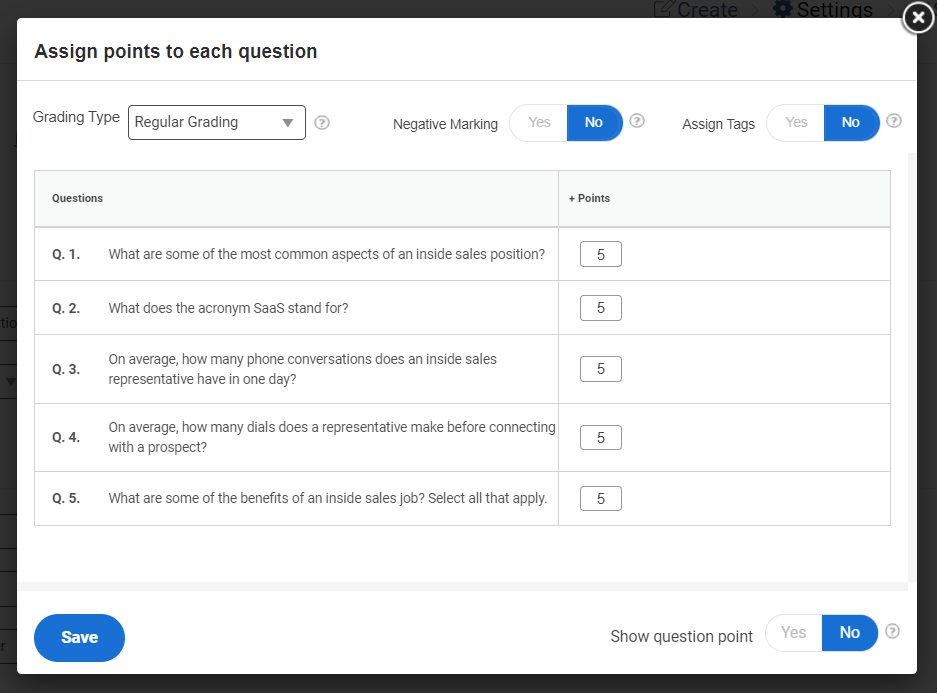
Next, decide how the quiz should run. Assign points and automate grading. Add time limits if needed. If the quiz is higher-stakes, enable cheating prevention settings. You can also configure notifications, completion messages, and other quiz rules.
Step 4: Add feedback and polish the experience
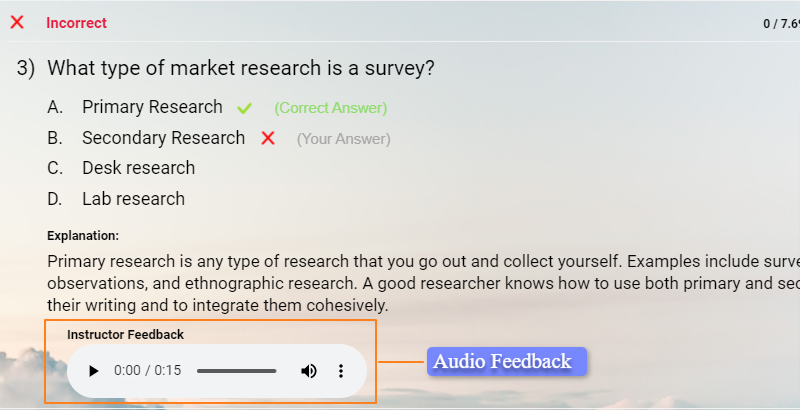
Now make the quiz more helpful and engaging. Add feedback to explain correct answers or guide learners when they get something wrong. You can also add images or videos where they improve understanding, and customize the theme, logo, fonts, and background.
Step 5: Preview and share the quiz (or print it)
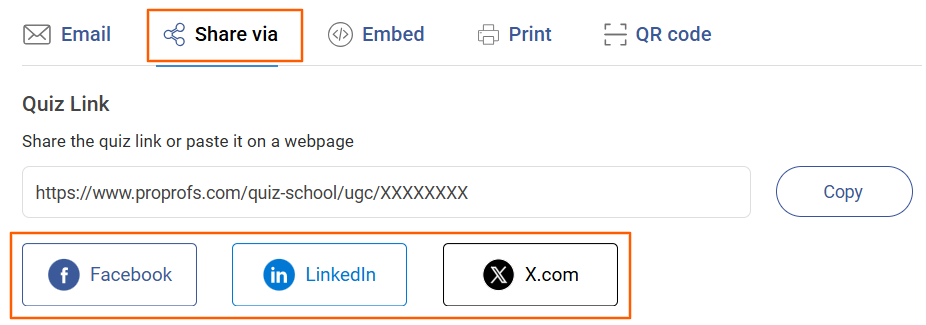
Preview the quiz once to see it exactly the way participants will. Then share it via a link, embed it on a website, assign it through a virtual classroom, or integrate it into a learning system.
If you need an offline handout for an in-person session, you can still create the quiz online first and then print it for distribution.
Step 6: Track results and spot what needs attention
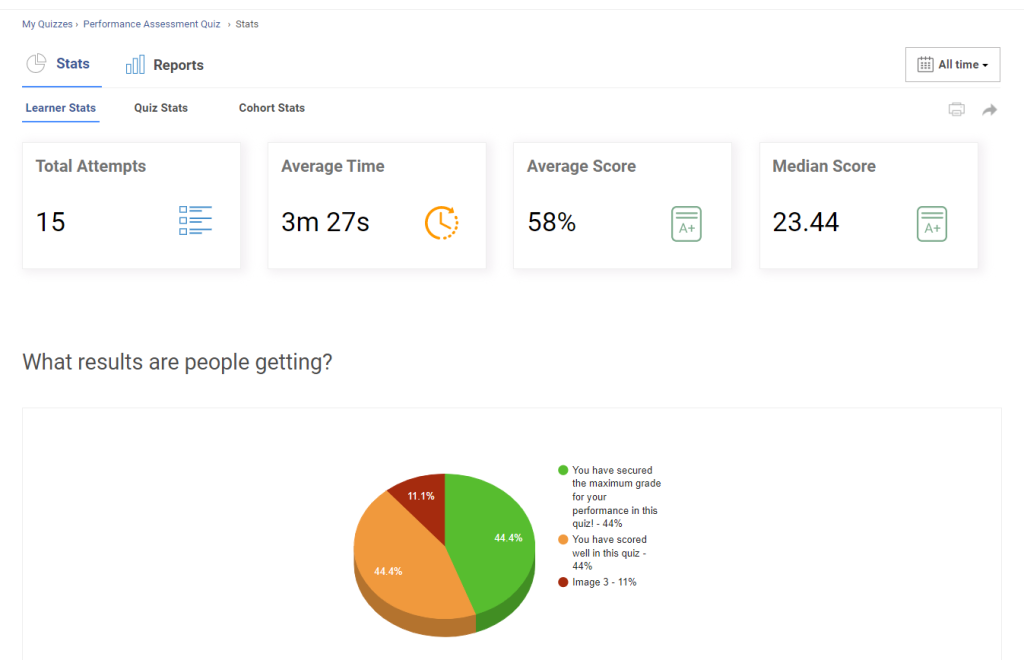
After people take the quiz, use reports and analytics to track completion rates, score comparison, learning progress, question difficulty, and engagement. This makes it easy to see which questions were most missed, where learners dropped off, and which topics need a quick follow-up.
Transform Quizzes Into Powerful Learning & Engagement Tools
A quiz is more than a set of questions—it’s a tool that can educate, evaluate, and engage. The right quiz reinforces knowledge, sharpens skills, and keeps users actively involved. Whether in a classroom, a workplace, or a marketing campaign, a well-structured quiz turns passive participation into meaningful interaction.
The impact of a quiz depends on its design. Clarity, relevance, and immediate feedback make the difference between a forgettable test and an engaging experience. When used strategically, quizzes drive better learning outcomes, improve retention, and even influence decisions.
If you want to create professional, engaging quizzes without the hassle, ProProfs Quiz Maker makes it easy. With 20+ question types, AI quiz generation, security settings, in-depth analytics, and all the other features you could need, it helps you craft quizzes that do more than test—they teach, engage, and deliver real results. Start building smarter quizzes today.
Frequently Asked Questions

What is the main purpose of a quiz?
The main purpose of a quiz is to quickly check understanding and reinforce learning. It helps learners recall information, spot weak areas early, and get feedback before moving on. Quizzes make learning more active and give instructors a fast way to adjust instruction.
What are the three main types of quizzes?
The three most common types are knowledge-based quizzes, personality quizzes, and trivia quizzes. Knowledge quizzes check facts or concepts, personality quizzes group people based on responses, and trivia quizzes focus on fun general knowledge. Many quizzes also include skill-based or scenario-style questions.
How do quizzes help in learning?
Quizzes help learning by forcing active recall, which strengthens memory and understanding. They also provide feedback that shows what’s clear and what needs review. Because quizzes are short and focused, learners stay engaged and can improve faster without feeling overwhelmed.
What is the difference between a quiz and a test?
A quiz is usually shorter, more focused, and often lower stakes than a test. It checks understanding of a small topic or a recent lesson. A test covers a broader range of material, takes longer, and usually carries more grading weight or evaluation impact.

Let ProProfs AI Build a Quiz

 We'd love your feedback!
What did you like & how can we make it even better?
 Thanks for your feedback!
 Ask Your Question
Have a question? Get expert help to make your decision easier.