
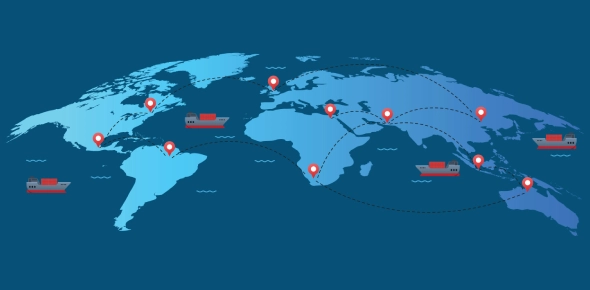
4th Grade World Geography Quiz

  • 3rd Grade,
  • 4th Grade,
  • 5th Grade
  • NGSS
Reviewed by Editorial Team
The ProProfs editorial team is comprised of experienced subject matter experts. They've collectively created over 10,000 quizzes and lessons, serving over 100 million users. Our team includes in-house content moderators and subject matter experts, as well as a global network of rigorously trained contributors. All adhere to our comprehensive editorial guidelines, ensuring the delivery of high-quality content.
Learn about Our Editorial Process
| By Thames
T
Thames
Community Contributor
Quizzes Created: 8156 | Total Attempts: 9,588,805
| Attempts: 11 | Questions: 15 | Updated: Jan 20, 2026
Please wait...
Question 1 / 15
🏆 Rank #--
Score 0/100

1. What is a continent?

Explanation

A continent is defined as a vast and continuous landmass separated mainly by oceans. It is much larger than islands or countries and contains multiple nations, ecosystems, and landforms. Continents are identified based on geographical convention rather than strict scientific rules. Their size and continuity make them distinct from other land features, helping geographers classify Earth’s surface effectively.

Submit
Please wait...
About This Quiz
4th Grade World Geography Quiz - Quiz

Discover our planet with this 4th grade world geography quiz designed for young learners. This grade 4 geography questions covers continents, oceans, countries, capitals, landforms and basic map skills through world geography quiz for kids MCQs.

Perfect for elementary students seeking social studies geography grade 4 practice or world geography practice... see moretest preparation, it includes fun facts and visual cues with clear explanations.
see less

2. How many continents are there in the world?

Explanation

Earth has seven continents recognized globally. This classification helps organize global geography and education. Each continent differs in size, climate, population, and natural features. The seven-continent model is widely accepted and taught because it balances clarity with geographic accuracy, making it easier for learners to understand Earth’s structure and spatial divisions.

Submit

3. Which list correctly names all continents?

Explanation

A globe is a three-dimensional spherical representation of Earth. Unlike flat maps, it preserves accurate shapes, distances, and directions. Because Earth itself is spherical, a globe provides the most realistic way to study continents, oceans, latitude, and longitude without distortion caused by flattening the planet’s surface.

Submit

4. What is a globe?

Explanation

Imaginary lines like latitude and longitude are essential tools for locating exact positions on Earth. They form a coordinate grid that allows geographers to pinpoint locations precisely. Without these lines, navigation, mapping, and global positioning systems would be inaccurate and unreliable, making global travel and geographic study extremely difficult.

Submit

5. Why are imaginary lines used on a globe?

Explanation

The equator is one of the most important imaginary lines on Earth. It runs halfway between the North and South Poles and divides the planet into two equal halves. This division helps define climate zones, latitude measurements, and hemispheric distinctions, making it central to geographic calculations and global navigation.

Submit

6. Which is an imaginary line?

Explanation

A hemisphere represents half of the Earth. The concept helps geographers study the planet in manageable sections. By dividing Earth into hemispheres, scientists can analyze climate patterns, seasonal changes, and geographic relationships more effectively. This division also simplifies understanding Earth’s orientation in space.

Submit

7. What does the equator divide the Earth into?

Explanation

Earth is divided into Northern, Southern, Eastern, and Western Hemispheres. These divisions are based on the equator and the prime meridian. They help categorize locations and explain global differences in climate, time zones, and seasonal variations, making Earth’s complex geography easier to understand.

Submit

8. What is a hemisphere?

Explanation

A full circle measures 360 degrees, a concept rooted in geometry and astronomy. Earth rotates 360 degrees on its axis in one full rotation. This measurement is essential for understanding longitude, navigation, time calculation, and map reading, forming the foundation of many geographic and mathematical calculations.

Submit

9. Which are the main hemispheres?

Explanation

Lines of latitude run parallel to the equator and measure distance north or south. They help determine climate zones and locations. These lines never meet and are evenly spaced, making them crucial for understanding Earth’s structure and for accurately identifying positions relative to the equator.

Submit

10. How many degrees are in a full circle?

Explanation

The equator is defined as 0° latitude and serves as the reference point for measuring latitude. It is the longest latitude line and divides Earth into the Northern and Southern Hemispheres. This baseline is essential for geographic calculations, climate classification, and global positioning systems.

Submit

11. What are lines of latitude?

Explanation

Meridians of longitude run from the North Pole to the South Pole. They measure distances east or west of the Prime Meridian. Unlike latitude lines, longitude lines converge at the poles. They are essential for determining time zones and for accurately locating places on Earth.

Submit

12. What is 0° latitude called?

Explanation

The Prime Meridian is located at 0° longitude and passes through Greenwich, England. It serves as the starting reference for measuring longitude worldwide. This line is critical for navigation, timekeeping, and global mapping systems, forming the basis for international time zones.

Submit

13. What are meridians of longitude?

Explanation

Maps visually represent geographic information such as landforms, boundaries, and human settlements. They help users understand spatial relationships and navigate areas effectively. Different types of maps serve different purposes, making maps versatile tools for education, planning, and exploration.

Submit

14. What is the Prime Meridian?

Explanation

Maps provide diverse information including direction, distance, population, and physical features. Depending on the type, they can show political boundaries, climate patterns, or natural resources. This versatility makes maps essential tools for geographers, planners, students, and travelers alike.

Submit

15. What is shown on a map?

Explanation

Geographic information includes physical and human-made features of Earth. Maps combine symbols, scales, and legends to present complex data clearly. This allows users to interpret spatial relationships, make comparisons, and perform calculations related to distance, area, and location effectively.

Submit
×
Saved
Thank you for your feedback!
View My Results
Cancel
  • All
    All (15)
  • Unanswered
    Unanswered ()
  • Answered
    Answered ()
What is a continent?
How many continents are there in the world?
Which list correctly names all continents?
What is a globe?
Why are imaginary lines used on a globe?
Which is an imaginary line?
What does the equator divide the Earth into?
What is a hemisphere?
Which are the main hemispheres?
How many degrees are in a full circle?
What are lines of latitude?
What is 0° latitude called?
What are meridians of longitude?
What is the Prime Meridian?
What is shown on a map?
play-Mute sad happy unanswered_answer up-hover down-hover success oval cancel Check box square blue
Alert!


