Art History Quiz: Prehistoric to Classical Antiquity

Reviewed by Editorial Team
The ProProfs editorial team is comprised of experienced subject matter experts. They've collectively created over 10,000 quizzes and lessons, serving over 100 million users. Our team includes in-house content moderators and subject matter experts, as well as a global network of rigorously trained contributors. All adhere to our comprehensive editorial guidelines, ensuring the delivery of high-quality content.
Learn about Our Editorial Process
| By Thames
T
Thames
Community Contributor
Quizzes Created: 8156 | Total Attempts: 9,588,805
| Questions: 29 | Updated: Jan 29, 2026
Please wait...
Question 1 / 30
🏆 Rank #--
Score 0/100

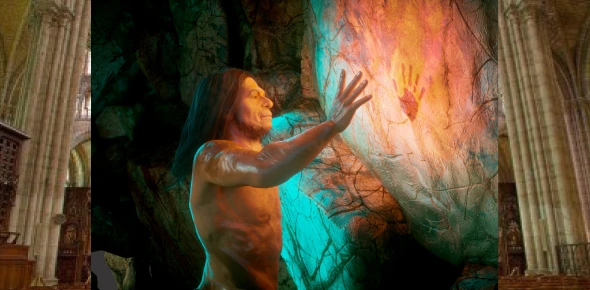
1. Which prehistoric cave site in France contains the Hall of Bulls dated to around 15000 BCE

Explanation

Lascaux Cave is a key Paleolithic site in southwestern France. The Hall of Bulls includes oversized animal figures painted using mineral pigments and charcoal. Dating is often estimated around 15000 BCE using archaeological context and radiocarbon testing of nearby materials. The subject matter focuses on large animals, suggesting symbolic or ritual significance. Its scale, repetition of animal forms, and careful placement show structured visual planning rather than random decoration.

Submit
Please wait...
About This Quiz
Art History Quiz: Prehistoric To Classical Antiquity - Quiz

This Art History quiz assesses understanding of key movements, artists, and historical impacts within the art world. It is designed to evaluate knowledge depth in Art History, preparing learners for advanced studies or professional exploration in the field.

2.

What first name or nickname would you like us to use?

You may optionally provide this to label your report, leaderboard, or certificate.

2. Which Ancient Egyptian sculpture depicts King Menkaure with a queen

Explanation

The Menkaure and Queen sculpture comes from the Old Kingdom and reflects Egypt’s formula for royal permanence. The figures are frontal, balanced, and idealized to signal stability and divine authority. Dating around 2480 BCE fits Menkaure’s reign and associated pyramid complex at Giza. The paired stance communicates legitimacy and continuity. The simplified anatomy is intentional, prioritizing symbolic clarity over lifelike motion, which aligns with Egyptian funerary beliefs.

Submit

3. Which architectural complex served as royal tombs around 2500 BCE in Egypt

Explanation

The Great Pyramids of Giza are Old Kingdom royal tombs built for Khufu, Khafre, and Menkaure. The approximate date around 2500 BCE matches the Fourth Dynasty timeline. Their geometry, alignment, and scale required precise planning and labor organization. Functionally, they supported the king’s afterlife journey, with mortuary temples and causeways forming a larger sacred landscape. The complex reflects centralized power and religious ideology tied to divine kingship.

Submit

4. Which Classical Greek sculpture by Polykleitos illustrates ideal human proportions

Explanation

Doryphoros by Polykleitos is a Classical Greek sculpture built around proportional rules often linked to his Canon. It presents a mathematically balanced body and controlled contrapposto, distributing weight through a stable stance. The goal is ideal harmony rather than portrait realism. Its date around 440 BCE aligns with the High Classical period’s focus on measured naturalism. The piece became a reference model, influencing later Greek and Roman representations of the male form.

Submit

5. Which Greek temple was designed by Iktinos and Kallikrates

Explanation

The Parthenon was designed by Iktinos and Kallikrates and built in Athens during the mid-fifth century BCE. Its dates, 447 to 432 BCE, align with Periclean Athens and post-Persian War rebuilding. Architecturally, it refines the Doric order with subtle optical corrections, improving perceived straightness and balance. It functioned as a temple to Athena and as a political symbol of Athenian identity, wealth, and artistic achievement.

Submit

6. Which Hellenistic sculpture represents Nike in dynamic motion

Explanation

The Winged Victory of Samothrace (Nike) is Hellenistic and famous for its sense of movement. The figure’s forward thrust and wind-swept drapery create a calculated illusion of force and momentum. The dating around 220 to 185 BCE matches Hellenistic interest in drama and viewer engagement. The sculpture likely commemorated a naval victory, so the energetic pose and implied environment are part of the message. It shifts beyond Classical restraint into theatrical realism.

Submit

7. Which Hellenistic sculpture depicts a wounded Galatian warrior

Explanation

The Dying Gaul presents a defeated warrior with careful anatomical detail and emotional intensity. Rather than ideal victory imagery, it emphasizes suffering and dignity, which is characteristic of Hellenistic storytelling. The approximate date around 230 to 220 BCE aligns with Pergamene victory monuments commemorating conflicts with Galatian groups. The realistic rendering of the body, the downward gaze, and the collapsed posture combine to communicate loss. It also serves political messaging by showing the enemy as worthy.

Submit

8. Which Indian monument is an early Buddhist reliquary dating to 200 BCE

Explanation

The Great Stupa at Sanchi is an early Buddhist reliquary monument associated with the preservation of sacred remains. The approximate date around 200 BCE aligns with early Buddhist architectural development and later expansions. Its hemispherical mound form symbolizes the Buddha and the cosmos. The design supports circumambulation, a measurable ritual action reinforcing devotion. The structure’s function is not decorative only, it organizes worship behavior in a controlled path, making space part of religious practice.

Submit

9. Which Roman statue uses idealized imagery for imperial propaganda

Explanation

Augustus of Prima Porta is political imagery shaped as sculpture. The emperor is shown youthful and idealized, borrowing Classical Greek body language to imply order and legitimacy. The breastplate reliefs present calculated symbolism about diplomacy and victory. The work uses visual persuasion, linking Augustus with divine favor and Roman destiny. Dating is commonly tied to early imperial Rome and the propagation of Augustus’s image across the empire. The result is not neutral portraiture, it is structured messaging.

Submit

10. Which Roman structure completed in 80 CE functioned as an amphitheater

Explanation

The Colosseum is a Roman amphitheater completed around 80 CE and designed for mass public spectacles. Its function relies on engineering logic: stacked arches distribute load, concrete and stone create durable spans, and tiered seating optimizes crowd flow. The building served political goals by providing entertainment tied to imperial generosity. Chronologically, it fits the Flavian dynasty’s program. Structurally and socially, it demonstrates how architecture can be engineered to manage large populations efficiently and reinforce power.

Submit

11. Which Roman temple features a massive concrete dome with an oculus

Explanation

The Pantheon is known for its dome and central oculus, a calculated opening that reduces weight while providing controlled light. The dome uses graded concrete, heavier materials lower, lighter materials higher, supporting stability. Completed around 125 CE in Hadrian’s era, it reflects Roman engineering mastery. The circular plan and hemisphere create geometric unity, often interpreted as a model of the cosmos. The oculus functions like a solar aperture, turning light into a structured interior effect.

Submit

12. Which Roman basilica built in 312 CE demonstrates large-scale concrete use

Explanation

The Basilica of Maxentius (also linked to Constantine’s era) demonstrates late Roman concrete engineering at civic scale. Built around 312 CE, it used massive vaults and thick piers to span large interiors. The logic is structural efficiency: vaulting transfers loads into fewer supports, freeing interior space. Its form influenced later monumental architecture by proving that concrete vault systems could create expansive halls. The building also signals a shift toward more abstract monumental effects in late antiquity.

Submit

13. Which monumental sculpture portrays Emperor Constantine

Explanation

The Colossal Portrait (or statue fragments) of Constantine uses exaggerated scale and simplified forms to project authority. The head, eyes, and proportions are calculated for visibility and impact, especially when viewed from below. Dating around 312 CE matches Constantine’s rise and consolidation of power. The style shifts away from Classical naturalism toward symbolic emphasis. The message is not anatomical accuracy, it is dominance and permanence. Monumentality becomes the key variable, increasing perceived power through size and abstraction.

Submit

14. Which Roman triumphal arch commemorates Constantine’s victory in 313 CE

Explanation

The Arch of Constantine was dedicated in 315 CE but commemorates the victory associated with 312 and political shifts that followed, including the 313 context of imperial change. It famously reuses spolia from earlier emperors, a strategic choice linking Constantine to past “good rulers.” The arch functions like a curated argument: old reliefs supply legitimacy, new inscriptions control interpretation. This reuse is not accidental, it is political calculation, assembling visual authority through selective historical association.

Submit

15. Which Early Christian artwork features biblical relief scenes on a sarcophagus

Explanation

The Sarcophagus of Junius Bassus from 359 CE is an Early Christian artwork combining Roman sculptural format with biblical narrative. The reliefs are arranged in registers, presenting key scenes to communicate doctrine and salvation themes. The date fits the period when Christianity gained elite patronage, so imagery becomes more public and confident. The figures often borrow Roman visual conventions while shifting meaning toward Christian theology. It is a calculated blend: familiar form, new religious message.

Submit

16. Which artwork is an Early Christian apse mosaic from Rome

Explanation

Early Christian apse mosaics in Rome use symbolic hierarchy rather than naturalistic space. The apse placement itself is strategic, positioned behind the altar where attention concentrates. Gold backgrounds and frontal figures create timeless authority. Dating to the fourth century context makes sense because Christian institutions were formalizing their visual language. The mosaic functions like theological architecture: it structures belief through image placement, scale, and iconography. Its power is compositional logic, guiding viewers toward a centered spiritual narrative.

Submit

17. Which Byzantine church was designed by Anthemius and Isidorus

Explanation

Hagia Sophia was designed by Anthemius of Tralles and Isidorus of Miletus and completed in 537 CE. Its engineering innovation is the pendentive system that transitions from square base to circular dome, distributing loads efficiently. The interior light and scale create a calculated spiritual effect: space feels weightless despite massive structure. The building also served imperial ideology, presenting the emperor’s Christianity as universal. Structural geometry and political messaging work together, making it both technical and symbolic.

Submit

18. Which illuminated manuscript originates from Early Medieval Northumbria

Explanation

Codex Amiatinus is a major Northumbrian manuscript from around 700 CE and among the earliest complete Latin Bibles. Its production implies large-scale monastic resources: parchment quantity, scribal labor, and organized planning. The style is comparatively restrained, focusing on clarity and authority rather than dense ornament. Its origin reflects the intellectual networks between England and Rome. The manuscript’s scale and completeness are measurable indicators of institutional ambition, presenting Christianity through disciplined textual transmission rather than visual complexity.

Submit

19. Which manuscript depicts Christ in Majesty with the Four Evangelists

Explanation

Codex Amiatinus includes imagery linked to Christian authority themes, including Christ in Majesty motifs and evangelist symbolism in the broader early medieval visual tradition. The four evangelists serve as a structured framework for the Gospel message, creating a systematic theological map. Dating around 700 CE fits a period of consolidation where manuscripts were both religious tools and prestige objects. The compositional logic is hierarchical: central divine figure, supporting evangelists, reinforcing order. It is designed to teach and legitimize.

Submit

20. Which Insular manuscript features a Chi Rho monogram page

Explanation

The Chi Rho page in the Book of Kells transforms text into a complex visual field. The monogram marks the beginning of Christ’s name and functions like an emphasized title, making theology visible through design. Produced around 800 CE, it reflects Insular aesthetics: interlace, zoomorphic forms, dense patterning, and layered symbolism. The logic is devotional concentration: detail slows reading, forcing attention. Instead of speed, it optimizes reverence, using ornament as a calculated spiritual engagement tool.

Submit

21. Which Anglo-Saxon artifact was found at Sutton Hoo

Explanation

The Sutton Hoo shoulder clasp is an Anglo-Saxon elite object from around 600 CE, found in a ship burial. Its technical features include intricate metalwork and interlocking animal motifs, showing high skill and cultural symbolism. The burial context indicates status and wealth, suggesting a leader-level individual. The clasp is not just decoration, it signals identity through craft complexity. The artifact helps date and interpret power networks in early medieval England using material evidence and burial association.

Submit

22. Which Romanesque tympanum is located at St. Lazare in Autun

Explanation

The St. Lazare tympanum in Autun, around 1130, is Romanesque and known for expressive Last Judgment imagery. Its purpose is instructional: it communicates salvation and damnation themes to a broad audience. The figures are stylized, with elongated forms and dramatic gestures to heighten emotion and readability. Placement above the portal creates a controlled viewing sequence, functioning like a visual warning at entry. The design strategy is clarity and impact, not realistic anatomy.

Submit

23. Which Romanesque pilgrimage church is located in Conques

Explanation

Sainte-Foy in Conques is a Romanesque pilgrimage church built around 1050 to 1130. Its design supports crowds through a structured plan that manages movement, including aisles and access around sacred areas. Thick walls and rounded arches reflect engineering limits and stability needs. The church’s function ties directly to relic veneration, which drove pilgrimage economics and spiritual practice. Architecture here solves both structural and social variables: it must stand, and it must circulate people efficiently without disrupting worship.

Submit

24. Which Romanesque sculptural element decorates Sainte-Foy

Explanation

A tympanum is a sculpted semicircular area above a church doorway, commonly used in Romanesque architecture to teach doctrine. At Sainte-Foy, the tympanum presents religious narratives with clear visual logic, guiding interpretation through composition and hierarchy. This placement is strategic: it meets viewers at entry, making theology unavoidable. The solution is practical and communicative, combining stone durability with a high-visibility teaching surface. It turns architecture into a structured lesson, using relief sculpture as public instruction.

Submit

25. Which architectural style defines Sainte-Foy in Conques

Explanation

Sainte-Foy is Romanesque, defined by rounded arches, thick masonry, and a strong, fortress-like presence. These features are structurally motivated: rounded arches distribute compressive forces effectively, thick walls provide stability, and limited openings preserve strength. The dates 1050 to 1130 align with Romanesque expansion across pilgrimage routes. The style also communicates spiritual solidity, visually reinforcing permanence. It differs from Gothic, which later uses pointed arches and flying buttresses to engineer height and light more efficiently.

Submit

26. Which Romanesque reliquary statue is associated with Conques

Explanation

The Reliquary Statue of Saint Faith is associated with Conques and reflects medieval relic devotion. It is constructed from precious materials that visually quantify importance, using gold and gems to signal sacred value. The statue’s function is practical and spiritual: it houses relics and draws pilgrims, increasing prestige and pilgrimage traffic. The object serves as a focal point for belief and community identity. Its form is not portrait realism, it is an engineered vessel of presence, designed to attract devotion and authority.

Submit

27. Which medieval embroidered narrative records the Norman Conquest

Explanation

The Bayeux Tapestry is an embroidered narrative documenting the Norman Conquest and events around 1066. It works like a visual sequence, similar to a storyboard, using repeated motifs and captions to maintain continuity. Its content also carries political messaging, supporting Norman legitimacy. The medium is significant: embroidery is durable and portable, allowing wide display. The tapestry provides historical data points, including weapons and ships, while shaping interpretation through selective emphasis. It blends record and persuasion through structured visual narration.

Submit

28. Which early Gothic structure is associated with Abbot Suger

Explanation

The Church of St. Denis is tied to Abbot Suger and early Gothic innovations around 1140. The architectural logic focuses on structural redistribution: pointed arches and rib vaults channel loads into supports more efficiently, allowing larger windows. This increases interior light, which Suger framed as a theological symbol. The result is a measurable shift in spatial experience: more height, more openness, more illumination. St. Denis becomes a prototype that influences later Gothic cathedrals, proving the system’s effectiveness and visual impact.

Submit

29. Which Gothic church introduced pointed arches and rib vaults in France

Explanation

St. Denis is a foundational early Gothic site because it demonstrates the combined use of pointed arches, rib vaulting, and expanded stained glass. The structural mathematics is straightforward: pointed arches reduce lateral thrust compared to semicircular arches, while ribs concentrate loads along defined paths. This allows walls to be less massive and more windowed. The aesthetic outcome is not accidental, it follows engineering choices. The building shows how technical solutions produce a new sacred atmosphere based on height and light.

Submit
×
Saved
Thank you for your feedback!
View My Results
Cancel
  • All
    All (29)
  • Unanswered
    Unanswered ()
  • Answered
    Answered ()
Which prehistoric cave site in France contains the Hall of Bulls dated...
Which Ancient Egyptian sculpture depicts King Menkaure with a queen
Which architectural complex served as royal tombs around 2500 BCE in...
Which Classical Greek sculpture by Polykleitos illustrates ideal human...
Which Greek temple was designed by Iktinos and Kallikrates
Which Hellenistic sculpture represents Nike in dynamic motion
Which Hellenistic sculpture depicts a wounded Galatian warrior
Which Indian monument is an early Buddhist reliquary dating to 200 BCE
Which Roman statue uses idealized imagery for imperial propaganda
Which Roman structure completed in 80 CE functioned as an amphitheater
Which Roman temple features a massive concrete dome with an oculus
Which Roman basilica built in 312 CE demonstrates large-scale concrete...
Which monumental sculpture portrays Emperor Constantine
Which Roman triumphal arch commemorates Constantine’s victory in 313...
Which Early Christian artwork features biblical relief scenes on a...
Which artwork is an Early Christian apse mosaic from Rome
Which Byzantine church was designed by Anthemius and Isidorus
Which illuminated manuscript originates from Early Medieval...
Which manuscript depicts Christ in Majesty with the Four Evangelists
Which Insular manuscript features a Chi Rho monogram page
Which Anglo-Saxon artifact was found at Sutton Hoo
Which Romanesque tympanum is located at St. Lazare in Autun
Which Romanesque pilgrimage church is located in Conques
Which Romanesque sculptural element decorates Sainte-Foy
Which architectural style defines Sainte-Foy in Conques
Which Romanesque reliquary statue is associated with Conques
Which medieval embroidered narrative records the Norman Conquest
Which early Gothic structure is associated with Abbot Suger
Which Gothic church introduced pointed arches and rib vaults in France
play-Mute sad happy unanswered_answer up-hover down-hover success oval cancel Check box square blue
Alert!