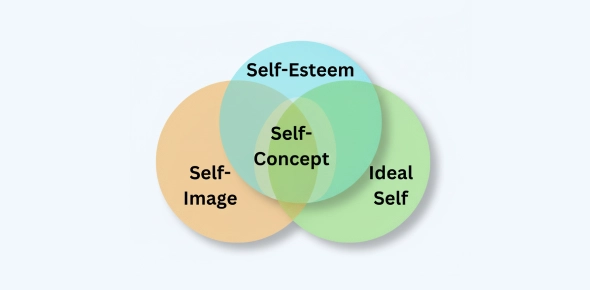
Self-concept & Self-awareness Practice Quiz

Reviewed by Juliette Firla
Juliette Firla, MA (Teaching Writing) |
English Teacher
Review Board Member
Juliette is a middle school English teacher at Sacred Heart of Greenwich, Connecticut. Juliette earned a BA in English/Language Arts Teacher Education from Elon University and an MA in Teaching Writing from Johns Hopkins University. She holds a Classroom Teacher license from the Connecticut State Department of Education. Juliette possesses strong skills in English language arts, writing, editing, and literature study. She has a deep passion for working with young people and contributing to the education of America's youth in the classroom.
, MA (Teaching Writing)
By Wand_234
W
Wand_234
Community Contributor
Quizzes Created: 2 | Total Attempts: 14,466
| Attempts: 13,471 | Questions: 10 | Updated: Dec 5, 2025
Please wait...
Question 1 / 10
0 %
0/100
Score 0/100
1. The idealized self is who we think we…

Explanation

The idealized self represents who you think you should be based on personal goals, values, social expectations, and cultural influences. It is shaped by standards you place on yourself or internalize from others. When the gap between your ideal and real self becomes too wide, it can create dissatisfaction or low self-esteem. Understanding the idealized self helps identify personal goals while also addressing unrealistic expectations.

Submit
Please wait...
About This Quiz
Self-concept & Self-awareness Practice Quiz - Quiz

Understanding how we see ourselves is essential for growth, which is why this self-concept quiz is designed to measure your awareness of your own beliefs, thoughts, and personal identity. Each question focuses on different aspects of the self, helping you understand the factors that shape confidence, behavior, and decision-making.... see more

In the second part of this self-awareness test, you’ll explore ideas such as ideal self vs. Perceived self, reflected appraisal, and influences that can distort self-concept. These concepts are foundational for anyone interested in psychology, communication skills, counseling, or personal development. see less

2.
You may optionally provide this to label your report, leaderboard, or certificate.
2. What does “perceived self” mean?

Explanation

Perceived self refers to how you see yourself internally—your beliefs, abilities, personality, and identity. It is subjective and shaped by thoughts, emotions, experiences, and personal reflections. This internal perception may not always match how others see you or how you appear externally. Understanding the perceived self is important because it influences confidence, behavior, communication style, and decision-making in everyday life.

Submit
3. How to break a negative self-concept?

Explanation

Breaking a negative self-concept requires changing your behavior because actions directly reinforce new beliefs. When you adjust your verbal and nonverbal communication—such as using positive language, better posture, and confident habits—you challenge the old narrative and build a new one. Over time, consistent behavior rewrites self-beliefs. This is more effective than trying to change others or defending yourself, which does not shift internal perception.

Submit
4. What is self-concept?

Explanation

Self-concept refers to the set of perceptions and beliefs you hold about who you are. These perceptions develop from your experiences, social interactions, and internal reflections. It influences confidence, communication, motivation, and decision-making. Because self-concept is relatively stable, it helps you maintain a consistent sense of identity over time. Changes occur, but they typically happen slowly through new experiences or major life events that reshape how you see yourself.

Submit
5. Social Comparison Theory: we compare to…

Explanation

Social Comparison Theory states that people evaluate themselves by comparing with others. These comparisons help individuals judge their abilities, appearance, success, or opinions. Since humans naturally seek reference points to understand who they are, comparing to others helps interpret personal strengths and weaknesses. This process heavily influences confidence, motivation, and emotions, making it central to shaping self-concept throughout life and social interactions.

Submit
6. Self-fulfilling prophecies fully control life events

Explanation

Self-fulfilling prophecies can influence outcomes, but they do not control all life events. Your expectations can shape your behavior, which can impact results—such as performing better when confident. However, many life events depend on external factors beyond personal mindset. While beliefs affect actions, they do not determine every outcome. Therefore, it is incorrect to claim that self-fulfilling prophecies fully control or predict major life changes.

Submit
7. When does self-concept usually stabilize?

Explanation

For most people, self-concept stabilizes in their 40s or 50s because identity becomes grounded in long-term experiences, roles, and responsibilities. By this stage, career direction, relationships, and personal values are more established. While growth still occurs, rapid shifts in self-identity become less common. Earlier decades involve more exploration, change, and identity development, whereas midlife tends to bring a more fixed and consistent self-view.

Submit
8. Not a reason for inaccurate self-concept

Explanation

Not caring excessively about others' opinions reduces the likelihood of having an inaccurate self-concept because it prevents external judgments from distorting personal identity. Many self-concept inaccuracies occur when people rely heavily on others’ feedback or focus on negative interpretations. By appreciating your abilities and minimizing external pressure, you maintain a clearer, more accurate self-view. Therefore, this is the only option that does not distort self-concept.

Submit
9. A role is defined as…

Explanation

A role is defined as the expected behavior associated with a specific position, job, or relationship. These expectations guide how individuals act within social, professional, or personal settings. For example, the role of a student includes attending classes and completing work, while the role of a friend includes support and communication. Roles help maintain structure in society and influence how people behave in different contexts.

Submit
10. What is reflected appraisal?

Explanation

Reflected appraisal is the process of understanding yourself based on how important people perceive you. It works like a psychological “mirror.” Your self-concept develops partly through the judgments, reactions, and feedback of family, friends, and peers. If others see you as capable or kind, you internalize those beliefs. If others are critical, you may adopt negative self-views. This makes reflected appraisal a powerful influence on personal identity.

Submit
×
Saved
Thank you for your feedback!
View My Results
Juliette Firla |MA (Teaching Writing) |
English Teacher
Juliette is a middle school English teacher at Sacred Heart of Greenwich, Connecticut. Juliette earned a BA in English/Language Arts Teacher Education from Elon University and an MA in Teaching Writing from Johns Hopkins University. She holds a Classroom Teacher license from the Connecticut State Department of Education. Juliette possesses strong skills in English language arts, writing, editing, and literature study. She has a deep passion for working with young people and contributing to the education of America's youth in the classroom.
Cancel
  • All
    All (10)
  • Unanswered
    Unanswered ()
  • Answered
    Answered ()
The idealized self is who we think we…
What does “perceived self” mean?
How to break a negative self-concept?
What is self-concept?
Social Comparison Theory: we compare to…
Self-fulfilling prophecies fully control life events
When does self-concept usually stabilize?
Not a reason for inaccurate self-concept
A role is defined as…
What is reflected appraisal?
Alert!

Advertisement