Understanding Meiosis: A Quiz on Gametes and Chromosome Division

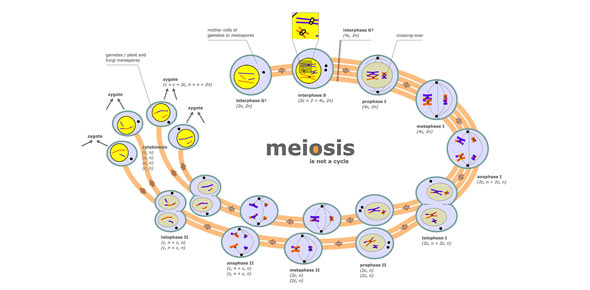
Reviewed by Editorial Team
The ProProfs editorial team is comprised of experienced subject matter experts. They've collectively created over 10,000 quizzes and lessons, serving over 100 million users. Our team includes in-house content moderators and subject matter experts, as well as a global network of rigorously trained contributors. All adhere to our comprehensive editorial guidelines, ensuring the delivery of high-quality content.
Learn about Our Editorial Process
| By Themes
T
Themes
Community Contributor
Quizzes Created: 466 | Total Attempts: 1,061,990
| Questions: 15 | Updated: Jan 23, 2026
Please wait...
Question 1 / 16
🏆 Rank #--
Score 0/100
1. What type of cells undergo meiosis?

Explanation

Meiosis is a specialized form of cell division that reduces the chromosome number by half, resulting in the formation of gametes—sperm and egg cells. This process is essential for sexual reproduction, allowing for genetic diversity through the combination of genetic material from two parents. In contrast, somatic cells undergo mitosis for growth and repair, while stem cells can differentiate into various cell types but do not specifically undergo meiosis. Epithelial cells also replicate through mitosis, not meiosis. Thus, gametes are the only cells that undergo meiosis.

Submit
Please wait...
About This Quiz
Meiosis Quizzes & Trivia

Explore the fascinating process of meiosis through this engaging quiz. Assess your understanding of gametes, chromosome numbers, and genetic variation. Perfect for biology students, this quiz enhances knowledge of cellular reproduction and its significance in inheritance.

2.
You may optionally provide this to label your report, leaderboard, or certificate.
2. What are gametes?

Explanation

Gametes are specialized reproductive cells that are involved in sexual reproduction. They include sperm in males and eggs in females, and their primary function is to carry genetic information from each parent to the offspring. Unlike body cells, which are somatic cells that make up the tissues and organs, gametes are haploid, meaning they contain half the number of chromosomes. This unique characteristic allows for genetic diversity when two gametes fuse during fertilization, resulting in a diploid zygote that develops into a new organism.

Submit
3. How many chromosomes do haploid cells have in humans?

Explanation

Haploid cells, such as human gametes (sperm and eggs), contain half the number of chromosomes found in diploid cells. In humans, diploid cells have 46 chromosomes, organized in 23 pairs. Therefore, haploid cells have only one chromosome from each pair, resulting in a total of 23 chromosomes. This reduction is crucial for sexual reproduction, ensuring that when two gametes fuse during fertilization, the resulting zygote has the correct diploid number of 46 chromosomes.

Submit
4. What is the main purpose of meiosis?

Explanation

Meiosis is a specialized type of cell division that reduces the chromosome number by half, resulting in the formation of haploid cells. This process is essential for sexual reproduction, as it produces gametes (sperm and eggs) that combine during fertilization to restore the diploid chromosome number in the offspring. By creating haploid cells, meiosis ensures genetic diversity through recombination and independent assortment, which are crucial for evolution and adaptation in populations.

Submit
5. What does independent assortment refer to?

Explanation

Independent assortment refers to the process during meiosis where homologous chromosomes are randomly separated into gametes. This random distribution of maternal and paternal chromosomes leads to genetic variation in the offspring. Each gamete receives a different combination of chromosomes, which contributes to the diversity of traits in a population. This principle was first described by Gregor Mendel in his experiments with pea plants, highlighting how traits are inherited independently of one another.

Submit
6. How many divisions occur during meiosis?

Explanation

Meiosis consists of two sequential divisions: meiosis I and meiosis II. In meiosis I, homologous chromosomes are separated, reducing the chromosome number by half, while in meiosis II, the sister chromatids are separated, resulting in four haploid cells from the original diploid cell. This two-step process is essential for sexual reproduction, ensuring genetic diversity and the correct distribution of chromosomes to gametes.

Submit
7. What is the end product of meiosis?

Explanation

Meiosis is a specialized form of cell division that reduces the chromosome number by half, resulting in the formation of gametes. It consists of two sequential divisions: meiosis I and meiosis II. The outcome of meiosis is four genetically diverse haploid cells, each containing half the number of chromosomes of the original diploid cell. This reduction is crucial for sexual reproduction, ensuring that when two gametes fuse during fertilization, the resulting zygote has the correct diploid chromosome number.

Submit
8. What is crossing over?

Explanation

Crossing over is a vital genetic process that occurs during meiosis, where homologous chromosomes exchange segments of genetic material. This exchange leads to genetic variation in the resulting gametes, contributing to diversity in offspring. By shuffling alleles between chromosomes, crossing over enhances evolutionary adaptability and plays a crucial role in the inheritance of traits. This process distinguishes it from other cellular activities, such as the division of sister chromatids or DNA replication, which do not involve the exchange of genetic information between different chromosomes.

Submit
9. Where are sperm cells produced?

Explanation

Sperm cells are produced in the testes, which are the male reproductive organs. Within the testes, specialized structures called seminiferous tubules facilitate the process of spermatogenesis, where male germ cells develop into mature sperm. This process is crucial for male fertility and occurs continuously throughout a male's reproductive life, starting at puberty. The other options listed—ovaries, liver, and skin—are not involved in sperm production, as ovaries are responsible for egg production in females, while the liver and skin do not play a role in reproductive cell formation.

Submit
10. What type of cells are somatic cells?

Explanation

Somatic cells refer to all the cells in an organism that are not involved in reproduction. They make up the majority of the body's tissues and organs, including skin, muscle, and nerve cells. Unlike sex cells or gametes, which are involved in reproduction and carry genetic information to the next generation, somatic cells are responsible for the growth, maintenance, and repair of the body. Therefore, they are commonly referred to as body cells.

Submit
11. What is the chromosome number in diploid cells?

Explanation

In diploid cells, there are two complete sets of chromosomes, one inherited from each parent. In humans, each set contains 23 chromosomes, resulting in a total of 46 chromosomes in diploid cells. This characteristic is crucial for maintaining genetic stability during cell division and reproduction, as it ensures the proper distribution of genetic material to daughter cells.

Submit
12. What happens during meiosis I?

Explanation

During meiosis I, homologous chromosomes are separated into different cells, reducing the chromosome number by half. This process involves the pairing of homologous chromosomes and their subsequent segregation into daughter cells. Unlike mitosis, where sister chromatids are separated, meiosis I focuses on the separation of the homologous pairs, which is crucial for generating genetic diversity in gametes. This reduction division is essential for sexual reproduction, ensuring that offspring receive a mix of genetic material from both parents.

Submit
13. What is the result of meiosis II?

Explanation

Meiosis II is the second division of meiosis, which follows meiosis I. During this phase, the two haploid cells produced in meiosis I undergo a division similar to mitosis, where sister chromatids are separated. This results in four genetically diverse haploid cells, each containing half the number of chromosomes as the original diploid cell. These haploid cells are essential for sexual reproduction, as they can fuse with another haploid cell during fertilization to restore the diploid state in the offspring.

Submit
14. What is the significance of genetic variation in meiosis?

Explanation

Genetic variation during meiosis is crucial for the evolution and adaptability of species. It occurs through processes like independent assortment and crossing over, which shuffle alleles and create new combinations of traits. This diversity enhances the potential for offspring to exhibit different characteristics, increasing the chances of survival in changing environments. Consequently, genetic variation is fundamental for natural selection, allowing populations to adapt over generations and maintain healthy ecosystems.

Submit
15. What is the total number of chromosomes in human gametes?

Explanation

Human gametes, which are sperm and egg cells, contain half the number of chromosomes found in somatic (body) cells. While somatic cells have a total of 46 chromosomes arranged in 23 pairs, gametes are produced through a process called meiosis, which reduces the chromosome number by half. Therefore, each gamete contains 23 chromosomes, ensuring that when fertilization occurs, the resulting zygote will have the full complement of 46 chromosomes.

Submit
×
Saved
Thank you for your feedback!
View My Results
Cancel
  • All
    All (15)
  • Unanswered
    Unanswered ()
  • Answered
    Answered ()
What type of cells undergo meiosis?
What are gametes?
How many chromosomes do haploid cells have in humans?
What is the main purpose of meiosis?
What does independent assortment refer to?
How many divisions occur during meiosis?
What is the end product of meiosis?
What is crossing over?
Where are sperm cells produced?
What type of cells are somatic cells?
What is the chromosome number in diploid cells?
What happens during meiosis I?
What is the result of meiosis II?
What is the significance of genetic variation in meiosis?
What is the total number of chromosomes in human gametes?

play-Mute sad happy unanswered_answer up-hover down-hover success oval cancel Check box square blue
Alert!


