Science Atomic Structure Quiz: Understanding Atoms and Their Properties

Reviewed by Editorial Team
The ProProfs editorial team is comprised of experienced subject matter experts. They've collectively created over 10,000 quizzes and lessons, serving over 100 million users. Our team includes in-house content moderators and subject matter experts, as well as a global network of rigorously trained contributors. All adhere to our comprehensive editorial guidelines, ensuring the delivery of high-quality content.
Learn about Our Editorial Process
| By Themes
T
Themes
Community Contributor
Quizzes Created: 482 | Total Attempts: 1,063,104
| Attempts: 11 | Questions: 14 | Updated: Jan 30, 2026
Please wait...
Question 1 / 15
🏆 Rank #--
Score 0/100

1. What are the three main subatomic particles of an atom?

Explanation

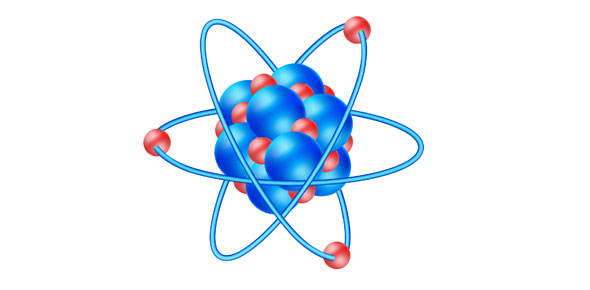
Atoms are composed of three primary subatomic particles: protons, neutrons, and electrons. Protons are positively charged particles found in the nucleus, while neutrons are neutral particles that also reside in the nucleus. Electrons are negatively charged particles that orbit the nucleus in various energy levels. Together, these particles determine the atom's identity, stability, and chemical behavior, making them fundamental to the structure of matter.

Submit
Please wait...
About This Quiz
Atomic Structure Quizzes & Trivia

Explore the fundamental concepts of atomic structure with this engaging quiz. Assess your understanding of subatomic particles, their charges, and electron arrangements. Perfect for learners seeking to deepen their knowledge of chemistry and the building blocks of matter.

2.

What first name or nickname would you like us to use?

You may optionally provide this to label your report, leaderboard, or certificate.

2. What charge do protons carry?

Explanation

Protons are subatomic particles found in the nucleus of an atom and are fundamental to determining an atom's identity and properties. They carry a positive electric charge, which is essential for the formation of chemical bonds and the overall stability of atoms. This positive charge attracts negatively charged electrons, allowing for the formation of neutral atoms when the number of protons equals the number of electrons. The positive charge of protons also plays a crucial role in the electromagnetic interactions that govern atomic and molecular behavior.

Submit

3. Where are neutrons located in an atom?

Explanation

Neutrons are subatomic particles found in the nucleus of an atom, alongside protons. They have no electric charge and contribute to the atomic mass while helping to stabilize the nucleus by offsetting the repulsive forces between positively charged protons. This central location is crucial for maintaining the overall structure and integrity of the atom, distinguishing neutrons from electrons, which occupy energy levels or shells surrounding the nucleus.

Submit

4. How many electrons can the first energy level hold?

Explanation

The first energy level, also known as the K shell, can hold a maximum of 2 electrons. This limitation arises from the principles of quantum mechanics, specifically the Pauli exclusion principle, which states that no two electrons can occupy the same quantum state simultaneously. The first energy level has only one orbital (the 1s orbital), which can accommodate a maximum of 2 electrons with opposite spins. Thus, the capacity of the first energy level is restricted to 2 electrons.

Submit

5. Who discovered the neutron?

Explanation

James Chadwick discovered the neutron in 1932, providing a crucial understanding of atomic structure. Prior to his discovery, the existence of neutrons was hypothesized but not confirmed. Chadwick's experiments involved bombarding beryllium with alpha particles, leading to the emission of a neutral particle that had a similar mass to protons. This discovery filled a significant gap in the understanding of atomic nuclei, as neutrons play a key role in stabilizing the nucleus alongside protons, influencing both atomic mass and nuclear reactions. Chadwick's work earned him the Nobel Prize in Physics in 1935.

Submit

6. What is the arrangement of electrons in an atom called?

Explanation

Electron configuration refers to the specific distribution of electrons in an atom's orbitals. It describes how electrons occupy different energy levels and sublevels, which is essential for understanding chemical behavior and bonding. This arrangement is represented using a notation that indicates the number of electrons in each orbital, helping to explain an element's reactivity and properties. In contrast, atomic structure refers more broadly to the composition of an atom, while mass number and nuclear arrangement pertain to protons and neutrons rather than electrons.

Submit

7. Which model of the atom describes electrons in clouds rather than fixed paths?

Explanation

The Schrödinger model of the atom, also known as the quantum mechanical model, describes electrons as existing in probabilistic clouds or orbitals rather than fixed paths. This approach is based on wave functions, which provide information about the likelihood of finding an electron in a particular region around the nucleus. Unlike earlier models, the Schrödinger model incorporates principles of quantum mechanics, allowing for a more accurate representation of electron behavior and energy levels, reflecting the complex nature of atomic structure.

Submit

8. What is the maximum number of electrons that can be held in the second energy level?

Explanation

The second energy level, or shell, of an atom can hold a maximum of eight electrons. This is derived from the formula \(2n^2\), where \(n\) is the principal quantum number representing the energy level. For the second level (n=2), the calculation is \(2(2^2) = 8\). This capacity is due to the arrangement of electrons in sublevels and orbitals, specifically the s and p orbitals, which can collectively accommodate eight electrons.

Submit

9. What is the charge of an electron?

Explanation

Electrons carry a fundamental charge that is negative, which is essential for the structure of atoms. This negative charge allows electrons to interact with positively charged protons in the nucleus, creating the electromagnetic forces that hold atoms together. The negative charge of electrons is a key aspect of their behavior in electric fields and chemical reactions, distinguishing them from protons, which are positively charged, and neutrons, which are neutral. Understanding the charge of electrons is crucial for grasping concepts in chemistry, physics, and electrical engineering.

Submit

10. What determines the identity of an element?

Explanation

The identity of an element is determined by the number of protons in its nucleus, known as the atomic number. Each element has a unique atomic number, which defines its chemical properties and distinguishes it from other elements. While neutrons and electrons play roles in atomic structure and behavior, it is the protons that fundamentally define what element an atom represents. For instance, all carbon atoms have six protons, while all oxygen atoms have eight.

Submit

11. What is an isotope?

Explanation

Isotopes are variants of a chemical element that have the same number of protons, which defines the element, but differ in the number of neutrons in their nuclei. This difference in neutrons results in varying atomic masses. For example, carbon-12 and carbon-14 are isotopes of carbon; both have six protons but differ in neutron count, leading to different physical properties while maintaining similar chemical behavior.

Submit

12. Which scientist proposed the 'plum pudding' model of the atom?

Explanation

J.J. Thomson proposed the 'plum pudding' model of the atom in 1904, suggesting that atoms are composed of a positively charged "soup" with negatively charged electrons embedded within it, resembling plums in a pudding. This model was developed after his discovery of the electron, challenging the notion of indivisible atoms and laying the groundwork for modern atomic theory. Thomson's idea illustrated the internal structure of the atom, which was a significant advancement in understanding atomic composition before the later discovery of the nucleus by Rutherford.

Submit

13. What does the atomic number represent?

Explanation

The atomic number is a fundamental property of an element that indicates the number of protons present in the nucleus of an atom. This number uniquely identifies an element and determines its position in the periodic table. Since protons carry a positive charge, the atomic number also influences the overall charge of the atom when balanced with electrons. Neutrons and electrons are not represented by the atomic number; instead, they vary among isotopes and ions of the same element, respectively. Thus, the atomic number is essential for understanding an element's identity and chemical behavior.

Submit

14. What is the mass number of an atom?

Explanation

The mass number of an atom represents the total count of protons and neutrons in its nucleus. Protons contribute to the positive charge and neutrons add to the mass without charge. Electrons, being much lighter and found outside the nucleus, do not affect the mass number. Therefore, the mass number is calculated by adding the number of protons and neutrons together, providing a measure of the atom's overall mass.

Submit
×
Saved
Thank you for your feedback!
View My Results
Cancel
  • All
    All (14)
  • Unanswered
    Unanswered ()
  • Answered
    Answered ()
What are the three main subatomic particles of an atom?
What charge do protons carry?
Where are neutrons located in an atom?
How many electrons can the first energy level hold?
Who discovered the neutron?
What is the arrangement of electrons in an atom called?
Which model of the atom describes electrons in clouds rather than...
What is the maximum number of electrons that can be held in the second...
What is the charge of an electron?
What determines the identity of an element?
What is an isotope?
Which scientist proposed the 'plum pudding' model of the atom?
What does the atomic number represent?
What is the mass number of an atom?

play-Mute sad happy unanswered_answer up-hover down-hover success oval cancel Check box square blue
Alert!


