Real Images & Virtual Images Produced by Lenses

  • Grade 12th
Reviewed by Editorial Team
The ProProfs editorial team is comprised of experienced subject matter experts. They've collectively created over 10,000 quizzes and lessons, serving over 100 million users. Our team includes in-house content moderators and subject matter experts, as well as a global network of rigorously trained contributors. All adhere to our comprehensive editorial guidelines, ensuring the delivery of high-quality content.
Learn about Our Editorial Process
| By Themes
T
Themes
Community Contributor
Quizzes Created: 3029 | Total Attempts: 1,231,654
| Questions: 8 | Updated: Oct 2, 2026
Please wait...
Question 1 / 9
🏆 Rank #-- ▾
0 %
0/100
Score 0/100

1. What is the definition of a real image?

Explanation

A real image is created when light rays converge at a point after passing through a lens or reflecting off a mirror. This convergence allows the image to be captured on a screen, making it possible to view the image in a tangible form. Unlike virtual images, which cannot be projected onto a screen and appear to be behind the lens, real images are inverted and can vary in size depending on the distance from the lens or mirror.

Submit
Please wait...
About This Quiz
Real Images & Virtual Images Produced By Lenses - Quiz

This assessment focuses on real and virtual images produced by lenses. It evaluates your understanding of key concepts such as the characteristics of real images, the nature of virtual images, and their ability to be projected. This knowledge is essential for anyone studying optics, as it lays the foundation fo... see moremore advanced topics in light behavior and lens applications. see less

2.

What first name or nickname would you like us to use?

You may optionally provide this to label your report, leaderboard, or certificate.

2. Which of the following is a correct characteristic of a real image?

Explanation

A real image is formed when light rays converge after passing through a lens or reflecting off a mirror. This convergence results in the image being upside down relative to the object, which is why it is always inverted. Unlike virtual images, which appear upright and cannot be projected onto a screen, real images can be captured on a surface, further emphasizing their inverted nature. This characteristic is fundamental in optics, particularly in systems like cameras and projectors.

Submit

3. A virtual image is formed when light rays from an object do not meet but appear to meet ____.

Explanation

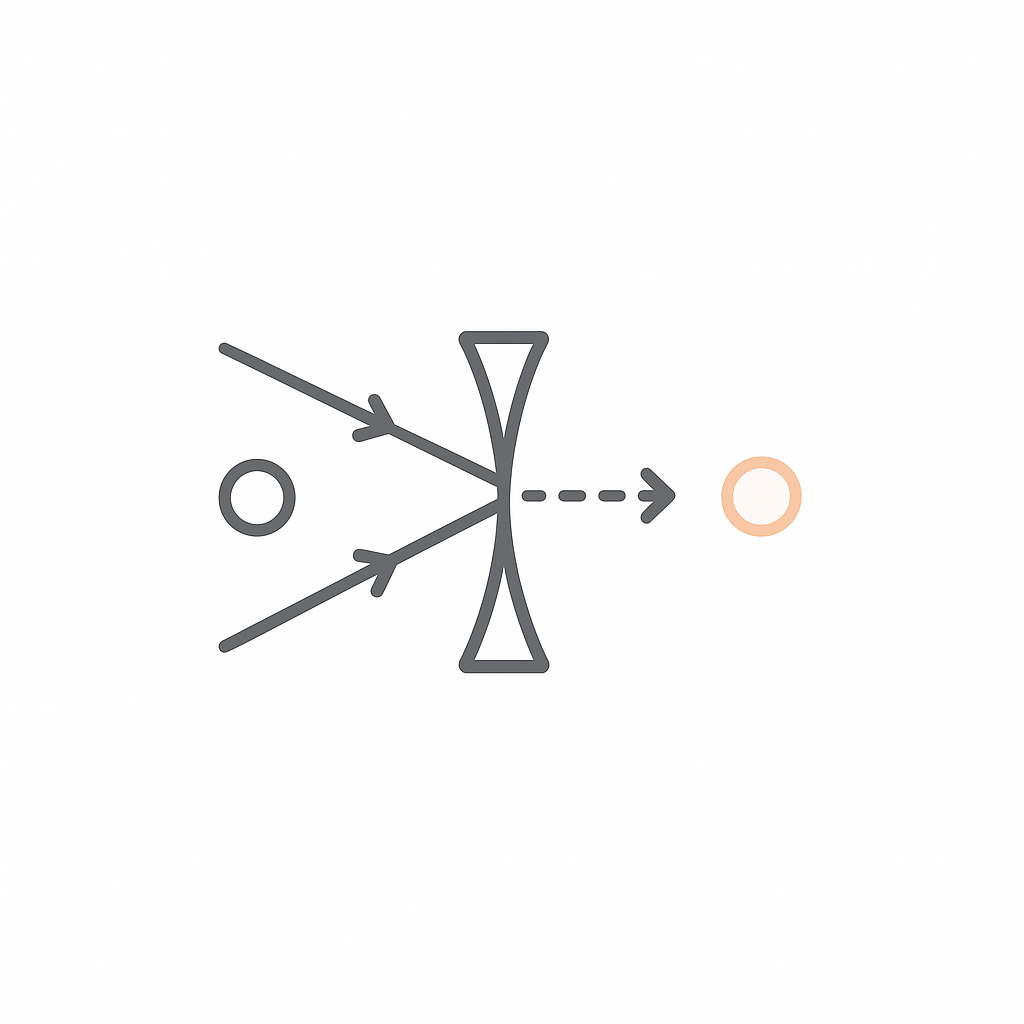
A virtual image is created when light rays diverge after passing through a lens, making them appear to originate from a point behind the lens. Unlike real images, which are formed where light rays converge, virtual images cannot be projected onto a screen. This phenomenon occurs in concave lenses or when objects are placed closer to a convex lens than its focal length, causing the light rays to spread out and appear to come from a location that is not physically present.

Submit

4. Which of the following is an example of a real image?

Explanation

A real image is formed when light rays converge and can be projected onto a surface. The image on a cinema screen is a real image because it is created by the convergence of light rays from the projector, allowing it to be viewed directly on the screen. In contrast, a person's reflection in a mirror or a reflection in a pond are examples of virtual images, as they cannot be projected onto a surface. Similarly, the image seen through a magnifying glass is also virtual, as it appears to be behind the lens.

Submit

5. Virtual images are always upright.

Explanation

Virtual images are formed when light rays appear to diverge from a point behind the mirror or lens, rather than converging at that point. In the case of mirrors, especially concave mirrors, and lenses, virtual images are produced when the object is placed within the focal length. These images cannot be projected onto a screen and are always oriented in the same direction as the object, making them upright. This characteristic distinguishes virtual images from real images, which can be inverted.

Submit

6. Match each image type with its correct characteristic.

Submit

7. Which of the following statements about virtual images are correct?

Explanation

Virtual images are formed when light rays diverge, making them appear to come from a location behind the mirror or lens. Unlike real images, which can be projected onto a screen, virtual images cannot be captured on a surface. They are typically upright, as seen in mirrors, where the image appears in the same orientation as the object. Thus, the characteristics of virtual images include their upright nature, their formation through diverging light, and their occurrence in reflections.

Submit

8. Real images can be projected onto a piece of paper or a screen, while virtual images cannot.

Explanation

Real images are formed when light rays converge and can be projected onto surfaces like paper or screens, making them visible. In contrast, virtual images occur when light rays diverge, appearing to come from a location behind the mirror or lens, which means they cannot be projected onto a surface. This fundamental difference in how these images are created and perceived explains why real images can be captured on screens while virtual images cannot.

Submit
×
Saved
Thank you for your feedback!
View My Results
Cancel
  • All
    All (8)
  • Unanswered
    Unanswered ()
  • Answered
    Answered ()
What is the definition of a real image?
Which of the following is a correct characteristic of a real image?
A virtual image is formed when light rays from an object do not meet...
Which of the following is an example of a real image?
Virtual images are always upright.
Match each image type with its correct characteristic.
Which of the following statements about virtual images are correct?
Real images can be projected onto a piece of paper or a screen, while...
play-Mute sad happy unanswered_answer up-hover down-hover success oval cancel Check box square blue
Alert!



