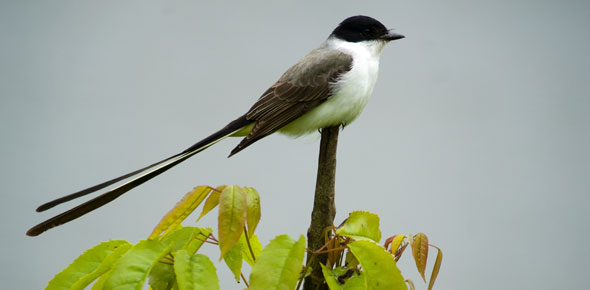
Costa Rica Birds Quiz: Tropical Species

Reviewed by Editorial Team
The ProProfs editorial team is comprised of experienced subject matter experts. They've collectively created over 10,000 quizzes and lessons, serving over 100 million users. Our team includes in-house content moderators and subject matter experts, as well as a global network of rigorously trained contributors. All adhere to our comprehensive editorial guidelines, ensuring the delivery of high-quality content.
Learn about Our Editorial Process
| By Thames
T
Thames
Community Contributor
Quizzes Created: 10017 | Total Attempts: 9,652,179
| Attempts: 31 | Questions: 15 | Updated: Feb 12, 2026
Please wait...
Question 1 / 16
🏆 Rank #--
0 %
0/100
Score 0/100

1. Which bird is recognized for extremely long white tail streamers over the ocean?

Explanation

The White-tailed Tropicbird is distinguished by elongated central tail feathers that can exceed its body length. These streamers function in display and identification over open oceans. Raptors such as Bald Eagles lack extended tail streamers and have broad flight feathers for soaring. The morphological adaptation of tail streamers assists aerodynamic balance and mate attraction, making this species uniquely identifiable among seabirds listed.

Submit
Please wait...
About This Quiz
Ornithology Quizzes & Trivia

Costa Rica is home to one of the richest bird populations in the world. This Costa Rica birds quiz challenges you to identify tropical and neotropical species found in diverse habitats, from rainforests to cloud forests. You’ll explore colorful toucans, hummingbirds, and other region-specific birds while strengthening recognition skills.

Questions focus... see moreon species traits, ecological roles, and habitat associations. Ideal for travelers, birdwatchers, and biology students, this quiz enhances your regional identification knowledge. By finishing, you’ll gain a deeper appreciation for biodiversity and the incredible avian diversity that defines Costa Rica. see less

2.

What first name or nickname would you like us to use?

You may optionally provide this to label your report, leaderboard, or certificate.

2. Which species is native to Central and South America and called the Great Tinamou?

Explanation

The Great Tinamou is a ground-dwelling bird native to tropical forests of Central and South America. Unlike robins or hawks, it belongs to an ancient lineage related to ratites. Its morphology includes rounded wings and cryptic brown plumage for camouflage. The species is identified taxonomically within Tinamidae, distinguishing it from ducks and raptors that occupy entirely different ecological and evolutionary classifications.

Submit

3. Which is the smallest grebe species globally?

Explanation

The Least Grebe measures approximately 21 to 27 centimeters in length, making it the smallest grebe globally. Size comparison among grebes confirms it is shorter and lighter than Red-necked or Western Grebes. Its compact body reduces water resistance while diving. Morphological proportions and mass measurements validate its classification as the smallest member of the Podicipedidae family worldwide.

Submit

4. Which is the smallest grebe found in North America?

Explanation

The Pied-billed Grebe averages 31 to 38 centimeters in length, making it the smallest grebe species regularly found in North America. Horned and Eared Grebes are slightly larger in both wingspan and body mass. Comparative field measurements and ornithological records confirm this ranking. Its stout, ringed bill during breeding season further distinguishes it from other regional grebe species.

Submit

5. Which bird is easily identified by its bright red bill and white body?

Explanation

The Red-billed Tropicbird possesses a vivid coral-red bill contrasting with its white plumage. This coloration aids species recognition during courtship displays. Other listed birds either lack red bills or have multicolored plumage. The bill structure is slender and slightly decurved, optimized for catching fish. Morphological analysis confirms the red bill as a defining diagnostic trait.

Submit

6. Which large bird is known for its entirely white plumage and long legs?

Explanation

The Great Egret is characterized by pure white plumage, long black legs, and a yellow bill. It can reach nearly one meter in height. Unlike Bald Eagles with brown feathers or Mallards with patterned coloration, this egret exhibits uniform whiteness. Its morphology supports wading in shallow waters, confirming its identity among large white wetland birds.

Submit

7. The Little Blue Heron belongs to which bird group?

Explanation

The Little Blue Heron belongs to the heron family Ardeidae. Juveniles appear white before developing blue-gray adult plumage. Falcons and eagles are raptors with hooked beaks and talons, unlike herons that possess spear-like bills for fishing. Taxonomic classification and feeding behavior confirm its placement within herons rather than birds of prey or passerines.

Submit

8. Which bird has reddish plumage and long slender legs for shallow-water hunting?

Explanation

The Reddish Egret displays reddish and gray plumage with elongated legs adapted for dynamic feeding in shallow coastal waters. Flamingos possess pink coloration but have uniquely curved filter-feeding bills. Cardinals and tanagers are perching songbirds lacking long wading legs. Morphological traits such as leg length and hunting behavior validate the Reddish Egret identification.

Submit

9. Egretta tricolor is commonly known as which bird?

Explanation

Egretta tricolor translates directly to Tricolored Heron in common naming conventions. The species exhibits blue-gray upperparts, a white belly, and rufous accents. Snowy and Great Egrets are entirely white. Scientific binomial nomenclature connects genus Egretta with heron species, confirming the standardized common name through taxonomic correlation and plumage pattern differentiation.

Submit

10. Which large heron species is native to Central and South America?

Explanation

The Agami Heron inhabits dense tropical forests and wetlands in Central and South America. It is not native to India or Southeast Asia. Its chestnut neck and blue-green wings create a distinctive profile. Biogeographical distribution records confirm its Neotropical range. Comparative habitat data eliminates Asian herons, validating Agami Heron as correct.

Submit

11. Which species is known for a black crown and nocturnal feeding habits?

Explanation

The Black-crowned Night Heron is identifiable by its black cap, gray wings, and nocturnal feeding patterns. Unlike diurnal robins or ducks, it hunts primarily at dusk and night. Behavioral ecology and plumage markings serve as key identifiers. Taxonomically classified within Ardeidae, it differs significantly from passerines and waterfowl in structure and habits.

Submit

12. Butorides striata is the scientific name for which species?

Explanation

Butorides striata is scientifically classified as the Striated Heron. Taxonomic binomial naming links genus Butorides to small herons inhabiting mangroves and wetlands. Green Heron is a related species but distinct. Morphological differences include plumage striping and geographic distribution. Scientific naming conventions confirm Striated Heron as the accepted common equivalent.

Submit

13. Which bird has a distinctive yellow crown and hunts mainly at night?

Explanation

The Yellow-crowned Night Heron features a pale yellow crown stripe and black facial markings. It feeds primarily on crustaceans at night. Diurnal birds such as cardinals lack these physical and behavioral traits. Morphological identifiers combined with nocturnal foraging patterns confirm its species classification within the night heron subgroup of Ardeidae.

Submit

14. Which bird is famous for its broad, boat-shaped bill?

Explanation

The Boat-billed Heron has an unusually wide, scoop-shaped bill used for tactile hunting in darkness. Pelicans possess pouches, not boat-shaped bills. Toucans have large colorful bills but different curvature and forest habitat. Bill morphology measurements and feeding adaptation analysis clearly distinguish the Boat-billed Heron from other listed species.

Submit

15. Swainson's Hawk belongs to which bird category?

Explanation

Swainson's Hawk is categorized as a bird of prey within the family Accipitridae. It has sharp talons, hooked beak, and migratory soaring behavior. Songbirds and waterfowl lack predatory anatomical structures. Comparative anatomy and dietary habits confirm its classification as a raptor specializing in small mammals and insects.

Submit
×
Saved
Thank you for your feedback!
View My Results
Cancel
  • All
    All (15)
  • Unanswered
    Unanswered ()
  • Answered
    Answered ()
Which bird is recognized for extremely long white tail streamers over...
Which species is native to Central and South America and called the...
Which is the smallest grebe species globally?
Which is the smallest grebe found in North America?
Which bird is easily identified by its bright red bill and white body?
Which large bird is known for its entirely white plumage and long...
The Little Blue Heron belongs to which bird group?
Which bird has reddish plumage and long slender legs for shallow-water...
Egretta tricolor is commonly known as which bird?
Which large heron species is native to Central and South America?
Which species is known for a black crown and nocturnal feeding habits?
Butorides striata is the scientific name for which species?
Which bird has a distinctive yellow crown and hunts mainly at night?
Which bird is famous for its broad, boat-shaped bill?
Swainson's Hawk belongs to which bird category?
play-Mute sad happy unanswered_answer up-hover down-hover success oval cancel Check box square blue
Alert!