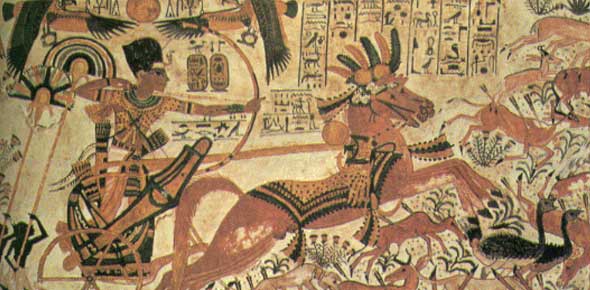
Ancient Art Quiz for Students and History Enthusiasts

Reviewed by Editorial Team
The ProProfs editorial team is comprised of experienced subject matter experts. They've collectively created over 10,000 quizzes and lessons, serving over 100 million users. Our team includes in-house content moderators and subject matter experts, as well as a global network of rigorously trained contributors. All adhere to our comprehensive editorial guidelines, ensuring the delivery of high-quality content.
Learn about Our Editorial Process
| By Thames
T
Thames
Community Contributor
Quizzes Created: 7682 | Total Attempts: 9,547,133
| Questions: 10 | Updated: Dec 3, 2025
Please wait...
Question 1 / 10
0 %
0/100
Score 0/100
1. What identifies the Woman from Willendorf?

Explanation

The Woman from Willendorf is a prehistoric figurine discovered in Austria. Dating to around 24,000 BCE, it reflects early human emphasis on fertility, body form, and symbolic representation. Its exaggerated features suggest ritual or cultural significance rather than naturalism. This makes Option A the correct identification.

Submit
Please wait...
About This Quiz
Art History Quizzes & Trivia

This ancient art quiz helps learners explore the most iconic artworks, monuments, and artifacts from early civilizations. It covers prehistoric figurines, Egyptian pyramids, Mesopotamian structures, and influential rulers. Each question highlights essential details like name, location, date, and artistic style so learners can build a strong foundation in world art... see morehistory.

These ancient art history questions provide a structured way to test knowledge through short, clear MCQs. The quiz blends cultural context with factual accuracy, making it ideal for students, educators, and history enthusiasts who want to identify major artistic contributions from early societies. see less

2.
You may optionally provide this to label your report, leaderboard, or certificate.
2. Which artwork matches the Hall of Bulls?

Explanation

The Hall of Bulls is located in Lascaux Cave in France and dates to about 15,000 BCE. These large, dynamic animal paintings demonstrate early mastery of contour, shading, and perspective. They reflect prehistoric beliefs surrounding animals, hunting, and ritual spaces. Because of its location, date, and style, Option A correctly matches this artwork.

Submit
3. Identify the house interior from 3100 BCE.

Explanation

Skara Brae offers some of the best-preserved prehistoric house interiors from 3100 BCE. The stone-built rooms show early furniture, hearths, and storage systems, revealing how Neolithic communities organized domestic life. This context aligns with Option B, which accurately identifies the location, period, and style of the structure.

Submit
4. Which monument matches Stonehenge?

Explanation

Stonehenge dates to around 2750 BCE and belongs to prehistoric ritual architecture in England. The carefully aligned stones reflect astronomical planning, communal labor, and ceremonial functions. Its uniqueness lies in its construction techniques and alignment with solstices. Option B accurately identifies its location, date, and cultural context.

Submit
5. What describes the Warka Head?

Explanation

The Warka Head comes from Uruk in ancient Mesopotamia and dates to the late 4th millennium BCE. Carved from imported marble, it reflects early stylized representation of human faces. It likely depicts a priestess or deity. Its craftsmanship illustrates the emerging sophistication of Ancient Near Eastern art, making Option A correct.

Submit
6. What describes the Uruk Vase?

Explanation

The Uruk Vase, also from Uruk, dates to the late 4th millennium BCE. It features carved registers depicting offerings and ritual processions. This provides insight into early religious practices and social hierarchy. Its geographic origin, material, and narrative style firmly situate it within the Ancient Near East, aligning with Option A.

Submit
7. Which option identifies the Votive Figures?

Explanation

Votive Figures from Sumer represent worshippers carved in gypsum or limestone. Their oversized eyes symbolize attentiveness to the divine. Dating to around 3500–3300 BCE, they provide evidence of early religious devotion and artistic conventions. These characteristics match Option B, which correctly identifies their date, location, and style.

Submit
8. What identifies the Nanna Ziggurat?

Explanation

The Nanna Ziggurat in Ur dates to around 2100 BCE and serves as a monumental platform temple. Constructed of mudbrick, it illustrates Mesopotamian religious architecture and administrative power. Its terraced structure and alignment reflect its ritual and civic role. These details correspond to Option B.

Submit
9. What describes the Narmer Palette?

Explanation

The Narmer Palette dates to around 3000 BCE and commemorates the unification of Upper and Lower Egypt. Carved with symbolic scenes, it marks the beginning of dynastic Egypt. Its style reflects early royal iconography. Option B correctly identifies this ceremonial stone’s origin, date, and cultural context.

Submit
10. What identifies the Step Pyramid of Djoser?

Explanation

The Step Pyramid of Djoser, built around 2600 BCE, was Egypt’s first large stone pyramid. Designed by architect Imhotep, it transformed traditional mastaba tombs into stacked, monumental forms. Its structure reflects the emergence of complex state architecture and Old Kingdom royal funerary practices. This makes Option A the accurate identification.

Submit
×
Saved
Thank you for your feedback!
View My Results
Cancel
  • All
    All (10)
  • Unanswered
    Unanswered ()
  • Answered
    Answered ()
What identifies the Woman from Willendorf?
Which artwork matches the Hall of Bulls?
Identify the house interior from 3100 BCE.
Which monument matches Stonehenge?
What describes the Warka Head?
What describes the Uruk Vase?
Which option identifies the Votive Figures?
What identifies the Nanna Ziggurat?
What describes the Narmer Palette?
What identifies the Step Pyramid of Djoser?
Alert!

Advertisement