Optometry 631: Ocular Diseases and Corneal Abnormalities Assessment

Reviewed by Editorial Team
The ProProfs editorial team is comprised of experienced subject matter experts. They've collectively created over 10,000 quizzes and lessons, serving over 100 million users. Our team includes in-house content moderators and subject matter experts, as well as a global network of rigorously trained contributors. All adhere to our comprehensive editorial guidelines, ensuring the delivery of high-quality content.
Learn about Our Editorial Process
| By Thames
T
Thames
Community Contributor
Quizzes Created: 8156 | Total Attempts: 9,588,805
| Attempts: 12 | Questions: 30 | Updated: Aug 4, 2025
Please wait...
Question 1 / 31
🏆 Rank #--
Score 0/100

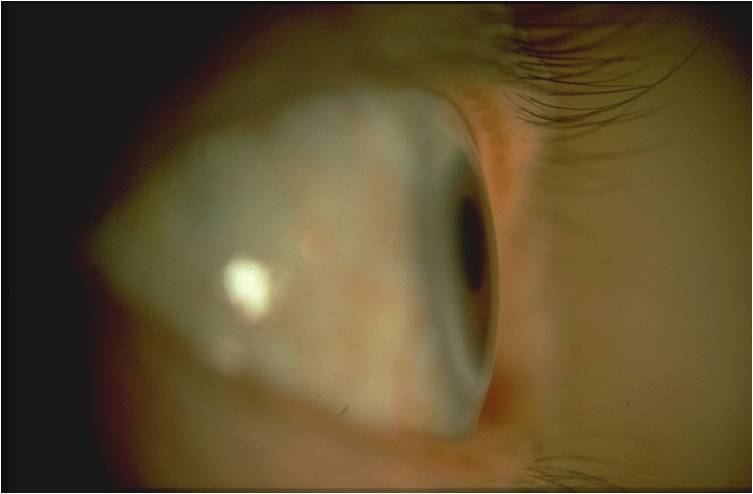
1. What dysgenisis is shown here?

Explanation

Megalocornea is the correct term for the condition shown here, which refers to an abnormally large cornea. Microcornea, Keratoconus, and Iridoschisis are all different eye conditions that are not represented by the term megalocornea.

Submit
Please wait...
About This Quiz
Optometry 631: Ocular Diseases and Corneal Abnormalities Assessment - Quiz

Designed for OPT 631, the 'Ocular Disease Midterm 1' focuses on assessing key competencies in diagnosing and managing ocular diseases. This evaluation is crucial for optometry students preparing for professional exams and practical application in clinical settings.

2.

What first name or nickname would you like us to use?

You may optionally provide this to label your report, leaderboard, or certificate.

2. What dysgenisis is shown here?

Explanation

Keratoglobus is a non-inflammatory thinning of the cornea, leading to a protrusion in the cornea. It is often mistaken for Keratoconus, which is a different type of corneal thinning disorder. Megalocornea and Pellucid Marginal Degeneration are also conditions that affect the cornea but present with different characteristics.

Submit

3. What are the 2 types of mesenchymal dysgenisis? Differentiate between both types.

Explanation

Mesenchymal dysgenesis refers to a spectrum of congenital corneal abnormalities. Posterior keratoconnus and Peter's Anomaly are two specific types, each with distinct characteristics as described in the answer. The incorrect answers provide misleading information which does not correspond to the actual types of mesenchymal dysgenesis.

Submit

4. What are the 3 different anterior chamber cleavage syndromes? Define each.

Explanation

The correct answer describes individual characteristics of each of the 3 different syndromes. Keratoconus, retinal detachment, and pigment dispersion syndrome are unrelated conditions and do not fit the definition of anterior chamber cleavage syndromes.

Submit

5. In what position is the displacement seen in posterior embryotoxon?

Explanation

In posterior embryotoxon, the displacement is typically seen in the 3 - 9 o'clock position around the corneal periphery.

Submit

6. What is the best way to get a good view of posterior embryotoxon?

Explanation

Gonioscopy is the most appropriate method for visualizing posterior embryotoxon due to its ability to provide a clear view of the iridocorneal angle.

Submit

7. What are the iris abnormalities that you see with Axenfeld's?

Explanation

Axenfeld's anomaly is characterized by a prominent iris sphincter and maybe corectopia. The incorrect answers do not accurately describe the iris abnormalities associated with Axenfeld's.

Submit

8. What is the risk of developing glaucoma if you see this type of anterior cleavage syndrome?

Explanation

Anterior cleavage syndrome is associated with a 50 - 70% risk of developing glaucoma. This condition requires close monitoring and timely intervention to manage the risk of glaucoma development.

Submit

9. What is the best illumination to see an epithelial basement membrane dystrophy?

Explanation

Retro-illumination is the preferred illumination method as it allows for the visualization of the corneal irregularities caused by epithelial basement membrane dystrophy by reflecting light off the inner surface of the cornea.

Submit

10. What are the 3 different characteristic patterns seen with Epithelial membrane dystrophy and how do they differ?

Explanation

Epithelial membrane dystrophy presents with distinct visual characteristics that can be identified on examination. Understanding these patterns can aid in proper diagnosis and management of the condition.

Submit

11. What pattern of EBMD is commonly seen?

Explanation

The correct term used to describe the pattern of EBMD is 'maps' due to its appearance resembling geographical maps with lines and borders.

Submit

12. What is the most common complication associated with EBMD?

Explanation

EBMD (Epithelial Basement Membrane Dystrophy) is a condition that affects the cornea. Spontaneous epithelial erosion is the most common complication, characterized by the peeling off of a large piece of epithelium, causing discomfort and visual disturbances.

Submit

13. How is treatment for Epithelial Basement Membrane Dystrophy (EBMD) determined?

Explanation

Treatment for EBMD should be tailored based on the severity of symptoms, ranging from education for asymptomatic cases to more aggressive interventions for severe cases.

Submit

14. What do you tell your patient about the recurrence of EBMD?

Explanation

EBMD is a recurrent condition that can be managed but not completely cured. It is important for patients to understand the nature of the condition and the implications for long-term management.

Submit

15. What is Meesman's juvenile epithelial dystrophy?

Explanation

Meesman's juvenile epithelial dystrophy is characterized by intraepithelial cysts or vesicles in the corneal epithelium.

Submit

16. What is the best illumination technique to visualize meesman's?

Explanation

Meesman's are best visualized using indirect retroillumination due to the specific characteristics of this corneal dystrophy. Direct transillumination, slit-lamp microscopy, and fluorescein angiography are not effective methods for visualizing Meesman's.

Submit

17. What are the 4 diffferent abnormalities of corneal curvature and sizes? Define each.

Submit

18. What condition are you at risk of with microcornea and what high refractive error is associated with it?

Explanation

Microcornea is a condition characterized by a smaller than normal cornea size. This can lead to the risk of developing glaucoma due to anterior chamber (AC) crowding. The high refractive error associated with microcornea is hyperopia, which means difficulty seeing objects up close more clearly than distant objects.

Submit

19. In megalocornea, are males or females more affected?

Explanation

Megalocornea is an x-linked recessive trait, which means that males are more affected because they only have one X chromosome. Females would need to inherit two copies of the recessive gene to show the trait. Therefore, males are more commonly affected by megalocornea.

Submit

20. What dysgenisis is shown here?

Explanation

The correct answer is Corneal plana, which is a rare congenital anomaly where the cornea is abnormally flat.

Submit

21. What dysgenisis is shown here?

Explanation

Microcornea is a condition characterized by abnormally small corneas, which can cause vision problems. Macrocornea, Nanocornea, and Megacone are not valid dysgenisis terms and are not associated with abnormal cornea size.

Submit

22. What type of corneal abnormality is depicted in the image above?

Explanation

The image displays posterior keratoconus where the thinning of the cornea occurs in the innermost layer, causing visual disturbances.

Submit

23. What type of dysgenesis is commonly associated with Peter's anomaly?

Explanation

Peter's anomaly is a form of anterior segment dysgenesis characterized by central corneal opacity and lenticular or corneolenticular adhesions.

Submit

24. Is your VA affected with posterior keratoconus?

Explanation

Posterior keratoconus specifically refers to thinning and bulging of the back of the cornea, which can lead to vision problems. It is important to differentiate between different types of keratoconus to accurately diagnose and treat the condition.

Submit

25. What is the difference between Axenfeld's and Rieger's anomaly and syndrome?

Submit

26. If you see this type of anterior cleavage syndrome, what is the risk of developing glaucoma?

Explanation

Anterior cleavage syndrome is associated with a low risk of developing glaucoma.

Submit

27. What is the risk of developing glaucoma if you see an anterior cleavage syndrome?

Explanation

Anterior cleavage syndrome is associated with a 20 - 50% risk of developing glaucoma.

Submit

28. Describe the limbal landmarks and depth of the anterior chamber in cornea plana.

Explanation

In cornea plana, the limbal landmark is obscured and the anterior chamber is shallow. The incorrect answers provided misstate the characteristics of these features in cornea plana.

Submit

29. At what age does a child reach adult cornea size? When is a child considered to have microcornea?

Explanation

The correct age for a child to reach adult cornea size is around 3 - 4 years old. Microcornea is diagnosed when a baby's cornea measures less than 9mm, indicating abnormal smallness.

Submit

30. What is the critical DDx in megalocornea? What is the high refractive error associated with it?

Explanation

Megalocornea is often associated with congenital glaucoma which leads to high myopia and astigmatism.

Submit
×
Saved
Thank you for your feedback!
View My Results
Cancel
  • All
    All (30)
  • Unanswered
    Unanswered ()
  • Answered
    Answered ()
What dysgenisis is shown here?
What are the 2 types of mesenchymal dysgenisis? Differentiate between...
What are the 3 different anterior chamber cleavage syndromes? Define...
In what position is the displacement seen in posterior embryotoxon?
What is the best way to get a good view of posterior embryotoxon?
What are the iris abnormalities that you see with Axenfeld's?
What is the risk of developing glaucoma if you see this type of...
What is the best illumination to see an epithelial basement membrane...
What are the 3 different characteristic patterns seen with Epithelial...
What pattern of EBMD is commonly seen?
What is the most common complication associated with EBMD?
How is treatment for Epithelial Basement Membrane Dystrophy (EBMD)...
What do you tell your patient about the recurrence of EBMD?
What is Meesman's juvenile epithelial dystrophy?
What is the best illumination technique to visualize meesman's?
What are the 4 diffferent abnormalities of corneal curvature and...
What condition are you at risk of with microcornea and what high...
In megalocornea, are males or females more affected?
What dysgenisis is shown here?
What type of corneal abnormality is depicted in the image above?
What type of dysgenesis is commonly associated with Peter's anomaly?
Is your VA affected with posterior keratoconus?
What is the difference between Axenfeld's and Rieger's anomaly and...
If you see this type of anterior cleavage syndrome, what is the risk...
What is the risk of developing glaucoma if you see an anterior...
Describe the limbal landmarks and depth of the anterior chamber in...
At what age does a child reach adult cornea size? When is a child...
What is the critical DDx in megalocornea? What is the high refractive...
play-Mute sad happy unanswered_answer up-hover down-hover success oval cancel Check box square blue
Alert!