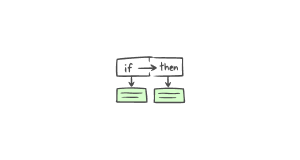
Structure Spotting: Identifying the Clauses in a Second Conditional Quiz

  • 6th Grade
Reviewed by Editorial Team
The ProProfs editorial team is comprised of experienced subject matter experts. They've collectively created over 10,000 quizzes and lessons, serving over 100 million users. Our team includes in-house content moderators and subject matter experts, as well as a global network of rigorously trained contributors. All adhere to our comprehensive editorial guidelines, ensuring the delivery of high-quality content.
Learn about Our Editorial Process
| By Thames
T
Thames
Community Contributor
Quizzes Created: 8157 | Total Attempts: 9,567,281
| Questions: 20 | Updated: Jan 7, 2026
Please wait...
Question 1 / 20
🏆 Rank #--
Score 0/100
1. In the sentence 'If I lived in the city, I would take the bus every day,' which part shows the condition?

Explanation

The condition is the 'if-clause.' It is the dependent clause that states the hypothetical or unreal situation, and it always begins with the subordinating conjunction 'If.'

Submit
Please wait...
About This Quiz
Structure Spotting: Identifying The Clauses In A Second Conditional Quiz - Quiz

Understanding second conditional sentences starts with recognizing their structure. In this second conditional clause identification quiz, you’ll identify if clauses and result clauses within hypothetical statements. You’ll analyze how each part contributes to meaning and see how structure signals unreality. Each question strengthens your ability to break down complex ideas... see moreand understand how hypothetical reasoning is built grammatically.
see less

2. The clause that describes the hypothetical consequence in a second conditional sentence is called the _______ clause.

Explanation

The result clause (or main clause) tells what would hypothetically happen if the condition in the 'if-clause' were true.

Submit
3. The condition (if-clause) in a second conditional sentence is the independent clause and can stand alone as a complete sentence.

Explanation

This is false. The condition clause is a dependent (subordinate) clause because it begins with the subordinating conjunction 'If' and cannot stand alone.

Submit
4. In the sentence ‘If she knew the answer, she would tell us,’ which part is the result clause?

Explanation

The result clause is the main clause, which expresses the hypothetical outcome and uses the modal 'would' plus the base verb.

Submit
5. In the sentence ‘If I moved to Canada, I would be happy,’ which phrases are the two separate clauses? (Select all that apply)

Explanation

The sentence is composed of two clauses: the dependent condition clause 'If I moved to Canada' (A) and the independent result clause 'I would be happy' (B).

Submit
6. Which of the two clauses in a second conditional sentence is capable of standing alone as a grammatically complete sentence?

Explanation

The main clause (result) is an independent clause, meaning it expresses a complete thought and can stand alone as a sentence.

Submit
7. The verb tense used in the condition clause of a second conditional sentence is the simple _______ tense.

Explanation

The structure of the second conditional uses the simple past tense (e.g., if I went, if she saw) in the condition clause to show that the situation is hypothetical or unreal.

Submit
8. Which sentence part contains the modal verb ‘would’ and the base form of a verb?

Explanation

The main clause (result) of a second conditional sentence contains the structure 'would' + base verb to indicate the hypothetical outcome.

Submit
9. The clause that starts with the subordinating conjunction ‘If’ always describes the hypothetical result of the situation.

Explanation

This is false. The clause starting with 'If' always describes the hypothetical condition or situation, not the result.

Submit
10. Which phrases could correctly function as a result clause in a second conditional sentence? (Select all that apply)

Explanation

Both A and B use a modal verb (would/could) plus the base form of the verb, which is the required structure for the result clause in the Second Conditional.

Submit
11. When a second conditional sentence begins with the condition clause, the two clauses are separated by a _______.

Explanation

Whenever a dependent clause (like the 'if-clause') starts a sentence, a comma must be used to separate it from the independent clause (the result).

Submit
12. In the sentence ‘I would buy a bicycle if I saved enough money,’ which part is the result?

Explanation

The result clause is the part that uses 'would' and tells the hypothetical consequence: 'I would buy a bicycle.'

Submit
13. The condition clause of a second conditional sentence states the highly unlikely or imaginary situation that is being discussed.

Explanation

This is true. The condition clause establishes the unreal premise (e.g., If I won the lottery, If she were here) before discussing the consequence.

Submit
14. Which of these is the dependent clause in the second conditional structure?

Explanation

The clause starting with 'If' is always dependent (subordinate), and in the second conditional, it contains the simple past tense verb.

Submit
15. Which clauses in the sentence ‘If the computer broke, we would have to use a pen and paper’ contain a simple past tense verb? (Select all that apply)

Explanation

The simple past tense verb 'broke' is found only in the condition clause, 'If the computer broke.' The result clause uses 'would have.'

Submit
16. The clause that is independent and uses the modal 'would' is also known as the _______ clause.

Explanation

The main clause is the part of the sentence that expresses the central idea and can stand alone; in the conditional structure, it is the result.

Submit
17. What is the subordinating conjunction that introduces the condition clause?

Explanation

The word 'If' is the subordinating conjunction used to introduce the dependent condition clause in all types of conditional sentences.

Submit
18. Identify the two correct clauses in the sentence: ‘If they had a dog, they would walk it every day.’ (Select all that apply)

Explanation

The two complete clauses are the condition clause 'If they had a dog' (A) and the result clause 'they would walk it every day' (B).

Submit
19. When the sentence is structured ‘I would watch a movie if I were home,’ the 'if-clause' is located:

Explanation

The 'if-clause' follows the main clause, placing it at the end of the sentence. In this order, no comma is used.

Submit
20. The clause in the second conditional sentence that requires the past form of the verb ‘to be’ (were) for all subjects (e.g., If I were) is the _______ clause.

Explanation

The condition clause uses the simple past tense, and in formal or set phrases like 'If I were you,' the subjunctive form 'were' is used for the verb 'to be' regardless of the subject.

Submit
×
Saved
Thank you for your feedback!
View My Results
Cancel
  • All
    All (20)
  • Unanswered
    Unanswered ()
  • Answered
    Answered ()
In the sentence 'If I lived in the city, I would take the bus every...
The clause that describes the hypothetical consequence in a second...
The condition (if-clause) in a second conditional sentence is the...
In the sentence ‘If she knew the answer, she would tell us,’ which...
In the sentence ‘If I moved to Canada, I would be happy,’ which...
Which of the two clauses in a second conditional sentence is capable...
The verb tense used in the condition clause of a second conditional...
Which sentence part contains the modal verb ‘would’ and the base...
The clause that starts with the subordinating conjunction ‘If’...
Which phrases could correctly function as a result clause in a second...
When a second conditional sentence begins with the condition clause,...
In the sentence ‘I would buy a bicycle if I saved enough money,’...
The condition clause of a second conditional sentence states the...
Which of these is the dependent clause in the second conditional...
Which clauses in the sentence ‘If the computer broke, we would have...
The clause that is independent and uses the modal 'would' is also...
What is the subordinating conjunction that introduces the condition...
Identify the two correct clauses in the sentence: ‘If they had a...
When the sentence is structured ‘I would watch a movie if I were...
The clause in the second conditional sentence that requires the past...
Alert!