How Food Webs Work in Ecosystems Quiz

Reviewed by Editorial Team
The ProProfs editorial team is comprised of experienced subject matter experts. They've collectively created over 10,000 quizzes and lessons, serving over 100 million users. Our team includes in-house content moderators and subject matter experts, as well as a global network of rigorously trained contributors. All adhere to our comprehensive editorial guidelines, ensuring the delivery of high-quality content.
Learn about Our Editorial Process
| By ProProfs AI
P
ProProfs AI
Community Contributor
Quizzes Created: 81 | Total Attempts: 817
| Questions: 15 | Updated: Apr 27, 2026
Please wait...
Question 1 / 15
🏆 Rank #--
0 %
0/100
Score 0/100

1. What do we call an organism that makes its own food using sunlight?

Explanation

Organisms that make their own food using sunlight are known as producers. They utilize photosynthesis to convert sunlight into energy, creating organic compounds from carbon dioxide and water. This process not only sustains the producers themselves but also forms the foundation of the food chain by providing energy for consumers and other organisms.

Submit
Please wait...
About This Quiz
How Food Webs Work In Ecosystems Quiz - Quiz

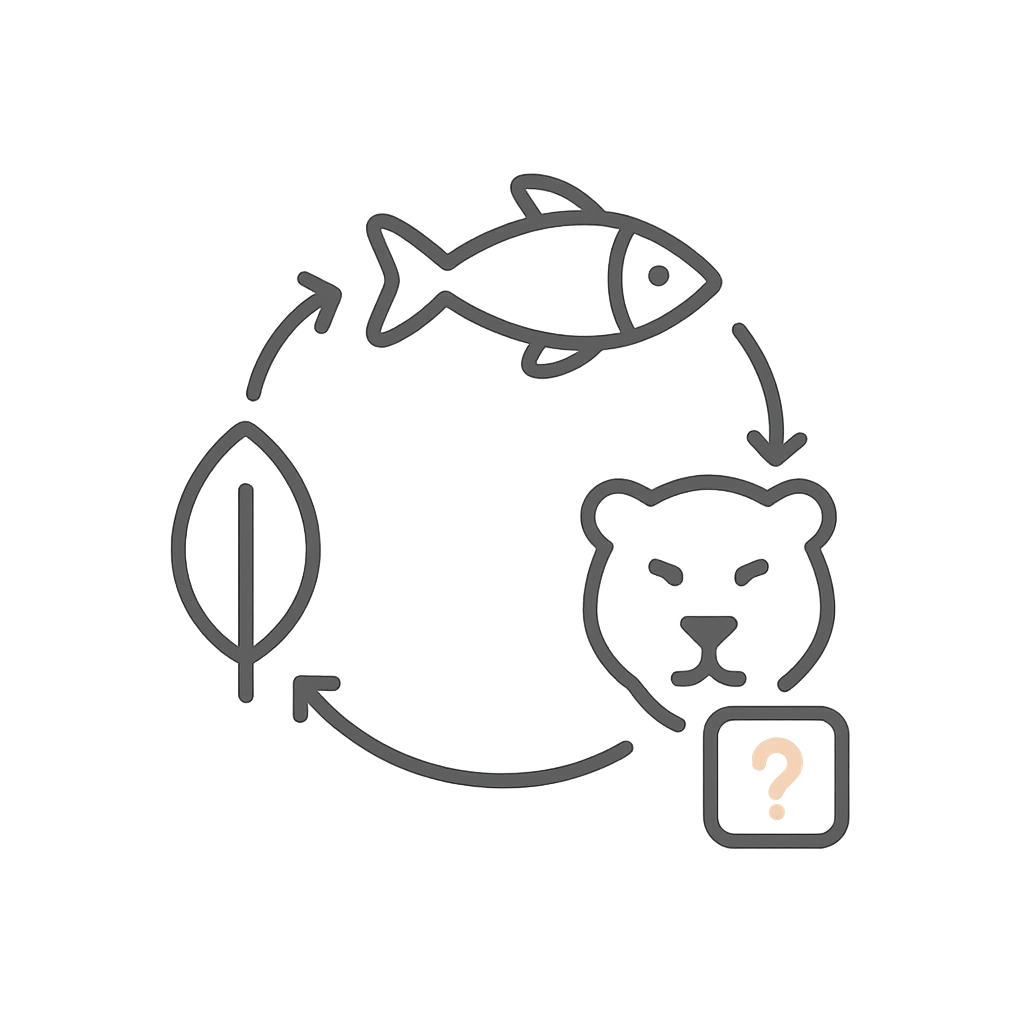
Learn how food webs work in ecosystems with this medium-level quiz for grade 5 students. This quiz explores food chains, energy flow, and the relationships between plants and animals in nature. Understand producers, consumers, and decomposers, and discover why every organism plays an important role in its ecosystem. Key focus:... see moreHow Food Webs Work in Ecosystems Quiz. see less

2. Which of these is an example of a primary consumer?

Explanation

A primary consumer is an organism that feeds on primary producers, such as plants. In this case, the rabbit is a herbivore that consumes vegetation, making it a primary consumer. In contrast, a lion is a predator, an oak tree is a producer, and a mushroom is a decomposer.

Submit

3. In a food chain, energy flows from plants to herbivores to ____.

Explanation

In a food chain, energy transfer occurs through different trophic levels. Plants, as producers, convert sunlight into energy, which is then consumed by herbivores (primary consumers). Carnivores, or secondary consumers, feed on herbivores, obtaining energy from them. This flow of energy is essential for maintaining ecosystem balance and supporting various life forms.

Submit

4. What is the main difference between a food chain and a food web?

Explanation

A food chain illustrates a linear sequence of energy transfer between organisms, highlighting a single pathway of consumption. In contrast, a food web encompasses multiple interconnected food chains, demonstrating the complex feeding relationships within an ecosystem, where various organisms can be part of several chains simultaneously.

Submit

5. Which organism breaks down dead plants and animals?

Explanation

Decomposers, such as fungi and bacteria, play a crucial role in ecosystems by breaking down dead organic matter, including plants and animals. This process recycles nutrients back into the soil, promoting healthy plant growth and maintaining the balance of the ecosystem. They are essential for the decomposition process and nutrient cycling.

Submit

6. A hawk eats a mouse. What role does the hawk play in this food chain?

Explanation

In this food chain, the hawk is classified as a secondary consumer because it preys on a primary consumer, the mouse. Primary consumers typically eat producers, such as plants, while secondary consumers feed on those primary consumers. The hawk, being higher up the food chain, plays a crucial role in regulating the population of its prey.

Submit

7. Organisms that eat only plants are called ____.

Explanation

Herbivores are organisms that primarily consume plant material for their diet. This group includes animals like cows, rabbits, and deer, which have specialized digestive systems to break down tough plant fibers. Their role in the ecosystem is crucial as they help in plant growth and serve as prey for carnivores.

Submit

8. True or False: All animals in a food web eat plants.

Explanation

Not all animals in a food web eat plants; many are carnivores or omnivores that consume other animals or a mix of plants and animals. Food webs illustrate complex feeding relationships, where some organisms rely solely on other animals for sustenance, highlighting the diversity of dietary habits in ecosystems.

Submit

9. Which of these would be a decomposer?

Explanation

Bacteria are microorganisms that break down dead organic matter, returning essential nutrients to the ecosystem. Unlike producers like grass or consumers like deer and butterflies, decomposers play a crucial role in recycling nutrients, facilitating soil health, and supporting plant growth, making them vital for ecological balance.

Submit

10. What do plants need to make their own food?

Explanation

Plants require sunlight, water, and air to perform photosynthesis, the process by which they convert light energy into chemical energy. Sunlight provides the energy needed for this process, water is essential for their growth and metabolic functions, and carbon dioxide from the air is used to produce glucose, their food.

Submit

11. A food web is more realistic than a food chain because it shows ____ food relationships.

Explanation

A food web illustrates the complex interconnections between various organisms in an ecosystem, highlighting how multiple species interact through various feeding relationships. Unlike a food chain, which simplifies these interactions into a linear sequence, a food web captures the diverse and interconnected nature of feeding relationships, reflecting the reality of ecological dynamics.

Submit

12. True or False: Energy in a food chain always starts with the sun.

Explanation

Energy in a food chain originates from the sun, as photosynthetic organisms like plants capture solar energy and convert it into chemical energy. This energy then flows through the food chain as herbivores eat plants and carnivores eat herbivores, illustrating the sun's crucial role as the primary energy source for ecosystems.

Submit

13. Which organism is at the top of most food chains?

Submit

14. An animal that hunts and eats other animals is called a ____.

Submit

15. In an ecosystem, why are decomposers important?

Submit
×
Saved
Thank you for your feedback!
View My Results
Cancel
  • All
    All (15)
  • Unanswered
    Unanswered ()
  • Answered
    Answered ()
What do we call an organism that makes its own food using sunlight?
Which of these is an example of a primary consumer?
In a food chain, energy flows from plants to herbivores to ____.
What is the main difference between a food chain and a food web?
Which organism breaks down dead plants and animals?
A hawk eats a mouse. What role does the hawk play in this food chain?
Organisms that eat only plants are called ____.
True or False: All animals in a food web eat plants.
Which of these would be a decomposer?
What do plants need to make their own food?
A food web is more realistic than a food chain because it shows ____...
True or False: Energy in a food chain always starts with the sun.
Which organism is at the top of most food chains?
An animal that hunts and eats other animals is called a ____.

In an ecosystem, why are decomposers important?
play-Mute sad happy unanswered_answer up-hover down-hover success oval cancel Check box square blue
Alert!


