Action Potential in Neurons

Reviewed by Editorial Team
The ProProfs editorial team is comprised of experienced subject matter experts. They've collectively created over 10,000 quizzes and lessons, serving over 100 million users. Our team includes in-house content moderators and subject matter experts, as well as a global network of rigorously trained contributors. All adhere to our comprehensive editorial guidelines, ensuring the delivery of high-quality content.
Learn about Our Editorial Process
| By Themes
T
Themes
Community Contributor
Quizzes Created: 1941 | Total Attempts: 1,160,425
| Questions: 25 | Updated: Jul 27, 2026
Please wait...
Question 1 / 26
🏆 Rank #--
0 %
0/100
Score 0/100

1. Chloride is a positively charged ion that promotes depolarization.

Explanation

Chloride (Cl-) is actually a negatively charged ion, not a positively charged one. In physiological processes, chloride ions typically help stabilize the resting membrane potential of neurons and can contribute to hyperpolarization rather than depolarization. Depolarization involves a decrease in the membrane potential, often facilitated by the influx of positively charged ions like sodium (Na+), not negatively charged ions like chloride. Therefore, the statement incorrectly identifies the charge of chloride and its role in depolarization.

Submit
Please wait...
About This Quiz
Action Potential In Neurons - Quiz

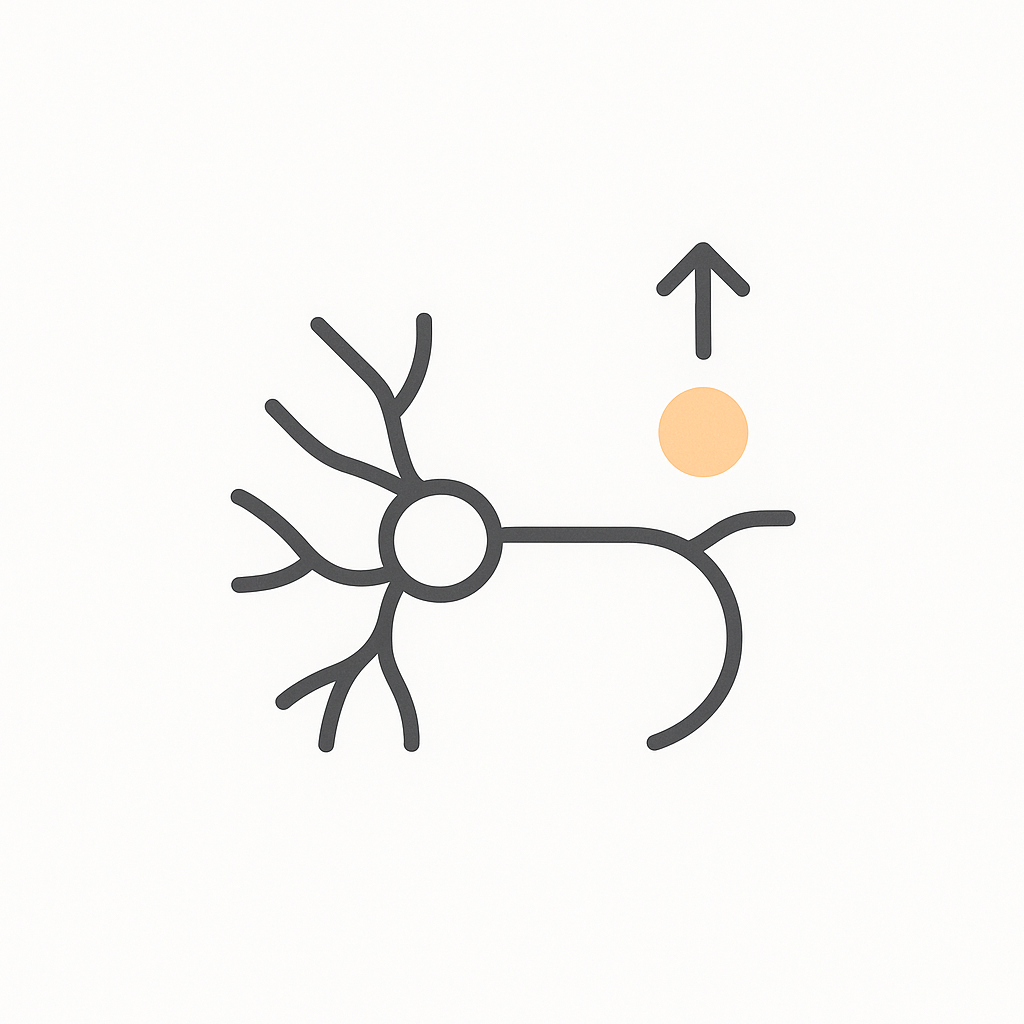
This assessment focuses on the action potential in neurons, evaluating key concepts such as excitability, ion movement, and the all-or-none principle. Understanding these mechanisms is crucial for grasping how neurons communicate and function in the nervous system, making this a valuable resource for students and professionals in neuroscience.

2.

What first name or nickname would you like us to use?

You may optionally provide this to label your report, leaderboard, or certificate.

2. During repolarization, voltage-gated sodium channels close and voltage-gated ____ channels open, allowing ions to exit the neuron.

Submit

3. Which of the following statements about the action potential are true? (Select all that apply)

Submit

4. Match each ion with its primary role during the action potential.

Submit

5. At the axon terminal, which ion's entry triggers exocytosis and the release of neurotransmitters?

Submit

6. Which of the following correctly distinguishes cytosis from exocytosis?

Explanation

Cytosis refers to a general process that involves the movement of substances into or out of a cell via vesicles, encompassing various types of transport mechanisms. In contrast, exocytosis is a specific form of cytosis that exclusively involves the fusion of vesicles with the cell membrane to release their contents outside the cell. This distinction highlights that while all exocytosis is a type of cytosis, not all cytosis is exocytosis, as cytosis can also include processes like endocytosis, which brings materials into the cell.

Submit

7. Exocytosis is a broad term for any active transport mechanism that moves large volumes of substances across a cell membrane using vesicles.

Explanation

Exocytosis specifically refers to the process where cells expel materials using vesicles that fuse with the plasma membrane. While it is indeed an active transport mechanism, it does not encompass all forms of active transport, which can include other mechanisms that do not involve vesicles. Therefore, stating that exocytosis is a broad term for any active transport mechanism is inaccurate, as it only describes a specific type of transport involving vesicular movement.

Submit

8. During propagation, when one section of the axon depolarizes, it triggers the ____ channels of a neighboring section to open.

Explanation

During the propagation of an action potential along an axon, the depolarization of one segment creates a change in the local membrane potential. This change activates adjacent voltage-gated ion channels, causing them to open. These channels allow the influx of sodium ions, further depolarizing the membrane and propagating the action potential down the axon. This process is essential for the rapid transmission of electrical signals in neurons.

Submit

9. What is propagation in the context of action potentials?

Explanation

Propagation refers to how an action potential, an electrical signal, travels along the axon of a neuron. This process involves the sequential opening and closing of voltage-gated ion channels, which allow ions to flow in and out of the neuron, creating a wave of depolarization that moves down the axon. This rapid movement ensures that the signal can reach the axon terminals, where it can trigger neurotransmitter release and communicate with other neurons. Propagation is essential for effective neural communication and the functioning of the nervous system.

Submit

10. Which of the following are key ions involved in generating an action potential? (Select all that apply)

Explanation

Sodium and potassium ions play crucial roles in generating action potentials in neurons. When a neuron is stimulated, sodium channels open, allowing sodium ions to rush into the cell, causing depolarization. Following this, potassium channels open, allowing potassium ions to exit the cell, which helps repolarize the membrane. Chloride ions can also influence neuronal excitability and contribute to inhibitory signals. Iron does not directly participate in action potentials, making sodium, potassium, and chloride the key ions involved in this process.

Submit

11. Match each phase of the action potential with its correct description.

Submit

12. The refractory period forces the action potential signal to travel in only one ____ along the axon.

Explanation

The refractory period is a phase following an action potential during which a neuron is less responsive to stimuli and cannot generate another action potential. This ensures that the signal propagates in a single direction along the axon, from the cell body toward the axon terminals. As the preceding segment becomes temporarily inactive, it prevents the action potential from reversing direction, thus maintaining the unidirectional flow of electrical signals essential for proper neuronal communication.

Submit

13. Which of the following correctly describes the refractory period?

Explanation

The refractory period is a critical phase in the action potential cycle of a neuron. It refers to the time required for the neuron to recover after firing an action potential before it can initiate another one. During this interval, the neuron is either unable to fire (absolute refractory period) or requires a stronger stimulus to fire (relative refractory period). This mechanism ensures that action potentials are discrete events, allowing for proper signaling and preventing excessive firing, which could lead to dysfunction in neural communication.

Submit

14. What is an action potential?

Explanation

An action potential is a rapid change in the electrical charge across a neuron's membrane, essential for transmitting signals in the nervous system. This process involves depolarization, where sodium ions rush into the neuron, followed by repolarization, as potassium ions exit. This temporary shift allows the neuron to communicate effectively with other neurons, ultimately facilitating various bodily functions such as reflexes and muscle contractions. The action potential is characterized by its all-or-nothing nature, meaning it either occurs fully or not at all, ensuring reliable signal transmission.

Submit

15. What is the role of chloride ions in neuronal signaling?

Explanation

Chloride ions play a crucial role in neuronal signaling by contributing to the inhibitory processes within the neuron. When chloride ions enter the neuron, they increase the negative charge inside the cell, making it less likely to fire an action potential. This hyperpolarization acts as a biological brake, counteracting excitatory signals and helping to regulate neuronal excitability. By maintaining a balance between excitatory and inhibitory signals, chloride ions are essential for proper neuronal function and communication within the nervous system.

Submit

16. Hyperpolarization occurs when the cell becomes even more negative than its normal resting state, dropping below ____.

Explanation

Hyperpolarization refers to a change in a cell's membrane potential that makes it more negative than its typical resting state. For most neurons, the resting membrane potential is around -70mV. During hyperpolarization, the membrane potential can drop below this threshold, making it less likely for the neuron to fire an action potential. This increased negativity is often caused by the influx of chloride ions or the efflux of potassium ions, which enhances the negative charge inside the cell compared to the outside environment.

Submit

17. During repolarization, which ion exits the neuron to restore the negative baseline?

Explanation

During repolarization, the neuron's membrane potential returns to its resting state after an action potential. This process involves the efflux of potassium ions (K+) from the neuron. When the action potential peaks, voltage-gated sodium channels close and potassium channels open, allowing K+ to flow out. This outflow of positively charged potassium ions helps to restore the negative internal environment of the neuron, re-establishing the resting membrane potential. Thus, potassium is crucial for returning the neuron to its baseline state following depolarization.

Submit

18. Which of the following correctly describes the 'all-or-none' principle of action potentials?

Explanation

The 'all-or-none' principle states that a neuron will only generate an action potential if the stimulus reaches a certain threshold. If the threshold is not met, the neuron remains inactive and does not fire. This principle ensures that action potentials are consistent in size and strength, regardless of the intensity of the stimulus, meaning that neurons either fully activate or do not activate at all. This binary response is crucial for reliable signal transmission in the nervous system.

Submit

19. During depolarization, the internal charge of the neuron rises to approximately ____.

Explanation

During depolarization, the neuron's membrane potential becomes more positive due to the influx of sodium ions (Na+) through voltage-gated sodium channels. This change in charge occurs rapidly, typically reaching a peak of around +30mV to +40mV. This positive shift is essential for the generation of an action potential, allowing the neuron to transmit signals effectively. The specific range of +30mV to +40mV reflects the typical threshold at which the neuron becomes fully depolarized before repolarization occurs.

Submit

20. During depolarization, which ion rushes into the cell causing the membrane potential to rise?

Explanation

During depolarization, the membrane potential of a neuron becomes more positive. This occurs primarily due to the rapid influx of sodium ions (Na+) into the cell through voltage-gated sodium channels. When these channels open in response to a stimulus, sodium ions move down their concentration gradient into the cell, resulting in a significant increase in membrane potential. This process is crucial for the generation of action potentials, which are essential for nerve signal transmission.

Submit

21. What is the threshold potential at which voltage-gated sodium channels open?

Explanation

Voltage-gated sodium channels open at a specific threshold potential, which is crucial for the initiation of action potentials in neurons. This threshold typically ranges from -50mV to -55mV, meaning that when the membrane potential reaches this level, the channels become permeable to sodium ions. This influx of sodium ions causes depolarization, leading to the rapid rise in membrane potential that characterizes the action potential. The other options do not align with the physiological properties of these channels, making -50mV to -55mV the correct range for their activation.

Submit

22. The sodium-potassium pump transports three sodium ions out of the cell and two potassium ions into the cell.

Explanation

The sodium-potassium pump is an essential membrane protein that actively transports ions against their concentration gradients. For every cycle, it moves three sodium ions (Na+) out of the cell and brings in two potassium ions (K+). This process maintains the electrochemical gradient necessary for various cellular functions, including nerve impulse transmission and muscle contraction. The pump uses ATP as energy to perform this transport, making it a vital component of cellular homeostasis. Thus, the statement accurately reflects the function of the sodium-potassium pump.

Submit

23. What is the typical resting membrane potential of a neuron?

Explanation

Neurons typically maintain a resting membrane potential between -70mV and -90mV, which is crucial for their function. This negative charge is primarily due to the distribution of ions, particularly sodium (Na+) and potassium (K+), across the neuronal membrane. The sodium-potassium pump actively transports Na+ out of the cell and K+ into the cell, creating a concentration gradient. This results in a higher concentration of K+ inside and Na+ outside the neuron, leading to a net negative charge inside the cell, essential for generating action potentials and transmitting signals.

Submit

24. The property that allows neurons and muscle cells to generate an action potential is called ____.

Explanation

Excitability refers to the ability of neurons and muscle cells to respond to stimuli and generate action potentials. This property is crucial for the functioning of the nervous system and muscle contraction. When a cell is stimulated, ion channels open, leading to a rapid change in membrane potential. This depolarization triggers an action potential, allowing for the transmission of signals in neurons and the contraction of muscle fibers. Thus, excitability is essential for communication between cells and the execution of movement.

Submit

25. Which of the following cells are capable of generating an action potential?

Explanation

Neurons and muscle cells are specialized for generating action potentials, which are rapid changes in membrane potential that propagate signals. Neurons use action potentials to transmit information throughout the nervous system. Muscle cells, particularly cardiac and skeletal muscles, rely on action potentials to initiate contraction. In contrast, red blood cells, glial cells, and liver cells do not possess the necessary ion channels or mechanisms to generate action potentials, limiting their functional roles in signaling and contraction.

Submit
×
Saved
Thank you for your feedback!
View My Results
Cancel
  • All
    All (25)
  • Unanswered
    Unanswered ()
  • Answered
    Answered ()
Chloride is a positively charged ion that promotes depolarization.
During repolarization, voltage-gated sodium channels close and...
Which of the following statements about the action potential are true?...
Match each ion with its primary role during the action potential.
At the axon terminal, which ion's entry triggers exocytosis and the...
Which of the following correctly distinguishes cytosis from...
Exocytosis is a broad term for any active transport mechanism that...
During propagation, when one section of the axon depolarizes, it...
What is propagation in the context of action potentials?
Which of the following are key ions involved in generating an action...
Match each phase of the action potential with its correct description.
The refractory period forces the action potential signal to travel in...
Which of the following correctly describes the refractory period?
What is an action potential?
What is the role of chloride ions in neuronal signaling?
Hyperpolarization occurs when the cell becomes even more negative than...
During repolarization, which ion exits the neuron to restore the...
Which of the following correctly describes the 'all-or-none' principle...
During depolarization, the internal charge of the neuron rises to...
During depolarization, which ion rushes into the cell causing the...
What is the threshold potential at which voltage-gated sodium channels...
The sodium-potassium pump transports three sodium ions out of the cell...
What is the typical resting membrane potential of a neuron?
The property that allows neurons and muscle cells to generate an...
Which of the following cells are capable of generating an action...
play-Mute sad happy unanswered_answer up-hover down-hover success oval cancel Check box square blue
Alert!



