Maclaurin Series in Depth: Error Bounds, Limits & Series-Based Approximations

Reviewed by Editorial Team
The ProProfs editorial team is comprised of experienced subject matter experts. They've collectively created over 10,000 quizzes and lessons, serving over 100 million users. Our team includes in-house content moderators and subject matter experts, as well as a global network of rigorously trained contributors. All adhere to our comprehensive editorial guidelines, ensuring the delivery of high-quality content.
Learn about Our Editorial Process
| By Thames
T
Thames
Community Contributor
Quizzes Created: 7682 | Total Attempts: 9,547,133
| Questions: 15 | Updated: Dec 15, 2025
Please wait...
Question 1 / 15
0 %
0/100
Score 0/100
1) What is the Maclaurin series for f(x) = 1/(2+x)?

Explanation

First, rewrite the function to match the geometric series form 1/(1-r). Factor out a 1/2 to get (½) * [1/(1 - (-x/2))]. Using the geometric series sum with r = -x/2, we get (½) * Sum of (-x/2)ⁿ. This simplifies to (½) * (-1)ⁿ * xⁿ / 2ⁿ = (-1)ⁿ xⁿ / 2ⁿ⁺¹.

Submit
Please wait...
About This Quiz
Maclaurin Series In Depth: Error Bounds, Limits & Series-based Approximations - Quiz

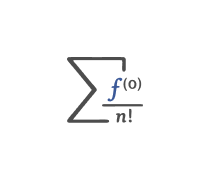
Maclaurin series offer a powerful lens for understanding how functions behave near zero—turning exponentials, trig functions, logarithms, and rational expressions into infinite polynomials whose patterns reveal deep mathematical structure. In this quiz, you’ll work with substitutions, long division of series, geometric expansions, and error estimates to uncover how series behave... see moreand how they can be used to evaluate limits, approximate values, and simplify complex expressions. You’ll also explore how differential equations generate their own series solutions and how small-angle approximations emerge naturally from the first few terms. From identifying general terms to analyzing convergence and determining the exact number of terms needed for a limit, this quiz will challenge your intuition and strengthen your mastery of Maclaurin expansions. Get ready to decode functions by expanding them—one power of xxx at a time! see less

2)
You may optionally provide this to label your report, leaderboard, or certificate.
2) Approximate cos(0.1) using the first three terms of its Maclaurin series.

Explanation

cos(x) ≈ 1 - x²/2! + x⁴/4!. For x=0.1: 1 - 0.01/2 + 0.0001/24 = 1 - 0.005 + 0.000004167 ≈ 0.995004167.

Submit
3) Using the known Maclaurin series for sin x and cos x, perform long division to find the first two non-zero terms of the Maclaurin series for tan x = sin x / cos x.

Explanation

We divide (x - x³/6 + ...) by (1 - x²/2 + ...). The first term is x/1 = x. Multiplying x by the denominator gives x - x³/2. Subtracting this from the numerator: (-x³/6) - (-x³/2) = -x³/6 + 3x³/6 = 2x³/6 = x³/3. The next term in the quotient is (x³/3)/1 = x³/3. Thus, tan x = x + x³/3 + …

Submit
4) When evaluating lim[x→0] (1 - cos(x))/x² using Maclaurin series, what is coefficient a?

Explanation

Using cos(x) = 1 - x²/2! + x⁴/4! - x⁶/6! + ..., the numerator 1 - cos(x) equals x²/2! - x⁴/4! + x⁶/6! - ... . The coefficient of x² is 1/2! = 1/2. This coefficient becomes the constant term after dividing by x² and thus determines the limit value. This question isolates the specific step of extracting the critical coefficient from the series.

Submit
5) Evaluate the sum Σ 1/(2n)!

Explanation

This series represents the even terms of the Maclaurin series for eˣ and e⁻ˣ. We know that cosh(x) = (eˣ + e⁻ˣ)/2 = n=0 x²n/(2n)! . Therefore, at x = 1, cosh(1) = (e + e^(-1))/2 = Σ 1/(2n)! from n=0 to ∞.

Submit
6) After substituting the Maclaurin series for eˣ into (eˣ - 1)/x, which series results before limit?

Explanation

Start by substituting the series: (eˣ - 1)/x = [(1 + x + x²/2! + x³/3! + x⁴/4! + ...) - 1]/x. The 1 and -1 cancel, leaving (x + x²/2! + x³/3! + x⁴/4! + ...)/x. Now divide each term in the numerator by x: x/x = 1, (x²/2!)/x = x/2!, (x³/3!)/x = x²/3!, and so on. This gives the simplified series 1 + x/2! + x²/3! + x³/4! + ... Option B is the numerator before dividing by x. Option C is the original series for eˣ. Option D incorrectly separates 1/x.

Submit
7) What is the Maclaurin series for f(x) = x * arctan(x)?

Explanation

The Maclaurin series for arctan(x) is Sum of (-1)ⁿ x^(2n+1) / (2n+1). To find the series for x * arctan(x), we multiply the arctan series by x. This adds 1 to the exponent of x, changing x^(2n+1) to x^(2n+2). The coefficients and denominators remain unchanged.

Submit
8) Why does adding more terms improve ln(1.1) approximation?

Explanation

The series converges to the function inside the radius of convergence (|x| < 1), and because it is alternating, the error when stopping at any term is less than the absolute value of the next term.

Submit
9) When using the Maclaurin series method to evaluate lim[x→0] (eˣ - 1 - x)/x², which expression correctly represents the general term of the series in the numerator after substituting and simplifying?

Explanation

After substituting the series for eˣ and canceling the 1 and x terms, the numerator becomes x²/2! + x³/3! + x⁴/4! + ... . We can write this sum using a general index n starting from 0. For the first term, when n=0, we need x^(0+2) / (0+2)! which is x²/2!. For the second term, when n=1, we need x^(1+2) / (1+2)! which is x³/3!. This pattern continues for all subsequent terms. Therefore, the general term is x^(n+2) / (n+2)! for n ≥ 0. Option A would incorrectly include the canceled 1 and x terms. Option C shifts the exponent and factorial by 1 instead of 2. Option D would only include even powers of x, but the series has all powers starting from x².

Submit
10) A student evaluates lim[x→0] (e²ˣ - 1)/x by substituting eˣ = 1 + x + x²/2 + ... and gets (1 + 2x + x² + ... - 1)/x = 2 + x + ... → 2. Where is the error?

Explanation

To find the Maclaurin series for e²ˣ, one must substitute (2x) for x in the standard series 1 + x + x²/2! + .... This yields 1 + (2x) + (2x)²/2! = 1 + 2x + 2x². The student incorrectly expanded the quadratic term (likely writing x² or x²/2 instead of 2x²), which is a common error when composing series.

Submit
11) To evaluate limx→0 (eˣ - 1 - x - x²/2)/x³ correctly, how many terms of the Maclaurin series of  eˣ must be included before substitution?

Explanation

The numerator cancels up to x², so we need the next term in the series to get a non-zero result after division by x³. The eˣ series must include at least the x³ term: 1 + x + x²/2! + x³/3! + ... .

Submit
12) Develop the Maclaurin series for a function y(x) that satisfies y'' + y = 0 with y(0) = 0 and y'(0) = 1.

Explanation

The differential equation y'' + y = 0 with y(0) = 0 and y'(0) = 1 describes the function y(x) = sin(x). Assuming a Maclaurin series y = Σ aₙ xⁿ, we find y' = Σ n aₙ xⁿ⁻¹ and y'' = Σ n(n-1)aₙ x^(n-2). Substituting into y'' + y = 0 gives Σ n(n-1)aₙ x^(n-2) + Σ aₙ xⁿ = 0. Reindexing and equating coefficients shows that a₁ = 1, a_0 = 0, and the pattern a_(2n+1) = (-1)ⁿ/(2n+1)!, a_(2n) = 0, giving sin(x) = Σ (-1)ⁿ x^(2n+1)/(2n+1)!.

Submit
13) The Maclaurin series for sin x is known. If we substitute x = t² into this series and then multiply by t, what will be the first non-zero term of the resulting series for t·sin(t²)?

Explanation

sin(t²) = t² - (t²)³/3! + ... = t² - t⁶/6 + ... . Multiplying by t gives t³ - t⁷/6 + ... . The first non-zero term is t³.

Submit
14) For the limit limx→0 (eˣ + e⁻ˣ - 2)/x², after substituting Maclaurin series, the numerator simplifies to a power series. What is the lowest power of x in this simplified numerator?

Explanation

eˣ = 1 + x + x²/2 + x³/6 + ... and e⁻ˣ = 1 - x + x²/2 - x³/6 + ... . Adding gives 2 + x² + x⁴/12 + ... . Subtracting 2 leaves x² + x⁴/12 + ... . The lowest power is x².

Submit
15) Which of these limits would require the fewest terms of a Maclaurin series to evaluate?

Explanation

For sin x / x, substituting just the first term (x) of the sin x series is sufficient: (x + ...)/x → 1. The others require more terms before non-zero constants emerge after division.

Submit
×
Saved
Thank you for your feedback!
View My Results
Cancel
  • All
    All (15)
  • Unanswered
    Unanswered ()
  • Answered
    Answered ()
What is the Maclaurin series for f(x) = 1/(2+x)?
Approximate cos(0.1) using the first three terms of its Maclaurin...
Using the known Maclaurin series for sin x and cos x, perform long...
When evaluating lim[x→0] (1 - cos(x))/x² using Maclaurin...
Evaluate the sum Σ 1/(2n)!
After substituting the Maclaurin series for eˣ into (eˣ - 1)/x,...
What is the Maclaurin series for f(x) = x * arctan(x)?
Why does adding more terms improve ln(1.1) approximation?
When using the Maclaurin series method to evaluate lim[x→0] (eˣ...
A student evaluates lim[x→0] (e²ˣ - 1)/x by substituting...
To evaluate limx→0 (eˣ - 1 - x - x²/2)/x³ correctly,...
Develop the Maclaurin series for a function y(x) that satisfies...
The Maclaurin series for sin x is known. If we substitute x = t²...
For the limit limx→0 (eˣ + e⁻ˣ - 2)/x², after...
Which of these limits would require the fewest terms of a Maclaurin...
Alert!

Advertisement



