Geometry Angles Quiz to Identify Angle Types Easily

  • 4th Grade,
  • 5th Grade,
  • 6th Grade
  • CCSS.Math.Content.HSG
Reviewed by Editorial Team
The ProProfs editorial team is comprised of experienced subject matter experts. They've collectively created over 10,000 quizzes and lessons, serving over 100 million users. Our team includes in-house content moderators and subject matter experts, as well as a global network of rigorously trained contributors. All adhere to our comprehensive editorial guidelines, ensuring the delivery of high-quality content.
Learn about Our Editorial Process
| By Thames
T
Thames
Community Contributor
Quizzes Created: 10017 | Total Attempts: 9,652,179
| Attempts: 47 | Questions: 10 | Updated: Feb 18, 2026
Please wait...
Question 1 / 10
🏆 Rank #--
0 %
0/100
Score 0/100

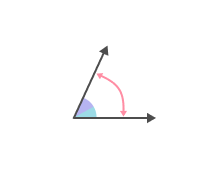
1) What is an acute angle?

Explanation

An acute angle measures greater than 0 degrees but less than 90 degrees. For example, angles measuring 30°, 45°, or 75° qualify as acute. These angles are smaller than a right angle. Since a right angle measures exactly 90°, any angle below that value but above 0° falls into the acute category. Acute angles frequently appear in triangles and basic geometric constructions.

Submit
Please wait...
About This Quiz
Angle Types Quizzes & Trivia

Angles are one of the most important building blocks in math, and this geometry angles quiz makes learning them simple and fun. You’ll practice identifying different angle types, understanding basic geometry vocabulary, and applying concepts in quick problem-solving questions. Whether you’re a student reviewing for class or just wanting to... see moresharpen foundational skills, this quiz offers an easy way to build confidence.

This quiz help reinforce what makes angles acute, obtuse, right, or straight, and why they matter in geometry. By the end, you’ll feel more comfortable recognizing angles in diagrams and solving geometry problems with greater speed and accuracy. see less

2) What defines a right angle?

Explanation

A right angle measures exactly 90 degrees. It forms when two lines intersect perpendicularly. In coordinate geometry, horizontal and vertical axes create right angles at their intersection. Right angles divide a full 360° rotation into four equal parts, each measuring 90°. Because of this exact quarter-turn measurement, right angles are foundational in geometry, construction, and measurement systems.

Submit

3) What is a straight angle?

Explanation

A straight angle measures exactly 180 degrees. It forms when two rays extend in opposite directions from a common vertex, creating a straight line. Since a full rotation measures 360°, half of that rotation equals 180°. Straight angles represent a linear measurement and are fundamental in identifying linear pairs and supplementary angle relationships in geometry.

Submit

4) What are vertical angles?

Explanation

Vertical angles are created when two lines intersect. The opposite angles formed share the same vertex but do not share sides. By geometric principles, vertical angles are always congruent. If one angle measures x degrees, the opposite angle also measures x degrees. This equality occurs because intersecting lines create two pairs of equal angles, each summing with adjacent angles to form 180 degrees.

Submit

5) If two vertical angles are formed and one measures 65°, what is the measure of the other?

Explanation

Vertical angles are always equal in measure. If one vertical angle measures 65°, its opposite angle must also measure 65°. This equality is guaranteed by the vertical angle theorem. Since intersecting lines form two equal pairs and adjacent angles sum to 180°, the opposite angle must match exactly. Therefore, the second angle measures 65°, maintaining geometric balance.

Submit

6) What is a reflex angle?

Explanation

A reflex angle measures greater than 180 degrees but less than 360 degrees. For example, angles measuring 200°, 250°, or 300° qualify as reflex. Since a full rotation equals 360°, reflex angles represent the larger portion of rotation beyond a straight angle. Mathematically, 180°

Submit

7) How is an obtuse angle defined?

Explanation

An obtuse angle measures more than 90 degrees but less than 180 degrees. For example, angles measuring 100°, 135°, or 170° are obtuse. These angles are larger than a right angle but do not reach the straight angle measure of 180°. Their degree range mathematically falls between 90°

Submit

8) What is true about congruent angles?

Explanation

Congruent angles are defined strictly by equal measurement. Orientation, direction, or placement does not affect congruency. For instance, two separate angles measuring 50° are congruent even if one is rotated. Mathematically, if angle A = 70° and angle B = 70°, then A ≅ B. Congruency depends only on numerical equality of degrees, not position or shape.

Submit

9) Which pair of angles always have equal measures?

Explanation

Vertical angles always have equal measures because they are formed by intersecting lines. Adjacent angles may differ in measure, complementary angles only sum to 90°, and supplementary angles sum to 180° but are not necessarily equal. The vertical angle theorem guarantees congruency. If one angle measures x degrees, its vertical counterpart also measures x degrees.

Submit

10) If two angles form a linear pair and one measures 130°, what is the other angle?

Explanation

A linear pair consists of two adjacent angles forming a straight line, totaling 180 degrees. If one angle measures 130°, the other equals 180° minus 130°. Performing the calculation: 180° − 130° = 50°. Therefore, the second angle measures 50°. Linear pairs are always supplementary, meaning their measures combine to produce a straight angle.

Submit
×
Saved
Thank you for your feedback!
View My Results
Cancel
  • All
    All (10)
  • Unanswered
    Unanswered ()
  • Answered
    Answered ()
What is an acute angle?
What defines a right angle?
What is a straight angle?
What are vertical angles?
If two vertical angles are formed and one measures 65°, what is the...
What is a reflex angle?
How is an obtuse angle defined?
What is true about congruent angles?
Which pair of angles always have equal measures?
If two angles form a linear pair and one measures 130°, what is the...
play-Mute sad happy unanswered_answer up-hover down-hover success oval cancel Check box square blue
Alert!



