Artists, Cultures, and Masterworks Recognition Quiz

Reviewed by Editorial Team
The ProProfs editorial team is comprised of experienced subject matter experts. They've collectively created over 10,000 quizzes and lessons, serving over 100 million users. Our team includes in-house content moderators and subject matter experts, as well as a global network of rigorously trained contributors. All adhere to our comprehensive editorial guidelines, ensuring the delivery of high-quality content.
Learn about Our Editorial Process
| By Thames
T
Thames
Community Contributor
Quizzes Created: 7682 | Total Attempts: 9,547,133
| Attempts: 11 | Questions: 14 | Updated: Nov 26, 2025
Please wait...
Question 1 / 14
0 %
0/100
Score 0/100
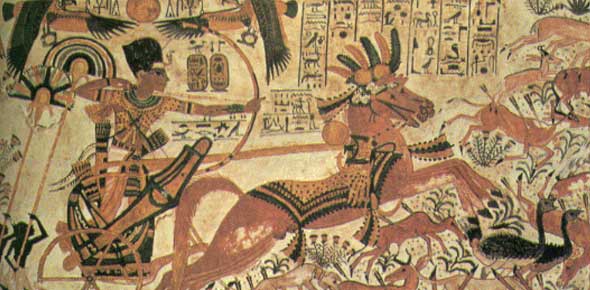
1. What artifact is this and from which year and culture?

Explanation

The artifact represents Akhenaten, a pharaoh from the 18th Dynasty of ancient Egypt, ruling around 1350 BCE. Known for his religious revolution promoting the worship of Aten, Akhenaten is visually distinct with elongated features and stylized forms characteristic of the Amarna period. This date and culture align precisely with Egyptian artistic traditions of the era, while the incorrect options list mismatched dates and cultures that do not correspond to Akhenaten’s historical identity.

Submit
Please wait...
About This Quiz
Art History Quizzes & Trivia

This Exploring Art History: Movements, Artists, and Masterpieces Quiz helps learners identify artworks, cultural symbols, and historical artifacts spanning prehistoric, ancient, Renaissance, and modern eras. Each question reinforces visual recognition and contextual understanding of major works such as the Venus of Willendorf, the Skull of Jericho, Titian’s papal portraits, Van... see moreGogh’s Starry Night, and Lorna Simpson’s contemporary pieces.

The quiz also deepens cultural literacy by exploring Paleolithic caves, Neolithic stone monuments, and iconic artworks from European, African American, and Egyptian traditions. With precise date and culture identification, this Exploring Art History: Movements, Artists, and Masterpieces Quiz is ideal for students, teachers, and enthusiasts seeking to improve visual analysis and art historical recall across multiple time periods. see less

2.
You may optionally provide this to label your report, leaderboard, or certificate.
2. What is the year and culture of Rembrandt's Shepherds print?

Explanation

Rembrandt’s Shepherds print, created in 1634, reflects Christian subject matter common in European art of the Baroque period. Rembrandt frequently depicted biblical scenes, using dramatic contrasts of light and shadow. The year 1634 falls during his early mature period when he produced many religious etchings. The other cultural options are inconsistent with Rembrandt’s background, medium, and thematic interests, making the Christian 1634 attribution the correct and historically grounded choice.

Submit
3. Who is depicted in the artwork created by Titian in 1546, and which culture does it belong to?

Explanation

The artwork portrays Pope Paul III with his grandsons, painted by Titian in 1546 within the cultural sphere of European Christian art. Titian was a prominent Renaissance painter known for his mastery of color and ability to create illusionistic space through layering and overlapping of forms. The work reflects papal authority, dynastic legacy, and Renaissance portraiture conventions. The incorrect options list rulers from unrelated cultures, making Titian’s European Christian context the accurate identification.

Submit
4. What is this artwork, when was it created, and what culture does it belong to?

Explanation

Artemisia Gentileschi’s Allegory of Painting (1640) reflects Baroque European culture and is deeply tied to her biographical experiences, including her courtroom ordeal and her distinctive portrayal of women. Known for powerful female subjects, Gentileschi incorporates dynamic composition, chiaroscuro, and symbolic self-representation. The incorrect options reference notable artworks, but none match the described themes, year, or cultural context. Her work demonstrates resilience, artistic innovation, and a personal redefinition of the painter’s identity.

Submit
5. What artwork is this, when was it created, and what culture does it reflect?

Explanation

Lorna Simpson’s You’re Fine (1988) belongs to African American contemporary art focused on race, identity, and feminism. Her use of fragmented imagery and obscured faces challenges historical stereotypes and the erasure of Black individuals in visual culture. The year 1988 aligns with her rise in conceptual photography. The other options reference well-known artworks with different cultural contexts and themes, making Simpson’s piece the accurate match for the described subject matter.

Submit
6. What is this art piece, when was it created, and what culture does it belong to?

Explanation

The artwork attributed to Sally Mann, created during the 1980s, explores autobiographical themes concerning family and childhood. Mann is known for her intimate black-and-white photographs capturing emotional depth and identity formation. Her work reflects American contemporary culture, focusing on personal narrative rather than abstract social commentary. The distractors deliberately introduce fabricated artists and mismatched decades, making Sally Mann’s autobiographical style and era the correct and contextually accurate choice.

Submit
7. What is this artwork, what year was it made, and which culture does it represent?

Explanation

Van Gogh’s Starry Night (1889) reflects Dutch post-impressionist culture, characterized by expressive brushwork, emotional intensity, and symbolic landscapes. Painted during his time in the Saint-Rémy asylum, it captures Van Gogh’s psychological depth and innovative visual language. The painting’s swirling forms and vivid color contrast distinguish it from the stylistic approaches of Monet, Picasso, or Da Vinci. The year and cultural context align precisely with this universally recognized masterpiece.

Submit
8. What is the significance, date, and culture of the Venus of Willendorf?

Explanation

The Venus of Willendorf (31,000–25,000 BCE, Paleolithic) exemplifies prehistoric sculpture in the round with exaggerated female features interpreted as symbols of fertility, abundance, or womanhood. Its stylization suggests symbolic emphasis rather than naturalism. This early artwork contributes to understanding prehistoric community values and aesthetic choices. The incorrect options position it within unrelated eras and cultural frameworks, making the Paleolithic identification the only accurate choice.

Submit
9. What sculpture is this, and what time period and culture does it belong to?

Explanation

The Venus of Laussel (25,000–23,000 BCE) is a Paleolithic relief sculpture featuring a female figure with exaggerated features, emphasizing symbolic interpretations of fertility or ritual significance. Carved into limestone, it reflects cultural focus on the female form. The incorrect options refer to Renaissance or modern works that do not match the medium, technique, or date. This sculpture is essential for studying prehistoric symbolic representation and early artistic expression.

Submit
10. What is the significance of the Lascaux Caves in prehistoric culture?

Explanation

The Lascaux Caves contain prehistoric paintings dating to roughly 15,000–13,000 BCE. The artworks emphasize contour, energetic outlines, and early attempts at depth illusion. The animal depictions are believed to relate to hunting rituals or symbolic practices expressing communal beliefs. The incorrect options suggest agriculture, astronomy, or funerary purposes, none of which align with the visual evidence or scholarly interpretations of the cave’s function.

Submit
11. Which caves contain 31,000-year-old Paleolithic art with subtle gradients blending animal forms?

Explanation

The Chauvet Caves, dating back 31,000 years, contain sophisticated Paleolithic paintings featuring subtle gradients and overlapping animal forms that obscure individual outlines. This artistic choice suggests early experimentation with shading and movement. Compared to Lascaux or Altamira, Chauvet’s style is more atmospheric and unified. The incorrect caves cannot be matched to this level of stylistic blending or chronology, making Chauvet the historically accurate identification.

Submit
12. What were Menhirs in Carnac, France (4000 BCE) most likely used for?

Explanation

The Carnac Menhirs (4000 BCE, Neolithic) consist of large upright stones arranged in long rows, likely serving ritual or astronomical purposes due to their shadow alignments. Their purpose remains speculative, but evidence suggests ceremonial or calendrical functions rather than defense, cooking, or burial. Their scale and intentional placement reflect early communal organization and ritual practice. The incorrect answers introduce uses unsupported by archaeological findings.

Submit
13. What is this structure, what year, and which culture?

Explanation

Stonehenge (2800–1500 BCE, Neolithic) is a monumental stone circle featuring lintels and trilithons arranged in a deliberate ceremonial pattern. Its construction spanned centuries, reflecting community labor, ritual significance, and possible astronomical alignments. The incorrect options reference structures from unrelated continents, eras, and cultures, making Stonehenge the only historically accurate match.

Submit
14. What is this artifact, what year does it date to, and what culture does it belong to?

Explanation

The Skull of Jericho (7000 BCE, Neolithic) consists of a human skull covered with plaster to reconstruct facial features, representing early ancestor veneration. This artifact reflects ritual practices in early settled communities. The incorrect options list medieval, Roman, and Egyptian artifacts unrelated in time, material, and cultural meaning. The Jericho skull remains one of the earliest examples of symbolic treatment of the dead in human history.

Submit
×
Saved
Thank you for your feedback!
View My Results
Cancel
  • All
    All (14)
  • Unanswered
    Unanswered ()
  • Answered
    Answered ()
What artifact is this and from which year and culture?
What is the year and culture of Rembrandt's Shepherds print?
Who is depicted in the artwork created by Titian in 1546, and which...
What is this artwork, when was it created, and what culture does it...
What artwork is this, when was it created, and what culture does it...
What is this art piece, when was it created, and what culture does it...
What is this artwork, what year was it made, and which culture does it...
What is the significance, date, and culture of the Venus of...
What sculpture is this, and what time period and culture does it...
What is the significance of the Lascaux Caves in prehistoric culture?
Which caves contain 31,000-year-old Paleolithic art with subtle...
What were Menhirs in Carnac, France (4000 BCE) most likely used for?
What is this structure, what year, and which culture?
What is this artifact, what year does it date to, and what culture...
Alert!

Advertisement