

Across modern classrooms, one insight has become increasingly clear: relying on a single test score is no longer enough to understand how students learn. As someone who has spent years building learning solutions and working closely with educators, I’ve seen firsthand how limiting that narrow snapshot can be. Comprehensive assessment changes that. It offers a research-backed, multi-dimensional view of learning—capturing progress, challenges, and potential across the entire instructional process.
When we gather insights at multiple stages, patterns emerge that traditional testing simply can’t reveal: the reasoning behind a student’s choices, the moments where their thinking stalls, and the places where their strengths begin to take shape. Assessment shifts from a static event to a continuous, actionable stream of understanding.
In this guide, I’ve distilled the frameworks, principles, and practical tools that consistently help schools and training programs make better instructional decisions. My goal is to help you implement comprehensive assessment in a way that’s clear, scalable, and deeply aligned with how real learning happens.
What Is a Comprehensive Assessment?
A comprehensive assessment is a holistic evaluation strategy that combines multiple evidence sources—including diagnostic, formative, and summative data—to measure a learner’s knowledge, skills, and application abilities. Unlike single-point testing, it integrates academic performance, critical thinking, and self-reflection to provide a complete picture of student growth or employee competency.
This broad spectrum of student assessment tools allows for a more in-depth understanding of a student’s abilities, learning styles, and areas for improvement. A comprehensive assessment can also be used in professional settings to evaluate employees for specific job roles and tasks and assess skill competencies.
What Are the Components of a Comprehensive Assessment?
Comprehensive assessment goes beyond tests or grades—it’s like piecing together a puzzle that shows the whole picture of how students learn. From planning to feedback, every step helps create a clearer view of each student’s progress. Here’s how it all comes together:
1. Pre-Assessment Planning
Good assessments start with a plan. Before jumping into a new topic, teachers need to think about what they want students to learn and how to measure that learning. It’s all about being intentional.
For example, if you’re teaching critical thinking, you wouldn’t just hand out a multiple-choice test. Instead, you might have students analyze case studies, solve problems, or even debate real-world issues. This way, your assessment matches what you’re trying to teach.
2. Data Collection Methods
To really understand how students are doing, you need a mix of tools. One-size-fits-all doesn’t work here.
- Performance Tasks: Think group presentations or debates where students apply what they’ve learned.
- Portfolios: These are like a scrapbook of student growth—perfect for subjects like art or writing.
- Observations: Keep an eye on how students engage in class activities.
- Interviews: A one-on-one chat can reveal how a student thinks through problems.
- Standardized Tests: These can help spot trends across a larger group.
When you use online quiz tools alongside these methods, the data becomes even easier to work with. Detailed reports highlight learning patterns, common misconceptions, and progress across attempts, helping you make informed decisions quickly.
You can also export this data into Excel sheets, making it simple to sort, compare, and share results whenever needed. can make this whole process smoother.
Watch: How to Review Online Quiz Reports & Statistics
3. Rubrics & Grading Criteria
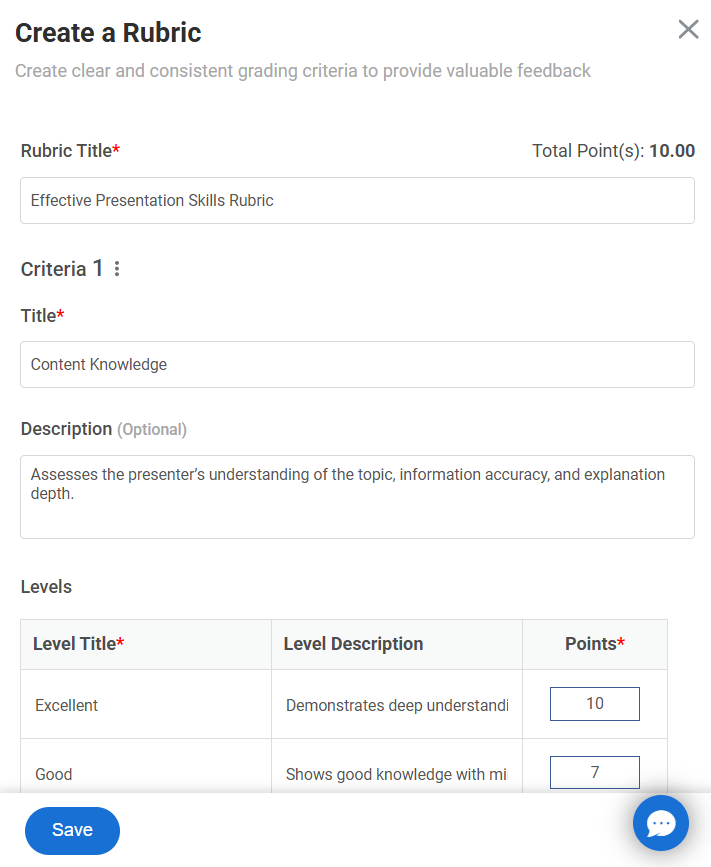
Image source: lucykirchh.com
Clear expectations make all the difference. Rubrics spell out exactly what’s expected so that students know how to succeed and teachers can grade fairly.
For example, a science project rubric might break things down into categories like experiment design, data analysis, and presentation. It’s not just about grading—it’s about showing students what’s important.
And let’s talk about fairness. Assessments should work for everyone, no matter their background. A history test, for instance, should include examples from diverse cultures to make it relatable to all students.
4. Continuous Feedback Mechanisms
Feedback is where the magic happens. It’s not just about handing back a graded quiz; it’s about helping students grow.
- Peer Reviews: Let students learn from each other—it’s collaborative and insightful.
- One-on-One Chats: These are perfect for diving deeper into what’s working and what’s not.
- Instant Feedback: AI tools or quick quizzes can give students real-time suggestions.
Imagine this: after a group activity, a teacher gives immediate feedback to help students tweak their approach before the next task. It’s small moments like these that keep students motivated and learning on the go.
Types of Comprehensive Assessments in Education
Comprehensive assessment encompasses a variety of approaches, each designed to provide unique insights into student learning:
1. Formative Assessments
Formative assessments are ongoing assessments woven into the fabric of daily instruction. They provide real-time feedback to students and inform immediate adjustments to teaching strategies.
Examples include exit tickets, quick quizzes, think-pair-share activities, student self-reflections, and informal observations of classroom discussions.
Formative assessments are flexible and adaptable, allowing educators to gauge understanding and address misconceptions as they arise.
2. Summative Assessments
Summative assessments occur at the end of a unit, term, or course to measure overall learning outcomes. They provide a comprehensive evaluation of student achievement and mastery of key concepts.
Examples include end-of-unit tests, final exams, research papers, presentations, and performance tasks.
Summative assessments offer a snapshot of student learning at a specific point in time and contribute to grades and academic records.
3. Diagnostic Assessments
Before embarking on a new unit or course, diagnostic assessments help educators gauge students’ prior knowledge, skills, and potential learning challenges. These assessments provide a baseline understanding of where students stand and inform instructional planning.
Examples include pre-tests, concept maps, student surveys, and informal interviews.
By identifying individual needs and learning gaps, diagnostic assessments help educators tailor their teaching to maximize student success.
4. Benchmark Assessments
Conducted periodically throughout the school year, benchmark assessments measure student progress toward specific learning goals or standards. They provide valuable data for tracking long-term growth and identifying areas where students may need additional support.
Examples include standardized tests administered at regular intervals, curriculum-based measures, and teacher-created assessments aligned with grade-level expectations.
Benchmark assessments help educators monitor the effectiveness of instruction and make data-driven decisions to improve student outcomes.
5. Performance Assessments
These assessments require students to apply their knowledge and skills in authentic, real-world contexts. They go beyond traditional tests and quizzes, focusing on demonstrating understanding through performance tasks.
Examples include conducting science experiments, designing engineering projects, writing persuasive essays, delivering oral presentations, creating artistic works, and participating in debates.
Performance assessments provide a rich and engaging way for students to showcase their abilities and demonstrate deeper learning.
Comprehensive vs. Traditional Assessments: At a Glance
To truly understand the value of a comprehensive approach, it helps to see how it differs from standalone testing methods. While formative and summative assessments are parts of the puzzle, comprehensive assessment is the whole picture.
| Feature | Formative Assessment | Summative Assessment | Comprehensive Assessment |
|---|---|---|---|
| Primary Goal | Monitor student learning to provide ongoing feedback. | Evaluate student learning at the end of an instructional unit. | create a holistic profile of the learner’s capabilities and growth. |
| Timing | During instruction (daily/weekly). | End of a chapter, term, or year. | Continuous cycles (combining pre, during, and post). |
| Data Scope | Narrow (specific skill or lesson). | Broad (unit or course mastery). | Multi-dimensional (skills, behavior, application, & synthesis). |
| Student Role | Reactive (receiving feedback). | Demonstrative (proving knowledge). | Reflective (analyzing their own growth path). |
| Outcome | Improvement of instruction. | Grades or certification. | Actionable roadmap for long-term development. |
How to Implement a Comprehensive Assessment: The CNA Framework
Many educators worry that comprehensive evaluation methods in education lead to “over-assessment” or policy fatigue. The solution isn’t doing more work; it’s following a structured framework.
Educational experts often utilize the Comprehensive Needs Assessment (CNA) model to streamline this process. Here is a 3-phase roadmap to implementing it effectively:
Phase 1: Explore “What Is”
Before creating new tests, evaluate your current landscape.
- Audit current tools: Are you relying on manual tools like Google Forms or spreadsheets? These often lead to fragmented data.
- Identify the gap: What data are you missing? (e.g., You may have test scores, but lack data on critical thinking skills).
Phase 2: Gather & Analyze Data
This is where the “comprehensive” aspect comes in. You must gather data from varied sources to validate your findings.
- Triangulate: Combine standardized test scores with perception data (surveys) and demographic data.
- Look for trends: Does high performance in quizzes correlate with high performance in practical projects? If not, why?
Phase 3: Make Decisions & Act
Data without action is just noise. Use your findings to drive specific changes.
- Instructional Tweak: If the data shows students struggle with synthesis, introduce more project-based learning.
Systemic Change: If data collection is too slow, adopt an LMS or assessment platform with API integrations to automate the flow of information.
Examples of Comprehensive Assessments
Let’s step into a few different classrooms to see how this structured approach transforms evaluation.
1. Elementary School – Reading Comprehension
Early literacy requires tracking more than just speed; it requires understanding the depth of a student’s connection to the text.
- Scenario: Ms. Rodriguez needs to evaluate her third-grade class on their reading fluency and ability to analyze story structures.
- The Assessment: She uses a multi-layered strategy: a diagnostic test to identify reading levels (baseline), weekly oral retellings and partner reading (formative monitoring), and a creative “Character Museum” presentation (summative synthesis).
- The Result: A holistic profile that distinguishes between students who merely read words and those who truly comprehend the narrative.
2. Middle School – Science & Inquiry
In science education, memorizing definitions is insufficient; students must demonstrate inquiry skills and real-world application.
- Scenario: Mr. Lee wants to ensure his seventh graders understand the complex interactions within biological ecosystems.
- The Assessment: The unit combines a digital pre-test (prior knowledge), daily online simulations and lab polls (ongoing feedback), and a physical terrarium build where students document biological changes (hands-on application).
- The Result: A clear measurement of scientific inquiry skills and practical knowledge, rather than just factual recall.
3. High School – History & Critical Thinking
Advanced history education focuses on analyzing context and constructing arguments rather than simply memorizing dates.
- Scenario: Mrs. Davis aims to gauge her tenth graders’ critical analysis of the Civil Rights Movement.
- The Assessment: She implements a primary source analysis activity (diagnostic), class debates and short writing prompts (critical thinking), and a choice between a research paper or a multimedia documentary (differentiated summative).
- The Result: A flexible evaluation that caters to different learning styles while ensuring every student demonstrates deep historical understanding.
4. Corporate & Professional Settings – Credentialing
Comprehensive assessments aren’t just for schools. In the corporate world, they are vital for annual employee certification and pre-employment screening.
- Scenario: A healthcare organization needs to certify nurses on new patient safety protocols.
- The Assessment: Instead of a simple checkbox, the organization uses a comprehensive approach: a timed knowledge quiz (validity), a video response scenario (application), and a supervisor observation checklist (performance).
- The Result: A verified credential that ensures the employee is not just knowledgeable, but job-ready.
What Are the Benefits of Comprehensive Assessments?
Comprehensive assessments are like a full-body check-up for learning—they look at the whole picture, not just a slice of it. Here’s why they’re so impactful:
A Full View of Student Learning
These assessments dig deeper than just test scores. By combining things like projects, group work, and self-reviews, they uncover what students know, how they think, and how they work. Imagine a group project where a student’s teamwork and creative problem-solving shine—those skills might not show up in a standard test, but they’re just as important.
If you want to see how this works in a real classroom, here’s a teacher walking through the impact of using comprehensive assessment tools to support deeper learning:
Teaching That Fits
Ever notice how some students ace discussions but struggle with essays? Comprehensive assessments give teachers a clear roadmap of each student’s strengths and areas that need a little TLC. With this insight, teachers can tweak their lessons—whether it’s adding writing workshops or offering more one-on-one feedback—to make sure every student gets the support they need.
Smarter Decisions Backed by Data
The data from these assessments isn’t just numbers; it’s a treasure trove for educators. It helps them figure out what’s working, what’s not, and where to focus their energy. Schools can even use this info to adjust their curricula or roll out extra help for students falling behind.
Keeping Things Fair
Comprehensive assessments are all about giving everyone a fair shot. By mixing up the ways students are evaluated—like presentations, written tests, and hands-on projects—they make room for different strengths. It’s not about one-size-fits-all; it’s about celebrating what makes each student unique.
Learning That Sticks
When students apply what they’ve learned—like presenting a project or solving a real-world problem—it sticks with them. This approach doesn’t just prepare them for tests; it gears them up for life, helping them build critical skills they’ll use far beyond the classroom.
Keeping Students Engaged
Let’s face it, traditional tests can feel like a chore. But with assessments that include creative projects or collaborative tasks, students actually enjoy the process. When learning feels relevant and exciting, motivation naturally follows.
Accountability for Everyone
These assessments aren’t just about students—they help teachers and schools stay on top of their game, too. By showing what’s working (and what’s not), they push everyone to keep improving and adapting.
Watch: How DMS Boosted Student Scores
Keys to Successful Comprehensive Assessments
A comprehensive assessment depends on a number of factors for success. Here are the most important ones:
- Alignment With Learning Objectives
The assessment must align with the learning objectives or outcomes that it is intended to measure. This ensures that the assessment accurately reflects what students are expected to learn.
- Variety of Assessment Methods
Utilizing a range of assessment methods, such as tests, projects, portfolios, presentations, and peer assessments, caters to different learning styles and provides a more holistic view of student abilities.
- Validity & Reliability
Validity ensures that the assessment measures what it is supposed to measure, and reliability ensures that it yields consistent results over time. Both are crucial for the credibility of the assessment.
- Fairness & Inclusivity
The assessment should be fair to all students, regardless of their backgrounds or learning differences. This might involve providing accommodations or alternative assessment methods for students with special needs.
- Clear Criteria & Rubrics
Providing students with clear criteria and rubrics for assessment helps them understand what is expected of them and how they will be evaluated.
- Feedback & Reflection
Offering constructive feedback helps students understand their strengths and areas for improvement. Encouraging student reflection on their performance can further enhance learning.
- Use of Technology
Leveraging technology, such as artificial intelligence and machine learning, can enhance assessment by providing diverse and engaging ways to evaluate student learning, as well as efficient methods for data collection and analysis.
- Continuous Improvement
Regularly reviewing and revising assessment strategies based on student performance and feedback ensures they remain effective and relevant.
- Collaboration Among Educators
Collaboration among teachers in designing and implementing assessments can lead to more consistent and comprehensive approaches to evaluating student learning.
Overcoming Challenges: Security, Efficiency & Anxiety
Implementing a comprehensive system comes with challenges. However, modern technology is solving the biggest hurdles regarding workload, integrity, and student well-being.
1. Move Beyond Manual Tools
Relying on basic tools like spreadsheets or standalone form builders often leads to data silos and manual grading fatigue. Modern comprehensive assessment platforms solve this through API integrations.
By connecting your assessment tool directly to your LMS or HRIS, grades and data flow automatically, saving hours of administrative work.
2. Ensuring Integrity With Proctoring
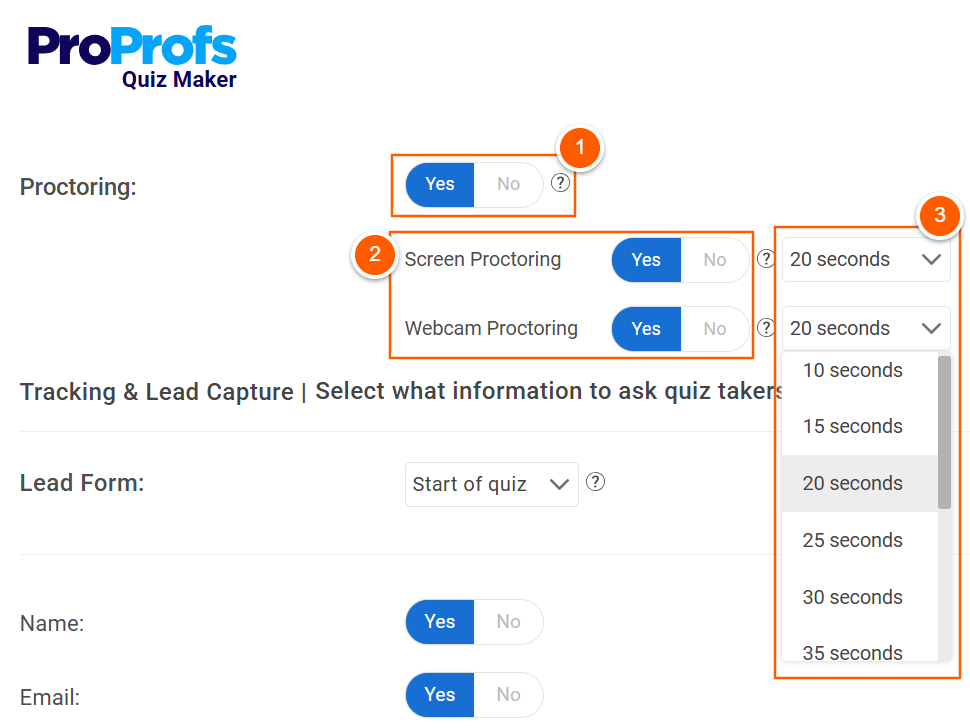
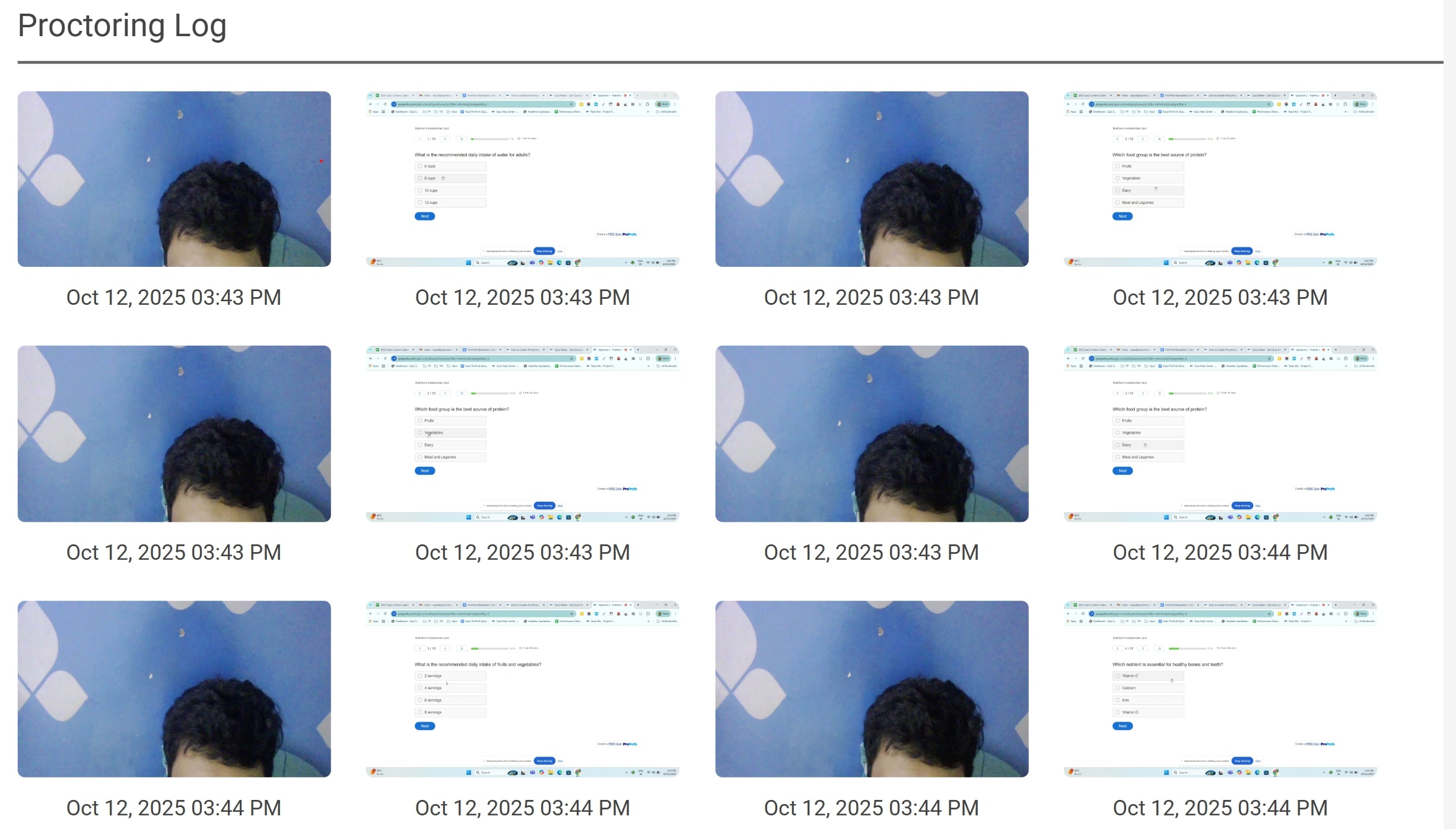
For high-stakes components of a comprehensive assessment (like end-of-term exams or certification), validity is key. Schools and companies are moving toward platforms that offer advanced security features, such as:
- Webcam Monitoring: To ensure the right student is taking the test.
- Browser Locking: Preventing “print screen” functionality or tab-switching to search for answers.
- Question Randomization: Ensuring no two students get the exact same sequence of questions.
3. Reducing Assessment Anxiety
Our research from student communities indicates that “Comprehensive exams” can cause paralyzing anxiety. To combat this, educators should focus on synthesis over memorization.
Instead of high-pressure memory tests, use AI-powered tools to create adaptive quizzes that adjust to the learner’s level. This ensures students are challenged appropriately without being overwhelmed, turning assessment into a supportive learning tool rather than a source of stress.
Unlock Student Potential With Comprehensive Assessments
Comprehensive assessments provide a holistic understanding of student progress, helping educators tailor learning experiences and address individual needs. By combining multiple tools and methods, these assessments create a complete picture of strengths and areas for growth.
To simplify the process, tools like ProProfs Quiz Maker can help you design secure, insightful assessments quickly. With features like customizable templates, AI-powered question creation, and detailed reporting, it’s easier to create evaluations that truly support student success.
Educators can use comprehensive assessments effectively to empower every student to reach their full potential.
Frequently Asked Questions

Does implementing comprehensive assessments increase teacher workload?
It shouldn't, if managed correctly. By utilizing AI-powered quiz makers and LMS integrations, educators can automate the grading of quizzes and data collection. This shifts the focus from manual administrative work to analyzing trends and providing high-value feedback.
Can comprehensive assessments be used in corporate settings?
Absolutely. In the business world, they are vital for employee credentialing and pre-employment screening. Rather than just checking a box, these assessments validate job-readiness by testing practical skills, soft skills, and problem-solving abilities alongside theoretical knowledge.
How do comprehensive assessments reduce student anxiety?
High-stakes "pass or fail" exams are a major source of student stress. Comprehensive systems reduce this pressure by spreading evaluation across multiple methods—like portfolios and projects. This allows students to demonstrate understanding in various ways rather than risking everything on a single test.
What role does technology play in comprehensive assessment?
Technology is the engine that makes this approach scalable. Tools like secure browsers and AI proctoring ensure the integrity of online exams, while analytics dashboards allow teachers to spot learning trends instantly, making the "comprehensive" view possible without manual data entry.

Let ProProfs AI Build a Quiz

 We'd love your feedback!
What did you like & how can we make it even better?
 Thanks for your feedback!
 Ask Your Question
Have a question? Get expert help to make your decision easier.