Essentials of Radiology Equipment: Operation and Maintenance Quiz

Reviewed by Editorial Team
The ProProfs editorial team is comprised of experienced subject matter experts. They've collectively created over 10,000 quizzes and lessons, serving over 100 million users. Our team includes in-house content moderators and subject matter experts, as well as a global network of rigorously trained contributors. All adhere to our comprehensive editorial guidelines, ensuring the delivery of high-quality content.
Learn about Our Editorial Process
| By Thames
T
Thames
Community Contributor
Quizzes Created: 8156 | Total Attempts: 9,588,805
| Attempts: 16 | Questions: 30 | Updated: Nov 13, 2025
Please wait...
Question 1 / 31
🏆 Rank #--
Score 0/100

1. What is considered generic equipment in a radiographic room?

Explanation

Generic equipment refers to components that are essential in all radiographic rooms, regardless of the specific imaging technique being performed. These items are basic necessities for conducting radiographic examinations.

Submit
Please wait...
About This Quiz
Essentials Of Radiology Equipment: Operation and Maintenance Quiz - Quiz

Enhance your understanding of radiology equipment through this focused assessment. This quiz covers crucial imaging technologies and their applications, providing insights into their operation and maintenance. Ideal for students and professionals in radiology and medical imaging fields.

2.

What first name or nickname would you like us to use?

You may optionally provide this to label your report, leaderboard, or certificate.

2. What do x-ray tubes produce?

Explanation

X-ray tubes are specifically designed to produce x-rays for medical imaging purposes, utilizing the interaction between high-speed electrons and a metal target to generate these electromagnetic waves.

Submit

3. What are the (2) major parts of the x-ray tube?

Explanation

In an x-ray tube, the anode is the positive electrode where the x-rays are generated, and the cathode is the negative electrode that produces the electron beam necessary for x-ray production.

Submit

4. What are the (4) components common to all radiographic rooms?

Explanation

The four components common to all radiographic rooms are essential for performing X-ray imaging procedures and ensuring patient safety and image quality.

Submit

5. What does the x-ray tube convert its energy into?

Explanation

The x-ray tube converts about 0.6% of its energy into x-rays and the rest into heat, with negligible production of other forms of energy.

Submit

6. What term is used to describe the quantity of x-rays taken?

Explanation

mAs stands for milliampere-seconds and represents the quantity of x-rays taken during a radiographic procedure. kVp refers to the quality of the x-ray beam, mGy is the unit for radiation dose, and CT is a different type of imaging modality.

Submit

7. Name the components of an x-ray tube.

Explanation

The components of an x-ray tube include the rotor, stator coils, rotating anode, glass envelope, focusing cup, filament, window, and target. Transformers, cathodes, anodes, and collimators are not parts of an x-ray tube. Detectors, processors, consoles, and displays are commonly found in digital radiography systems. Lead aprons, gonad shields, thyroid collars, and dosimeters are radiation protection devices.

Submit

8. What are the anode and cathode supplied with?

Explanation

The anode and cathode in an electrical circuit are supplied with electrical energy to drive the flow of electrons and facilitate the chemical reactions that occur during the process.

Submit

9. Where are adjustments for mAs and kVp typically made?

Explanation

Adjustments for mAs and kVp are typically made at the control panel, where the radiologic technologist can modify these settings based on the patient's size, anatomy, and desired image quality.

Submit

10. What is a collimator?

Explanation

A collimator is a device that restricts a beam of radiation or particles to a small diameter.

Submit

11. What does the act of 'Collimating' involve?

Explanation

Collimating in the context of x-ray technology refers to reducing the size of the x-ray field to only the area of interest, thereby reducing scatter radiation and improving image quality.

Submit

12. When should you avoid exposing a patient to unnecessary radiation?

Explanation

It is important to limit radiation exposure to patients only when it is necessary to produce an image for diagnosis or treatment. Unnecessarily exposing patients to radiation can have harmful effects, so it should be avoided unless there is a clear medical need.

Submit

13. When is a manual tape measure utilized?

Explanation

A manual tape measure is specifically designed for measuring lengths and distances, making it ideal for tasks like measuring the SID (Source-to-Image Distance) in radiography.

Submit

14. What is the table?

Explanation

The correct answer refers to a specific type of table used in the medical field for examinations. The incorrect answers provide alternative definitions of the term 'table' in different contexts.

Submit

15. What is a Bucky Tray?

Explanation

A Bucky Tray is a crucial component in radiography used to hold the x-ray cassette in place during imaging procedures.

Submit

16. What must you do with the Bucky Tray before taking an x-ray?

Explanation

Before taking an x-ray, it is crucial to center the Bucky Tray properly and securely lock it in place to ensure accurate and clear imaging results.

Submit

17. What is the purpose of the control console in radiology?

Explanation

The control console in radiology is primarily used to adjust the exposure factors such as kVp, mA, and S to control the amount of radiation exposure and image quality during x-ray imaging. It is not used to regulate temperature, contrast brightness, or focus of the x-ray beam.

Submit

18. What type of control panels are used by Florida Hospital?

Explanation

Florida Hospital uses touch screen control panels to make it easier for staff to operate various equipment and systems in the hospital.

Submit

19. What are the most common parts of a control panel?

Submit

20. What does Kilo mean?

Explanation

Kilo is a prefix used in the metric system to denote a factor of one thousand.

Submit

21. What is the typical range of voltage used in X-ray imaging?

Explanation

The range of voltage used in X-ray imaging typically falls between 30 KVp and 150 KVp, which is crucial for producing the desired X-ray penetration and image quality.

Submit

22. What does kVp control?

Explanation

kVp (kilovoltage peak) controls the quality of the x-ray beam, affecting its penetrating ability to pass through tissues and produce the desired image contrast.

Submit

23. What is the term for the energy of x-rays produced?

Explanation

The energy of x-rays produced is referred to as kVp, which stands for kilovolts peak and is a measurement of the quality of the x-ray beam produced. The other options - mAs represents the quantity of x-rays produced, RAD is a unit of absorbed dose, and Gy is the unit of measurement for ionizing radiation.

Submit

24. What controls the size and shape of the x-ray beam?

Explanation

Lead shutters are used to control the size and shape of the x-ray beam by limiting the areas of exposure. The collimator is responsible for limiting the size of the x-ray beam to the desired area. Exposure time settings determine the duration of x-ray exposure, while X-ray tube voltage controls the penetrating power of the x-ray beam.

Submit

25. How efficient is an x-ray machine at producing energy?

Explanation

X-ray machines are not efficient at producing energy because a majority of the energy they produce is in the form of heat rather than useful radiation for imaging purposes.

Submit

26. How fast are the electrons moving from the filament to the target?

Explanation

Electrons moving from the filament to the target do so at approximately half the speed of light, allowing for efficient electricity conversion in the process.

Submit

27. What is the function of Positive Beam Limitation?

Explanation

Positive Beam Limitation (PBL) is a feature in radiography systems that automatically senses the size of the image receptor (such as cassette or digital detector) being used and adjusts the x-ray field size to match it. This helps in optimizing image quality and reducing unnecessary exposure to radiation.

Submit

28. What are the parts of the Collimator Housing?

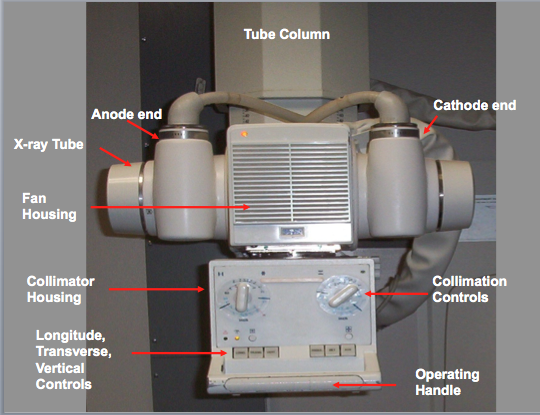
Explanation

The Collimator Housing typically consists of the cathode end, anode end, focusing cup, and grid wire. In this context, 'Cathode end' is one of the parts of the Collimator Housing.

Submit

29. What degree is a tilting table able to turn?

Explanation

A tilting table is able to turn at either 90 degrees or 30 degrees depending on the design and functionality of the specific table.

Submit

30. What are the two types of table movements?

Explanation

The correct answer includes Tilting and Tabletop movement as the two types of table movements. While the incorrect answers provide other types of movements that are not typically associated with tables.

Submit
×
Saved
Thank you for your feedback!
View My Results
Cancel
  • All
    All (30)
  • Unanswered
    Unanswered ()
  • Answered
    Answered ()
What is considered generic equipment in a radiographic room?
What do x-ray tubes produce?
What are the (2) major parts of the x-ray tube?
What are the (4) components common to all radiographic rooms?
What does the x-ray tube convert its energy into?
What term is used to describe the quantity of x-rays taken?
Name the components of an x-ray tube.
What are the anode and cathode supplied with?
Where are adjustments for mAs and kVp typically made?
What is a collimator?
What does the act of 'Collimating' involve?
When should you avoid exposing a patient to unnecessary radiation?
When is a manual tape measure utilized?
What is the table?
What is a Bucky Tray?
What must you do with the Bucky Tray before taking an x-ray?
What is the purpose of the control console in radiology?
What type of control panels are used by Florida Hospital?
What are the most common parts of a control panel?
What does Kilo mean?
What is the typical range of voltage used in X-ray imaging?
What does kVp control?
What is the term for the energy of x-rays produced?
What controls the size and shape of the x-ray beam?
How efficient is an x-ray machine at producing energy?
How fast are the electrons moving from the filament to the target?
What is the function of Positive Beam Limitation?
What are the parts of the Collimator Housing?
What degree is a tilting table able to turn?
What are the two types of table movements?

play-Mute sad happy unanswered_answer up-hover down-hover success oval cancel Check box square blue
Alert!