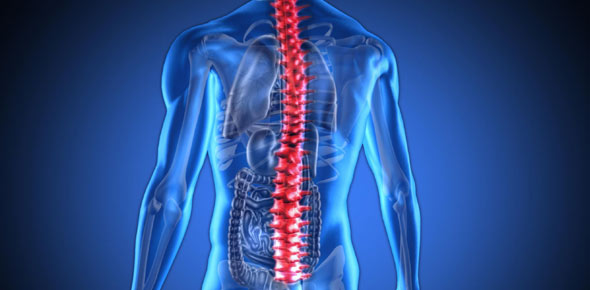
Understanding Cervical Spine Anatomy and Mobility

Reviewed by Editorial Team
The ProProfs editorial team is comprised of experienced subject matter experts. They've collectively created over 10,000 quizzes and lessons, serving over 100 million users. Our team includes in-house content moderators and subject matter experts, as well as a global network of rigorously trained contributors. All adhere to our comprehensive editorial guidelines, ensuring the delivery of high-quality content.
Learn about Our Editorial Process
| By Thames
T
Thames
Community Contributor
Quizzes Created: 7387 | Total Attempts: 9,537,848
| Attempts: 13 | Questions: 25 | Updated: Oct 22, 2025
Please wait...
Question 1 / 25
0 %
0/100
Score 0/100
1. What are the movements of the cervical spine?

Explanation

The correct movements of the cervical spine are flexion (forward bending), lateral flexion (side bending), rotation (twisting), and extension (backward bending). The incorrect movements mentioned are related to other joints in the body, such as the shoulder, ankle, and jaw.

Submit
Please wait...
About This Quiz
Understanding Cervical Spine Anatomy And Mobility - Quiz

Explore the intricacies of cervical spine anatomy through focused assessments. This educational tool enhances understanding of spinal structure, function, and common pathologies, crucial for students and professionals in health sciences.

2.
You may optionally provide this to label your report, leaderboard, or certificate.
2. What is an atlas?

Explanation

An atlas is a book or collection of maps, typically in a bound volume, designed to provide reference material for various locations and geographical features.

Submit
3. What are normal vertebrae?

Explanation

Normal vertebrae refer to the spinal bones that are in good alignment and do not have any structural issues such as fractures, severe degeneration, or misaligned discs.

Submit
4. Where is the atlanto-occipital joint located?

Explanation

The atlanto-occipital joint is specifically found between the atlas vertebrae and the cranium, allowing for nodding movements of the head.

Submit
5. Where does a medial Atlanta axial joint form?

Explanation

The correct answer describes the formation of a medial Atlanta axial joint, highlighting the specific locations involved in the articulation process. It is crucial to understand the precise anatomical structures for accurate identification.

Submit
6. What is located between vertebral bodies?

Explanation

The intervertebral discs made of fibrocartilage provide cushioning and act as shock absorbers between the vertebral bodies in the spine.

Submit
7. Where is the alar ligament located and what is its function?

Explanation

The alar ligament is specifically located underneath the cranium, from the occipital condyles to the cuneiform process, and plays a role in limiting rotation of the head.

Submit
8. What holds the coronoid process in place?

Explanation

The correct answer includes the transverse ligament of the atlas and alar ligament, while the incorrect options are not relevant to the anatomical structure in question.

Submit
9. What movement does the Atlanta occipital joint make?

Explanation

The Atlanta occipital joint allows for forward flexion and extension of the neck, commonly known as nodding. The incorrect answers provided are movements associated with different joints in the body and do not relate to the movement of the Atlanta occipital joint.

Submit
10. What structure is located between vertebral arches?

Explanation

The vertebral arches are part of the spinal column and house the spinal cord. The structures between the vertebral arches allow for movement and flexibility in the spine.

Submit
11. Where does the transverse ligament of the atlas run?

Explanation

The transverse ligament of the atlas is a crucial structure in the neck that holds the dens (odontoid process) of the axis in place, it runs along the vertebral foramen, securing the stability of the cervical spine.

Submit
12. What is the main function of the anterior longitudinal ligament?

Explanation

The anterior longitudinal ligament runs along the front of vertebral bodies, providing support and preventing excessive movement.

Submit
13. Where does the posterior longitudinal ligament run?

Explanation

The posterior longitudinal ligament runs inside the vertebral canal to help support and stabilize the spine.

Submit
14. Which vertebrae are the most mobile?

Explanation

The atlasaxis vertebrae, also known as the first and second cervical vertebrae, are the most mobile in the spine since they allow for a wide range of motion for the head and neck.

Submit
15. What movement does it cause?

Explanation

The correct answer is rotation because it refers to the circular movement around an axis.

Submit
16. What holds the arches of C3 onwards together?

Explanation

The arches of C3 onwards are held together by the ligament flavum, which is a strong ligamentous structure that runs between the lamina of adjacent vertebrae in the spinal column, helping to maintain the stability and integrity of the spine.

Submit
17. What type of joint is the atlantooccipital joint?

Explanation

The atlantooccipital joint is classified as a condylar synovial joint due to its structure and function, allowing for flexion, extension, and lateral flexion of the neck.

Submit
18. Where does a lateral atlantoaxial joint form?

Explanation

The lateral atlantoaxial joint specifically forms between the superior and inferior articular surfaces of the first and second cervical vertebrae. This joint allows for rotation of the head from side to side.

Submit
19. What type of joint is the atlanto axial joint?

Explanation

The atlanto axial joint is a pivot type synovial joint that allows rotation between the atlas and axis vertebrae in the cervical spine.

Submit
20. What is the plural form of axis?

Explanation

The correct plural form of 'axis' is 'axes'.

Submit
21. What type of joint is the Atlanta axial joint?

Explanation

The Atlanta axial joint is a plane type synovial joint due to its structure and movement characteristics.

Submit
22. Which type of joint is found between the atlas and axis in the human body?

Explanation

The correct answer is a synovial joint because it allows for smooth movement between the atlas and axis vertebrae. Fibrous joint, cartilaginous joint, and ball-and-socket joint are types of joints found elsewhere in the body and not specifically between the atlas and axis.

Submit
23. What ligaments make up the cuniform ligaments?

Explanation

The correct answer refers to the ligaments in the cervical spine, while the incorrect answers are related to ligaments in the knee, ankle, and shoulder regions respectively.

Submit
24. Where is the nuchal ligament located and what is its function?

Explanation

The nuchal ligament connects the cervical spine to the thoracic spine all the way to the base of the skull, helping with forward flexion of the neck and head.

Submit
25. What letter comes after 'g'?

Explanation

The correct answer is 'h' as it comes immediately after the letter 'g' in the English alphabet. The other options provided are not sequential in relation to the given sequence.

Submit
×
Saved
Thank you for your feedback!
View My Results
Cancel
  • All
    All (25)
  • Unanswered
    Unanswered ()
  • Answered
    Answered ()
What are the movements of the cervical spine?
What is an atlas?
What are normal vertebrae?
Where is the atlanto-occipital joint located?
Where does a medial Atlanta axial joint form?
What is located between vertebral bodies?
Where is the alar ligament located and what is its function?
What holds the coronoid process in place?
What movement does the Atlanta occipital joint make?
What structure is located between vertebral arches?
Where does the transverse ligament of the atlas run?
What is the main function of the anterior longitudinal ligament?
Where does the posterior longitudinal ligament run?
Which vertebrae are the most mobile?
What movement does it cause?
What holds the arches of C3 onwards together?
What type of joint is the atlantooccipital joint?
Where does a lateral atlantoaxial joint form?
What type of joint is the atlanto axial joint?
What is the plural form of axis?
What type of joint is the Atlanta axial joint?
Which type of joint is found between the atlas and axis in the human...
What ligaments make up the cuniform ligaments?
Where is the nuchal ligament located and what is its function?
What letter comes after 'g'?
Alert!

Advertisement