

When I started looking into talent assessment platforms, I noticed how quickly the options blur together. Almost every platform promises better candidate screening, smarter evaluations, and faster hiring, but the actual differences become clearer once you look at what each tool is designed to assess.
While researching the options, I found software built for very different needs, from developer-focused coding assessments to broad skills testing, psychometric evaluations, job simulations, and high-volume candidate screening. Some are packed with features but come with a higher price tag, while others keep things simpler and more accessible.
I looked at 10 leading talent assessment software tools with a practical question in mind: Which ones actually make candidate evaluation easier and more reliable? Below, I’ll break down their key features, pricing, pros and cons, and for whom the tool is best suited.
What Is Talent Assessment Software?
In practice, a talent assessment platform is really a filter. It takes a pile of applicants who all look qualified on paper and tells you, with actual data, who can do the work. Whether that’s an online talent assessment for a coding role or a scored situational judgment test for a customer support hire, the job is the same: replace guessing with evidence.
US job openings sat at 7.4 million in June 2026, and every one of those openings is competing for a shrinking pool of recruiter hours. A talent assessment platform does that filtering for you, before you’ve spent a minute on a phone screen.
The best talent assessment tool isn’t necessarily the one with the biggest question library; it’s one candidates actually complete. Traditional cognitive and personality tests often see just 50–55% completion, limiting their value.
Meanwhile, hiring teams are increasingly looking beyond resumes and experience; 56% of employers use pre-employment assessments, with nearly 80% saying scores matter as much as or more than degrees and tenure.
10 Best Talent Assessment Tools for Candidate Evaluation
I tested and researched these based on real recruiter usage and current vendor and review-site data. Before the full breakdown, here’s how the ten stack up side by side on cost and reputation, so you can narrow your shortlist and get a sense of where each one sits on price before you commit time to reading the details.
| Tool | Best For | Pricing | Capterra Rating |
| ProProfs Quiz Maker | Creating Quizzes & Assessments for Business & Training | Free plan; paid from $19.99/month | 4.5 |
| Testlify | Hiring across multiple departments | From $99/month | 4.0 |
| HackerRank | High-level technical and coding assessments | From $199/month | 4.5 |
| Codility | Engineering teams needing tailored tests | From $5,000/year | 4.6 |
| TestGorilla | Breadth of cognitive and role-specific tests | Free plan; paid from $75/month | 4.2 |
| Truffle | High candidate completion via video screening | From $99/month (billed annually) | 5 |
| Xobin | Pre-built tests with AI proctoring | From $599/year | 4.5 |
| Criteria Corp | Cognitive screening | Contact vendor for pricing | 4.8 |
| Sova | Bundling psychometrics with video interviews | Contact vendor (custom, plus onboarding fee) | Not yet rated on Capterra (4.4/5 on G2) |
| iMocha | Mixed technical and non-technical roles | Contact vendor (paid plans reported from ~$1,800/year) | 4.5 |
1. ProProfs Quiz Maker – Best for Easily Creating Quizzes & Assessments for Business & Training
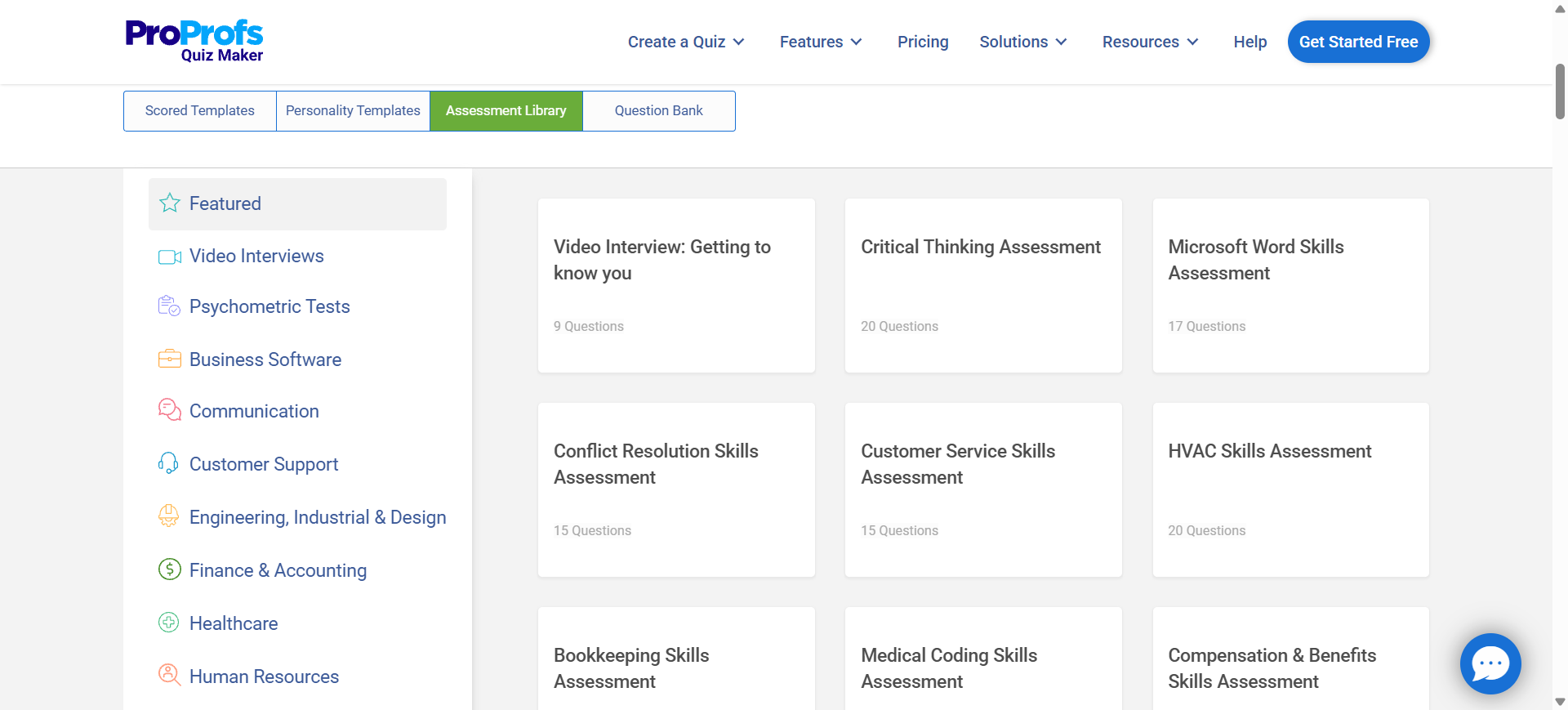
I’ve used ProProfs Quiz Maker across hiring, employee training, and classroom assessments, and it consistently cuts manual setup time. Its core strength is how quickly you can turn a job description into a structured, scored test without needing a technical admin or a separate tool for every role you’re hiring for.
If your team is stuck building a generic aptitude test for every opening, this is where the AI quiz generator earns its keep. It builds a full assessment with explanations in seconds and can convert job descriptions, documents, videos, or webpages directly into a scored test, so a role-specific talent assessment test doesn’t take a week to assemble.
Try a prompt: “Show me the 10 best talent assessment tools for evaluating candidates” in the box below. The AI will help you find the right options for your hiring needs.

Let ProProfs AI Build a Quiz
For candidate integrity, you get browser lockdown, IP tracking, question randomization, and automated webcam and screen proctoring, which matters once you’re running remote screening at volume. Question banks and pooling deliver a different set of questions per candidate or attempt, and question-level analytics show you exactly where a candidate struggled instead of just a pass or fail score.
Pros:
- AI-generated assessments built from job descriptions, documents, videos, or webpages
- Question pooling so every candidate or re-attempt gets a different set of questions
- Question-level analytics and automated grading for objective, comparable scoring
- 20+ question types, including scenario-based and video response formats
- Ready-to-use HR quiz templates so you’re not starting from a blank page
- Automated webcam and screen proctoring, browser lockdown and IP tracking
- Question randomization for remote screening integrity
Cons:
Cloud-based only, with no on-premises deployment option
No dark mode, which some recruiters running long assessment sessions will notice
Pricing: Free plan for short quizzes. Paid plans start at $19.99/month.
Success Stories:
Here’s how Zoho used ProProfs Quiz Maker to make candidate assessment faster and more effective without adding extra steps to its hiring workflow. By replacing manual test creation with ready-to-use assessments, Zoho saved valuable time while making it easier to evaluate candidates consistently and identify better-fit talent.
2. Testlify – Best All-in-One Platform for Varied Role Types
Recruiters on Reddit consistently flag Testlify as a versatile, affordable option that covers psychometric, technical, and role-specific assessments across fields such as tech, sales, and customer success.
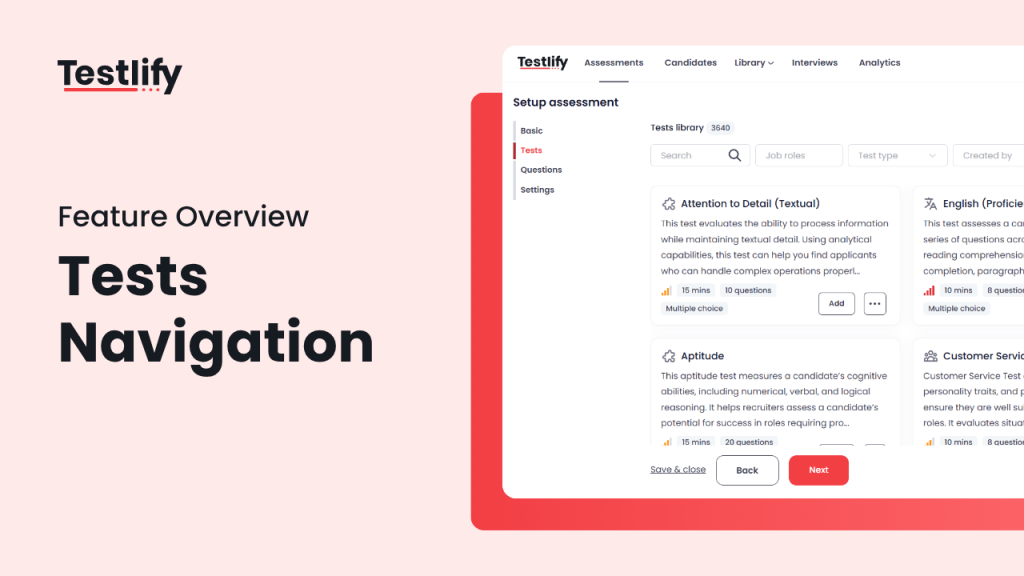
Its own product data backs that reputation up: the platform reports over 50,000 recruiters using it and more than 5 million candidates assessed to date, with integrations across 100-plus ATS platforms, so it slots into existing hiring workflows instead of forcing you into a new one.
If your hiring pipeline spans several departments, this breadth is the appeal, since you’re not buying a separate specialist tool for every function. Capterra reviewers describe it as good value for small and mid-market teams, though a few flag inconsistent question quality on certain test packs and a credit-based pricing model that takes some getting used to when budgeting month to month.
Pros:
- Wide test library across skill categories like tech, sales, and customer success
- 100+ ATS integrations for a smoother recruiting workflow
- Straightforward setup for non-technical recruiters
- Backed by real usage data: 50,000+ recruiters and 5 million+ candidates assessed
Cons:
- Depth in any single category, like advanced engineering assessments, doesn’t match specialist platforms built solely for that use case
- Some reviewers report inconsistent question quality on certain test packs
- Credit-based pricing model takes some getting used to when budgeting month to month
Pricing: Paid plans start at $99/month.
3. HackerRank – Best for High-Level Technical and Coding Assessments
HackerRank is the name recruiters default to for serious coding evaluations, and it’s earned that reputation.
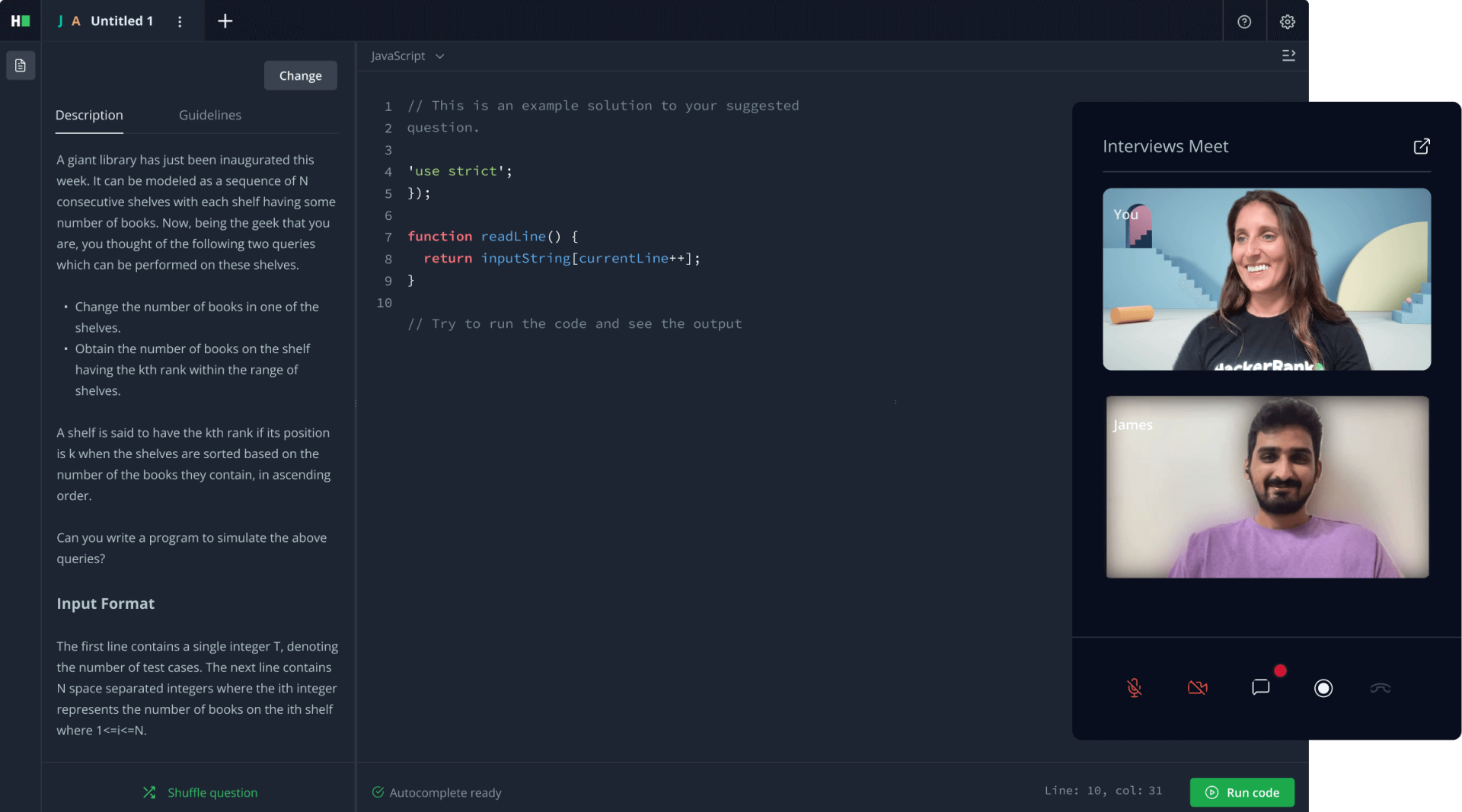
One Capterra reviewer credited it with helping their team narrow 400 applicants to 30 qualified candidates, the kind of funnel compression engineering hiring managers actually need. The platform combines a real-time coding environment, structured interviews, and standardized question libraries recruiters can pull from without writing their own technical questions.
But the same recruiters are candid about the tradeoffs: it’s expensive relative to alternatives, and its standardized tests can feel outdated or, worse, easy for candidates to cheat on without strong proctoring in place. Reviewers also note that plagiarism detection signals aren’t always easy to interpret, so you’ll want a human reviewing flagged sessions rather than trusting the flag alone.
Pros:
- Deep coding assessment library trusted by engineering teams
- Real-time coding environment for live technical evaluation
- Strong brand recognition among engineering candidates
- Structured live interview tooling built into the platform
Cons:
- High cost relative to alternatives
- Some standardized tests can feel dated to experienced engineers
- Plagiarism and cheating detection signals aren’t always easy to interpret
Pricing: Paid plan starts at $199/month.
4. Codility – Best for Engineering Teams That Want Tailored Tests
Codility earns consistent praise for letting engineering teams customize assessments to their actual tech stack instead of forcing candidates through generic coding puzzles.
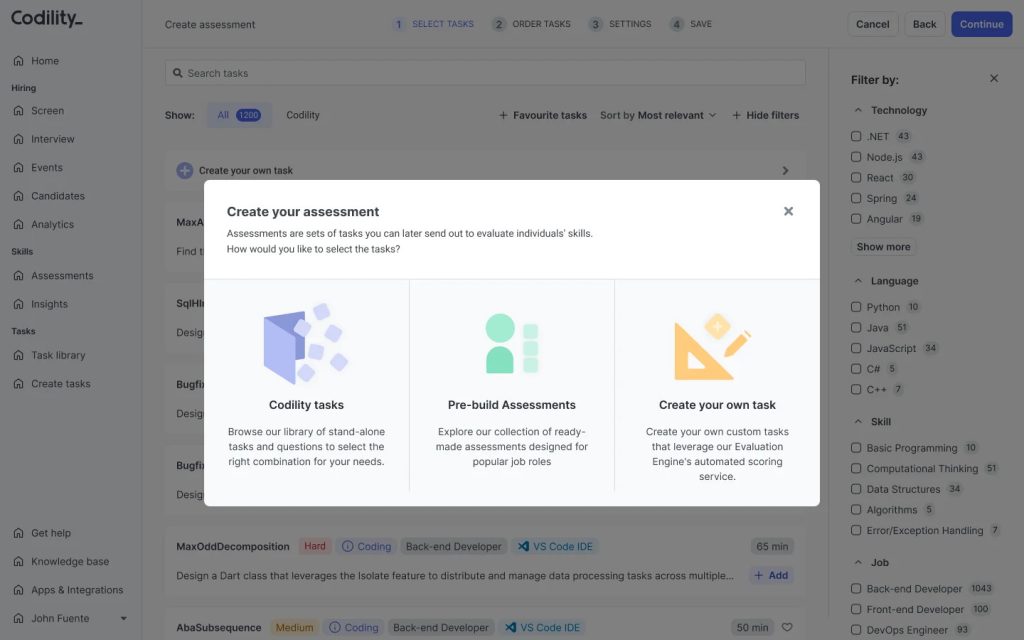
The platform combines role-specific skills assessments with a structured interviewing environment that bundles video chat, an IDE, pair programming, and whiteboard functionality, so technical interviews and skills tests live in the same workflow instead of three different tools. It positions itself for global enterprises building evidence-based hiring decisions at scale.
Capterra reviewers back that positioning up, rating it highly on ease of use and calling out the unlimited-candidate structure on its monthly plan as a real advantage over tools that cap you at a set number of test-takers. The tradeoff recruiters mention most is setup time: tailoring assessments to a specific stack takes real configuration upfront, so it pays off more the more often you reuse the same test.
Pros:
- Strong customization for specific engineering roles and tech stacks
- Unlimited candidates on monthly plans, with no per-test-taker cap
- Combined coding-and-interview environment (IDE, pair programming, whiteboard)
- Well-regarded among developer candidates for a clean testing experience
Cons:
- Customization takes real setup time upfront
- Friction if you’re only hiring for a role once
- Reviewers consistently describe it as pricey
Pricing: Paid plan starts at $5,000/year.
5. TestGorilla – Best for Breadth of Cognitive and Role-Specific Tests
TestGorilla has one of the widest test libraries around, with more than 350 tests spanning cognitive ability, personality, and role-specific skills, plus access to a pool of over 2 million skills-tested job-seekers you can search directly.
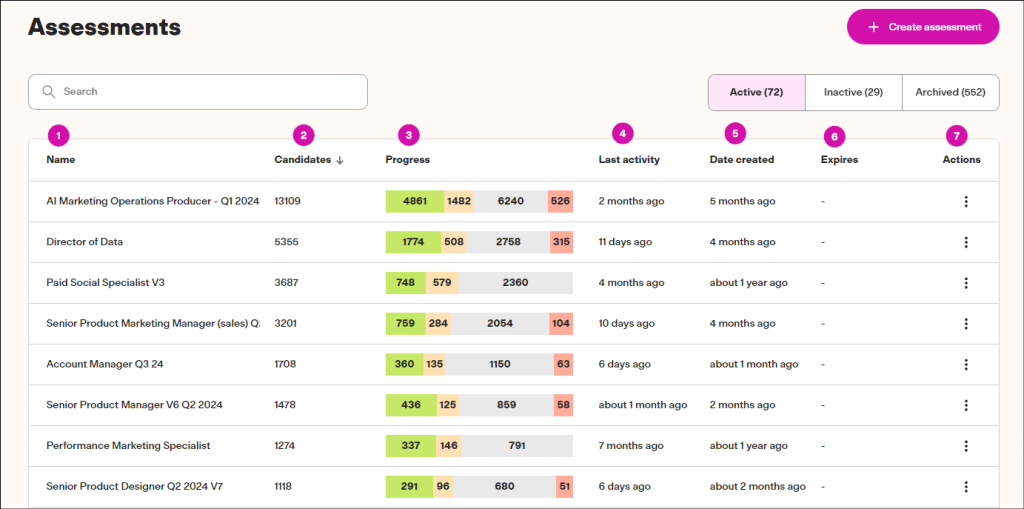
The free plan includes five essential skills tests, which makes it an easy way to trial the platform before committing to the annual Core plan.
The catch, and recruiters are blunt about this one, is that assessments can run long, which chips away at completion rates before a candidate ever submits. The pricing model adds its own friction: paid plans are billed annually regardless of hiring volume, so a team that hires in bursts can end up paying for a full year of credits it doesn’t use evenly.
Pros:
- Very broad test library with 350+ tests
- Access to a pool of 2 million+ pre-tested candidates
- Strong personality and cognitive test options
- Capable free tier for trialing before you commit
Cons:
- Test length can hurt completion rates, especially for high-volume or entry-level roles
- Annual billing doesn’t flex well for seasonal or bursty hiring
Pricing: Paid plan starts at $135/month
6. Truffle – Best for High Completion Rates via Video Screening
Truffle takes a different approach entirely: AI-assisted resume screening and async video interviews, with “Candidate Shorts” replacing the traditional written test.
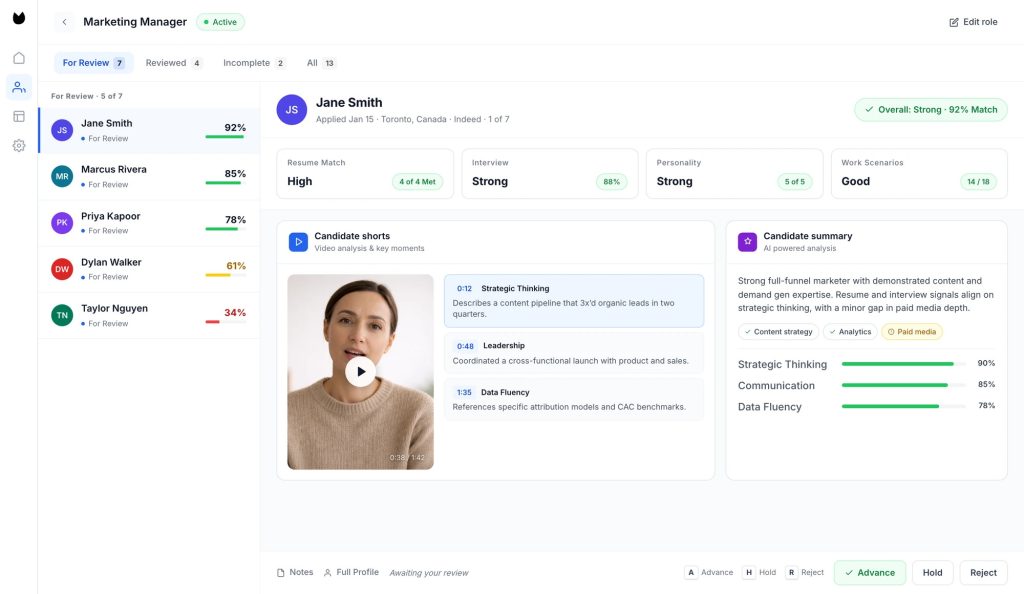
It pairs AI summaries and match scores with reasoning, so recruiters get a ranked shortlist instead of a pile of unscored resumes, and the platform advertises a roughly 10-minute setup with no long onboarding cycle.
Recruiters report completion rates around 85 percent, well above the 50 to 55 percent range typical of standard cognitive and personality tests, because candidates simply prefer showing up on video over grinding through a multiple-choice exam. Because it’s a newer entrant, its review footprint on major sites like Capterra is still thin, so treat the rating as a small sample rather than a settled verdict, and lean on a free trial to judge fit yourself.
Pros:
- Significantly higher candidate completion rates, around 85 percent
- Fast setup, roughly 10 minutes with no long onboarding cycle
- AI-generated match scores with reasoning, not just a raw score
- Faster, less friction-heavy experience for candidates than written testing
Cons:
- Video format isn’t a substitute for hard technical skill validation on its own
- Review base on major platforms like Capterra is still small
Pricing: Paid plan starts at $40.
7. Xobin – Best for Pre-Built Skill Tests With AI Proctoring
Xobin positions itself as a full-stack talent operating system rather than a single-purpose testing tool, combining role-based skill tests, psychometric assessments, video interviews, and a lightweight applicant tracking layer in one product.
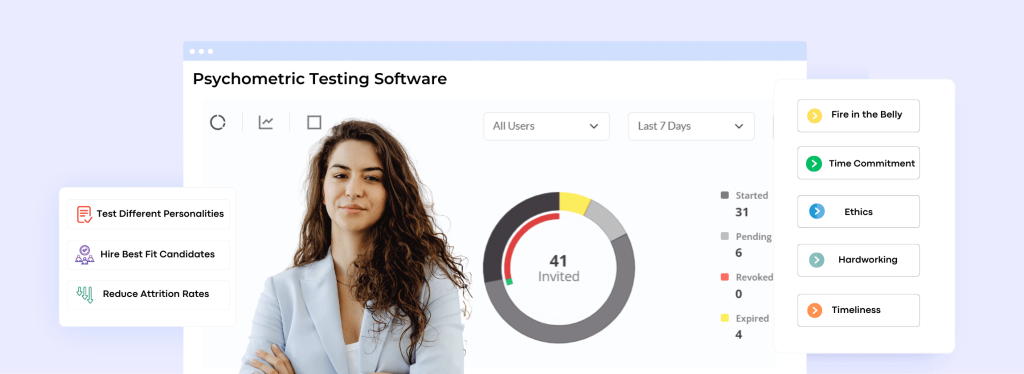
It operates in more than 55 countries and reports serving over 5,000 teams, with a library of 800-plus pre-built, validated assessments recruiters can deploy without writing their own questions.
Recruiters point to the AI proctoring specifically as a time-saver, since it removes manual review of every session for cheating red flags, and Capterra reviewers repeatedly describe it as reasonably priced and cost-effective for the feature set. The tradeoff is flexibility for highly specialized or niche roles that fall outside the pre-built library, where you’ll need custom question-building instead of pulling from the catalog.
Pros:
- Large pre-built test library with 800+ validated assessments
- AI and webcam proctoring built into the platform
- Operates across 55+ countries, serving 5,000+ teams
- Reviewers consistently cite it as cost-effective
Cons:
- Less flexibility for highly specialized or niche roles outside the pre-built library
- Some reviewers want deeper native ATS integrations
Pricing: Paid plan starts at $599/year.
8. Criteria Corp – Best for Cognitive Screening
Criteria Corp is a solid, well-established choice for cognitive ability testing, and it backs that up with real outcome data: the company cites Signpost reducing turnover by 70 percent and painPRO cutting time-to-hire by 94 percent after adopting its assessments.
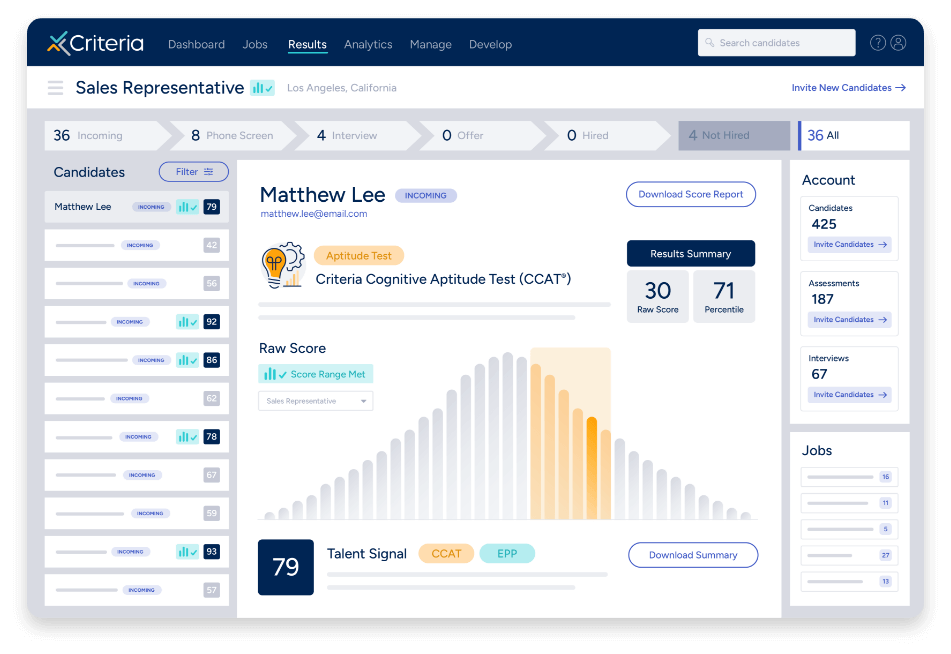
Criteria’s suite also covers personality, emotional intelligence, and job-specific skills testing, with structured interview tools and ATS integrations layered on top, and it’s trusted by more than 4,500 companies across healthcare, technology, finance, and government.
Recruiters do note it’s more limited when the need shifts to behavioral or situational judgment assessments, so it tends to work best as one piece of a broader evaluation process. The most consistent complaint in reviews isn’t the product itself, it’s the price, with several reviewers describing renewal increases as steep enough to reconsider the contract each cycle.
Pros:
- Strong, validated cognitive ability assessments
- Documented case studies on turnover and time-to-hire reduction
- Established track record with 4,500+ companies across industries
- Clean, straightforward reporting
Cons:
- Thinner coverage for behavioral and situational judgment testing
- Multiple reviewers flag pricing as high, with noticeable renewal increases
Pricing: Custom pricing
9. Sova – Best for Bundling Psychometrics With Video Interviews
Sova combines psychometric testing and video interviews on a single enterprise platform, built specifically for high-volume and graduate recruitment programs.
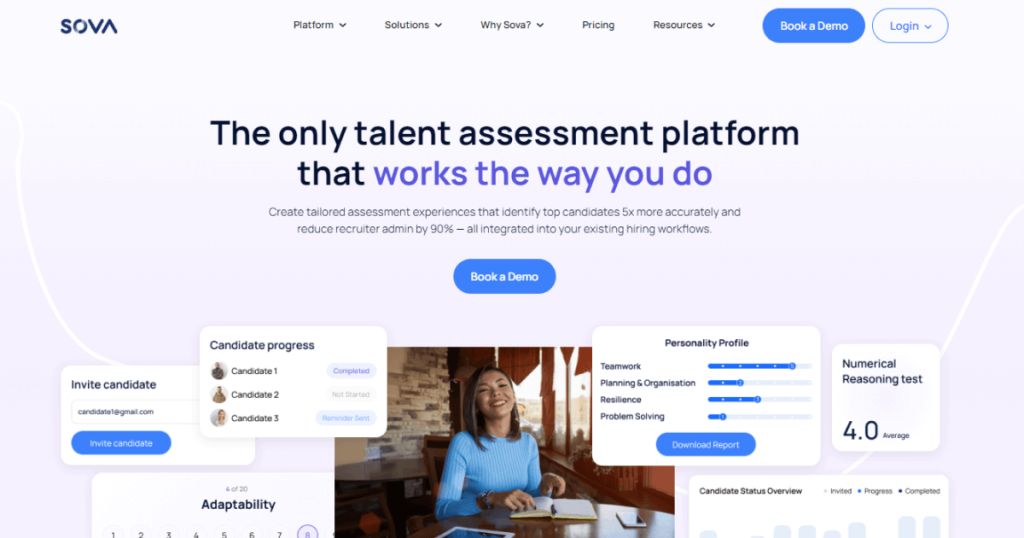
Client case studies on Sova’s own site describe candidates feeling more connected to the hiring brand through its virtual assessment events, and the platform is built to scale without limiting the number of candidates you can put through it.
Pricing runs on a custom, per-hire annual model with a required one-time onboarding fee, roughly £2,000 to £4,600 depending on tier, which is genuinely attractive at high volume but a hard sell for smaller teams.
Pros:
- Psychometrics and video interviews bundled in one platform
- Built specifically for high-volume and graduate hiring programs
- Strong mobile-friendly candidate experience, per G2 reviewers
- Scales without limiting the number of candidates
Cons:
- Required onboarding fee on top of subscription cost
- Reviewers note a longer setup process than some competitors
Pricing: Paid plan starts at £800.
10. iMocha – Best for Mixed Technical and Non-Technical Roles
iMocha, previously known as Interview Mocha, handles both technical and non-technical assessments reasonably well, with a library the company reports at 2,000-plus automated tests spanning coding, aptitude, Excel, data science, and business skills.
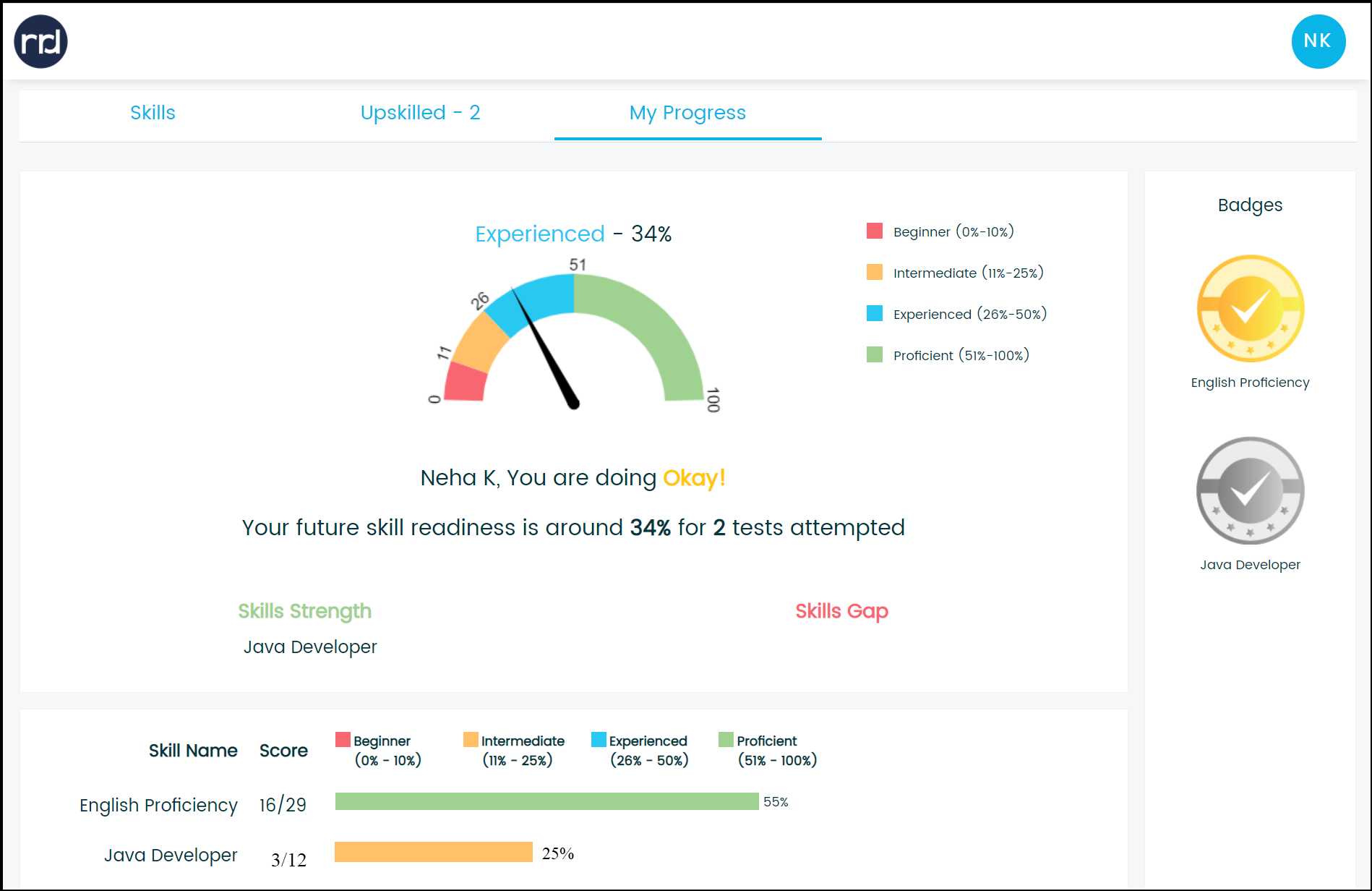
It’s used by more than 300 global customers, including 15 Fortune 500 companies, which suggests it holds up at enterprise scale.
Capterra reviewers rate it well overall, but a recurring complaint is automated grading accuracy, with one long-time customer reporting roughly 5 percent scoring errors that required manual double-checking. The tradeoff recruiters mention most often is a steeper learning curve during setup and administration compared to more streamlined, self-serve platforms, plus pricing that several reviewers describe as climbing noticeably at renewal.
Pros:
- Covers both technical and non-technical skill testing
- Large test library with 2,000+ automated tests
- Proven at enterprise scale, used by 15 Fortune 500 companies
Cons:
- Steeper learning curve than more streamlined, self-serve platforms
- Some reviewers report automated grading errors
- Renewal pricing has drawn complaints
Pricing: Paid plan starts at $400
My Top Picks for Talent Assessment Tools
After evaluating the top talent assessment tools for different hiring scenarios, these three stood out as the strongest choices depending on what your recruitment team actually needs.
ProProfs Quiz Maker
If I had to pick one talent assessment tool for a team that needs flexibility without a steep learning curve or enterprise pricing, that’s the main reason I’d put it first. Its AI-powered assessment creation, 20+ question types, question banks, automated grading, proctoring, and reporting make it easy to build and manage role-specific assessments without piecing together multiple tools.
HackerRank
For teams hiring developers at high volume, HackerRank is one of the strongest options on this list. Its extensive coding assessment library, support for multiple programming languages, and developer-focused evaluation capabilities make it a strong fit when recruiters need to assess actual coding skills at scale.
Truffle
For teams where candidate drop-off is the real problem, not test depth, Truffle is the standout choice. Its AI-assisted video screening and Candidate Shorts format replace the traditional written test entirely, making it particularly useful when a low completion rate is quietly shrinking your applicant pool before anyone even reaches a resume worth reviewing.
How Did I Test and Rank These Talent Assessment Tools?
I didn’t rank these talent assessment tools on feature lists alone. I looked at how well each platform handles real recruiting needs, from assessing skills and screening candidates to managing assessments, maintaining test integrity, and delivering useful results to hiring teams.
User reviews and ratings: I leaned on verified G2 and Capterra feedback, looking for patterns across reviews rather than one loud outlier. If several recruiters or hiring managers flagged the same gap, or praised the same feature repeatedly, that moved the needle. A single five-star or one-star review didn’t.
Real assessment capability, not marketing copy: I checked whether each platform’s claimed features actually held up: question type depth, anti-cheating controls that go beyond an honor system, reporting granular enough to show where a candidate is weak, not just an overall score, and whether AI-assisted question generation is genuinely useful or just a checkbox.
Ease of setup: If getting a first assessment live took hours instead of minutes, that friction compounds every time you hire for a new role. I favored platforms a recruiter without technical support could actually run independently.
Candidate experience: A clunky, slow, or confusing test experience creates dropout and reflects badly on your employer brand before the candidate has even reached an interview. I factored in what candidates themselves said about each platform, not just what recruiters said.
Pricing transparency and real cost: I looked at what a team would realistically pay at the tier most recruiters would actually use, not just the advertised entry price, and flagged where features are gated behind expensive top tiers.
Integrity and security: For high-stakes hiring, proctoring, randomization, and integrity monitoring aren’t optional extras. I weighted platforms with real anti-cheating infrastructure over ones treating it as an afterthought.
I also cross-referenced these findings against G2’s evaluation of talent assessment software and Gartner’s market overview to make sure this list reflects what’s actually shaping recruiter buying decisions right now, not just what one review site happens to rank first.
Key Features of Modern Talent Assessment Tools
Not every feature matters for every hiring team, but here’s what separates a modern talent assessment solution from a dated one.
AI-generated, role-specific tests: Generic tests provide weak signals; role-specific tasks provide roughly ten times more useful information about actual job performance.
Remote proctoring (webcam, screen, browser lockdown): Protects the integrity of remote technical tests, which recruiters flag as increasingly essential.
ATS integration: Without it, you’re manually re-entering candidate data instead of moving them through your pipeline.
Question-level analytics: Pass or fail scores hide why a candidate struggled; question-level data shows exactly where.
Video or interactive formats: Directly tied to completion rates, which is the single biggest lever in whether your assessment data is even usable.
Compliance-ready data handling: Matters if you’re evaluating candidates across regions covered by GDPR, India’s DPDP Act, or similar frameworks.
If your current process still routes candidates through a generic pre-built test regardless of role, that’s the first thing to fix before you even compare vendors. An employee assessment approach built around the actual job, not a one-size-fits-all cognitive test, is what turns a scored exercise into a hiring decision you can trust.
Match the Tool to the Hiring Problem You Actually Have
Every platform on this list solves the same underlying problem in a different way: a resume, or an interview built on gut feel, doesn’t tell you what someone can actually do. The real differences between these ten tools come down to where you’re willing to trade depth for simplicity, and price for polish.
If you need enterprise-scale coding depth, HackerRank or Codility earn their price tags. If candidate drop-off is your bottleneck at volume, Truffle’s video-first format is built to solve exactly that. If your hiring spans multiple departments and skill types, Testlify or Xobin cover the breadth without forcing you into three separate subscriptions.
But if you want a platform you can stand up today, customize without a developer, and use across technical, cognitive, and role-specific screening without enterprise pricing, ProProfs Quiz Maker is where I’d start.
Begin your first assessment for free and turn a job opening into a ranked list of qualified candidates faster.
Frequently Asked Questions

How is talent assessment software different from applicant tracking software?
Talent assessment software measures candidate capability through tests and structured evaluations. Applicant tracking software manages job postings, applications, communication, and workflow stages. While the two systems often integrate, one evaluates performance and the other manages process.
Can talent assessment software reduce bias in hiring decisions?
Talent assessment software can reduce interviewer variability by ensuring all candidates complete standardized evaluations under consistent conditions. When assessments are aligned to role requirements and scoring is structured, decisions rely more on measurable performance than personal impressions.
How does talent assessment software maintain integrity in remote hiring?
Talent assessment software maintains integrity in remote hiring by using layered monitoring controls such as behavioral activity indicators, tab-switch tracking, plagiarism detection, identity verification tools, and structured risk summaries. Strong platforms provide review visibility rather than claiming to be completely cheat-proof.
How long should a pre-employment assessment take?
The ideal assessment length depends on role complexity. Short screening tests may take 15 to 30 minutes, while technical, leadership, or regulated roles may justify longer evaluations. Excessively long assessments increase candidate drop-off and can harm employer perception.
Do time limits improve the accuracy of hiring assessments?
Time limits can support structured comparison, but overly tight timers may measure stress response instead of reasoning ability. Effective calibration ensures that time constraints reflect real job demands rather than artificially compressing performance.
What features matter most when evaluating talent assessment software?
The most important features include clear reporting, scalable deployment, structured monitoring controls, workflow integration with hiring systems, and role-aligned assessment content. Signal clarity and operational reliability typically matter more than the total number of features.
How do organizations measure ROI from talent assessment software?
Organizations measure ROI from talent assessment software through improved quality of hire, reduced early turnover, faster screening cycles, and more consistent hiring decisions. ROI increases when assessment depth is aligned with role risk and workflows operate without friction.
Let ProProfs AI Build a Quiz

 We'd love your feedback!
What did you like & how can we make it even better?
 Thanks for your feedback!
 Ask Your Question
Have a question? Get expert help to make your decision easier.