Hiring assessment tools are one of the few parts of the recruiting stack that consistently pull their weight. Resumes tell you what someone claims to know. Interviews show how they talk about it. Assessments show whether they can actually do the work. That matters when you’re hiring for impact, not just credentials.
When we built our hiring framework, I didn’t want generic filters or personality quizzes pretending to be predictive. I wanted tools that gave our team real evidence: measurable, repeatable, role-specific insights. What I found is that most platforms either go too broad or try to lock you into rigid templates that don’t fit how you actually hire.
This guide breaks down the hiring assessment software I’d actually recommend to teams that want to make better calls on who to hire. It’s based on real usage, not HR theory. What each tool does well, where it fits, and the tradeoffs you’ll want to know upfront.
What Are Hiring Assessment Tools?
Hiring assessment tools are software platforms that help you evaluate candidates before you spend hours interviewing the wrong people.
They usually answer three practical questions:
1. Can they do the work?
Skills tests, work samples, simulations, role-based tasks.
2. Do they know what they claim to know?
Baseline knowledge checks, product or domain understanding, rules and concepts.
3. How do they operate when it gets real?
Judgment, communication, prioritization, and behavior in realistic situations.
On the simpler side, some teams use online quiz makers to screen for baseline readiness. On the deeper side, you’ll see tools built for simulations, structured scoring, and proctoring. The point is not to test for the sake of testing. It’s to get reliable signals early, so interviews focus on fit and context.
Why Hiring Assessments Are No Longer Optional
Hiring used to be slower, smaller, and more forgiving. Today, most teams are hiring under pressure. Roles change fast. Candidate volume is unpredictable. And one weak hire can drag down momentum for months.
Assessments solve a problem that interviews cannot. Interviews tell you how someone presents. They rarely tell you how someone performs.
Here’s where assessments earn their spot:
- Speed without sloppiness: you can screen faster while keeping standards consistent.
- Better comparisons: you’re not judging candidates on charisma or background. You’re judging them on the same bar.
- Less rework: fewer late-stage surprises like “great interview, weak execution.”
- Cleaner handoff to hiring managers: results give structure to the interview and reduce circular debates.
The key is using assessments with intent. Short, role-relevant, and tied to what success looks like in the first 90 days. That’s when they stop feeling like an extra process and start behaving like a hiring advantage.
Top 10 Hiring Assessment Tools I Recommend
I put these candidate screening tools through real test runs, then compared what I saw with peer feedback and patterns across review sites. I also sanity-checked the hype against what hiring teams say on Reddit, Quora, and other forums, especially around reliability, candidate experience, and reporting.
| Tool | Best for | Pricing |
|---|---|---|
| ProProfs Quiz Maker | Creating secure assessments with AI or templates | Free plan; paid plans start from $19.99/month. |
| eSkill | Pre-designed technical and job skill assessments | Custom pricing |
| Mercer Mettl | Enterprise assessment suite with advanced proctoring | Custom pricing |
| TestGorilla | Fast screening with a broad test library | Free plan; paid plans start at $135/month |
| Criteria | Science-backed cognitive and psychometric testing | Custom pricing |
| Vervoe | Work sample style assessments with AI grading | Free plan; paid plans start at $300 for 10 candidates |
| iMocha | Skills assessments with AI support and proctoring | Custom pricing |
| HireVue | Video interviews plus structured assessments at scale | Enterprise pricing starting at $35,000/year |
| HackerRank | Coding tests and technical interviews | Starts at $165/month |
| Pymetrics by Harver | Gamified behavioral traits and potential screening | Custom pricing |
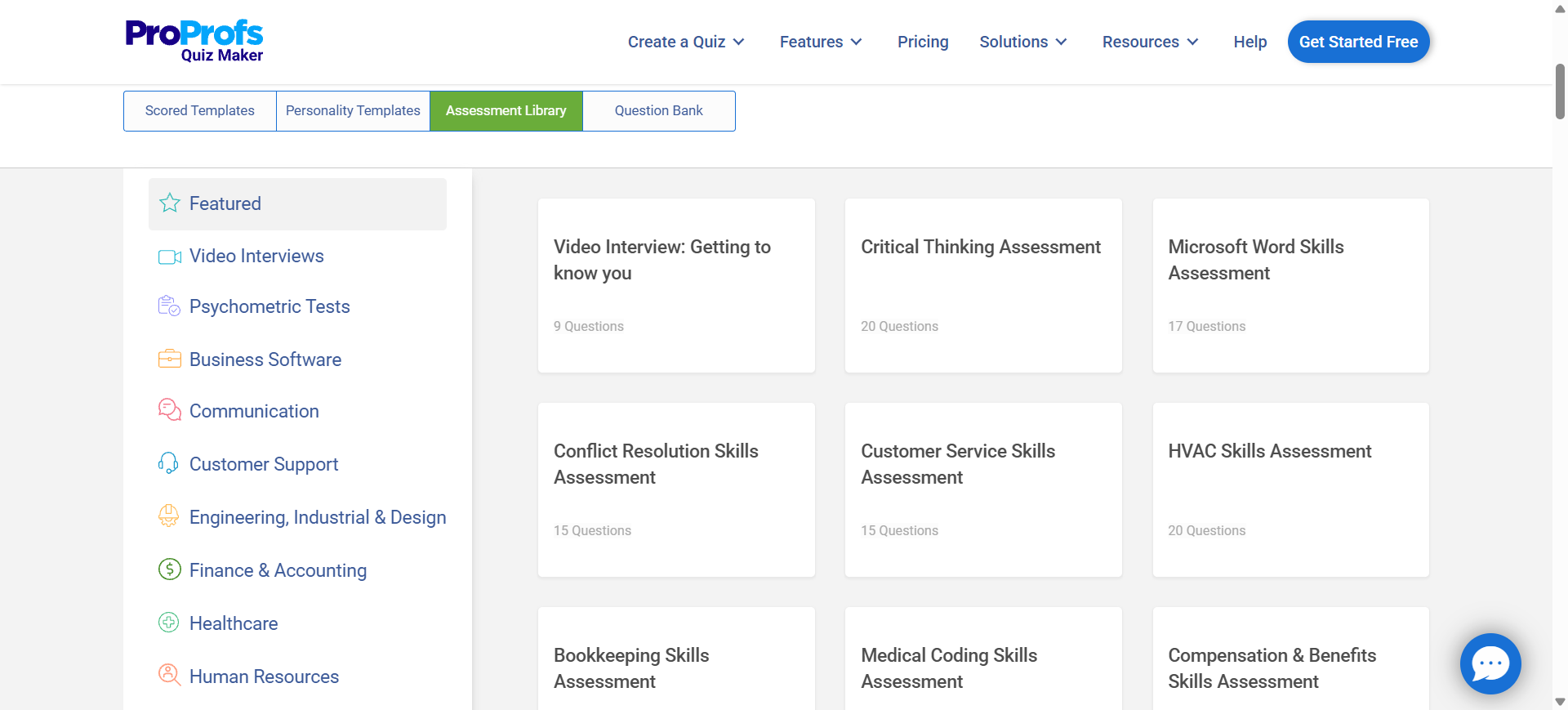
1. ProProfs Quiz Maker – Best for Creating Secure Hiring Assessments With AI or Templates
When I need to launch a hiring assessment fast without losing control, ProProfs Quiz Maker is what I use. It’s quick to set up, but it still lets me build role-specific tests that feel intentional, without needing a technical admin.
The AI quiz generator is what I lean on most. It creates an assessment in seconds and can turn a document, webpage, or YouTube video into a quiz, which is handy when your screening material already lives in SOPs or internal playbooks. If I don’t want to start from scratch, I can pull from 200+ skill and psychometric assessments built by subject matter experts.
You also get 20+ question types, including audio and video response questions. For early-stage screening, that means you can run video interview quizzes where every candidate answers the same prompts, and you can review communication and presence before booking live interviews.
Security is one of ProProfs’ strongest areas. You get browser lockdown, question randomization, time limits, pooling, and automated webcam and screen proctoring. Results are auto-graded with clear analytics, and reports can be sent automatically to hiring managers and other stakeholders.
Pros:
- AI quiz generator plus content conversion from docs, webpages, and videos in minutes
- 200+ skill and psychometric assessments designed by subject matter experts for hiring
- Strong anti-cheating controls: browser lockdown, IP tracking, randomization, time limits for fairness
- Question banks and pooling so each candidate sees a different set every time
- Auto-grading with analytics that make comparisons easy at scale
Cons:
- No dark mode right now
- Cloud-only, no on-premise option for enterprises
User Rating: 4.6/5 (Capterra)
Pricing: Free plan for short quizzes. Paid plans start at $19.99/month.
2. eSkill – Best for Pre-Designed Technical and Job Skill Assessments With Deep Customization
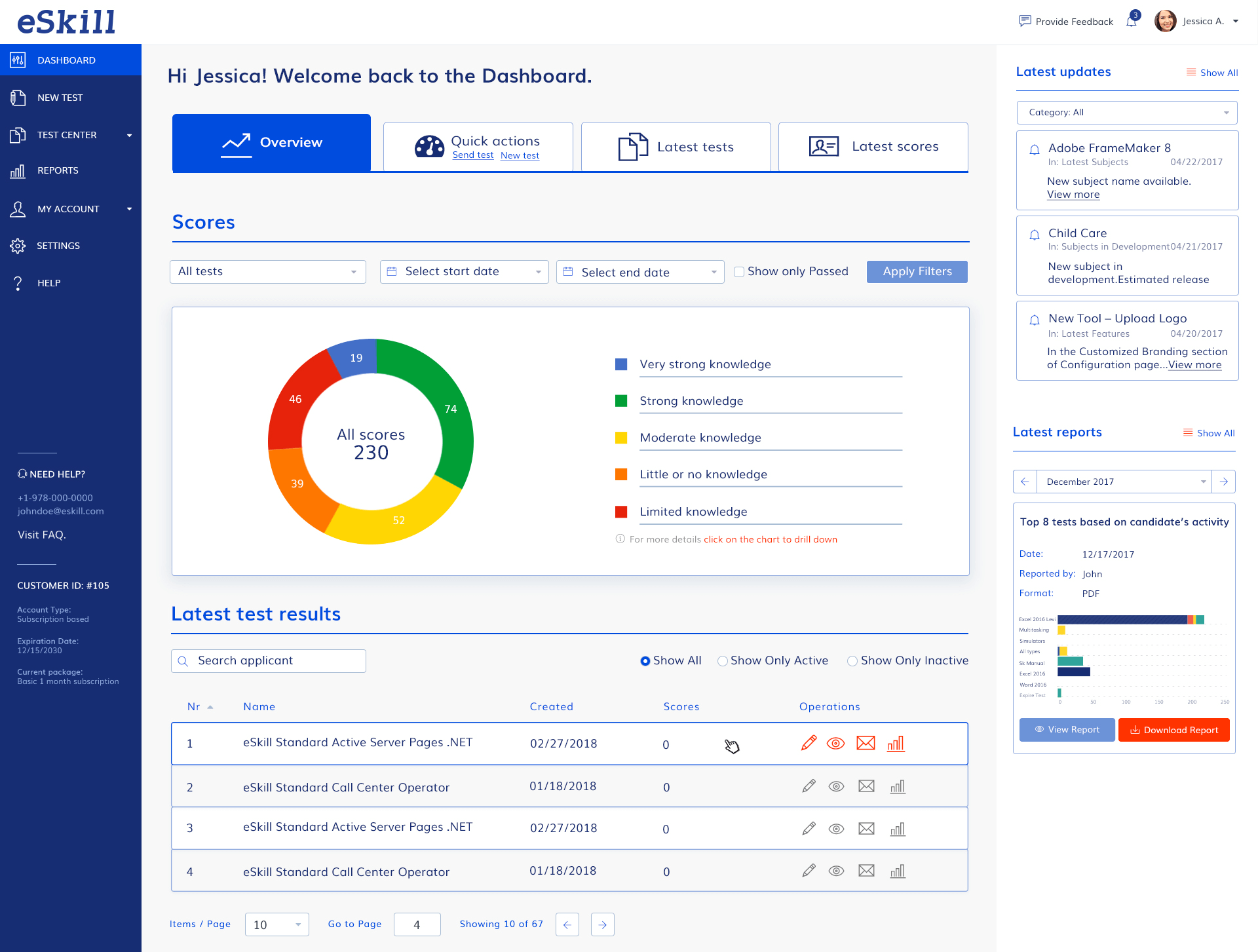
Image source: eSkill
eSkill is the kind of platform that saves you from building everything from scratch. It starts with pre-designed assessments, then gives you enough flexibility to make them feel job-specific instead of generic. In the mix of hiring assessment tools, it works best when you want speed, structure, and customization without getting boxed in.
What makes it especially strong is the depth of its content library, with coverage across 600+ subjects and more than 70,000 job-based questions spanning IT, finance, healthcare, administrative, and customer-facing roles.
I liked how easy it is to combine topics into one clean role profile. That matters when a role is not purely technical or purely business, and you need a blended view. You can adjust difficulty, add your own questions, and keep the test aligned with what the job actually requires.
It supports distributed hiring well. Proctoring options, simulations, and language support help keep results consistent, and the reporting gives you something you can use in real decision meetings.
Pros:
- Large pre-designed library across technical and business skills for quick setup
- Flexible test builder for combining topics into role-specific assessments
- Proctoring options that help protect integrity during remote candidate testing
- Reporting that breaks down results by skill area for clearer comparisons
- Multi-language support for consistent assessments across regions and locations
Cons:
- The admin interface can feel dense early, with many controls visible at once
- Role profiles may need calibration time before benchmarks feel stable and consistent
User Rating: 4.5/5 (Capterra)
Pricing: Custom pricing
3. Mercer Mettl – Best for Enterprise Assessment Suite With Advanced Proctoring
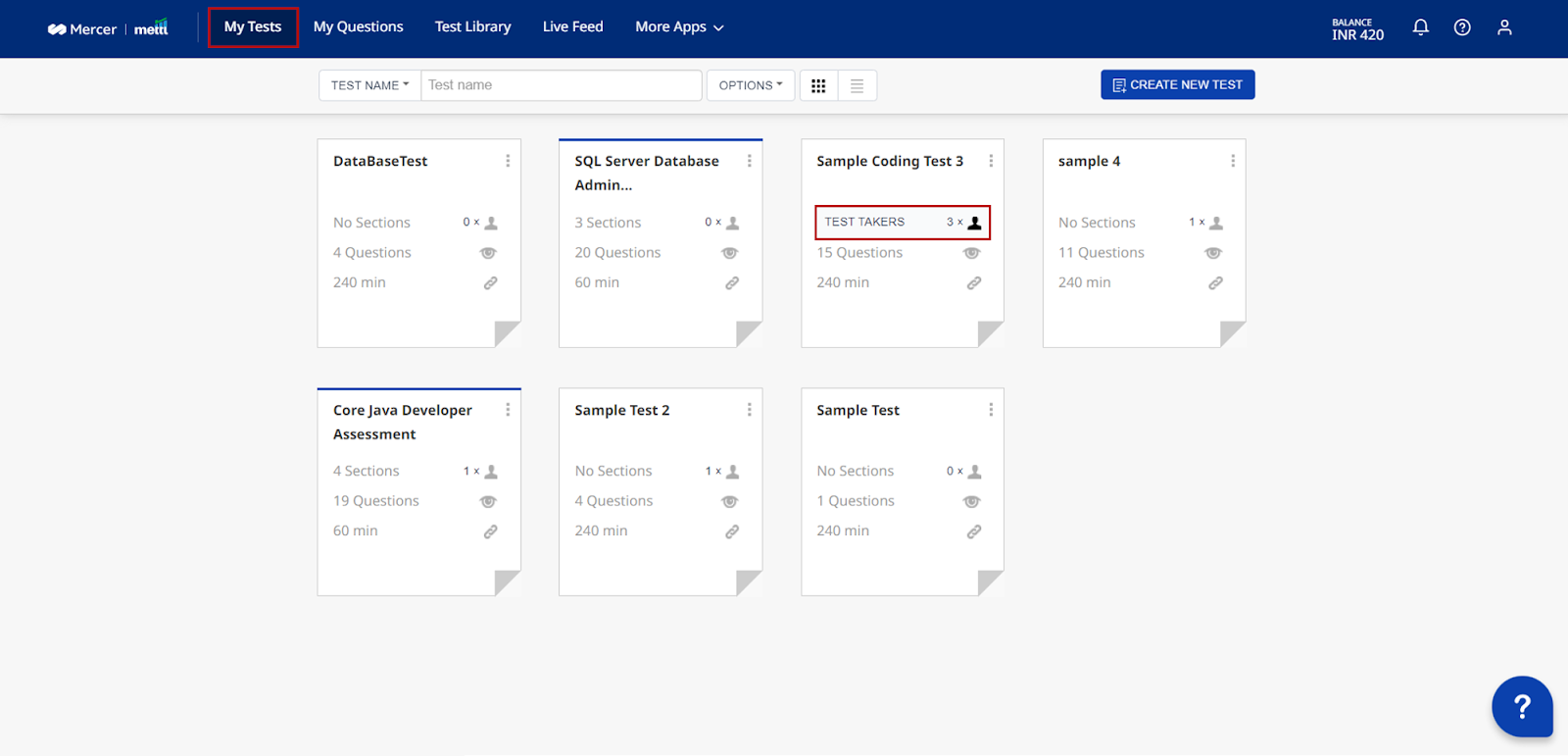
Image source: Mercer Mettl
When assessments need to hold up at scale, the bar changes. One of the best talent assessment tools, Mercer Mettl is built for that environment, with aptitude, technical, cognitive, and psychometric options under one roof and controls designed for large programs and multiple stakeholders.
The proctoring depth stood out. Remote testing is easy to game without the right guardrails, and this platform is built with layered monitoring features like webcam tracking, browser restrictions, and automated flagging to reduce loopholes.
Monitoring and standardized workflows make it easier to run consistent evaluations across teams, locations, and hiring cycles. I also like that you can standardize how results are shared with managers.
Mettl also supports structured video interviews alongside assessments, which helps teams evaluate communication and readiness without adding separate tools. The reporting keeps comparisons clean, even when different teams are hiring for different roles. It helps keep the process aligned across departments without constant re-training or debates.
Pros:
- Broad suite covering aptitude, technical, and psychometric assessment formats
- Advanced proctoring and monitoring controls for high-stakes remote testing
- Standardized workflows that support consistent evaluation across large hiring teams
- Reporting built for decisions, not just scores, across candidate groups
- Enterprise-ready support and integrations for complex hiring environments
Cons:
- The platform can feel heavy if you only need a narrow assessment scope
- More complex setups may require vendor involvement for workflows and policies
User Rating: 4.3/5 (Capterra)
Pricing: Custom pricing
4. TestGorilla – Best for Fast Screening With a Broad Test Library
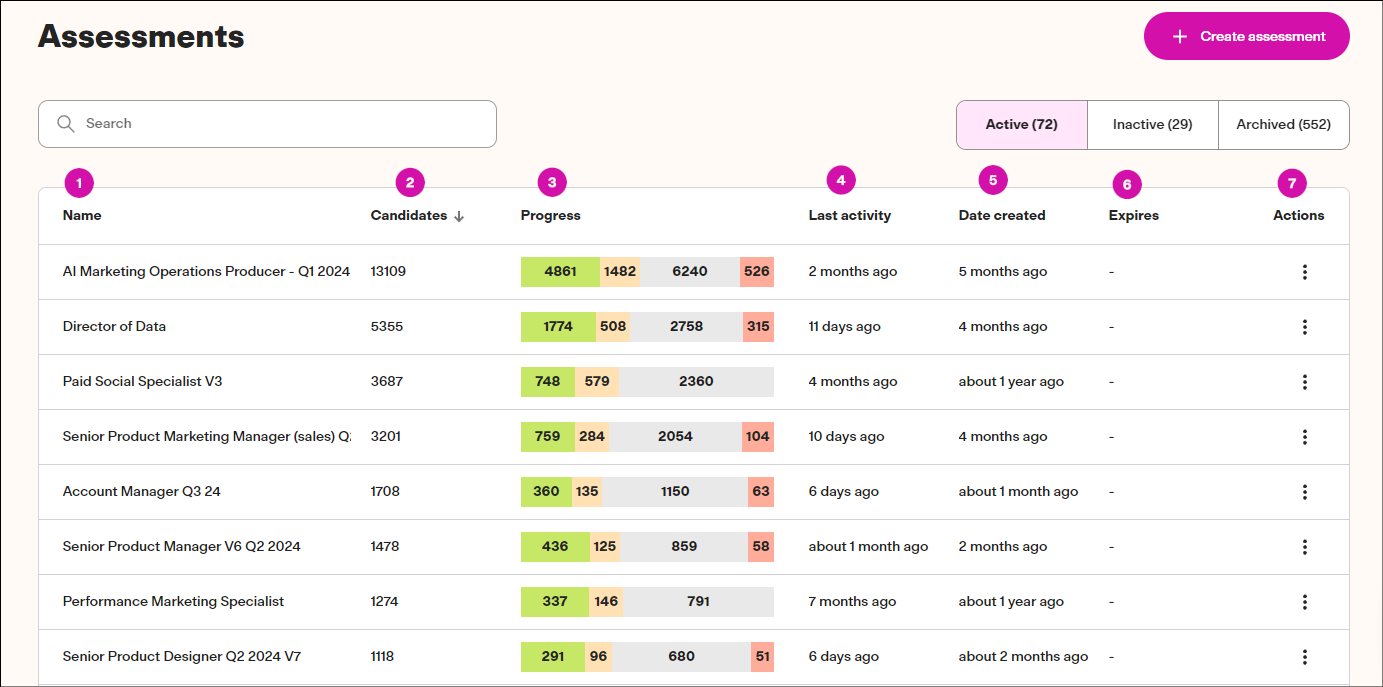
Image source: TestGorilla
TestGorilla is built for quick shortlisting when you want a standardized first pass. You can assemble an assessment fast, send it out, and compare candidates without turning setup into a project. As hiring assessment tools go, it’s a practical pick when speed matters and you still want a consistent bar.
Its library includes 300+ ready-made tests across job skills, cognitive ability, personality, language, and role-relevant aptitude checks, which makes it easy to cover common hiring needs without building from scratch.
What works well is combining multiple checks in one flow. Skills plus cognitive plus language can give a more balanced view than a single test. The candidate experience stays straightforward, which helps when you’re screening a lot of applicants and don’t want completion rates to tank.
Pros:
- Broad test library that supports quick screening across many job categories
- Fast setup that helps standardize early hiring criteria across teams
- Auto-scoring and ranking that simplifies shortlisting during high applicant volume
- Candidate flow that stays clear and supports higher completion rates
- Integration options that help move results into existing hiring workflows
Cons:
- Limited depth if you need highly role-specific simulations or custom tasks
- Some test content benefits from review to match your role context
User Rating: 4.1/5 (Capterra)
Pricing: Free plan available. Paid plans start at $135/month.
5. Criteria – Best for Science-Backed Cognitive and Psychometric Testing
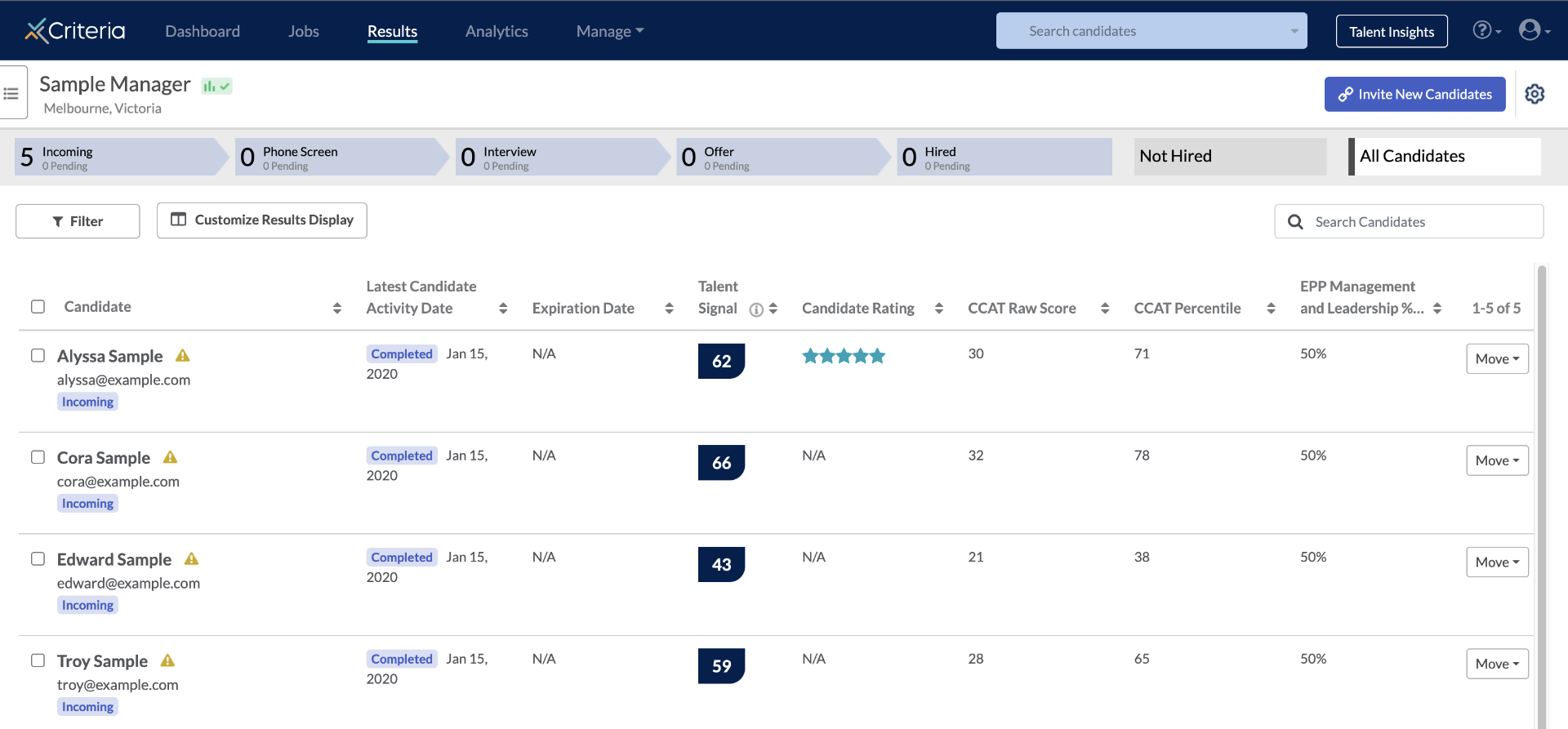
Image source: Criteria
Not every role needs a work sample, but many roles benefit from a clean read on learning ability and work style. Criteria focuses on that, and it does it in a way that feels structured and defensible.
Its core suite includes validated tools like the CCAT cognitive aptitude test, personality assessments, and game-based evaluations that measure traits such as adaptability and emotional intelligence.
What I appreciated is how readable the output is. The reports translate results into practical follow-up questions, so the assessment supports interviews instead of competing with them. Many tests are short, often 10 to 20 minutes, which matters when you’re screening early and moving fast.
This fits well as a measurement layer when you want consistency and clearer comparisons, especially for roles where potential matters as much as experience.
Pros:
- Validated cognitive and psychometric assessments built for consistent evaluation
- Reports that translate results into interview-ready discussion points quickly
- Candidate-friendly test lengths that reduce fatigue in early stages
- Role-based assessment options that simplify setup for common hiring needs
- Useful for measuring potential when resumes are weak predictors
Cons:
- Not designed for hands-on technical simulations, so pairing may be needed
- Some teams may want more flexibility in how results are visualized
User Rating: 4.7/5 (Capterra)
Pricing: Custom pricing
6. Vervoe – Best for Work Sample Style Assessments With AI Grading
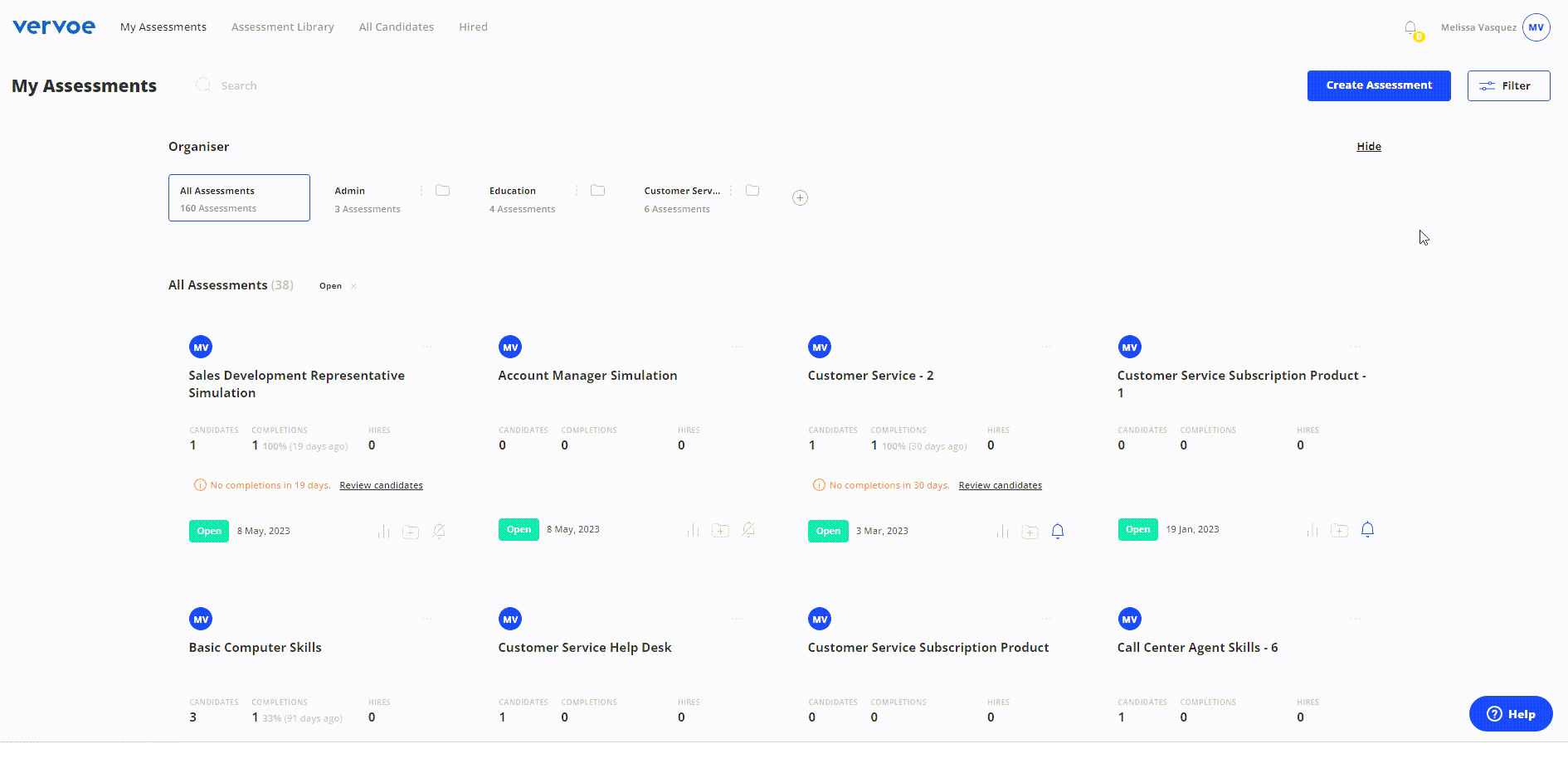
Image source: Vervoe
The fastest way to see capability is to ask for output. Vervoe is built around work sample tasks, so candidates show how they think and execute, not just what they can recall. In a sea of hiring assessment tools, it’s one of the better options when you want evidence you can review, share, and discuss.
It supports a wide range of task formats, including written responses, file uploads, spreadsheets, presentations, coding exercises, and video questions, which makes assessments feel closer to real work.
The builder makes it easy to design tasks around job expectations, and you get artifacts back that hiring teams can evaluate collaboratively. AI grading can help prioritize submissions, but the real value is using it as a sorting layer before humans judge quality.
It’s especially useful for roles where clarity of thinking and communication matter as much as correctness.
Pros:
- Work sample tasks that reflect real job outputs and expectations
- Flexible builder for creating role-specific assessments across functions
- AI grading support that helps prioritize submissions and reduce review time
- Collaborative review flow that supports alignment across hiring stakeholders
- Candidate experience that feels closer to work than test-taking
Cons:
- AI scoring still benefits from human oversight for nuanced written responses
- Teams that prefer large ready libraries may spend more time building
User Rating: 4.5/5 (Capterra)
Pricing: Free plan available. Paid plans start at $300 for 10 candidates.
7. iMocha – Best for Skills Assessments With AI Support and Proctoring
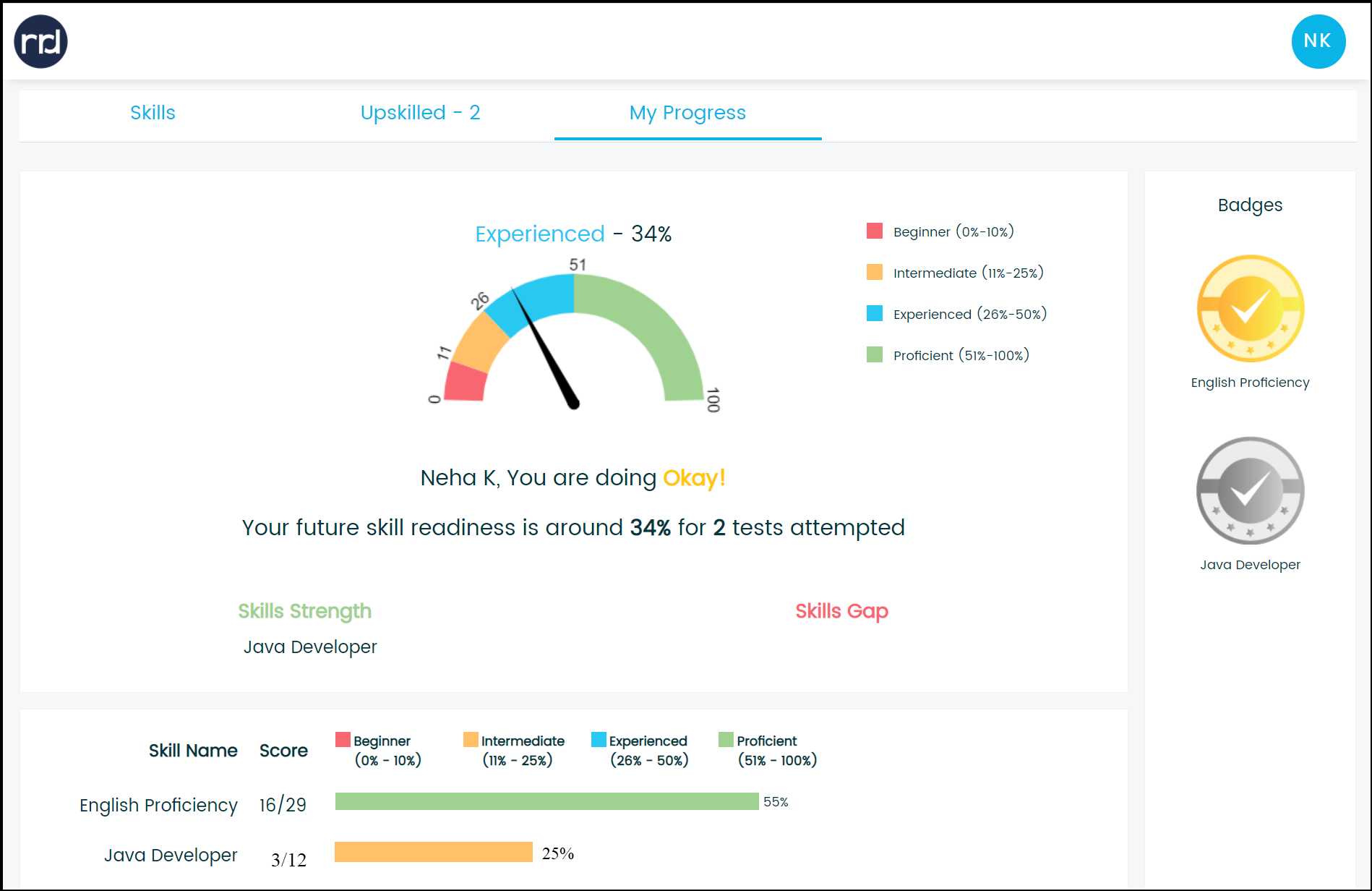
Image source: iMocha
When you hire across many roles, breadth matters. iMocha brings a large skills catalog, AI support, and proctoring into one platform, which is useful when you need coverage without building everything manually. It claims coverage across 2,500+ skills spanning IT, business, finance, aptitude, and language roles, making it one of the broader platforms for enterprise screening.
Customization is there when you need it. You can tune assessments by skill focus and seniority, then add proctoring for roles where integrity matters. I liked that you can mix library content with your own questions, which helps when a role has company-specific workflows. The reporting also breaks performance down by skill area, so you can compare candidates without squinting at raw scores.
iMocha is a strong choice when you want to standardize screening across job families and keep the process predictable. Review test content before launch so results match the role.
Pros:
- Large skills library that supports assessments across many job categories
- AI support that speeds up assessment creation and refinement work
- Proctoring options that strengthen integrity during remote candidate testing
- Customization controls for tuning tests by role level and skill focus
- Reporting that highlights strengths and gaps across multiple skill areas
Cons:
- Navigation can feel dated in places, especially across larger test libraries
- Occasional content inconsistencies mean you should review assessments before sending
User Rating: 4.5/5 (Capterra)
Pricing: Custom pricing
8. HireVue – Best for Video Interviews & Structured Assessments at Scale
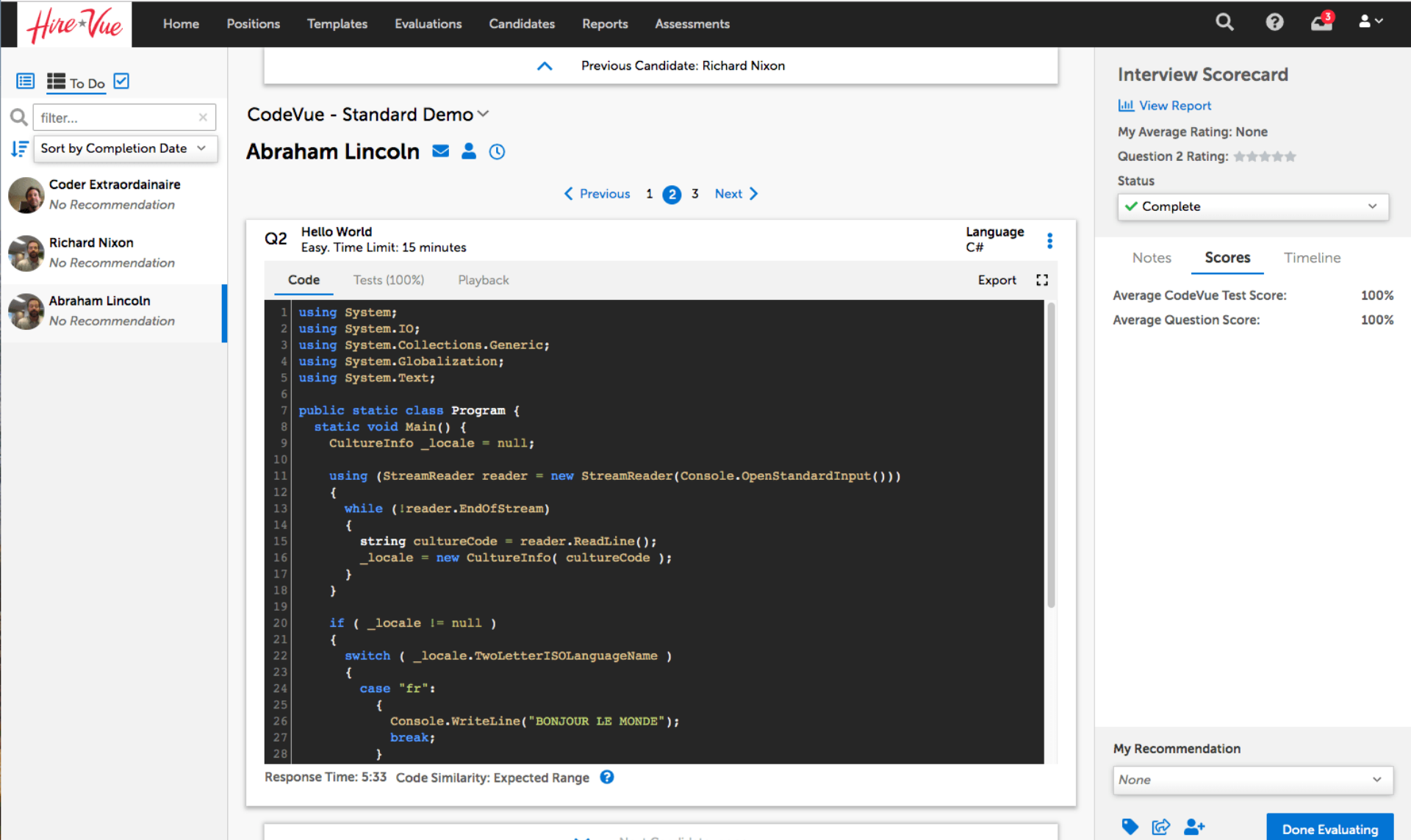
Image source: HireVue
HireVue is designed for volume, especially when scheduling is the bottleneck. It combines structured video screening with assessments so teams can evaluate more candidates without stacking calendars. For hiring assessment tools that need to scale, this is more about repeatable workflow than perfect test design.
Its core strength is asynchronous video interviewing, where candidates record structured responses and hiring teams review them without live calls. That makes it especially common in frontline, campus, and enterprise recruiting.
What I like is the consistency it enforces. Everyone answers the same prompts under the same conditions, which reduces interviewer variance. Built-in scoring guides help keep feedback aligned, and managers can review artifacts asynchronously. Overall, HireVue is especially useful for early stages and high-volume roles.
Pros:
- Asynchronous video screening that reduces scheduling delays in early hiring
- Structured workflows that standardize evaluation across hiring teams
- Built-in assessments that complement interviews with consistent scoring signals
- Collaboration tools that support reviews without requiring live panel time
- Reporting that helps track throughput, pass rates, and funnel performance
Cons:
- One-way video can feel impersonal if prompts are not designed carefully
- Some candidates may drop off if the flow feels long or repetitive
User Rating: 4.5/5 (Capterra)
Pricing: Enterprise-level pricing starting at $35,000/year
9. HackerRank – Best for Coding Tests and Technical Interviews
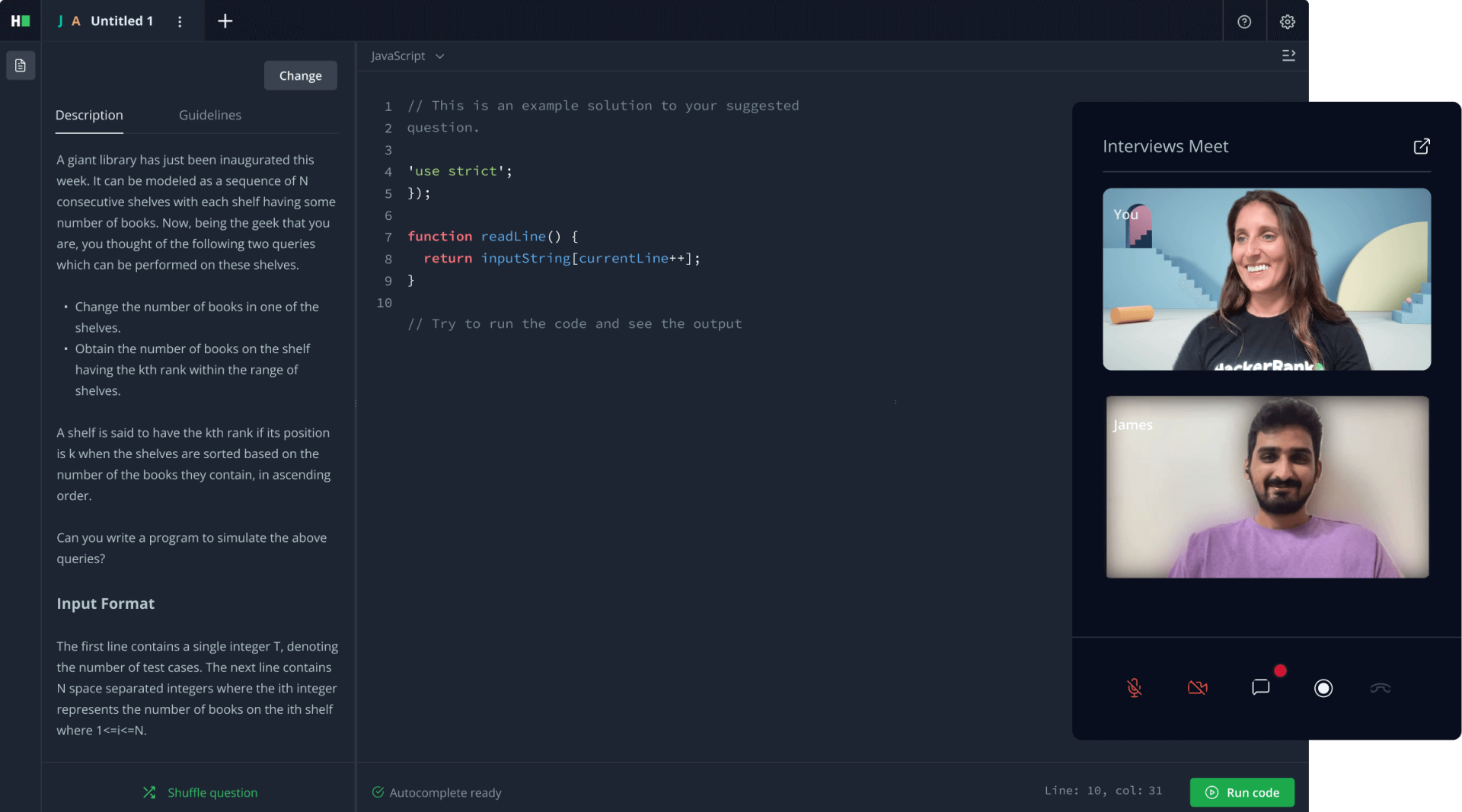
Image source: HackerRank
HackerRank helps keep technical screening consistent by providing a structured coding environment, a challenge library, and workflows that support both assessments and interviews. It’s widely recognized, which can reduce friction when candidates know what to expect.
It supports coding assessments across 40+ programming languages, with challenges spanning algorithms, debugging, SQL, and backend role tasks.
What stood out is the clarity of the decision-ready insights. You can see not only whether someone solved a problem, but how they approached it, which matters when you care about maintainability.
I also like the option to move from an assessment into a structured live interview in the same ecosystem, which helps standardize evaluation across teams. The strongest results come from using role-relevant challenges instead of generic puzzles.
Pros:
- Strong coding environment for consistent screening across roles and languages
- Challenge library that speeds up test creation for common engineering roles
- Structured interview workflows that support repeatable evaluation standards
- Detailed signals on approach and solution quality beyond pass or fail
- Familiar candidate experience that many engineers already understand
Cons:
- Some challenges may feel familiar to candidates who practice these platforms often
- Certain formats can reward test strategy more than real engineering work
User Rating: 4.5/5 (G2)
Pricing: Starts at $165/month
10. Pymetrics by Harver – Best for Gamified Behavioral Traits and Potential Screening
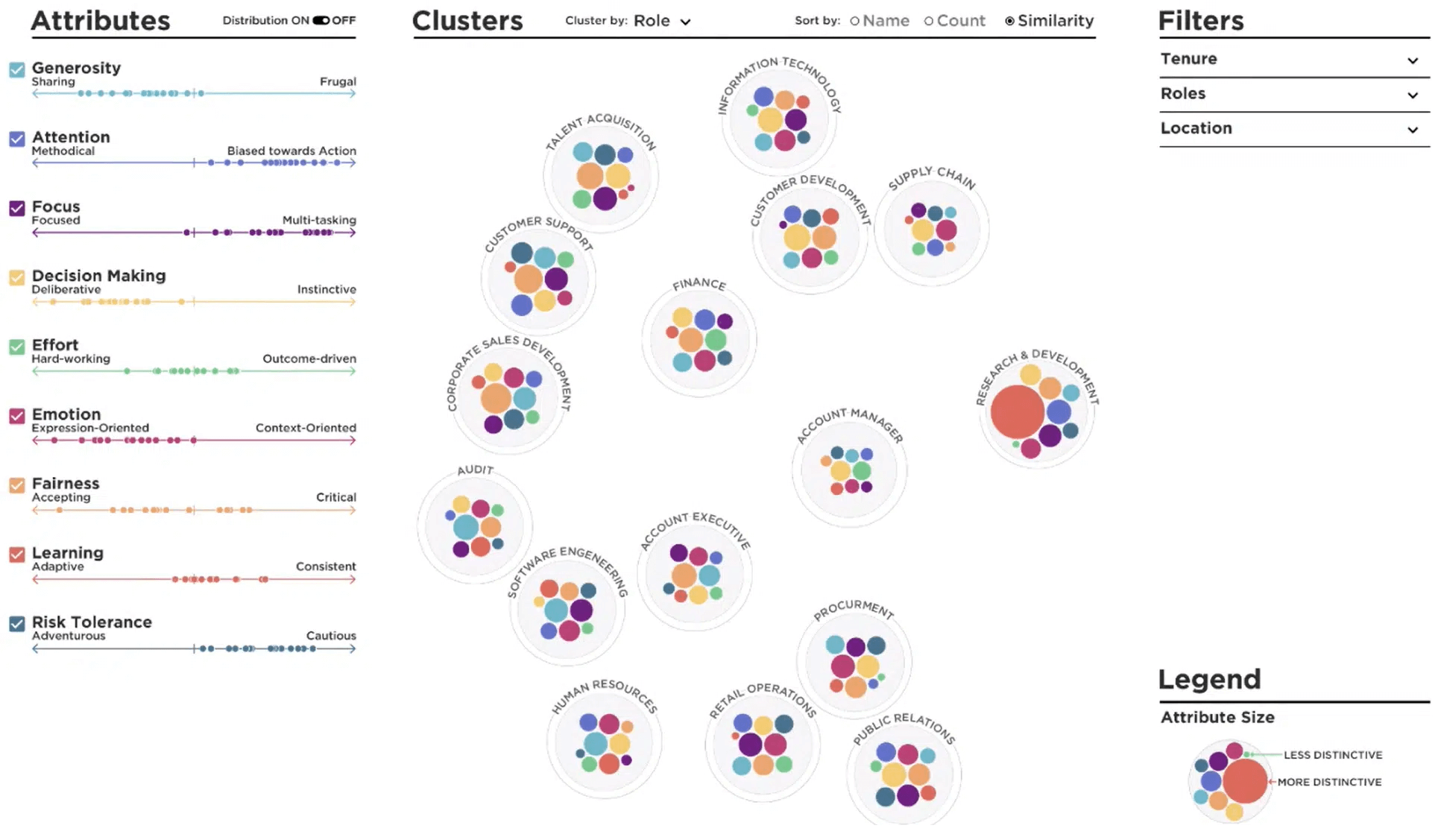
Image source: Pymetrics
Pymetrics takes a different approach by using neuroscience-based games to surface behavioral and cognitive traits. It can add value early in the funnel, especially when you want more than resumes to drive the shortlist.
Candidates complete short exercises designed to measure patterns like attention, risk tolerance, decision-making style, and emotional intelligence, usually in under 30 minutes.
The key is positioning. When candidates understand what’s being measured, the experience tends to land better and feel less mysterious. The results are most useful as context, not as a final verdict, especially for roles where you still need skills proof later.
Pymetrics is a solid fit for teams trying to widen the funnel while staying intentional about evaluation.
Pros:
- Game-based exercises that capture behavioral patterns without heavy test pressure
- Useful early signal when you want more than resume-based shortlisting
- Candidate experience that feels lighter than traditional assessments for many
- Designed to support fairer evaluation by focusing on patterns over pedigree
- Results that add context when paired with skills and work samples
Cons:
- Some candidates may find the format abstract without a clear explanation upfront
- Hiring teams need alignment on interpretation to avoid over-weighting results
Pricing: Custom pricing
How to Choose the Right Hiring Assessment Tool
Most hiring assessment platforms promise faster screening and smarter decisions. The real difference shows up once you’re running live candidates through the system. Choosing the right software is about what holds up in practice, not what sounds good on a landing page.
1. Prioritize Role Fit Over General Test Libraries
A huge question bank is useless if the tests feel generic. What matters is whether you can build assessments that match your roles and hiring bar, instead of being pushed into one-size templates that make every candidate look the same on paper.
2. Evaluate How Much Control You Really Get
Some tools are fast but rigid. Others support various types of talent assessments but feel heavy to configure across roles and teams. Look at how easily you can customize questions, adjust difficulty, set scoring rules, and build assessments that match different seniority levels.
3. Pay Attention to Assessment Integrity Features
If results influence real hiring decisions, credibility matters. Question pooling, randomization, time controls, and proctoring options should be available without making the experience feel punitive or overly intrusive.
4. Check Whether Reporting Helps You Decide, Not Just Measure
A tool is only as useful as the decisions it supports. Strong platforms make it easy to compare candidates, spot strengths and gaps, and generate structured interview follow-ups. Weak reporting turns assessments into noise.
5. Use Reviews to Validate What Demos Won’t Show
Once you have a shortlist, review sites like G2 and Capterra help you see what happens after adoption. Look for repeated feedback on reliability, candidate drop-off, workflow friction, and support responsiveness.
6. Make Sure the Software Fits Into Your Hiring Workflow
The best assessment tool won’t help if it sits outside your process. Look for clean invite flows, collaboration for hiring managers, exports, and ATS integrations that reduce admin instead of adding it.
The right hiring assessment software is the one that produces trustworthy signals, stays usable under real hiring volume, and earns adoption across your team.
My Top 3 Picks for Hiring Assessment Tools
If you’ve made it through the full list, these are the three tools that feel most dependable when the goal is to choose something practical, widely used, and decision-ready.
1. ProProfs Quiz Maker
ProProfs Quiz Maker is a strong pick when you want secure hiring assessments that are fast to build and easy to tailor. AI quiz generation, question pooling, browser controls, and expert-designed skill assessments make it practical for role-specific screening without adding operational complexity.
2. Mercer Mettl
Mercer Mettl is built for enterprise hiring teams that need standardized evaluation across roles, regions, and high-stakes workflows. Advanced proctoring depth, broad assessment coverage, and structured reporting make it a reliable choice when consistency and defensibility matter.
3. TestGorilla
TestGorilla works well when you need to screen large applicant volumes quickly. Its broad test catalog, simple setup, and clean candidate flow make it useful for early-stage shortlisting, especially when speed and consistency matter more than deep customization.
Make Your Next Hire With More Confidence
Hiring decisions get easier when you stop relying on resumes and instinct alone. The right assessments give you clearer evidence early, so interviews become deeper conversations instead of guesswork.
This list is a starting point, not a final answer. Shortlist two or three tools that match your hiring volume, role complexity, and security needs. Then take the next step: book demos, explore free trials, and see how the workflow feels with real hiring scenarios.
If you want a flexible, AI-powered option to create secure, role-specific tests quickly, ProProfs Quiz Maker is worth a look. It’s one of the more straightforward hiring assessment tools for building structured evaluations without heavy setup.
The best choice is the one your team will actually use consistently.
Frequently Asked Questions

When should you send an assessment in the hiring process?
Most teams send it early, right after an initial resume screen. Waiting until late stages wastes interview time on candidates who may not meet the baseline. Early assessments make shortlisting cleaner and faster.
How do you make sure online assessment results are trustworthy?
Remote assessments can be meaningful, but only if the tool includes integrity controls. Teams often look for question randomization, time limits, question pools, and stronger proctoring options for high-stakes roles. The goal isn’t surveillance, it’s keeping results credible.
How long should a hiring assessment be?
Keep it short unless the role truly demands depth. Many hiring teams aim for 20 to 40 minutes. Longer tests increase drop-off and can frustrate strong candidates.
Can hiring assessments replace interviews?
No. Assessments work best as an evidence layer before interviews. They help you ask better questions, compare candidates more fairly, and reduce late-stage surprises. Some teams also pair assessments with structured video interview questions to add more context before live interviews.

Let ProProfs AI Build a Quiz

 We'd love your feedback!
What did you like & how can we make it even better?
 Thanks for your feedback!
 Ask Your Question
Have a question? Get expert help to make your decision easier.