When I work with teams on their training or hiring funnels, I always start in the same place: the questions. Tools change, formats change, but solid tips for writing quiz questions consistently move the needle on how useful those quizzes actually are.
I have seen smart managers make big decisions on top of shaky quizzes. The content was good, the flow looked fine, but the questions were vague, too easy, or disconnected from real work. Scores looked impressive, yet no one trusted them enough to act with confidence.
In this guide, I am sharing what has worked for me in practice. You will see how I think about structure, difficulty, scenarios, and feedback so that every question pulls its weight and your quiz becomes a decision asset, not just a formality at the end of a lesson.
Why Good Quiz Questions Matter
A quiz question is not just a sentence with four options. It is a decision tool.
Each question should help you answer at least one of these:
- Did this person actually understand the material?
- Are they likely to behave correctly in a real situation?
- Can I trust their score when I make a decision?
When questions are vague or poorly written, three things usually happen.
First, high performers lose patience. If they see obviously wrong options, poorly worded stems, or trick questions, they stop taking the quiz seriously. They click through it because they have to, not because they think it is a fair test of their ability.
Second, weaker learners get no real help. A low score on a bad quiz does not tell them what to improve. They walk away with a number and a feeling of frustration instead of clear insight.
Third, your reports stop being useful. The dashboard looks full of data, but the signal is weak. You see percentages, averages, and charts, but they are not tied to real skills or behaviors, so you hesitate to act on them.
Good questions flip this.
- They are easy to read, so people focus on the content, not the wording
- They align with clear learning or business outcomes
- They stretch people just enough to separate strong understanding from surface-level familiarity
- They produce scores you can explain and defend
The rest of this guide is about how to write that kind of question consistently.
18 Tips for Writing Quiz Questions
The ideas here are not random hints. They are a sequence you can treat like a simple playbook, from planning your quiz to polishing each question.
Use them as a checklist. Even small improvements on a few questions will noticeably change how fair and useful your quizzes feel.
1. Start With Concrete Outcomes
Before you think about formats or tools, decide what a passing score should actually mean.
Finish this sentence in a specific way:
If someone passes this quiz, I am comfortable saying that they can:
- Handle a basic customer complaint without making the situation worse
- Follow the core steps of our safety procedure
- Identify common data privacy risks in daily work
Write three to five outcomes like that. Then decide roughly how many questions you need for each one. Maybe four questions for safety basics, five for customer situations, three for privacy.
Now every question has a purpose. You are not filling space. You are checking whether an outcome is true.
2. Build a Simple Blueprint Before You Write
Once you have outcomes, sketch a quick blueprint for the quiz. It might look like this for a 12-question quiz on customer support:
- Greeting and tone: 3 questions
- Problem solving: 5 questions
- Escalation and follow-up: 4 questions
You can also add difficulty bands:
- 4 easy check questions
- 6 mid-level questions
- 2 tougher scenario questions
This takes ten minutes and saves a lot of rework. You avoid writing six questions on the easiest topic and only one on the thing that actually matters.
3. Test One Idea Per Question
If a question tries to test two things at once, your data becomes fuzzy.
Consider this:
Which of the following is a benefit of time management, and how does it improve productivity?
Someone might know the benefit but not remember the exact wording about productivity. Or the other way round. When they miss it, you do not know what they missed.
Split it into two:
Which of these is a key benefit of good time management?
and
How does effective time management usually affect productivity?
Now each wrong answer points to a specific gap, which is what you want when you review results or coach someone later.
4. Write Stems in Plain, Direct Language
The stem is the question text before the options. If it is unclear, the whole item is unclear.
Here is a stem that does more harm than good:
Which of the following is not an inappropriate response when dealing with an irate customer?
There are too many moving parts. Not, inappropriate, irate. A learner has to untangle the logic before they can even think about the content.
Compare it to this:
Which of these is a good first response to an angry customer?
Same topic. No mental gymnastics.
Good stems have a few things in common:
- They are short enough to read in one breath
- They use everyday words, unless a technical term is essential
- They tell you clearly what you are being asked to do
A practical habit: read stems aloud when you review your quiz. If you stumble, shorten or rewrite.
5. Make the Stem Stand on Its Own
You can test this by hiding the options and showing only the stem to someone who did not write the quiz.
Weak stem:
Which of the following is true?
They will probably ask, true about what?
Stronger stem:
Which of these statements about password security is true?
Even stronger:
Which of these is the safest way to store your work password?
With a strong stem, the learner already knows the topic and the task before they see any options. That reduces confusion and makes the quiz feel more professional.
6. Avoid Negative and Tricky Wording
Negative wording is one of the fastest ways to turn a fair question into an unfair one.
For example:
Which of the following is not a recommended practice when handling chemicals?
Even people who know the topic sometimes misread or skim past the word “not”.
Whenever you can, flip the logic into a positive:
Which of these is an unsafe practice when handling chemicals?
This sounds like a small tweak, but it matters. You want difficulty to come from the concept, not from grammar.
The same goes for trick questions. If you find yourself smiling at how sneaky a question is, that is a warning sign. You are probably testing attention to detail rather than the skill you care about.
7. Trim Scenarios to the Essentials
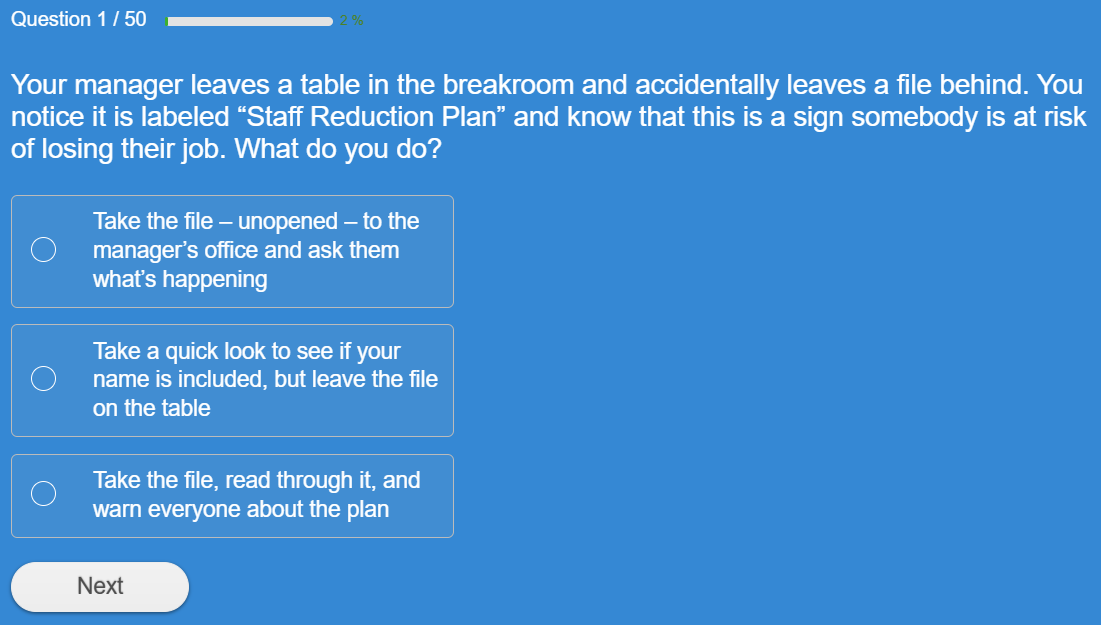
Scenario questions are great for testing judgment and application. They become a problem when the story gets in the way.
Here is a typical overloaded scenario:
John, who has worked in the company for seven years and recently moved to the night shift, notices that on Tuesdays the warehouse door is sometimes left open because the evening supervisor, who is normally very careful, is busy closing the front office. What should John do in this situation?
Most of that detail does not affect the correct answer. It is just extra reading.
Tighter version:
You notice the warehouse door has been left open at the end of a shift. What should you do first?
Now the learner can focus on the decision, not on holding a paragraph of background in their head. When you write scenarios, keep any detail that changes what the best response should be, and cut the rest.
8. Build Distractors From Real Mistakes
In multiple-choice questions, the wrong options are just as important as the right ones.
A weak set of options usually looks like this:
What is the safest way to respond to a fire alarm?
Options:
- Evacuate through the nearest safe exit
- Ignore it
- Keep working
- Take a selfie and post it
Three of these are obviously absurd, so there is no real thinking involved.
Talk to the people who deal with this in real life and ask, “What do people actually do wrong?” You might hear things like:
- They stop to finish a task
- They grab personal items
- They wait for someone to tell them to move
Now your options can be:
- Check your email for instructions before leaving
- Evacuate through the nearest safe exit using the posted route
- Finish your current task and then go to the exit
- Wait until a manager tells you what to do
These are all plausible. Someone who has not absorbed the training will hesitate. Someone who has will choose correctly. That is what a good question looks like.
9. Keep Options Parallel & Balanced
Learners are surprisingly good at spotting patterns in how questions are written. If the correct answer is always the longest, or the only one that sounds serious, people will start guessing based on style instead of knowledge.
Imagine this set:
A. Yes
B. No, complaints are not important
C. Only if you are not busy
D. You should always listen carefully to the customer, remain calm, and follow the company’s standard process
It is not hard to guess which one is correct.
A better set would be:
A. Ignore the complaint unless the customer insists
B. Listen fully, stay calm, and follow the standard process to resolve the issue
C. Tell the customer you cannot help and end the conversation
D. Ask the customer to email support instead of helping them now
The options are similar in length and tone. The correct answer does not stand out visually. That forces people to rely on understanding, which is the point.
10. Use a Sensible Number of Options
More options are not always better.
If you push yourself to write six or seven options for every question, most of them will be weak or repetitive.
Four options is a solid default: one correct answer, three strong distractors. Three is fine when you want a quick pulse check. Five can work if you genuinely have five plausible choices, but that is less common than it seems.
If you notice that two options are just filler or jokes, cut them. A question with three well thought out options is better than one crowded with weak ones.
11. Use “All of the Above” and “None of the Above” Sparingly
These answers are tempting because they feel like shortcuts, but they come with side effects.
With “all of the above,” savvy test takers will sometimes pick it whenever more than one option looks true, even if they are not sure about all of them.
With “none of the above,” a learner can understand the concept well but lose the point because they misjudged a single word in one option.
That does not mean you can never use them, but they should be rare. Most of the time, you can rewrite the question so that each option stands on its own without these catch-all answers.
12. Match Question Type to What You Want to Measure
Multiple choice is convenient, but it is not the only option. Different question types are better suited to different goals.
If you want to know whether someone remembers a definition, a short fill-in-the-blank can work very well. If you care about recognizing patterns or relationships, matching questions make more sense. If you care about applied judgment, short scenarios are ideal.
The key is to choose formats on purpose. If every question in a quiz looks and feels the same, people fall into a rhythm of guessing based on test-taking tricks. When you mix formats thoughtfully, you test a wider range of skills.
13. Move From Pure Recall to Application
Definitions and facts are the easiest questions to write, so teams overuse them.
What is our refund policy for orders above 500 dollars?
is simple to grade, but it tells you very little about how someone will behave with a real customer.
A more useful question might be:
A customer with a 600 dollar order asks for a refund after the usual deadline. The product was clearly defective. What should you do first?
Now you are testing whether they understand how to apply the policy, not just whether they can quote it. These are the questions that change behavior. They are also harder to answer with a quick search, which makes them more robust in online settings.
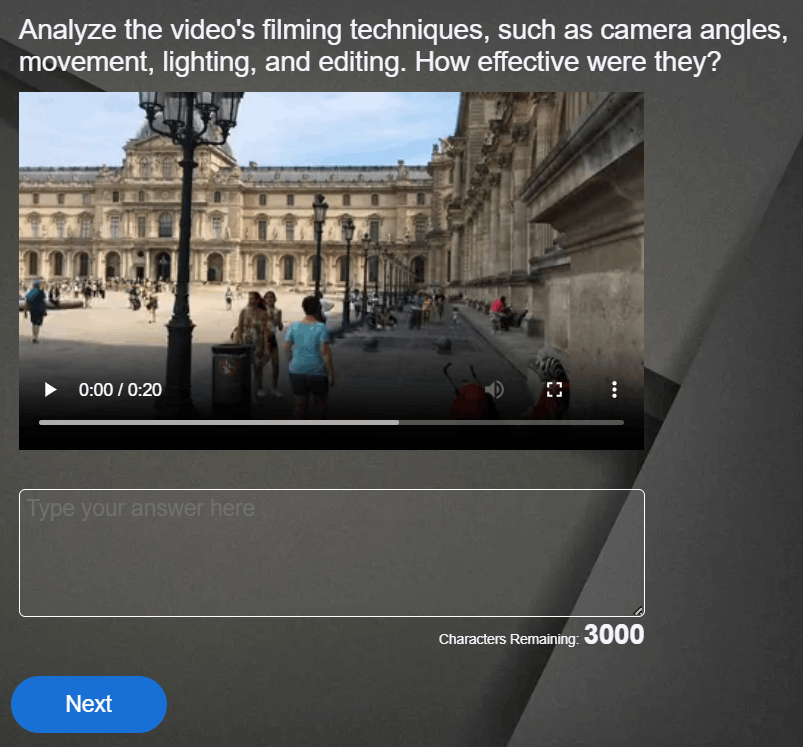
If you use quizzes for hiring, this is where video response questions work especially well. They let you see how candidates think, communicate, and problem solve in real time, not just what they can pick from a list.
To see how this works in practice, watch the video below on creating a video interview quiz and think about which of your current text questions could become short video responses instead.
14. Balance Difficulty Across the Quiz
A quiz where everyone scores 95 percent is not very informative. Neither is a quiz where almost everyone fails.
You want a mix of:
- A few questions that most people can answer correctly
- A solid group that matches your target level
- A small number that challenge your strongest performers
One simple way to manage this is to bake difficulty into your question bank. Label each item as easy, medium, or hard, then either tell your quiz to pull a fixed number from each difficulty or give each level different point values so the quiz builds a natural mix based on points.
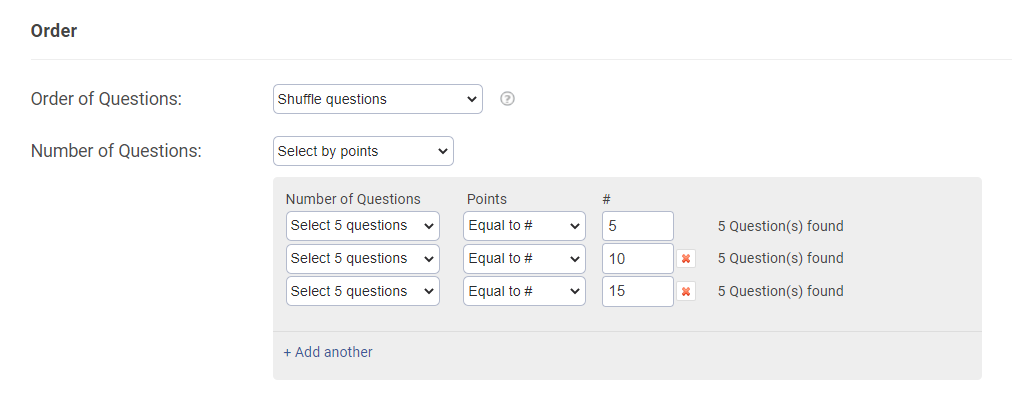
If you see a quiz full of easy checks, raise the level on some items. If everything is hard, add a few straightforward questions early on to build confidence. The goal is to have scores that spread out enough to show you where people really stand.
15. Watch for Bias and Unnecessary Cultural References
Good quiz questions are fair to any learner who has seen the material, regardless of their background.
Problems appear when questions depend on knowledge that has nothing to do with the content. For example, imagining everyone follows a specific sport, knows a particular TV show, or lives in a specific country.
A question like:
At a Super Bowl party, your friend spills beer on the Wi Fi router. What should he do?
puts pressure on cultural knowledge that is irrelevant to the technical skill you are testing.
If you instead write:
At a social gathering, someone spills a drink on the Wi Fi router. What should they do?
you keep the situation clear without excluding anyone who does not follow a particular event or culture.
16. Add Short Explanations to Key Questions
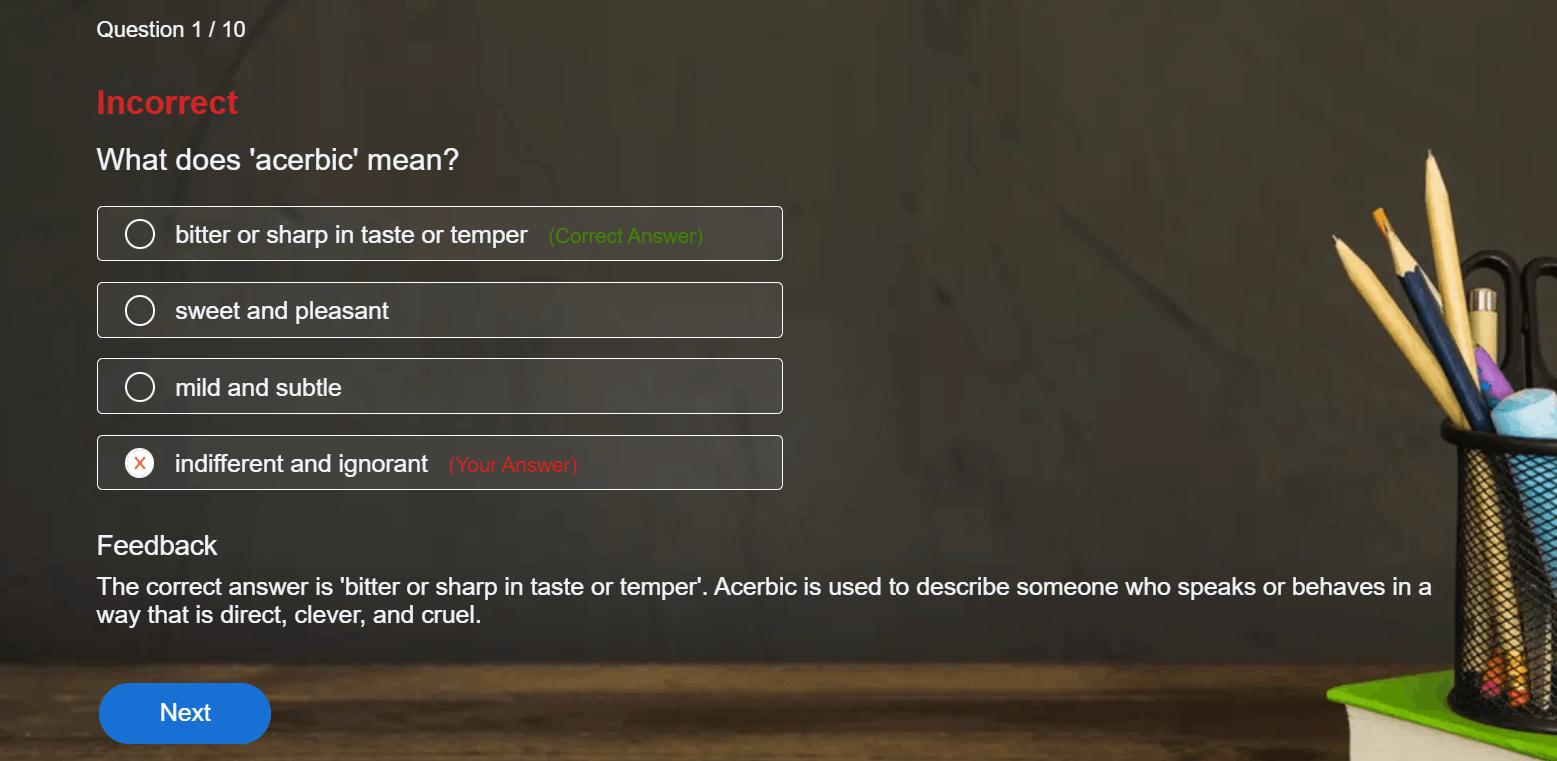
If you are using quizzes for learning, not just for sorting people, answer explanations add a lot of value.
After a learner answers, you can show a short note like:
- Correct. Listening first helps the customer feel heard and often reduces tension.
- Not ideal. Offering a discount before you understand the issue can cost money without fixing the problem.
You do not need to write a paragraph for each question. One or two good sentences are enough. Over time, this builds trust. People feel that even when they get something wrong, they learn something useful.
17. Use Randomization to Protect Integrity
Once a quiz has been in use for a while, questions leak. People remember patterns. They tell friends that the correct answer is always option C, or that the tricky questions are in the second half.
Features like shuffling question order and shuffling answer options help with this. If you have a question bank, you can also draw a random subset of questions each time someone takes the quiz.
That is exactly how Christian, a history teacher at The Potter’s House Christian School, uses his online question bank: he turned years of paper multiple-choice tests into one large pool and now has the system serve 15 randomized questions each time.
Watch: From 15 Years of Paper Tests to Easy Digital Assessments | ProProfs Case Study
Randomization is not a substitute for good question design, but it keeps your quiz fresher for longer and makes an honest effort more valuable than memorizing a fixed sequence.
18. Treat Your Question Bank as a Living Asset
The first version of a quiz is rarely the best version. The difference between a weak assessment system and a strong one is how you treat your question bank over time.
Instead of writing questions once and forgetting about them, track a few things using online quiz reports:
- Which questions almost everyone misses
- Which questions almost everyone gets right
- Which questions strong performers often miss while weaker learners often guess correctly
These are signals. They tell you which items might be confusing, too easy, mis-keyed, or misaligned with your material.
Adjust wording, change distractors, or retire and replace questions based on this data. Tag questions by topic, difficulty, and skill so you can rebuild quizzes quickly when policies change or new modules are added.
Over time, you will have a bank of questions that has been tested, refined, and proven useful in real decisions. That is incredibly valuable.
Watch: How to Review Online Quiz Reports & Statistics
Examples: Good vs. Poorly Written Questions
It helps to see several tips come together in full examples. Here are three makeovers that show the difference between a weak question and a stronger one.
Example 1: Cleaning Up Wording and Logic
Original:
Which of the following is not an incorrect way to respond to a data breach?
- Inform no one so as not to cause panic
- Immediately notify the IT security team
- Delete the affected records without reporting
- Post about it on social media for transparency
The double negative in the stem is confusing, and the social media option may distract people from the main concept.
Improved:
What is the best first step if you suspect a data breach?
- Inform no one so as not to cause panic
- Immediately notify the IT security team
- Delete the affected records without reporting
- Post about it on social media
Now the task is clear. The learner chooses from realistic actions, and you can defend why one of them is the best first step.
Example 2: From Trivia to Application
Original:
In what year did the company adopt the current customer service policy?
- 2015
- 2017
- 2019
- 2021
This is internal trivia. It does not change behavior and quickly becomes outdated.
Improved:
Under the current customer service policy, what should you do if you cannot resolve an issue during the first contact?
- Tell the customer to call back later
- Escalate according to the defined escalation path
- Transfer the call to any available team member
- End the call and send a generic follow up email
Now the question tests whether the learner knows how to act within the policy, which is what you care about in practice.
Example 3: Strengthening Distractors
Original:
What is the main benefit of regular data backups
- You can recover data after a failure
- Your computer runs faster
- Your screen looks brighter
- Your keyboard lasts longer
Three of the options are obviously unrelated.
Improved:
What is the main benefit of having regular data backups
- You can recover important information after a system failure
- You can avoid all hardware problems
- You no longer need any security software
- You can install any software without risk
The wrong options now reflect real misunderstandings. A learner who thinks backups solve every problem might choose one of them. Someone who understands their true role will choose correctly.
Quiz Question Writing Checklist
You can use this checklist when you review a quiz on your own or with your team.
For each question, ask:
- Does this question clearly connect to one of our learning or business outcomes?
- Does it test a single idea, or am I trying to squeeze two or three into one?
- Is the stem short, clear, and easy to understand on the first read?
- Could someone understand the task from the stem alone, before seeing any options?
- Is there one defensible best answer?
- Are the wrong options based on realistic mistakes or misconceptions?
- Do the options look similar in length, tone, and structure?
- Is there any negative or tricky wording I can remove or simplify?
- Have I checked this question for factual accuracy, spelling, and grammar?
For the quiz as a whole:
- Do the questions cover all key outcomes, not just the easiest topics?
- Is there a balance of easy, medium, and harder questions?
- Are the question types chosen intentionally, not just out of habit?
- Is randomization set up where it makes sense?
- Have I looked at pilot results or previous attempts to refine weak items?
Running through this list once will already improve quality. Doing it regularly turns good practice into habit.
FREE. All Features. FOREVER!
Try our Forever FREE account with all premium features!
Common Mistakes to Avoid
Even experienced teams fall into some predictable traps when they write quiz questions. Here are a few to watch for.
1. Treating Question Writing as a Last-Minute Task
When questions are squeezed into the final hour of a project, they tend to be shallow, repetitive, or misaligned with the actual goals of the training or assessment.
2. Reusing Old Questions Without Reviewing Them
Recycling old questions without checking if they still match current reality is risky. Policies change, processes evolve, and examples that once made sense may now be misleading.
3. Creating Fake Difficulty With Tricky Wording
Relying on negative phrasing, trick wording, or overly complex sentences creates a sense of difficulty but mostly tests reading speed and attention to detail, not the intended skill.
4. Overusing the Same Question Structures
When every question is a definition or every scenario feels the same, learners fall into a rhythm of guessing instead of thinking. Mixing formats thoughtfully helps break that pattern.
5. Ignoring Question-Level Performance Data
Some teams never look at performance data by question and only watch overall pass rates. Flawed questions stay in circulation for years, quietly undermining trust in the results.
If you avoid these patterns and adopt a review habit, your quizzes will keep improving with each iteration instead of slowly drifting away from their purpose.
Put These Quiz Question Tips Into Practice
Strong quiz questions do not shout for attention. They sit at the end of a course or assessment and quietly influence what happens next.
They still decide plenty: who earns a certificate, who moves ahead in a hiring round, who needs extra support, and whether your training spend is changing behavior at all. That is why tips for writing quiz questions should sit close to your core strategy, not as a rushed step on launch day.
You do not have to rebuild everything. Start with one quiz, rework a handful of questions, and see how the scores and comments shift. As you make this part of your regular process, it helps if your tools support the way you work.
In ProProfs Quiz Maker, for example, you can generate questions from your prompts or materials with AI, keep them organized in tagged question banks, randomize what each person sees, and use question-level reports to steadily refine your question set over time.
Frequently Asked Questions

What makes a quiz question effective?
An effective question is clear, fair, and tied to a real goal. A learner should know what is being asked, have to think about the content instead of the wording, and produce an answer that tells you something meaningful about their understanding or likely behavior.
How many questions should a quiz have?
There is no single perfect number. For a quick engagement or lesson recap, 5 to 10 focused questions often work well. For deeper assessments, 10 to 20 well-written questions give a better picture than a longer quiz filled with weak items. Quality matters more than length.
How can I tell if a question is too hard or too easy?
Look at the results. If almost everyone misses a question, it might be confusing or misaligned with your material. If almost everyone gets it right and it was meant to be challenging, it might be too simple. Patterns where strong learners fail, and weaker ones pass, are also a red flag.
How do I reduce cheating in online quizzes?
You cannot completely remove the possibility, but you can design questions that do not reward simple search. Focus on scenarios, decisions, and combinations of ideas instead of pure recall. Use proctoring and randomization features and draw from a larger question bank when people retake quizzes.

Let ProProfs AI Build a Quiz

 We'd love your feedback!
What did you like & how can we make it even better?
 Thanks for your feedback!
 Ask Your Question
Have a question? Get expert help to make your decision easier.