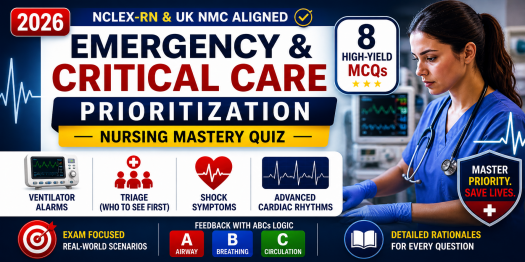
Stop Guessing. Start Thinking Like a Nurse. ​Are you struggling with the most difficult part of the NCLEX or NMC exam? Most students fail not because they lack knowledge, but because they can’t prioritize in high-stakes scenarios. ​Produced by Premium Nursing Resources, this specialized 8-question drill is designed to sharpen your clinical judgment and save you hours of study time. We focus exclusively on the Emergency and Critical Care topics that appear most frequently on certification exams. ​What’s Inside This Mastery Drill?
  • 8 High-Quality Questions: Expertly crafted to mirror the 2026 NCLEX-RN and UK NMC standards.
  • Prioritization Mastery: Focus on Triage, Ventilator Alarms, and Shock—the topics students find most challenging.
  • Detailed Clinical Rationales: We don’t just tell you which answer is right; we explain the ABCs (Airway, Breathing, Circulation) logic so you can apply it to any question.
Why Choose Premium Nursing Resources? ​Our materials are developed by professional examiners and educators who understand the exact criteria used in secondary and professional board evaluations. When you buy from us, you aren't just getting a quiz—you are getting a professional assessment tool designed for success. ​Unlock your potential and pass your exam on the first try. Add this High-Yield Drill to your study plan today!

5 Sample Questions

A patient on a ventilator has an alarm sounding indicating high pressure. What is the first action the nurse should take?

  • A. Check the patient's airway for obstruction.
  • B. Increase the ventilator settings.
  • C. Notify the physician.
  • D. Assess the patient's vital signs.

During a triage situation in the emergency department, which patient should the nurse assess first?

  • A. A patient with a broken arm.
  • B. A patient with chest pain and shortness of breath.
  • C. A patient with a sprained ankle.
  • D. A patient with a mild headache.

A patient presents with signs of shock. Which symptom should the nurse recognize as a priority indicator?

  • A. Increased heart rate.
  • B. Cool, clammy skin.
  • C. Decreased urine output.
  • D. Confusion.

In a patient with advanced cardiac rhythms, which rhythm should the nurse recognize as requiring immediate intervention?

  • A. Atrial fibrillation.
  • B. Ventricular tachycardia with a pulse.
  • C. Ventricular fibrillation.
  • D. Sinus bradycardia.

What is the priority nursing action for a patient experiencing respiratory distress?

  • A. Administer bronchodilators.
  • B. Position the patient in a high Fowler's position.
  • C. Obtain a pulse oximetry reading.
  • D. Call for a rapid response team.